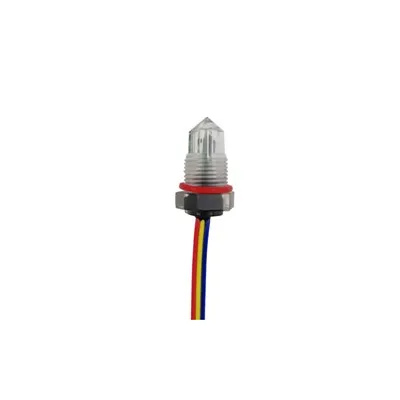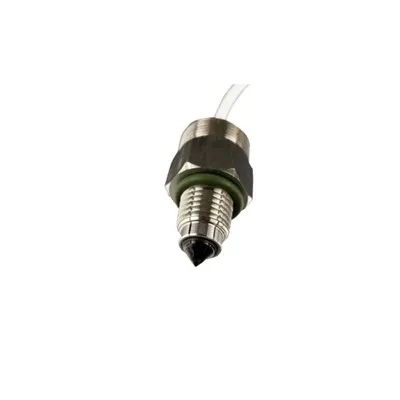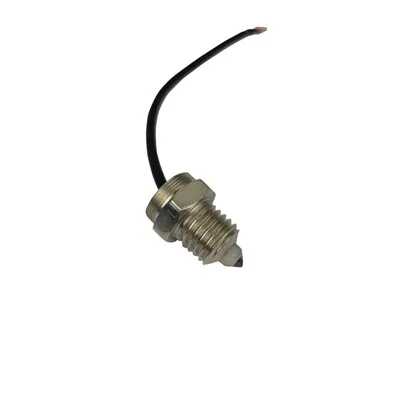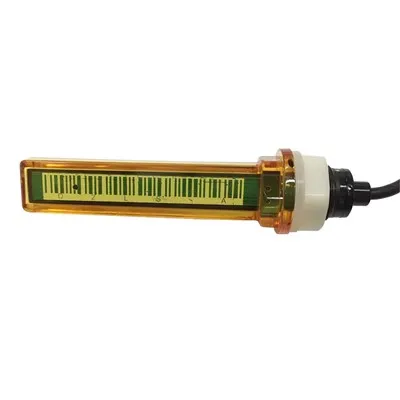
Broadly speaking, the construction of a flowmeter consists of three main components: a sensing section, a conversion section, and an output section. Different structural configurations are tailored to specific application scenarios and fluid conditions.
The construction of mechanical flowmeters is relatively straightforward, typically comprising a housing, a flow channel, and moving parts. For instance, a turbine flowmeter features an internal impeller; as fluid flows through, it drives the impeller to rotate, and this rotational speed is subsequently converted into a flow signal via electromagnetic induction or photoelectric elements. Gear flowmeters, conversely, measure fluid volume by monitoring the rotation of two interlocking gears. This class of structures places a strong emphasis on mechanical fitting precision and operational stability.
The construction of an electromagnetic flowmeter primarily consists of a measuring tube, electrodes, excitation coils, and a liner. The inner wall of the measuring tube is typically lined with an insulating material; the excitation coils generate a magnetic field, and as a conductive fluid flows through this field, an induced voltage is generated between the electrodes, thereby enabling flow detection. This design features no moving parts, making it particularly suitable for measuring fluids containing impurities.
Ultrasonic flowmeters are built around a core assembly comprising transducers, a signal processing unit, and mounting brackets. By positioning ultrasonic probes either externally on the pipe surface or internally within the pipe, these devices achieve non-contact measurement of fluid velocity. Their compact design minimizes interference with the pipeline and renders them suitable for a wide variety of operating conditions. Furthermore, modern flowmeters typically integrate display modules, communication interfaces, and power supply units, endowing them with advanced digital and intelligent capabilities.