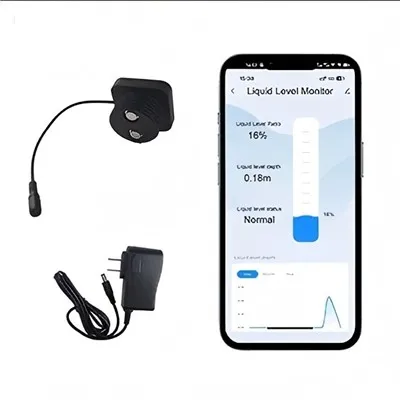
The development trends within the flowmeter industry are shifting away from traditional mechanical metering toward increasing intelligence, digitalization, and high precision-a transformation closely intertwined with the advancements in industrial automation and Internet of Things (IoT) technologies.
Technological Landscape
Flowmeters are progressively evolving toward higher precision and multi-functional integration. The adoption rate of high-end products-such as electromagnetic, ultrasonic, and Coriolis mass flowmeters-is steadily rising. Compared to traditional mechanical flowmeters, these advanced devices offer superior measurement accuracy, wider turndown ratios, and greater adaptability, enabling them to meet measurement requirements even under complex operating conditions.
Application Models
Intelligence and networking have emerged as distinct trends. Modern flowmeters not only feature local display capabilities but can also integrate into industrial control systems via communication protocols such as 4–20 mA, RS485, and Modbus, thereby enabling remote monitoring, data acquisition, and real-time analysis. Furthermore, some new-generation flowmeters support cloud platform connectivity, providing a robust data foundation for energy management and process optimization.
Market and Industry Structure
The industry is currently exhibiting a parallel trend of high-end advancement and localization. While international brands continue to dominate the market for high-precision and specialized-application products, domestic enterprises are rapidly gaining ground in the mid-to-low-end segments and are gradually making inroads into the high-end sector. Concurrently, the growth of emerging industries-including energy conservation and environmental protection, new energy, water treatment, and intelligent manufacturing-is creating sustained market expansion opportunities for flowmeters.