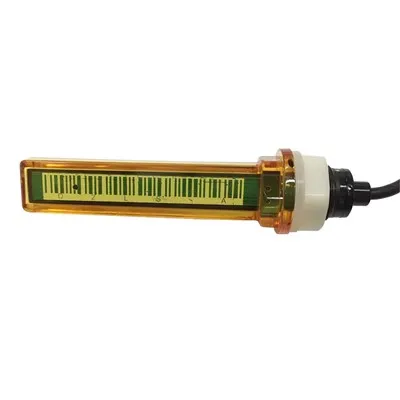
Gas Cylinder Level Indicator: Which Type Is Right for Your Propane Tank?
In this guide: A practical decision-focused guide to gas cylinder level indicators-how to choose the right type for your specific propane tank, what accuracy you can realistically expect, the hidden limitations of each method, installation requirements, real costs including ongoing maintenance, and a straightforward comparison that helps you decide which gas cylinder level indicator solves your problem.
The Question Every Propane User Asks
You are standing in front of your propane tank. Maybe it is a 20 lb BBQ cylinder, a 9 kg caravan gas bottle, or a 500 gallon home propane tank. You need to know: How much propane is actually inside?
The gauge on the tank says something in between empty and full. You shake the cylinder, but that tells you nothing precise. You try to remember when you last filled it, but your memory is hazy. You are about to cook dinner, or leave for a camping trip, or head into a cold winter week-and you genuinely do not know if you have enough propane to get through.
This is the problem that gas cylinder level indicators exist to solve. But not all indicators are created equal. Some work in certain conditions and fail in others. Some cost $8 and last for years. Some cost $200 and give you smartphone alerts from anywhere in the world. Some are accurate to within 2% of the actual level. Some can be off by 30% or more.
This guide helps you answer one question: Which gas cylinder level indicator is right for YOUR tank and YOUR situation?
The Five Types of Gas Cylinder Level Indicators: What They Actually Do
There are five fundamental ways to measure propane level in a gas cylinder. Each method measures something different, has different accuracy, and works best in different conditions.
Method 1: Pressure Gauges - The Built-In Approach
What it measures: Vapor pressure inside the tank
How it works: A mechanical dial threads onto the tank valve or is integrated into the valve assembly. It reads the pressure of the LPG vapor in the top of the tank and displays this as a fill percentage.
What the gauge actually tells you: Vapor pressure is determined primarily by temperature, not fill level. At 70°F, a tank that is 20% full and a tank that is 70% full have nearly identical vapor pressure. The gauge cannot tell the difference. As temperature drops, vapor pressure drops-but the tank level has not changed. This is why pressure gauges read "empty" in winter even when the tank still has propane.
Accuracy by temperature:
| Temperature | What the Gauge Reads | Actual Tank Level | Accuracy Problem |
|---|---|---|---|
| 90°F (32°C) | 80% | 60% actual | Over-reads due to high pressure |
| 70°F (21°C) | 60% | 60% actual | Reasonably accurate |
| 50°F (10°C) | 40% | 60% actual | Under-reads by 20% |
| 30°F (-1°C) | 20% | 60% actual | Under-reads by 40% |
| 10°F (-12°C) | "Empty" | 60% actual | Useless reading |
Best use case: Mild climates where temperatures stay above 50°F year-round. Useful as a rough indicator, but do not rely on it for critical decisions.
Cost: $10–50 (often included with tank)
Method 2: Ultrasonic Sensors - The Precision Approach
What it measures: Distance from the sensor to the liquid propane surface inside the tank
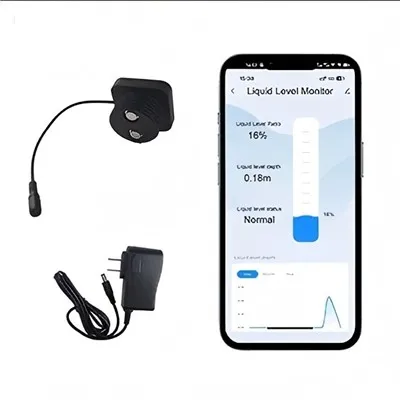
How it works: A small device (about the size of a hockey puck) mounts magnetically on the outside of a steel tank, or with a bracket on aluminum or composite tanks. It emits high-frequency sound pulses that travel through the tank wall, pass through the vapor space, bounce off the liquid surface, and return. The sensor measures the travel time, calculates the distance to the liquid, and converts this to a fill percentage.
What the sensor actually tells you: The exact position of the liquid surface inside your tank. This is a direct measurement of how much liquid propane you have, regardless of temperature, pressure, or weather conditions.
Why ultrasonic is accurate: Sound travels at a known speed through propane vapor. By measuring the round-trip time of a sound pulse, the sensor calculates the exact distance to the liquid surface. Temperature compensation adjusts for the effect of temperature on sound speed. The result is a level reading that is accurate to within 2–8% of the actual fill.
Accuracy across conditions:
| Condition | Ultrasonic Accuracy | Pressure Gauge Accuracy |
|---|---|---|
| Summer (90°F) | 90–98% | 70–80% |
| Room temperature (70°F) | 92–98% | 75–85% |
| Cold weather (30°F) | 90–98% | 55–65% |
| Freezing (10°F) | 90–98% | 40–55% |
| After recent fill | 90–98% | 70–80% |
Best use case: Anyone who needs reliable level monitoring across all seasons-homeowners, RV owners, caravanners, off-grid cabin owners, and anyone who has experienced the frustration of pressure gauges that lie in cold weather.
Cost: $65–250 depending on connectivity (Bluetooth, WiFi, or cellular)
Method 3: Adhesive Liquid Crystal Strips - The Visual Approach
What it measures: Temperature difference between the liquid zone and vapor zone on the outside of the tank
How it works: A thin adhesive strip (typically 100–250mm tall) sticks to the outside of a steel propane tank. The strip contains thermochromic liquid crystals-chemicals that change color at specific temperatures. The portion of the strip overlying cold liquid propane shows cool colors (blue/purple). The portion overlying warm vapor shows warm colors (green/yellow/red). The boundary between colors marks the liquid level.
What the strip actually tells you: The relative temperature of the tank wall at each point along the strip. Because liquid propane absorbs heat through the tank wall to vaporise, the wall over liquid is cooler than the wall over vapor. The strip reveals this temperature difference as a color gradient.
Limitations: The strip works best on steel tanks. Aluminum tanks conduct heat more efficiently, reducing the temperature difference and making the color boundary less distinct. The strip requires a temperature differential to work-if the tank has not been used recently, the liquid and vapor may be at similar temperatures, and the strip will show no clear boundary.
Accuracy: 80–88% under good conditions. Can be 70–80% on aluminum tanks, in extreme cold, or when the tank has been idle.
Best use case: Stationary steel tanks where you want a permanent, always-on visual indicator without batteries or electronics. Excellent as a backup to an ultrasonic sensor.
Cost: $5–30
Method 4: Weighing - The Free Method
What it measures: Total weight of the tank, from which you calculate the propane weight
How it works: Every propane cylinder has its tare weight (TW)-the empty weight of the cylinder-stamped on the collar. Weigh the entire cylinder on a scale. Subtract the tare weight to get propane weight. Divide by propane's density (4.2 lb per gallon for propane, 0.51 kg per litre for LPG) to get the propane volume. Compare to the tank's water capacity (also stamped on the collar) to calculate the fill percentage.
What weighing actually tells you: The exact mass of propane in your tank. This is a direct, physics-based measurement with no interpretation required.
Accuracy: 92–97% depending on scale accuracy. This is one of the most accurate methods available for portable cylinders.
Limitations: Requires physical access to the tank and a scale. Not practical for large stationary tanks, underground tanks, or tanks in hard-to-reach locations.
Best use case: Portable cylinders (BBQ, camping, small RV bottles) where you can easily lift or roll the tank onto a scale.
Cost: Free if you own a scale. $10–50 if you need to buy a scale.
Method 5: Float Gauges - The Mechanical Approach
What it measures: Vertical position of a float resting on the liquid propane surface inside the tank
How it works: A buoyant float (typically aluminum or a compatible alloy) sits on the liquid propane surface inside the tank. As the liquid level drops, the float moves down. A magnetic coupling or mechanical linkage transfers this movement to a dial or electronic sensor outside the tank.
What the float gauge actually tells you: The physical position of the liquid surface inside the tank-similar to the float in a toilet tank or car fuel gauge.
Accuracy: 85–92% in good conditions. Can be affected by tank tilt, liquid turbulence during use, and mechanical wear over time.
Limitations: Requires tank modification for installation-typically a fitting that penetrates the tank wall. Not practical for most consumer cylinders. Best suited for large stationary tanks and commercial applications.
Best use case: Large commercial and industrial propane storage tanks. Residential tanks of 250 gallons and larger may have float gauges installed by the propane supplier.
Cost: $100–500 for gauge and professional installation
How to Choose: The Decision Framework
Choosing the right gas cylinder level indicator comes down to four questions:
Question 1: What size and type of propane tank do you have?
| Tank Type | Recommended Primary Method | Why |
|---|---|---|
| Portable BBQ cylinder (1–20 lb) | Weighing or liquid crystal strip | Easy to lift for weighing; strip gives permanent visual check |
| RV / caravan gas bottle (20–40 lb) | Ultrasonic sensor (Mopeka Pro Check or RC1) | Mobile use; need reliability in all weather; Bluetooth app convenient |
| Small home tank (120–250 gallon) | Ultrasonic sensor (WiFi or cellular) | Remote monitoring essential; may be far from house |
| Large home tank (250–1,000+ gallon) | Float gauge (if installed) or ultrasonic sensor | Large tanks may have float gauge; ultrasonic is retrofit option |
| Underground tank | Tank-mounted ultrasonic sensor with access port | No external surface for strip or magnetic mount; requires access port |
Question 2: What climate do you live in?
| Climate | Pressure Gauge | Ultrasonic | Liquid Crystal Strip |
|---|---|---|---|
| Warm year-round (>50°F) | Reasonable accuracy | Excellent accuracy | Works well |
| Variable seasons | Unreliable in cold | Excellent accuracy | Reduced clarity in cold |
| Cold winters (<30°F) | Not reliable | Excellent accuracy | Reduced clarity; read during warmest part of day |
| Extreme cold (<10°F) | Useless | Excellent accuracy | May be difficult to read |
If you live in a cold climate, pressure gauges are not reliable. Choose ultrasonic sensors or use weighing for portable tanks.
Question 3: How often do you need to check your level?
| Checking Frequency | Recommended Solution |
|---|---|
| Occasionally (once per month or less) | Liquid crystal strip or pressure gauge (in warm climates) |
| Regularly (weekly) | Ultrasonic sensor with app; quick check anytime |
| Daily or multiple times per day | Ultrasonic sensor with low-fuel alerts |
| Remotely (while away from home or travelling) | Cellular ultrasonic sensor (Generac LTE) or WiFi-enabled sensor (Mopeka Link) |
Question 4: What is your budget?
| Budget | What You Get | Recommended Product |
|---|---|---|
| $0 | Weighing method (if you have a scale) | Use your existing bathroom or kitchen scale |
| $5–30 | Permanent visual indicator; no batteries; 80–88% accuracy | Liquid crystal adhesive strip |
| $65–95 | 95–98% accuracy; smartphone app; Bluetooth or WiFi | Mopeka Pro Check ($65–80) or Mopeka Link ($80–95) |
| $199–249 | 90–95% accuracy; cellular; works anywhere; no WiFi needed | Generac 7009 LTE |
| $100–500+ | Professional float gauge; installed by propane supplier | Consult your propane supplier |
The Hidden Costs: What Sales Pages Do Not Tell You
Every gas cylinder level indicator has hidden costs and limitations that product descriptions rarely mention:
Pressure Gauges
| Hidden Cost | Reality |
|---|---|
| Temperature dependency | The gauge reads differently at 30°F vs 70°F for the same tank level. You must learn to mentally compensate for temperature. |
| Cold weather failure | In freezing temperatures, the gauge may show "empty" even when the tank is half full. This is not a defect-it is how pressure gauges work. |
| No alert capability | You must physically look at the gauge to know your level. No notification if you are running low. |
Ultrasonic Sensors
| Hidden Cost | Reality |
|---|---|
| Battery replacement | Every 2–6 years, you need to replace the sensor battery (CR2032 or CR123A). Cost: $1–8 per battery. |
| App dependency | You need a smartphone and must keep the app updated. If the app is discontinued, the sensor may become useless. |
| Bluetooth range limit | Bluetooth sensors require you to be within 10–30 metres of the tank. If your tank is far from your house, choose WiFi or cellular. |
| Setup complexity | First-time setup requires entering tank dimensions and configuring alerts. Takes 10–20 minutes. |
Liquid Crystal Strips
| Hidden Cost | Reality |
|---|---|
| UV degradation | Outdoor strips fade in sunlight. Colours become less distinct after 2–4 years of direct sun exposure. |
| Adhesion issues | Poor surface preparation leads to strips peeling off. You must clean the tank thoroughly before installation. |
| Aluminum tank incompatibility | Strips work poorly on aluminum tanks due to different thermal conductivity. |
| Reading in extreme weather | Very cold or very hot weather reduces colour contrast. Best read in moderate temperatures. |
Weighing Method
| Hidden Cost | Reality |
|---|---|
| Physical effort | You must lift or roll the tank onto a scale. Not practical for heavy tanks or tanks in confined spaces. |
| Scale accuracy | Cheap scales can be off by 1–2 lb, reducing accuracy to 90–95% instead of 95–97%. |
| No continuous monitoring | You only know the level when you weigh the tank. No alerts, no history, no remote checking. |
Real-World Accuracy: What to Actually Expect
Manufacturers state best-case accuracy. Here is what you can realistically expect in normal use:
| Method | Stated Accuracy | Real-World Accuracy | Conditions That Reduce Accuracy |
|---|---|---|---|
| Pressure gauge | "Accurate" (no number given) | 60–75% | Cold weather, recent fill, altitude changes |
| Ultrasonic sensor | 95–98% | 88–96% | Incorrect tank setup, battery running low, extreme tank tilt |
| Liquid crystal strip | 80–88% | 75–85% | Aluminum tank, direct sunlight, extreme cold, recent fill |
| Weighing | 95–97% | 92–96% | Scale inaccuracy, water in tank scale, incorrect tare weight |
| Float gauge | 85–92% | 80–88% | Tank tilt, float wear, turbulence during use |
The takeaway: No method is perfect. Ultrasonic sensors come closest to their stated accuracy. Pressure gauges are furthest from their implied accuracy in cold weather. Liquid crystal strips and weighing are generally close to their stated accuracy when used correctly.
Installation: What Is Actually Involved
Pressure Gauge Installation
Time: 2–5 minutes
Tools required: None (hand-tighten)
Steps:
Turn off the tank valve
Remove the old gauge or cap (if present)
Thread the pressure gauge onto the valve
Hand-tighten only-do not use tools
Open the valve slowly and check for leaks
Professional help needed?: No
Ultrasonic Sensor Installation
Time: 10–20 minutes
Tools required: Smartphone, alcohol wipe (included with most sensors)
Steps:
Download the manufacturer's app
Create an account and pair the sensor via Bluetooth
Enter your tank's water capacity and orientation (vertical/horizontal)
Clean the tank surface where the sensor will mount
Press the magnetic sensor firmly onto the bottom centre of the tank
Wait 10–15 minutes for the first accurate reading
Set your low-fuel alert threshold (recommended: 25–30%)
Professional help needed?: No-most consumers can install ultrasonic sensors themselves
Liquid Crystal Strip Installation
Time: 5–15 minutes
Tools required: Isopropyl alcohol, clean cloth, optional silicone sealant
Steps:
Clean a vertical section of the tank at mid-height with isopropyl alcohol
Let the surface dry completely
Peel the backing from the strip, handling by edges only
Align the strip vertically and press firmly from bottom to top
Smooth out any air bubbles with a flat tool
(Optional) Apply clear silicone sealant around the edges for outdoor tanks
Wait 15–30 minutes for the strip to equilibrate before reading
Professional help needed?: No
Float Gauge Installation
Time: 30–60 minutes (plus scheduling)
Tools required: Professional installation by licensed propane technician
Steps:
Schedule an appointment with your propane supplier or a licensed technician
Technician drains the tank to a safe level
Technician cuts or threads an access port into the tank
Float gauge assembly is inserted and sealed
Technician tests for leaks and calibrates the gauge
Tank is refilled to the appropriate level
Professional help needed?: Yes-this is not a DIY job
Frequently Asked Questions
Q1: What is the most accurate gas cylinder level indicator for home use?
For home propane tanks, ultrasonic sensors provide the best combination of accuracy (90–98%), convenience, and value. The Mopeka Pro Check, Mopeka Link, and Generac 7009 LTE are the leading options. For homeowners who want remote monitoring from anywhere, the Generac 7009 LTE (cellular) or Mopeka Link (WiFi) are the best choices. Weighing is more accurate (92–97%) but impractical for large stationary tanks.
Q2: Can I trust the pressure gauge on my propane tank?
In warm weather (above 50°F), you can trust a pressure gauge as a rough indicator-accurate to within 15–20%. In cold weather (below 50°F), pressure gauges become increasingly unreliable. At 30°F, a pressure gauge may read "empty" when your tank is still half full. If you rely on a pressure gauge, learn to mentally compensate for temperature: add 10–20% to the reading in cool weather, and 20–30% in cold weather.
Q3: Which is better: liquid crystal strip or ultrasonic sensor?
Ultrasonic sensors are more accurate (90–98% vs 80–88%) and provide smartphone alerts, remote checking, and usage history. Liquid crystal strips are simpler, cheaper, require no batteries, and give a permanent at-a-glance visual check. The best approach for most tanks is both: install a strip for instant visual checking, and add an ultrasonic sensor for precision and alerts.
Q4: How do I check my propane level without any gauge?
Use the weighing method. Find the tare weight (TW) stamped on the tank collar. Weigh the tank on a scale. Subtract the tare weight from the total weight to get propane weight. For a 20 lb BBQ cylinder, propane weight of 16 lb means approximately 80% full. Propane weight of 8 lb means approximately 40% full. This method is free, accurate, and requires only a scale.
Q5: Do ultrasonic gas cylinder level indicators work on all tanks?
Ultrasonic sensors work on steel, aluminum, and composite tanks-but the mounting method differs. Magnetic-mount sensors (like the Mopeka Pro Check) work on steel tanks. For aluminum or composite tanks, you need a bracket-mounted sensor or a sensor with an adhesive mounting plate. Before purchasing, verify that the sensor is compatible with your tank material.
Q6: How often should I check my propane tank level?
| Tank Use | Recommended Checking Frequency |
|---|---|
| Home heating (winter) | Daily or every other day |
| Home heating (summer) | Monthly |
| RV / caravan touring | Before each trip, and daily during extended trips |
| BBQ | Before each cookout |
| Off-grid cabin | Daily during visits; remotely via cellular sensor when away |
Q7: Can I install a gas cylinder level indicator myself?
Most consumer gas cylinder level indicators are designed for self-installation. Pressure gauges, ultrasonic sensors, and liquid crystal strips can all be installed by the tank owner without professional help. Float gauges require professional installation because they penetrate the tank wall. If you are unsure about any aspect of installation, consult your propane supplier or a licensed technician.
The Bottom Line: Making Your Decision
You now have everything you need to choose the right gas cylinder level indicator for your situation. The key is matching the method to your specific tank, climate, and checking needs.
The three most common recommendations:
| Situation | Best Choice | Why |
|---|---|---|
| Home propane tank, want remote monitoring | Ultrasonic sensor (WiFi or cellular) | Check from anywhere; low-fuel alerts; 90–98% accurate |
| RV or caravan gas bottle | Ultrasonic sensor (Mopeka Pro Check or RC1) | Reliable in all weather; Bluetooth app convenient; mobile use |
| BBQ cylinder, budget-conscious | Liquid crystal strip + occasional weighing | $8–25 for strip; weighing is free; together give visual and accurate readings |
The universal truth: Any level indicator is better than no level indicator. Even a pressure gauge that reads 20% low in cold weather is better than guessing. Even a $8 liquid crystal strip with 80% accuracy is better than running out unexpectedly.
Invest in visibility. Know your level. Avoid the emergency. The right gas cylinder level indicator pays for itself the first time it prevents you from running out at the wrong moment.
Last updated: July 2026
Disclaimer: This guide provides general information about gas cylinder level indicators for educational purposes. Product specifications, accuracy figures, and pricing are subject to change. Always verify current information from the manufacturer's official documentation before purchasing. Propane systems involve pressurised flammable gas; installation should follow applicable regulations and manufacturer guidelines. Consult a licensed gas professional for any questions about propane tank equipment, installation, or safety.