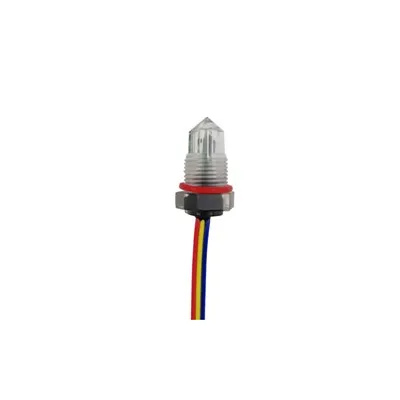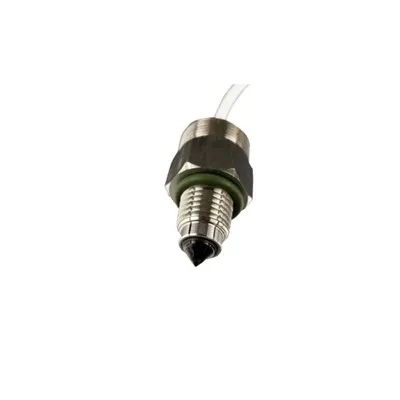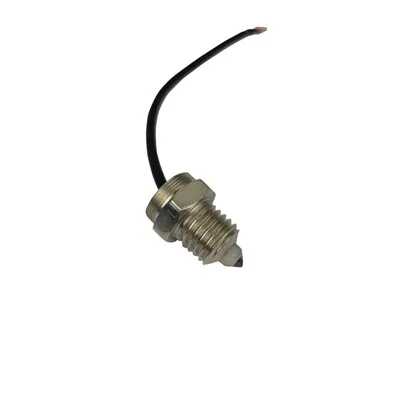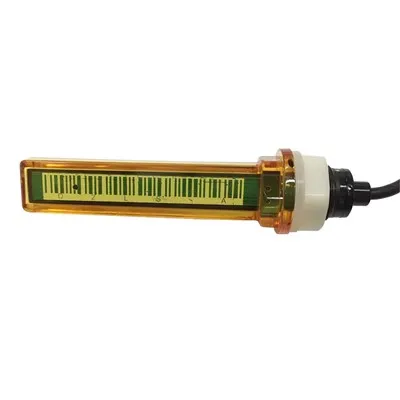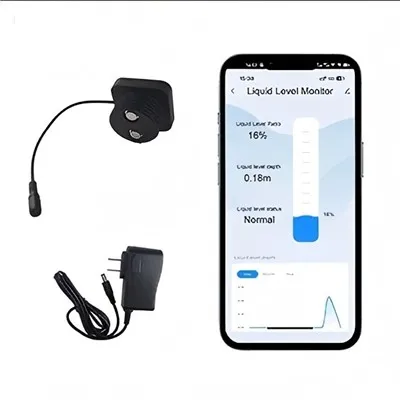
A liquid level sensor (also referred to as a hydrostatic level gauge, level transmitter, or water level sensor) is a type of pressure sensor designed specifically for measuring liquid levels. The submersible hydrostatic level transmitter (or level gauge) operates on the principle that the hydrostatic pressure exerted by a liquid is directly proportional to its height. Utilizing isolated diffused silicon sensing elements or ceramic capacitive pressure sensors, it converts hydrostatic pressure into an electrical signal. This signal then undergoes temperature compensation and linearity correction to be transformed into a standard electrical output (typically 4–20 mA or 1–5 VDC). These devices are suitable for measuring the levels of various media across a wide range of systems and industries, including petrochemicals, metallurgy, electric power, pharmaceuticals, water supply and drainage, and environmental protection.
These sensors are broadly categorized into two types: The first category consists of *contact-type* sensors, which include single-flange hydrostatic/dual-flange differential pressure level transmitters, float-type transmitters, magnetic level transmitters, submersible transmitters, electric internal float transmitters, electric displacer transmitters, capacitive level transmitters, magnetostrictive level transmitters, and servo level transmitters, among others. The second category comprises *non-contact-type* sensors, which are further subdivided into ultrasonic level transmitters, radar level transmitters, and similar devices.
Submersible hydrostatic level transmitters (level gauges) are well-suited for liquid level measurement across diverse media within sectors such as petrochemicals, metallurgy, electric power, pharmaceuticals, water management, and environmental protection. Their compact design, straightforward calibration procedures, and flexible installation options ensure ease of use and convenience for the operator. Users may select from various standard signal output formats-such as 4–20 mA, 0–5 V, or 0–10 mA-according to their specific requirements. The application of hydrostatic principles to measure liquid levels represents a significant and vital application of pressure sensor technology. By employing specialized cables featuring an integrated ventilation tube-combined with advanced sealing techniques-the device ensures both the watertight integrity of the sensor and the proper communication between the reference pressure chamber and the ambient atmospheric pressure, thereby guaranteeing high measurement accuracy and exceptional stability.