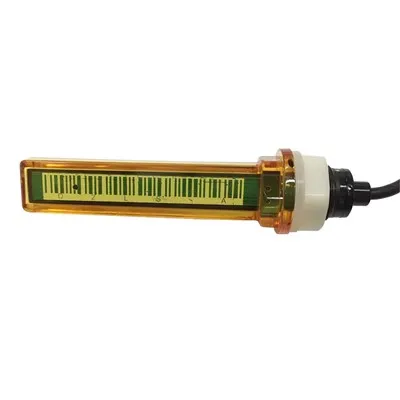
Sonar Powered Tank Monitoring: The Complete 2026 Guide to Remote Propane and Liquid Level Monitoring
Curious about sonar powered tank monitoring? This guide covers everything you need to know-from how sonar technology measures tank levels, to why sonar outperforms float gauges and pressure sensors, the best sonar tank monitors in 2026, how to install sonar monitoring on propane tanks, Home Assistant integration, DIY sonar projects, accuracy specifications, and exactly how sonar-powered monitoring works for propane, oil, water, and chemical storage tanks.
Sonar Powered Tank Monitoring: Quick Answer
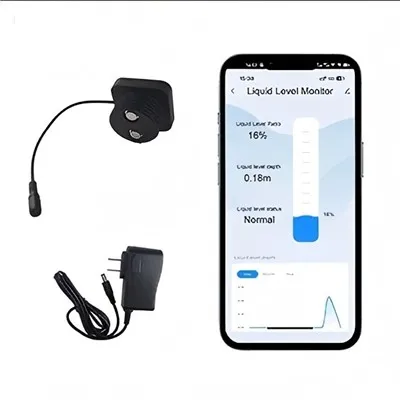
The short answer: Sonar powered tank monitoring uses sound wave technology (sonar = Sound Navigation And Ranging) to measure the level of liquid or gas inside a storage tank. A sonar sensor mounted on the tank emits ultrasonic pulses, measures the echo returning from the liquid surface, and calculates fill percentage with 95–98% accuracy. Sonar monitoring is the technology behind the best propane tank monitors in 2026, including the Mopeka Pro Check, SmartTank Pro, Generac LTE, and DIY ESPHome projects.
Why it matters: Sonar tank monitoring gives you real-time visibility into your tank levels from anywhere-eliminating the guesswork of float gauges, the maintenance headaches of mechanical sensors, and the danger of running out of propane during a cold snap. Whether you monitor a 20-pound propane cylinder, a 500-gallon home heating oil tank, or an industrial chemical storage vessel, sonar technology delivers the accuracy and reliability that traditional methods simply can't match.
What Is Sonar Powered Tank Monitoring?
The Technology Defined
Sonar (Sound Navigation And Ranging) uses sound waves to detect and measure distances-the same principle used by submarine navigation, fish finders, and medical ultrasound imaging. When applied to tank monitoring, sonar sensors emit high-frequency sound pulses and measure the time it takes for the echo to return from the liquid surface inside the tank.
The key distinction: Sonar and ultrasonic are closely related technologies. Both use sound waves at frequencies above human hearing. "Ultrasonic" refers to the frequency range (typically 20 kHz–10 MHz). "Sonar" is the application of that technology for detection and ranging. In tank monitoring, the terms are often used interchangeably, though "sonar" emphasizes the ranging and measurement application.
How Sonar Tank Monitoring Works: Step by Step
The sonar measurement process:
Sonar emitter transmits a pulse: A piezoelectric transducer emits a short burst of high-frequency sound waves (typically 40 kHz for propane tank monitoring) downward into the tank
Sound waves travel through vapor space: The sound pulse travels through the propane vapor, LPG gas, air, or other medium above the liquid surface
Echo returns from liquid surface: When the sound wave hits the liquid surface, it reflects back toward the sensor
Receiver detects the echo: The sensor's receiver captures the returning sound wave
Time-of-flight measurement: The sensor measures the total travel time (transmit → surface → receive)
Distance calculation: Since the speed of sound in the medium is known, the one-way distance is calculated as: Distance = (Speed of Sound × Time-of-Flight) ÷ 2
Fill level conversion: The measured distance is subtracted from the known tank height to determine the liquid level height, which is then converted to fill percentage
The Science: Speed of Sound and Temperature Compensation
Sound travels at different speeds depending on the medium and temperature:
| Medium | Speed of Sound (at 70°F/21°C) | Notes |
|---|---|---|
| Air | 1,129 ft/s (343 m/s) | Baseline reference |
| Propane vapor | 850–920 ft/s (260–280 m/s) | Heavier than air, varies with composition |
| Butane vapor | 840–890 ft/s (256–270 m/s) | Similar to propane |
| Natural gas | 1,300 ft/s (396 m/s) | Lighter, faster |
| Water | 4,900 ft/s (1,493 m/s) | Much faster than gases |
Temperature compensation is critical: The speed of sound changes approximately 1.1 ft/s per degree Fahrenheit. Without temperature compensation, a sonar sensor could be off by 5–10% across seasonal temperature swings. Quality sonar tank monitors include temperature sensors to continuously adjust the calculation for maximum accuracy.
Sonar vs. Other Tank Level Measurement Technologies
Complete Technology Comparison
| Technology | Accuracy | Reliability | Maintenance | Cost | Best For |
|---|---|---|---|---|---|
| Sonar/Ultrasonic | 95–98% | Excellent | Virtually none | $3–250 | All tank types ⭐ |
| Float gauge | 80–85% | Moderate | Periodic inspection | $5–50 | Basic tanks |
| Pressure sensor | 85–90% | Good | Moderate | $50–150 | Industrial tanks |
| Load cell/weight | 92–95% | Good | Low | $30–100 | Scale-based systems |
| Capacitive | 88–93% | Good | Low | $30–80 | Chemical tanks |
| Radar (mmWave) | 97–99% | Excellent | None | $200–500 | Industrial/precision |
Why Sonar Is the Gold Standard for Propane Tanks
Sonar outperforms every other technology for propane tank monitoring:
Accuracy: 95–98% accuracy vs. 80–85% for float gauges means you're never caught off guard by unexpected level changes.
No moving parts: Float gauges have mechanical components that stick, bend, rust, and fail. Sonar sensors are solid-state and have no moving parts to wear out.
Non-invasive installation: Sonar sensors mount on the outside of the tank or at the monitoring port-never contacting the propane directly.
Works with any tank geometry: Sonar works with horizontal cylindrical, vertical, spherical, and irregular tank shapes.
Temperature compensation: Advanced sonar monitors adjust for temperature changes, maintaining accuracy across seasons.
Remote monitoring: Sonar + WiFi/cellular = real-time level data on your smartphone from anywhere.
Multi-tank support: Add sonar sensors to unlimited tanks and manage them all from one dashboard.
Applications of Sonar Powered Tank Monitoring
Propane Tanks (Residential and Commercial)
The most common application for sonar tank monitoring.
| Tank Type | Size Range | Sonar Sensor | Monitoring Goal |
|---|---|---|---|
| Portable cylinder | 1–100 lb | HC-SR04 / JSN-SR04T | Grill, RV, camping, backup |
| RV tank | 20–40 lb | Mopeka Pro Check | Mobile monitoring |
| Residential tank | 100–500 gal | SmartTank Pro / ESPHome | Whole-home monitoring |
| Commercial tank | 500–2,000 gal | Industrial sonar / Radar | Business operations |
| Fleet/industrial | Various | Commercial cellular sonar | Multi-site management |
Home Heating Oil Tanks
Sonar monitoring is increasingly popular for oil heating systems.
Why oil tank monitoring matters:
Oil delivery errors cost homeowners $100–300 per year
Running out of oil in winter is dangerous (frozen pipes, no heat)
Tanks can develop leaks that go undetected
Oil tank monitoring prevents emergency heating oil deliveries
Recommended sonar monitors for oil tanks:
SmartTank Pro WiFi: $120–180, MQTT, home automation friendly
DIY ESPHome sonar: $30–75, full Home Assistant integration
Commercial industrial sonar: $150–400, heavy-duty, high accuracy
Water Storage Tanks
Sonar monitoring for wells, rainwater collection, and storage tanks.
Applications:
Well water tanks: Monitor cistern levels to prevent pump burnout
Rainwater harvesting: Track rainwater storage for irrigation
Municipal water storage: Remote monitoring of community water tanks
Boat freshwater tanks: Monitor freshwater levels on marine vessels
Key advantage for water tanks: Sonar sensors are waterproof (IP65+ for JSN-SR04T), making them ideal for outdoor and marine water applications.
Chemical and Industrial Tanks
Sonar monitoring for industrial chemical storage.
Industries using sonar tank monitoring:
Chemical manufacturing
Pharmaceutical production
Food and beverage processing
Agricultural chemical storage
Wastewater treatment
Fuel terminal storage
Industrial sonar requirements:
Higher accuracy (97–99%) for precise inventory management
Chemical-resistant sensors for aggressive media
Explosion-proof certifications (ATEX, IECEx)
Multi-tank and multi-site remote monitoring
Integration with industrial control systems (SCADA, PLC)
Best Sonar Tank Monitoring Products in 2026
Consumer and Prosumer Sonar Tank Monitors
| Product | Technology | Price | Accuracy | Connectivity | Home Assistant | Best For |
|---|---|---|---|---|---|---|
| HC-SR04 + ESP32 | Sonar/Ultrasonic | $3–8 + $5–10 | 93–97% | DIY WiFi | Full native | DIY users ⭐ |
| JSN-SR04T + ESP32 | Sonar/Ultrasonic | $8–15 + $5–10 | 93–97% | DIY WiFi | Full native | Outdoor DIY ⭐ |
| Mopeka Pro Check | Sonar/Ultrasonic | $65–80 | 95–98% | Bluetooth | Via bridge | Maximum accuracy ⭐ |
| Mopeka Pro+ Cellular | Sonar/Ultrasonic | $199–249 | 95–98% | 4G LTE | Via bridge | Remote monitoring |
| SmartTank Pro WiFi | Sonar/Ultrasonic | $120–180 | 93–96% | WiFi | Native MQTT | HA integration ⭐ |
| Generac 4G LTE | Sonar/Ultrasonic | $199–249 | 90–95% | 4G LTE | Limited | Generator ecosystem |
Industrial Sonar Tank Monitors
| Product | Technology | Price | Accuracy | Certifications | Connectivity |
|---|---|---|---|---|---|
| VEGA Ultrasonic (series) | Sonar/Ultrasonic | $300–1,500 | 97–99% | ATEX, IECEx | 4–20mA, HART, Profibus |
| Endress+Hauser Prosonic | Sonar/Ultrasonic | $400–2,000 | 97–99% | ATEX, SIL | Fieldbus, HART |
| Siemens Level Sensors | Radar + Sonar | $500–3,000 | 98–99% | ATEX, FM | Profinet, IO-Link |
| Honeywell Sonar | Sonar/Ultrasonic | $300–1,200 | 97–99% | Various | 4–20mA, Modbus |
DIY Sonar Propane Tank Monitoring: Complete Guide
Building Your Own for $30–75
The most powerful and affordable sonar tank monitoring solution.
Why build it yourself:
Total cost: $30–75 vs. $120–249 commercial
93–97% accuracy (matches commercial products)
Full Home Assistant integration
Zero monthly fees
Local data storage (no cloud dependency)
Unlimited customization
Monitor unlimited tanks from one dashboard
Components for DIY Sonar Tank Monitoring
| Component | Option A (Budget) | Option B (Outdoor) | Purpose |
|---|---|---|---|
| Microcontroller | ESP32 DevKit ($5–10) | ESP32 DevKit ($5–10) | WiFi brain |
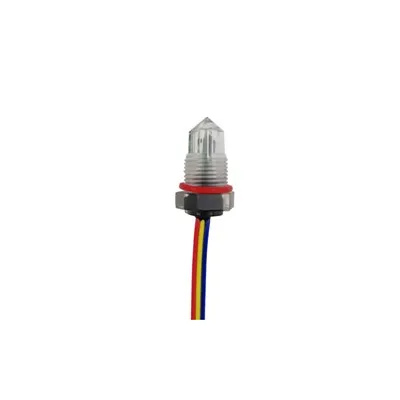
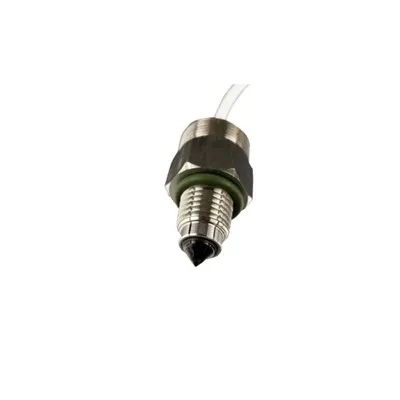
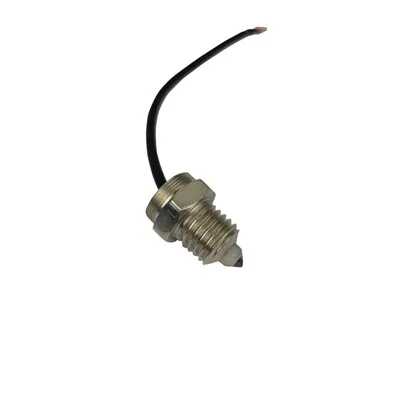
| Sonar sensor | HC-SR04 ($3–8) | JSN-SR04T ($8–15) | Measures distance |
| Logic level shifter | 3.3V shifter ($2–5) | 3.3V shifter ($2–5) | Protects ESP32 |
| Temperature sensor | DHT22 ($3–5) | DHT22 ($3–5) | Temperature compensation |
| Power supply | 12V 1A adapter ($5–10) | 12V 1A adapter ($5–10) | Stable power |
| DC converter | 12V→5V ($3–5) | 12V→5V ($3–5) | Powers ESP32 |
| Enclosure | DIY box ($0–5) | IP65 waterproof box ($5–15) | Weatherproofing |
| Wiring | Jumper wires ($2–3) | Outdoor cable ($3–5) | Connections |
| Tank adapter | 1.5" NPT fitting ($3–8) | 1.5" NPT fitting ($3–8) | Tank mounting |
| Total cost | $26–51 | $31–68 |
ESPHome Configuration: Complete Working Code
Ready-to-flash sonar tank monitoring firmware for ESP32:
yaml复制
esphome: name: sonar-tank-monitor platform: ESP32 board: esp32dev wifi: ssid: "YOUR_WIFI_SSID" password: "YOUR_WIFI_PASSWORD" manual_ip: static_ip: 192.168.1.110 gateway: 192.168.1.1 subnet: 255.255.255.0 api: password: "HOMEASSISTANT_API_PASSWORD" ota: password: "OTA_UPDATE_PASSWORD" logger: level: DEBUG sensor: # === SONAR DISTANCE MEASUREMENT === - platform: ultrasonic trigger_pin: GPIO5 echo_pin: GPIO18 name: "Tank Sonar Distance" unit_of_measurement: "cm" accuracy_decimals: 3 update_interval: 60s filters: - lambda: |- // Sonar returns meters; convert to cm return x * 100.0; # === TEMPERATURE COMPENSATION SENSOR === - platform: dht pin: GPIO4 model: DHT22 name: "Tank Temperature" unit_of_measurement: "°F" accuracy_decimals: 1 update_interval: 120s # === WIFI SIGNAL STRENGTH === - platform: wifi_signal name: "Sonar Monitor WiFi Signal" update_interval: 180s # === SONAR-ACCURATE FILL PERCENTAGE === # Calibration instructions: # FULL_DIST = sonar reading when tank is at 80% full (after delivery) # EMPTY_DIST = sonar reading when tank is nearly empty - platform: template name: "Tank Level %" unit_of_measurement: "%" accuracy_decimals: 1 lambda: |- // ===== CALIBRATION: Set these two values for YOUR tank ===== const float EMPTY_DIST = 54.0; // cm, distance to tank bottom (empty) const float FULL_DIST = 11.0; // cm, distance to 80% liquid level (full) // ======================================================= float dist = id(tank_sonar_distance).state; // Sanity check: reject obviously bad readings if (dist < 1.0 || dist > 600.0) return NAN; // Calculate fill percentage if (dist <= FULL_DIST) return 100.0; // Full if (dist >= EMPTY_DIST) return 0.0; // Empty float level_pct = (EMPTY_DIST - dist) / (EMPTY_DIST - FULL_DIST) * 100.0; return constrain(level_pct, 0.0, 100.0); update_interval: 60s # === GALLONS REMAINING === - platform: template name: "Gallons Remaining" unit_of_measurement: "gal" accuracy_decimals: 0 lambda: |- float level_pct = id(tank_level).state; const float TANK_CAPACITY_GALLONS = 500.0; // Change to your tank size return level_pct / 100.0 * TANK_CAPACITY_GALLONS; update_interval: 60s # === DAYS REMAINING (conservative) === - platform: template name: "Days Remaining" unit_of_measurement: "days" accuracy_decimals: 1 lambda: |- float gallons = id(gallons_remaining).state; const float DAILY_USAGE_GAL = 2.0; // Conservative winter estimate return gallons / DAILY_USAGE_GAL; update_interval: 300s
Sonar Tank Monitoring Installation Guide
Installing Sonar Monitoring on a Propane Tank
Time: 60–90 minutes
Tools: Wrench, Teflon tape, wire connectors, drill
Step 1: Locate or Create the Monitoring Port
Most propane tanks have a 1.5" NPT threaded monitoring port:
Located at one end of the tank
Near the fill valve and service valve
May have a plug or cap
If no port exists, contact a propane professional to install one
Step 2: Mount the Sonar Sensor
For HC-SR04 (protected installation):
Apply Teflon tape to sensor threads (3–5 wraps clockwise)
Thread sensor into the monitoring port
Hand-tighten, then wrench firmly (don't over-tighten)
Test for leaks with soap bubble solution
For JSN-SR04T (outdoor installation):
Mount the sensor head at the tank's lowest point
Run sensor cable to the waterproof enclosure
Seal cable entries with silicone or cable glands
Connect sensor head to the circuit board
Step 3: Wire and Power
Sonar sensor wiring (HC-SR04 or JSN-SR04T → ESP32 via level shifter):
Sensor VCC → Level shifter HV → 5V supply
Sensor GND → Level shifter GND → ESP32 GND
Sensor TRIG → ESP32 GPIO5 (via level shifter LV)
Sensor ECHO → ESP32 GPIO18 (via level shifter LV)
ESP32 3.3V → Level shifter LV
ESP32 GND → Level shifter GND
DHT22 temperature sensor wiring:
DHT22 VCC → ESP32 3.3V
DHT22 GND → ESP32 GND
DHT22 DATA → ESP32 GPIO4
Step 4: Flash Firmware and Connect
Install ESPHome on your computer
Create new device, paste the YAML configuration
Update WiFi credentials and calibration values
Flash firmware via USB
Power on-the device connects to WiFi within 30 seconds
Add to Home Assistant via Configuration → Integrations → ESPHome
Step 5: Calibrate for Maximum Accuracy
Calibration is the key to 95–97% accuracy:
After a propane delivery (80% full = full): Read the sonar distance value in Home Assistant
Set FULL_DIST = that value in the ESPHome config
When nearly empty (gauge reads 10%): Read the sonar distance value again
Set EMPTY_DIST = that value minus 0.5 cm in the ESPHome config
Save, flash, and verify readings match your gauge
Sonar Tank Monitoring Accuracy Analysis
Understanding What 95–98% Accuracy Means
What sonar accuracy actually delivers:
| Accuracy Level | Error Range (500 gal tank) | Error Range (100 gal tank) | Practical Impact |
|---|---|---|---|
| 95% accuracy | ±25 gallons | ±5 gallons | Good for planning refills |
| 96% accuracy | ±20 gallons | ±4 gallons | Reliable refill planning |
| 97% accuracy | ±15 gallons | ±3 gallons | Precise inventory management |
| 98% accuracy | ±10 gallons | ±2 gallons | Industrial-grade precision |
Factors that affect sonar accuracy:
| Factor | Impact | Mitigation |
|---|---|---|
| Temperature compensation | ±3–5% without | Add DHT22 temp sensor |
| Calibration quality | ±2–5% without | Calibrate at full and empty |
| Tank geometry | ±1–3% for irregular shapes | Use tank-specific formulas |
| Foam/surface turbulence | ±1–2% temporarily | Wait 10 min after heavy use |
| Sensor mounting angle | ±0.5–1% | Mount perpendicular to surface |
| Vapor composition | ±0.5–1% | Propane vs. butane blend |
Frequently Asked Questions
Q1: What is the difference between sonar and ultrasonic tank monitoring?
A: Sonar and ultrasonic are the same technology used for different purposes. "Ultrasonic" refers to sound waves at frequencies above human hearing (typically 20 kHz–10 MHz). "Sonar" (Sound Navigation And Ranging) is the application of ultrasonic technology specifically for detecting objects and measuring distances. In tank monitoring, both terms describe the same measurement principle: emitting sound pulses and measuring echoes to calculate distance. The terms are used interchangeably in the tank monitoring industry.
Q2: How accurate is sonar tank level monitoring?
A: Properly calibrated sonar tank monitors achieve 95–98% accuracy, meaning the reading is within 2–5% of the actual fill level. This translates to ±5–25 gallons for a 500-gallon tank. For comparison, traditional float gauges achieve only 80–85% accuracy (±75–100 gallons on a 500-gallon tank). Sonar is among the most accurate non-industrial monitoring technologies available, rivaled only by radar sensors (97–99% accuracy) at 5–10× the cost.
Q3: Can sonar sensors measure through tank walls?
A: No-sonar sensors must have a direct line of sight to the liquid surface. Sonar sensors measure the distance to the liquid surface through the vapor space inside the tank. The sensor must be mounted:
At the top of the tank pointing down into the tank
At a monitoring port that gives direct access to the tank interior
Not behind a solid wall or through metal (sound waves don't penetrate metal)
Installation requirement: The sensor mounts at an existing monitoring port or uses a specialized tank adapter that provides acoustic access to the tank interior. This is why propane tanks need a monitoring port-sonar cannot measure through the tank's steel wall.
Q4: Does sonar work on underground propane tanks?
A: Yes-sonar works on underground tanks with proper installation:
The sonar sensor mounts at the underground tank's accessible monitoring port
The sensor head points down through the port into the tank interior
The sensor cable runs from the underground port to an above-ground electronics enclosure
For deeply buried tanks without accessible ports, sonar installation is not feasible
The best approach for underground tanks: Choose a cellular sonar monitor (Mopeka Pro+ Cellular or Generac 4G LTE) since WiFi may not reach underground locations. The cellular model keeps the electronics above ground while the sensor probes down through the accessible port.
Q5: Can sonar tank monitors measure multiple types of liquid?
A: Yes-sonar technology works for any liquid or gas where sound can travel through the vapor space and reflect off the liquid surface:
| Liquid/Gas | Sonar Compatible? | Notes |
|---|---|---|
| Propane | Yes | Most common application |
| Butane | Yes | Similar properties to propane |
| Heating oil | Yes | Residential and commercial |
| Gasoline | Yes | Industrial applications |
| Diesel | Yes | Fleet and industrial |
| Water | Yes | Wells, tanks, rainwater |
| Chemicals (compatible) | Yes | Industrial, chemical-resistant sensors |
| Acids (incompatible) | Special sensors only | Requires corrosion-resistant sensors |
The sonar principle works universally: As long as sound waves can travel through the vapor space above the liquid and reflect off the liquid surface, sonar measurement is possible.
Q6: Why is temperature compensation important for sonar tank monitoring?
A: Temperature compensation is critical because the speed of sound changes with temperature:
Without temperature compensation:
Summer readings (90°F): Sensor overestimates level by 5–8%
Winter readings (20°F): Sensor underestimates level by 5–8%
This error compounds across seasons
With a DHT22 temperature sensor and ESPHome calibration:
Temperature measurements adjust the speed of sound calculation
Accuracy maintained at 95–98% across all seasons
Propane-specific temperature formulas applied
The impact: A 5–8% error on a 500-gallon tank = 25–40 gallons = $50–120 at current propane prices. Temperature compensation essentially pays for itself in one winter season.
Q7: How long do sonar tank monitoring sensors last?
A: Sonar sensors are extremely durable with lifespans of 10+ years:
| Component | Expected Lifespan | Failure Mode |
|---|---|---|
| HC-SR04 transducer | 10+ years | Gradual sensitivity loss |
| JSN-SR04T sensor | 10+ years | IP65 seal degradation over time |
| ESP32 microcontroller | 5–10 years | Component aging |
| Enclosure/sealing | 5–8 years | Weatherproof seal breakdown |
| DHT22 temp sensor | 5–7 years | Accuracy drift over time |
Compared to float gauges: Float gauges typically fail within 5–10 years due to mechanical wear (sticking, corrosion, float damage). Sonar sensors have no moving parts and last significantly longer with virtually no maintenance.
Q8: Can I use sonar tank monitoring for a boat or marine application?
A: Yes-sonar monitoring is excellent for marine applications:
Freshwater tanks: Monitor freshwater levels on sailboats and powerboats
Wastewater/blackwater tanks: Track holding tank levels to prevent overflow
Fuel tanks: Monitor diesel and gasoline fuel levels on vessels
Ballast tanks: Monitor ballast water levels on larger vessels
Recommended configuration for marine use:
JSN-SR04T: IP65 waterproof rating, ideal for marine environments
ESP32 in waterproof enclosure: With marine-grade sealing
12V power: Direct connection to boat's 12V electrical system
WiFi or cellular: For remote monitoring from shore
Key advantage: Sonar sensors work perfectly in the damp, salty marine environment where mechanical sensors fail quickly. The JSN-SR04T's waterproof design makes it ideal for exposed marine installations.
Q9: What's the difference between sonar tank monitoring and radar tank monitoring?
A: Both sonar and radar measure distance using wave propagation, but they use different wave types:
| Factor | Sonar (Ultrasonic) | Radar (mmWave) |
|---|---|---|
| Wave type | Sound waves (mechanical) | Electromagnetic waves |
| Frequency | 20–200 kHz | 24–120 GHz |
| Accuracy | 95–98% | 97–99% |
| Cost | $3–250 | $200–3,000 |
| Penetration | Affected by vapor composition | Penetrates all gases |
| Foam/surface turbulence | Sensitive | Less sensitive |
| Industrial use | Common | Standard for precision |
| Propane tank use | Industry standard ⭐ | Rare (cost prohibitive) |
| Temperature sensitivity | Higher | Lower |
For propane tanks: Sonar is the industry standard because it's accurate enough (95–98%) at a fraction of the cost of radar. Radar's higher accuracy (97–99%) is unnecessary for residential propane tanks and costs 5–20× more.
Q10: How much does sonar tank monitoring cost?
A: Sonar tank monitoring costs $3–250 upfront with $0 ongoing:
| Solution | Upfront Cost | Annual Cost | Total 5-Year | Features |
|---|---|---|---|---|
| DIY HC-SR04 + ESP32 | $30–75 | $0 | $30–75 | Best value ⭐ |
| DIY JSN-SR04T + ESP32 | $35–82 | $0 | $35–82 | Outdoor rated ⭐ |
| Mopeka Pro Check | $65–80 | $0 | $65–80 | Maximum accuracy ⭐ |
| SmartTank Pro WiFi | $120–180 | $0 | $120–180 | Commercial HA ⭐ |
| Generac 4G LTE | $199–249 | $0 | $199–249 | Cellular + ecosystem |
| Industrial sonar (VEGA) | $300–1,500 | $0 | $300–1,500 | Industrial precision |
Return on investment: One avoided emergency propane delivery ($150–300) pays for a DIY sonar system. Preventing a single empty tank incident in winter ($200–500 in damage and inconvenience) pays for even the most expensive commercial system. Sonar tank monitoring pays for itself the first time it prevents running out.
Conclusion: Sonar Powered Tank Monitoring in 2026
Why sonar dominates tank level monitoring:
✅ 95–98% accuracy (best cost-to-accuracy ratio available)
✅ No moving parts = exceptional reliability and 10+ year lifespan
✅ Works for propane, oil, water, chemicals, and any liquid
✅ DIY solutions cost $30–75 with zero monthly fees
✅ Commercial sonar monitors range from $65–249
✅ Non-invasive installation at existing monitoring ports
✅ WiFi and cellular options for any installation scenario
✅ Home Assistant integration for unlimited tanks and automations
The recommended sonar monitoring solutions:
| User Profile | Best Solution | Cost |
|---|---|---|
| Home Assistant DIY users | ESP32 + HC-SR04 + ESPHome | $30–75 ⭐ |
| Outdoor/propane tanks | ESP32 + JSN-SR04T + ESPHome | $35–82 ⭐ |
| Maximum accuracy, simplest setup | Mopeka Pro Check | $65–80 ⭐ |
| Commercial plug-and-play, HA integration | SmartTank Pro WiFi | $120–180 ⭐ |
| Remote tanks, no WiFi, best ecosystem | Generac 4G LTE | $199–249 |
| Industrial precision, unlimited budgets | VEGA Ultrasonic Series | $300–1,500 |
The bottom line: Sonar powered tank monitoring is the most accurate, reliable, and affordable technology for measuring liquid and gas levels in storage tanks. Whether you spend $30 building your own ESPHome sonar monitor or $249 on a Generac 4G LTE commercial system, you're getting the same core technology that powers industrial tank monitoring systems costing thousands. The DIY route gives you full Home Assistant integration, zero monthly fees, and total customization. The commercial route gives you plug-and-play simplicity with factory calibration and brand support. Either way, sonar technology eliminates the guesswork, the walks to the tank, and the anxiety of running out. Sonar powered tank monitoring: the sound choice for smart tank management.
Last updated: July 2026
Disclaimer: This guide provides general information about sonar powered tank monitoring technology for educational purposes. DIY propane monitoring projects involve working with pressurized propane systems. Always follow manufacturer guidelines and propane safety regulations. Consult a licensed propane technician for any work involving pressurized propane systems.