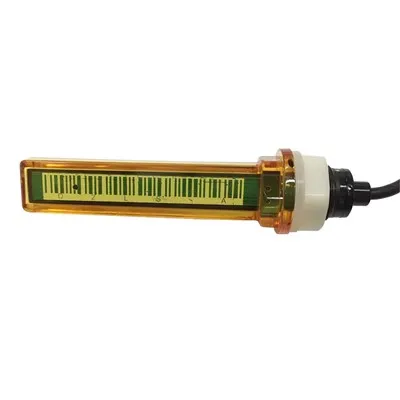
Ultrasonic Propane Tank Sensor: The Complete 2026 Guide
Curious about ultrasonic propane tank sensors? This guide covers everything you need to know-from how ultrasonic sensors measure propane levels, to how they work in commercial and DIY propane monitors, the best ultrasonic sensors for propane tanks in 2026, accuracy comparison, installation guide, Home Assistant integration, DIY ESPHome projects, and exactly how ultrasonic technology outperforms float gauges and pressure sensors.
Ultrasonic Propane Tank Sensor: Quick Answer
The short answer: An ultrasonic propane tank sensor measures the distance from the sensor to the liquid propane surface inside your tank using sound waves, then converts this distance to a fill percentage. Ultrasonic sensors are the industry standard for smart propane monitoring because they're non-invasive, highly accurate (95–98%), have no moving parts, and work with any propane tank type. The most popular options are the HC-SR04 ($3–8) for DIY projects and commercial sensors in products like Mopeka Pro Check and SmartTank Pro.
Why it matters: Traditional float gauges are inaccurate, can stick, and require you to physically check your tank. Ultrasonic sensors give you real-time, digital propane level readings on your smartphone-without walking outside. Understanding how ultrasonic sensors work helps you choose the right propane monitoring solution and decide whether a commercial product or a DIY ESPHome project is right for you.
How Do Ultrasonic Sensors Measure Propane Levels?
The Science Behind Ultrasonic Propane Monitoring
Ultrasonic sensors use sound waves to measure distance-the same technology used in car backup sensors, medical imaging, and industrial level measurement.
How ultrasonic propane measurement works:
Transmitter emits ultrasonic pulse: The sensor's transmitter emits a high-frequency sound wave (typically 40 kHz) downward into the propane tank
Sound wave travels through propane vapor: The wave passes through the propane vapor above the liquid surface
Sound wave reflects off liquid surface: When the wave hits the liquid propane, it reflects back toward the sensor
Receiver detects the echo: The sensor's receiver detects the returning sound wave
Time-of-flight calculation: The sensor measures the time between emission and reception
Distance conversion: Since the speed of sound in propane vapor is known, the sensor calculates the distance to the liquid surface
Fill percentage calculation: The distance to the liquid surface is compared to the tank's known total height to calculate fill percentage
The Physics: Why Ultrasonic Works for Propane
Sound travels through propane vapor at a predictable speed:
Factor Value Impact on Measurement
Speed of sound in air ~343 m/s at 20°C Baseline for calculations
Speed of sound in propane vapor ~260–280 m/s Temperature compensated
Ultrasonic frequency 40 kHz (standard) Good balance of range and accuracy
Measurement resolution ±2–3mm (HC-SR04) High precision for tank level
Maximum range 4–5 meters Suitable for all residential tanks
Temperature compensation is critical: The speed of sound changes with temperature. Advanced propane sensors include temperature sensors to compensate for this variation, ensuring accurate readings across summer heat and winter cold.
Why Ultrasonic Beats Other Propane Measurement Methods
Comparison of Propane Level Measurement Technologies
Technology Accuracy Moving Parts Invasiveness Reliability Cost
Ultrasonic 95–98% None Non-invasive Excellent $3–200
Float gauge 80–85% Yes (float + arm) Invasive (inside tank) Moderate $5–50
Pressure sensor 85–90% None Minimally invasive Good $50–150
Weight sensor 92–95% None Non-invasive (external) Good $30–100
Capacitive 88–93% None Minimally invasive Good $30–80
Thermal 75–85% None Invasive Moderate $20–50
Ultrasonic vs. Float Gauge: The Key Differences
Traditional float gauges have been used for decades-but ultrasonic is objectively better:
Factor Float Gauge Ultrasonic Sensor
Accuracy 80–85% 95–98%
Moving parts Yes (float + arm) No
Failure modes Float sticks, arm bends, rust Sensor failure only
Installation Requires tank modification Uses existing port
Remote monitoring No Yes (with WiFi/cellular)
Temperature compensation No Yes (with temp sensor)
Historical data No Yes (app/tracking)
Maintenance Periodic inspection Virtually none
Smart home integration No Yes (MQTT, Home Assistant)
Float gauges fail in specific ways:
Float fills with propane over time and sinks
Float arm bends from pressure or impact
Float gets stuck at one level (sticks)
Gauge mechanism corrodes from moisture
Gauge reads differently at different temperatures
Ultrasonic sensors don't have these problems-they have no moving parts to fail, no components inside the tank to degrade, and they measure the actual liquid surface rather than relying on a mechanical proxy.
Types of Ultrasonic Sensors for Propane Tanks
Commercial Ultrasonic Sensors
Factory-built ultrasonic propane tank sensors:
Product Type Price Accuracy Connectivity Notes
HC-SR04 DIY component $3–8 93–96% DIY (ESP32/WiFi) Most popular DIY sensor
JSN-SR04T DIY component $8–15 93–97% DIY (ESP32/WiFi) Waterproof, better for outdoors
Mopeka Pro Check Commercial sensor $65–80 95–98% Bluetooth Best accuracy, Bluetooth only
SmartTank Pro Commercial monitor $120–180 93–96% WiFi Ultrasonic + WiFi built-in
Generac 4G LTE Commercial monitor $199–249 90–95% 4G LTE Ultrasonic + cellular built-in
APRVPro Ultrasonic Commercial sensor $60–100 88–92% WiFi Budget commercial option
HC-SR04: The Most Popular DIY Ultrasonic Sensor ⭐
The HC-SR04 is the go-to ultrasonic sensor for DIY propane monitoring projects.
Specifications:
Measurement range: 2 cm to 400 cm
Resolution: ±3 mm
Operating frequency: 40 kHz
Operating voltage: 5V DC
Operating current: 15 mA
Dimensions: 45 mm × 20 mm × 15 mm
Transducer angle: 15 degrees
Price: $3–8 (Amazon, eBay)
Accuracy: 93–96% (properly calibrated)
Why the HC-SR04 is ideal for propane tanks:
✅ Extremely low cost ($3–8)
✅ Well-documented and widely supported
✅ Excellent ESPHome integration
✅ Reliable measurements for tanks up to 500 gallons
✅ Temperature compensation available with additional sensor
✅ Massive online community support
Limitations of the HC-SR04:
⚠️ 5V operating voltage (needs logic level shifter for ESP32)
⚠️ Non-waterproof (needs waterproof housing outdoors)
⚠️ Requires DIY assembly and programming
JSN-SR04T: The Waterproof DIY Ultrasonic Sensor ⭐
The JSN-SR04T is a waterproof, one-piece ultrasonic sensor-better suited for outdoor propane tank installations.
Specifications:
Measurement range: 2.5 cm to 450 cm
Resolution: ±2–3 mm
Operating frequency: 40 kHz
Operating voltage: 5V DC
Waterproof rating: IP65
Module dimensions: 45 mm × 20 mm (separate sensor head)
Price: $8–15
Accuracy: 93–97%
Advantages over HC-SR04:
✅ Waterproof sensor head (IP65 rated)
✅ Separate sensor head (transducer and circuit board separated)
✅ Better for outdoor use without additional housing
✅ Slightly better accuracy than HC-SR04
✅ More stable in varying weather conditions
Ideal for: Outdoor propane tank installations where weatherproofing is important. The JSN-SR04T is the recommended choice for permanent outdoor propane monitoring.
DIY Ultrasonic Propane Tank Sensor with ESPHome
Build Your Own for $30–75
The ESP32 + HC-SR04/JSN-SR04T + ESPHome combination is the most powerful and affordable propane monitoring solution available.
Why build it yourself:
Total cost: $30–75 (vs. $65–250 commercial)
93–97% accuracy (matches or exceeds commercial products)
Full Home Assistant integration
No monthly fees
Local data storage (no cloud dependency)
Complete customization
Learn valuable IoT skills
Complete Parts List
Component Cost Purpose
ESP32 DevKit $5–10 WiFi-enabled microcontroller
HC-SR04 ultrasonic sensor $3–8 Measures distance to propane surface
JSN-SR04T (waterproof) $8–15 Better for outdoor use
3.3V logic level shifter $2–5 Protects ESP32 from 5V sensor
12V to 5V DC converter $3–5 Powers ESP32 and sensor
Waterproof enclosure (IP65) $5–15 Outdoor-rated housing
12V power supply $5–10 Stable outdoor power
Wiring and connectors $3–5 Cabling and connections
Propane-rated cable gland $3–5 Sealed entry through enclosure
Total $31–68
ESPHome Configuration: Complete Working Code
Ready-to-flash ESPHome YAML configuration for ESP32 ultrasonic propane sensor:
yaml
复制
esphome:
name: propane-tank-ultrasonic
platform: ESP32
board: esp32dev
wifi:
ssid: "YOUR_WIFI_SSID"
password: "YOUR_WIFI_PASSWORD"
manual_ip:
static_ip: 192.168.1.105
gateway: 192.168.1.1
subnet: 255.255.255.0
ap:
ssid: "Propane Fallback AP"
password: "fallback1234"
api:
password: "your_homeassistant_api_password"
ota:
password: "ota_update_password"
logger:
level: DEBUG
sensor:
# Ultrasonic distance measurement
- platform: ultrasonic
trigger_pin: GPIO5
echo_pin: GPIO18
name: "Propane Tank Distance"
unit_of_measurement: "cm"
accuracy_decimals: 3
update_interval: 60s
filters:
- lambda: |-
// HC-SR04 returns distance in meters, convert to cm
// Raw distance = sensor to liquid surface
return x * 100.0;
# Temperature sensor for compensation
- platform: dht
pin: GPIO4
model: DHT22
name: "Propane Tank Temperature"
unit_of_measurement: "°F"
accuracy_decimals: 1
update_interval: 120s
# WiFi signal strength
- platform: wifi_signal
name: "Propane Sensor WiFi Signal"
update_interval: 180s
# === CALIBRATED FILL PERCENTAGE ===
# Adjust these values for your specific tank:
# EMPTY_DIST = distance when tank is empty (tank bottom to sensor)
# FULL_DIST = distance when tank is full (80% liquid to sensor)
- platform: template
name: "Propane Tank Level %"
unit_of_measurement: "%"
accuracy_decimals: 1
lambda: |-
// === CALIBRATION VALUES FOR YOUR TANK ===
// Measure and set these two values:
const float EMPTY_DIST = 52.0; // cm, distance when EMPTY (tank bottom)
const float FULL_DIST = 10.0; // cm, distance when FULL (80% liquid level)
// =======================================
float dist = id(propane_tank_distance).state;
if (dist < FULL_DIST) return 100.0; // Full or overfull
if (dist > EMPTY_DIST) return 0.0; // Empty
float level_pct = (EMPTY_DIST - dist) / (EMPTY_DIST - FULL_DIST) * 100.0;
return constrain(level_pct, 0.0, 100.0);
update_interval: 60s
# Gallons remaining
- platform: template
name: "Propane Gallons Remaining"
unit_of_measurement: "gal"
accuracy_decimals: 0
lambda: |-
float level_pct = id(propane_tank_level).state;
// YOUR_TANK_GALLONS = actual capacity (e.g., 500 gallons)
const float YOUR_TANK_GALLONS = 500.0;
return level_pct / 100.0 * YOUR_TANK_GALLONS;
update_interval: 60s
# Days remaining (conservative estimate)
- platform: template
name: "Propane Days Remaining"
unit_of_measurement: "days"
accuracy_decimals: 1
lambda: |-
float gallons = id(propane_gallons_remaining).state;
// Conservative: 2 gal/day winter estimate
return gallons / 2.0;
update_interval: 300s
Calibrating Your Ultrasonic Propane Sensor
The Most Important Step for Accuracy
Calibration is the difference between 85% accuracy and 97% accuracy. Without proper calibration, your ultrasonic sensor may be off by 5–15%.
How to Calibrate for Your Specific Tank
Step 1: Know your tank dimensions
For a horizontal cylindrical propane tank:
Total height (diameter): Measure across the tank's circular end
Total length: Measure the tank's length
Water capacity: Check the tank's nameplate or documentation
Tank capacity formula:
code
复制
Water capacity (gallons) = π × radius² × length × 7.481 (for gallons)
Example for a 500-gallon horizontal tank:
Typical dimensions: 10 ft long × 37 inches diameter
The sensor mounts at the bottom center of one end
Step 2: Measure FULL_DIST (80% fill = full)
The best time to set FULL_DIST is immediately after a propane delivery:
After delivery, wait 1 hour for propane to settle
Read the raw sensor distance (in cm)
Record this value as FULL_DIST in the ESPHome config
At 80% fill, this is your maximum propane level
Step 3: Measure EMPTY_DIST (empty tank)
The best time to set EMPTY_DIST is just before a scheduled refill:
When gauge reads 10% or below, record the raw sensor distance
Add a safety margin: EMPTY_DIST = measured_distance - 0.5 cm
Record this value as EMPTY_DIST in the ESPHome config
This represents the tank bottom (the sensor can't detect below this)
Step 4: Fine-tune with known reference points
After setting initial calibration values, refine by comparing sensor readings to:
Your propane gauge (after settling)
Propane delivery receipt (gallons delivered vs. tank capacity)
Weighing the tank (tank weight + propane weight = total)
Calibration formula:
text
复制
Fill % = (EMPTY_DIST - measured_distance) / (EMPTY_DIST - FULL_DIST) × 100%
Ultrasonic Sensor Installation Guide
Installing on a Propane Tank
Time: 60–90 minutes
Tools: Wrench, Teflon tape, wire connectors, drill
Step 1: Find the monitoring port
Most propane tanks have a 1.5" NPT threaded monitoring port:
Located at one end of the tank
Near the fill valve and service valve
May have a plug or cap
Not all tanks have one-check your tank documentation
If no monitoring port exists:
Contact your propane supplier or a propane technician
Some suppliers can install a monitoring port
Never drill into a propane tank yourself
Step 2: Mount the sensor
For HC-SR04 (indoor/protected):
Install sensor pointing down into the tank through the monitoring port
Apply Teflon tape to threads (3–5 wraps clockwise)
Hand-tighten, then wrench firmly
Leak test with soap bubble solution
For JSN-SR04T (outdoor exposed):
The sensor head installs at the tank bottom
The circuit board mounts in a weatherproof enclosure nearby
Connect sensor head to board with the included cable
Seal cable entries with silicone or cable glands
Step 3: Wire the circuit
HC-SR04 wiring to ESP32 (via level shifter):
HC-SR04 VCC → 5V from DC converter (via level shifter HV)
HC-SR04 GND → GND
HC-SR04 TRIG → ESP32 GPIO5 (via level shifter LV)
HC-SR04 ECHO → ESP32 GPIO18 (via level shifter LV)
ESP32 3.3V → Level shifter LV
ESP32 GND → Level shifter GND
JSN-SR04T wiring:
Sensor VCC → 5V DC converter
Sensor GND → GND
Sensor TRIG → ESP32 GPIO5 (via level shifter)
Sensor ECHO → ESP32 GPIO18 (via level shifter)
Step 4: Power and network
Connect 12V power supply to DC converter
Connect ESP32 to 5V output from converter
Position for strong WiFi signal
Power on and watch ESPHome connect
Add to Home Assistant
Frequently Asked Questions
Q1: How accurate is an ultrasonic propane tank sensor?
A: Properly calibrated ultrasonic sensors achieve 93–98% accuracy, meaning the reading is within 2–7% of the actual fill level. Factors affecting accuracy:
Calibration quality: The most critical factor. Proper calibration at full and empty gives 95–98% accuracy
Temperature compensation: Propane vapor temperature affects sound speed. Sensors with DHT22 temp compensation are 2–3% more accurate
Tank shape: Cylindrical horizontal tanks calibrate most accurately. Vertical and irregular tanks require more complex calculations
Installation position: Sensor must be at the lowest point of the tank bottom
Vapor composition: Propane-butane blends slightly affect sound speed (negligible for most applications)
Commercial sensors (Mopeka, SmartTank) achieve 95–98% accuracy. Well-calibrated DIY sensors match or exceed this.
Q2: Can I use any ultrasonic sensor for a propane tank?
A: Most ultrasonic sensors work for propane tanks, but some are better than others:
Recommended sensors:
HC-SR04 ($3–8): Best value, most documented, excellent ESPHome support
JSN-SR04T ($8–15): Waterproof, better for outdoor use, slightly better accuracy
US-100 ($5–10): Temperature compensation built in, 5-pin variant supports serial
Sensors to avoid:
❌ Waterproof fish finders (not designed for tank monitoring)
❌ Medical ultrasonic sensors (different frequency, expensive)
❌ Industrial sensors without documentation (no ESPHome support)
The key requirement: The sensor must work with 5V power and have a trigger/echo interface supported by ESPHome. HC-SR04 and JSN-SR04T are the proven choices.
Q3: Does an ultrasonic sensor touch the propane inside the tank?
A: No-ultrasonic sensors are completely non-invasive. The sensor mounts on the outside of the tank (at the monitoring port) and measures the liquid level from above:
The sensor's transducers point downward through the monitoring port
Sound waves travel through the vapor space above the liquid
The sensor never contacts liquid propane
The measurement is entirely acoustic-from outside the tank
No propane enters the sensor or electronics
No modifications to the tank interior are needed
This is one of ultrasonic sensing's biggest advantages over float gauges, which have components inside the tank that can degrade over time.
Q4: How does temperature affect ultrasonic propane measurements?
A: Temperature significantly affects ultrasonic measurements because sound speed changes with temperature:
Temperature Sound Speed in Air Impact
0°F (-18°C) ~331 m/s Slower = reading appears closer
70°F (21°C) ~343 m/s Baseline
100°F (38°C) ~355 m/s Faster = reading appears farther
Without temperature compensation: Readings can be off by 3–8% in extreme temperature ranges (summer vs. winter).
With temperature compensation: Using a DHT22 or DS18B20 temperature sensor and applying temperature correction in ESPHome reduces this error to 1–2%.
Practical impact: For a 500-gallon tank, a 5% error = 25 gallons = approximately $40–75 at current propane prices. Temperature compensation is worth implementing.
Q5: Why does my ultrasonic sensor give inconsistent readings?
A: Inconsistent readings usually have one of these causes:
Cause 1: Sensor vibration or movement
The sensor must be firmly mounted
Wind or tank vibration can shift readings
Solution: Secure the sensor housing; use vibration-dampening mounts
Cause 2: Foam or turbulence on propane surface
Propane sloshing after heavy use causes temporary high readings
Solution: Wait 10–15 minutes after any propane usage before taking readings
Cause 3: Condensation on sensor face
Outdoor humidity and temperature changes cause condensation
Solution: Use waterproof JSN-SR04T outdoors; clean sensor face periodically
Cause 4: Poor WiFi signal causing dropped readings
Weak WiFi can cause ESP32 to miss measurement cycles
Solution: Improve WiFi signal or use a WiFi extender near the tank
Cause 5: Incorrect calibration values
Wrong FULL_DIST or EMPTY_DIST causes systematic errors
Solution: Re-calibrate by comparing to propane delivery records
Best fix: Increase the ESPHome sensor update interval to 120 seconds (not 30 seconds) to average out noise and get more stable readings.
Q6: Can an ultrasonic sensor measure multiple tanks?
A: Yes-with multiple ESP32 devices or a multi-channel setup:
One sensor per tank: Each tank needs its own ESP32 + ultrasonic sensor ($30–75 per tank)
Multi-channel ultrasonic sensors: Some sensors have multiple transducer pairs, but they're designed for different applications
Home Assistant: Manage unlimited tanks from one dashboard
Commercial systems: Products like SmartTank Pro support multiple tanks per app
For homes with multiple propane tanks, DIY ESPHome is cost-effective-each additional tank costs only $30–75 in components.
Q7: How long do ultrasonic propane sensors last?
A: Ultrasonic sensors are extremely reliable and last indefinitely under normal conditions:
Component Expected Lifespan Failure Mode
HC-SR04 transducer 10+ years Gradual sensitivity loss
JSN-SR04T sensor head 10+ years IP65 rating degrades over time
ESP32 microcontroller 5–10 years Component aging
Electronics in enclosure 5–10 years Moisture intrusion if seal fails
Batteries (if used) 1–3 years Depletion
Compared to float gauges:
Float gauges fail within 5–10 years due to mechanical wear
Ultrasonic sensors have no moving parts to wear out
The main failure risk is electronics aging, not mechanical failure
IP65+ waterproofing extends outdoor sensor life to 10+ years
Q8: Can I use an ultrasonic sensor on a buried underground propane tank?
A: Yes-ultrasonic sensors work on buried tanks with the right installation:
The sensor installs at the underground tank's accessible monitoring port
The sensor head points down through the port into the tank
The electronics and WiFi module are above ground
A waterproof sensor (JSN-SR04T) is recommended for this application
For deeply buried tanks with no accessible port, ultrasonic is not suitable
For buried tanks without accessible ports: Consider pressure-based monitoring (measures tank pressure to estimate fill level) or a cellular-enabled commercial monitor.
Q9: What's the difference between HC-SR04 and JSN-SR04T?
A: Both are 40 kHz ultrasonic sensors but have different designs:
Feature HC-SR04 JSN-SR04T
Price $3–8 $8–15
Waterproof No (indoor only) Yes (IP65 rated)
Design One-piece Two-piece (separate sensor head + board)
Range 2–400 cm 2.5–450 cm
Accuracy 93–96% 93–97%
Beam angle 15 degrees 15–30 degrees (wider)
Best use Indoor/protected Outdoor/exposed
ESPHome support Native Native
Setup complexity Easy Moderate
Recommendation: Use JSN-SR04T for outdoor propane tank installations. The waterproof rating is worth the extra $5–10. Use HC-SR04 for temporary or indoor use.
Q10: Do commercial propane monitors use the same ultrasonic sensors as DIY?
A: Yes-most commercial propane monitors use the same ultrasonic technology as DIY sensors, just in a packaged, certified form:
Component DIY Solution Commercial Product
Sensor technology HC-SR04 / JSN-SR04T Custom ultrasonic transducer
Microcontroller ESP32 Custom embedded processor
Connectivity ESPHome + WiFi Proprietary app + cellular/WiFi
Accuracy 93–97% (calibrated) 90–98% (factory calibrated)
Temperature compensation Manual (DHT22) Built-in
Enclosure DIY waterproof box Factory sealed, certified
Certifications None (DIY) DOT, UL (varies)
Cost $30–75 $65–249
Home Assistant Full integration Limited/none
The trade-off: Commercial products offer factory calibration, certifications, and plug-and-play simplicity. DIY offers full customization, Home Assistant integration, lower cost, and the satisfaction of building it yourself. Both use fundamentally the same ultrasonic technology.
Conclusion: Ultrasonic Propane Tank Sensors in 2026
Why ultrasonic sensors dominate propane monitoring:
✅ 95–98% accuracy (best available for consumer use)
✅ No moving parts = exceptional reliability
✅ Non-invasive = no tank modification needed
✅ Works with any propane tank type and size
✅ Temperature compensated for all-season accuracy
✅ Industry standard in both commercial and DIY monitoring
The recommended ultrasonic sensors:
Use Case Best Sensor Cost Notes
DIY Home Assistant ESP32 + HC-SR04 + ESPHome $30–75 Best value, full control ⭐
Outdoor DIY ESP32 + JSN-SR04T + ESPHome $35–82 Waterproof, outdoor rated ⭐
Maximum accuracy Mopeka Pro Check $65–80 95–98%, Bluetooth + bridge
Commercial plug-and-play SmartTank Pro WiFi $120–180 93–96%, MQTT, no DIY
Cellular, anywhere Generac 4G LTE $199–249 Built-in cellular, no DIY
The bottom line: Ultrasonic sensors are the gold standard for propane tank monitoring. Whether you spend $3–8 on an HC-SR04 for a DIY ESPHome project or $249 on a Generac 4G LTE commercial monitor, you're getting the same core technology. The DIY route gives you full Home Assistant integration, zero monthly fees, and costs 75% less. The commercial route gives you factory calibration, certifications, and plug-and-play simplicity. Either way, ultrasonic technology gives you the accurate, reliable, real-time propane level data that float gauges never could.
Last updated: July 2026
Disclaimer: This guide provides general information about ultrasonic propane tank sensors for educational purposes. DIY propane monitoring projects involve working with pressurized propane systems. Always follow manufacturer guidelines and propane safety regulations. Consult a licensed propane technician for any work involving pressurized propane systems