Checking Your Tank Gauge: A Complete Homeowner's Guide
In this guide: The complete guide to checking your tank gauge - covering what a tank gauge actually is, how to read a float gauge step by step, what every percentage mark on the dial means, why the gauge reads 80% when full, how to convert gauge percentage to actual gallons, why gauge readings can be misleading in cold weather and when the tank is nearly empty, how to check if the gauge itself is broken, how often to check it, what to do when the gauge reads low, and answers to the most common questions about reading and understanding a propane tank gauge.
Checking Your Tank Gauge - Quick Answer
To check your tank gauge, locate the round dial on top of your propane tank (under a protective lid), lift the lid, and read where the needle points on the 0–100% scale. A reading of 80% means the tank is full (tanks are filled to 80% by code). A reading of 25–30% means it is time to order more propane. To convert percentage to gallons: Gallons = Tank Capacity × Gauge % × 0.8. For example, a 500 gallon tank at 30% holds 120 gallons. Gauge accuracy is ±5–10% - fine for general use, but cold weather (below 30°F) and near-empty conditions can make readings unreliable. If the needle has not moved in weeks despite normal usage, the float mechanism may be stuck. Check the gauge monthly and always order at 25–30% to avoid running out.
Bottom line: Lift the lid, read the needle at 80% = full, 30% = order. The gauge is reliable enough for routine monitoring - just know its limits in extreme cold and at very low levels.
What Is a Propane Tank Gauge?
The Float Gauge Explained
| Feature | Detail |
|---|---|
| Full name | Float-type liquid-level gauge |
| Location | Top of the tank, under a brass or plastic lid |
| How it works | A float inside the tank rises and falls with the liquid propane level; a rod connects to a needle on the dial |
| What it shows | 0–100% scale representing how full the tank is |
| Accuracy | ±5–10% under normal conditions |
| Requires | No batteries or electricity |
The gauge is the simplest and most common level-monitoring tool on large home propane tanks (120 gallon and up). It requires no power, no smartphone, and no special tools - just a trip to the tank and a look at the dial.
How to Read a Tank Gauge: Step by Step
Reading the Dial in 6 Steps
| Step | Action | Detail |
|---|---|---|
| 1 | Walk to your propane tank | Locate it in its designated area |
| 2 | Find the gauge housing on top | A small round lid on top of the tank |
| 3 | Unscrew or lift the protective lid | May be brass, plastic, or metal |
| 4 | Read the needle position | The needle points to a percentage between 0 and 100 |
| 5 | Record the reading | Note date and percentage in your phone or a log |
| 6 | Close the lid securely | Keep dirt and moisture out |
What the Gauge Dial Looks Like
| Element | What It Is |
|---|---|
| 0–100 scale | 0% = empty; 100% = maximum |
| Needle | Points to current level |
| Color coding (many models) | Green zone = safe; yellow = caution; red = empty |
| "80" marking | This is the "full" mark - not 100 |
Important: On most propane tank gauges, the dial is marked up to 100%, but the maximum fill level is 80%. This means when the needle points to 80%, your tank is correctly and safely full. A reading of 90–100% would indicate an overfill, which is unsafe and unusual.
What Does Each Gauge Reading Mean?
Percentage Interpretations
| Gauge Reading | Meaning | Action |
|---|---|---|
| 80% | Tank is full | None needed |
| 70% | Comfortable | Monitor normally |
| 50% | Half tank | Plan delivery in the next 4–6 weeks |
| 40% | Getting low | Contact supplier to schedule delivery |
| 30% | Low - reorder zone | Order propane now |
| 25% | Very low | Order immediately |
| 20% | Critical | Emergency delivery - risk of runout |
| 0–10% | Empty or near-empty | Emergency fill only |
The universal rule for propane tank gauges: order at 25–30%. This gives you a comfortable buffer of propane while you wait for the delivery truck - typically 3–7 business days, though some suppliers offer same-day or next-day service.
Why Does the Gauge Read 80% When Full?
The 80% Fill Rule Explained
| Fact | Explanation |
|---|---|
| NFPA 58 code requirement | Propane tanks must never be filled above 80% capacity |
| Why 80%? | Provides space for propane to expand when heated |
| Expansion space | Propane expands ~1.5% per °F above 60°F |
| 80% = full | A correctly filled tank reads 80%, not 100% |
| What 100% means | Indicates overfill - call your supplier |
This is one of the most common points of confusion. If your tank gauge reads 80%, your tank is correctly and completely full. A reading above 80% (90%, 95%, 100%) means the tank has been overfilled, which is a safety concern - contact your propane supplier immediately.
The Expansion Math
| Temperature | Propane Expansion | Why 80% Matters |
|---|---|---|
| 60°F (16°C) | Baseline | Tank is at 80% |
| 80°F (27°C) | +1.5% per 20°F = +1.5% | 81.5% of tank space used |
| 100°F (38°C) | +3% total | 83% - without 20% headspace, dangerous |
| 120°F (49°C) | +4.5% total | 84.5% - headspace prevents overflow |
Converting Gauge Percentage to Gallons
The Formula
Gallons Remaining = Tank Water Capacity × Gauge Reading × 0.80
Conversion Table by Tank Size
| Tank Size | 80% (Full) | 50% | 30% (Order) | 20% (Urgent) |
|---|---|---|---|---|
| 120 gal | 96 gal | 48 gal | 29 gal | 19 gal |
| 150 gal | 120 gal | 60 gal | 36 gal | 24 gal |
| 200 gal | 160 gal | 80 gal | 48 gal | 32 gal |
| 250 gal | 200 gal | 100 gal | 60 gal | 40 gal |
| 320 gal | 256 gal | 128 gal | 77 gal | 51 gal |
| 500 gal | 400 gal | 200 gal | 120 gal | 80 gal |
| 1,000 gal | 800 gal | 400 gal | 240 gal | 160 gal |
Use this table to translate "30%" into "I have 120 gallons left" on your specific tank. This helps when estimating days of supply: if you use 8 gallons per day, 120 gallons lasts about 15 days.
When Gauge Readings Are Unreliable
Limitations of Float Gauges
| Situation | Why the Gauge Misreads |
|---|---|
| Below 30°F | Propane vaporizes less efficiently; pressure drops; float may not sit true |
| Below 10°F | Severe pressure reduction; reading can be 10–20% low |
| Tank is nearly empty (below 15%) | Float rests on bottom; may stick or show wrong level |
| Float mechanism is old | Float can lose buoyancy or the rod can seize |
| Gauge has been bumped or damaged | Needle alignment can be thrown off |
| Tank is on a slope | Float cannot sit level; reading distorted |
Cold Weather Tip
| Condition | What Happens | What to Do |
|---|---|---|
| Cold morning reading | Gauge may read 5–15% lower than actual | Use the "days remaining" method; check again at midday |
| Frozen tank | Rare but possible below −20°F | Let tank warm slightly before reading |
| Recent delivery on cold day | Gauge may not have stabilized | Wait 24 hours after refill before reading |
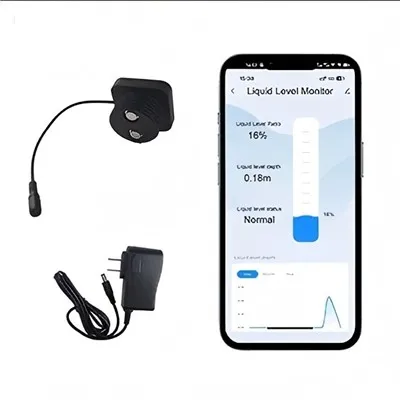
If you suspect your gauge is reading incorrectly in cold weather, weigh the tank if possible, or add a Bluetooth ultrasonic sensor (Mopeka Pro Check, Generac G0070090) for a second, independent reading. Ultrasonic sensors are not affected by temperature.
How to Tell If the Gauge Is Broken
Signs of Gauge Failure
| Sign | What It May Mean |
|---|---|
| Needle has not moved in weeks | Float stuck or linkage frozen |
| Needle jumps erratically | Float bouncing; mechanical fault |
| Needle points to 0 when tank is full | Gauge not connected to float |
| Needle reads 80% but tank ran out fast | Actual level lower; gauge reading false high |
| Needle stuck below 10 | Float resting on tank bottom |
| Hissing sound from gauge area | Pressure leak near gauge seal |
What to Do If the Gauge Is Broken
| Step | Action |
|---|---|
| 1 | Note the discrepancy - does it match your usage? |
| 2 | Contact your propane supplier |
| 3 | Request a service call to inspect the gauge |
| 4 | Monitor usage manually until fixed |
| 5 | Consider installing a Bluetooth sensor as backup |
How Often to Check the Tank Gauge
Recommended Schedule
| Season | Frequency | Why |
|---|---|---|
| Heating season (winter) | Weekly | Highest consumption; runout risk highest |
| Shoulder season (spring/fall) | Every 2 weeks | Moderate usage |
| Off-season (summer) | Monthly | Low usage; still monitor |
| After a delivery | Check same day | Confirm refill registered on gauge |
| After heavy-use event | Within 2 days | Big cooking, heating burst |
A weekly gauge check in winter takes 60 seconds and gives you peace of mind. Most propane runouts in winter happen because nobody checked the gauge for weeks. Set a recurring reminder on your phone.
What to Do When the Gauge Reads Low
Response by Level
| Reading | What to Do | Urgency |
|---|---|---|
| 40–50% | Contact supplier to schedule delivery | Low priority |
| 30–35% | Schedule a delivery now | Within 1 week |
| 25–30% | Order propane immediately | This week |
| 20% | Emergency order | Today |
| 10% or below | Emergency fill only | Now; do not use appliances |
Proactive Delivery Options
| Option | How It Works |
|---|---|
| Scheduled delivery | Supplier delivers on a set calendar |
| Will-call | You call when gauge reaches your threshold |
| Automatic delivery | Supplier monitors usage and delivers automatically |
| Tank monitor with alerts | Bluetooth/cellular sensor notifies you at your set level |
Automatic delivery is the most convenient option - your supplier's system tracks estimated usage and schedules deliveries based on degree days and historical consumption, so you never have to check the gauge or remember to call.
Propane Tank Gauge vs Other Level Methods
How the Gauge Compares
| Method | Accuracy | Remote Access | Cost | Best For |
|---|---|---|---|---|
| Built-in float gauge | ±5–10% | ❌ | $0 | Routine home monitoring |
| Bluetooth sensor (Mopeka) | ±1–2% | ✅ | $50–$80 | Phone alerts; precise tracking |
| Cellular monitor (Generac) | ±1–2% | ✅ | $199–$249 | Remote properties; no Wi-Fi |
| Weighing (home tank) | ±5–10% | ❌ | $0 | One-time check; no sensor |
| Tank Utility Wi-Fi | ±1–2% | ✅ | $150–$200 | Tech-savvy homeowners |
The built-in gauge is perfectly adequate for routine monitoring - it costs nothing and requires no setup. If you want remote monitoring, low-gas alerts, and history tracking, add a smart sensor on top of (not instead of) your existing gauge.
Frequently Asked Questions
Q1: How do I check my propane tank gauge?
Locate the round gauge dial on top of your propane tank (under a protective lid). Unscrew or lift the lid and read where the needle points on the 0–100% scale. A reading of 80% means full; 30% means it is time to order more propane. Convert percentage to gallons: Tank Capacity × Gauge % × 0.8. Check monthly in summer and weekly in winter heating season.
Q2: Why does my propane gauge read 80% when full?
Because propane tanks are legally filled to 80% capacity under NFPA 58 code - the remaining 20% is expansion space for liquid propane when it heats up. When your gauge reads 80%, the tank is correctly and safely full. Readings above 80% indicate overfill; call your supplier if you see this.
Q3: How accurate is a propane tank gauge?
A float gauge is accurate to approximately ±5–10% under normal conditions. Cold weather (below 30°F) and near-empty conditions (below 15%) can make readings less reliable. For more precise level tracking, a Bluetooth ultrasonic sensor (Mopeka Pro Check) provides ±1–2% accuracy regardless of temperature.
Q4: How do I convert gauge percentage to gallons?
Gallons Remaining = Tank Water Capacity × Gauge Reading × 0.80. For example, a 500 gallon tank at 30%: 500 × 0.30 × 0.80 = 120 gallons. See the conversion table above for common tank sizes and percentage readings.
Q5: Why is my propane gauge not moving?
If the gauge needle has not moved in weeks despite normal propane usage, the float mechanism inside the tank may be stuck. Contact your propane supplier to schedule a service inspection. In the meantime, monitor your usage manually and consider installing a Bluetooth sensor as a backup monitoring method.
Q6: Does cold weather affect propane tank gauge readings?
Yes - in cold weather (below 30°F), propane pressure drops and the float may not sit correctly, causing the gauge to read 5–15% lower than the actual level. Read the gauge at midday when the tank is warmest for the most accurate winter reading, or add a Bluetooth sensor that is unaffected by temperature.
Q7: How low should my propane tank gauge read before I order?
Order propane when the gauge reads 25–30%. For a 500 gallon tank, that is 120 gallons remaining - approximately a 1–2 week supply at typical heating usage. Never let the gauge drop below 20%, as this risks an emergency runout and costly emergency fills of $100–$300+.
Q8: Can I check my propane tank gauge from my phone?
Not directly - the built-in gauge has no remote capability. However, you can add a Bluetooth or cellular monitor (Mopeka Pro Check or Generac G0070090) that sends your tank level to a smartphone app from anywhere. The sensor sits on the tank alongside the gauge and gives you an independent, temperature-compensated reading on your phone.
The Bottom Line: Checking Your Tank Gauge
Checking your propane tank gauge is a 60-second task. Locate the dial on top of the tank, lift the lid, and read the needle: 80% = full, 30% = time to order. Convert to gallons with Tank Capacity × Gauge % × 0.8. Check weekly in winter, monthly in summer. Know that cold weather and near-empty conditions can make readings less reliable, and a stuck needle means call your supplier. The gauge is free, requires no batteries, and is accurate enough for routine monitoring - but for peace of mind and remote access, add a Bluetooth sensor.
Key takeaways:
| Takeaway | Why It Matters |
|---|---|
| ✅ Lift the lid to read | Gauge is under a protective top cap |
| ✅ 80% = full | NFPA 58 fill rule; 20% = expansion space |
| ✅ 30% = order | Universal reorder threshold |
| ✅ Below 20% = emergency | Risk runout; emergency fill fees |
| ✅ Gallons = Capacity × % × 0.8 | The conversion formula |
| ✅ Weekly in winter | Highest usage; highest risk |
| ✅ Cold affects accuracy | ±5–15% low in below-freezing temps |
| ✅ Stuck needle = call supplier | Float mechanism issue |
| ✅ Add Bluetooth for remote | Mopeka/Generac give phone access |
| ✅ Automatic delivery is easiest | Supplier manages it for you |
Remember:
Gauge is on top of the tank, under a protective lid
80% on the dial = correctly and safely full
Above 80% = overfill; call your supplier
30% = time to order; 20% = emergency
Gallons = Tank Capacity × Gauge % × 0.80
500 gal tank at 30% = 120 gallons
Gauge accuracy = ±5–10%
Cold weather = gauge reads lower than actual
Below 10°F = up to 15–20% inaccuracy
Needle not moving = float stuck; call supplier
Weekly check in heating season
Monthly check in off-season
Bluetooth sensor adds remote phone access
Weights do not change with temperature
Automatic delivery eliminates guessing
Sixty seconds once a week - that is all it takes to know where your propane supply stands. Read the gauge, know your number, and you will never be caught off guard by an empty tank.
Last updated: July 2026
Disclaimer: This guide provides general information about reading propane tank gauges for educational purposes. Always follow your propane supplier's guidelines and local regulations. Propane is a combustible fuel - use proper safety precautions, maintain your tank, and consult your supplier for guidance on monitoring and delivery schedules.