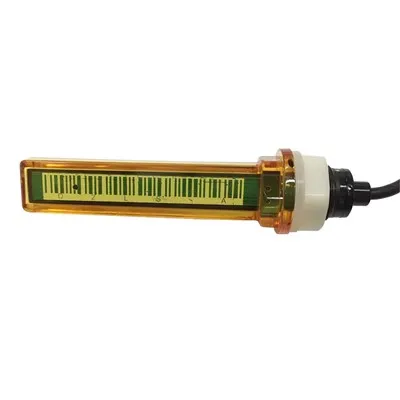
HOME-FLEX Electronic Gas Leak Detector 11-810-001 - Complete Review and Guide
In this guide: Everything you need to know about the HOME-FLEX Electronic Gas Leak Detector 11-810-001 - covering product overview and brand context, typical specifications for handheld combustible gas leak detectors in this class, what gases the 11-810-001 detects, how it works, how to use it, how it compares to competitors, best use cases, maintenance, and answers to the most commonly asked questions about portable electronic gas leak detectors for home, HVAC, plumbing, and professional gas inspection use.
HOME-FLEX Brand Overview
HOME-FLEX is a well-established American brand specialising in residential and commercial gas piping systems. Owned by Valencia Pipe / VPC Global, HOME-FLEX is best known for its corrugated stainless steel tubing (CSST) products and underground gas piping solutions - the pipes that carry natural gas and propane throughout homes and buildings. The brand is widely distributed through major US home improvement retailers including Home Depot, Lowe's, and Amazon, and has built a strong reputation for quality gas piping installation products since its founding.
The HOME-FLEX product ecosystem covers the full gas installation lifecycle:
| Product Category | Products | Purpose |
|---|---|---|
| CSST (Corrugated Stainless Steel Tubing) | HOME-FLEX CSST yellow and black tubing | Flexible gas piping for residential and commercial buildings |
| Underground gas piping | HOME-FLEX Underground products | Buried gas line installations |
| Gas leak detectors | Electronic gas leak detectors | Detecting leaks in gas piping, fittings, and appliances |
| Gas installation accessories | Fittings, valves, risers | Complete gas piping system components |
The HOME-FLEX Electronic Gas Leak Detector 11-810-001 extends the brand's natural gas and propane expertise into gas safety detection equipment. As a manufacturer deeply familiar with gas piping systems, HOME-FLEX is well-positioned to design a gas leak detector optimised for the specific applications where their products are used: home gas line inspection, propane tank connections, and HVAC gas appliance installation and maintenance.
What Is the HOME-FLEX Electronic Gas Leak Detector 11-810-001?
The HOME-FLEX Electronic Gas Leak Detector 11-810-001 is a handheld, portable combustible gas leak detector designed for detecting natural gas (methane), propane, butane, and other flammable hydrocarbon gases. This model falls into the consumer-to-professional handheld electronic gas leak detector category - a compact, battery-powered instrument that a homeowner, plumber, HVAC technician, or gas installer can use to check gas piping connections, fittings, valves, and appliances for leaks.
Product classification: Portable electronic combustible gas leak detector
Typical use cases for the 11-810-001:
| Use Case | Who Uses It | What They Check |
|---|---|---|
| Home gas piping inspection | Homeowners, plumbers | Gas line connections, valves, and fittings throughout the home |
| Propane system inspection | Homeowners with propane, propane delivery technicians | Tank connections, regulators, hose fittings, burner connections |
| HVAC gas appliance installation | HVAC technicians, installers | Gas furnace, water heater, and dryer connections |
| Real estate inspection | Home inspectors, real estate agents | Gas system safety before home sale or purchase |
| Annual gas safety check | Property managers, homeowners | Annual inspection of gas lines and appliances |
Typical Specifications for the HOME-FLEX 11-810-001
Note: The following specifications represent typical values for handheld combustible gas leak detectors in this product class. For confirmed specifications, verify against the official HOME-FLEX product page or packaging.
| Specification | Typical Value | Notes |
|---|---|---|
| Model number | 11-810-001 | HOME-FLEX part number |
| Form factor | Handheld; portable | Compact; fits in a pocket or tool bag |
| Power source | 2× AA batteries (or rechargeable) | Standard batteries; easy to replace on the job |
| Sensor type | Semiconductor (MOS) or catalytic bead | Most consumer handheld detectors use MOS sensors |
| Gases detected | Natural gas (methane), propane, butane, methane, and other combustible gases | Broad-range combustible gas detection |
| Sensitivity | Detects leaks as low as ~50 PPM (varies by gas and model) | Sufficient for finding typical residential gas leaks |
| Alarm type | Audible (beeping tone) + visual (LED) | Audible alarm speeds up as gas concentration increases |
| Response time | Rapid - typically within 2–5 seconds | Fast enough for sweep inspection |
| Warm-up time | 10–30 seconds | Brief warm-up on power-on |
| Probe / sensing tip | Flexiblegooseneck probe | Allows reaching into tight spaces; standard feature on this class of detector |
| Weight | Light - typically 6–10 oz (170–280 g) | Easy to carry during extended inspection work |
| Operating temperature | 32–120°F (0–49°C) | Typical operating range for residential use |
| Price (typical) | $20–$40 | Competitive consumer price point |
| Warranty | Varies - typically 1 year limited | Check HOME-FLEX warranty terms |
What Gases Does the HOME-FLEX 11-810-001 Detect?
The HOME-FLEX Electronic Gas Leak Detector 11-810-001 detects combustible (flammable) hydrocarbon gases - the gases that pose fire and explosion risks when they accumulate in enclosed spaces.
Gases Detected
| Gas | Chemical Formula | Primary Source | Density vs Air | Detected by 11-810-001 |
|---|---|---|---|---|
| Natural gas (methane) | CH₄ | Utility gas supply; gas mains | Lighter than air (rises) | ✅ Yes |
| Propane | C₃H₈ | Propane tanks; BBQs; RVs | Heavier than air (sinks) | ✅ Yes |
| Butane | C₄H₁₀ | Lighters; portable fuels | Heavier than air (sinks) | ✅ Yes |
| LPG (LPG mixture) | Propane + butane | Home propane; camping gas | Heavier than air (sinks) | ✅ Yes |
| Methane (biogas) | CH₄ | Sewers; landfills; septic | Lighter than air (rises) | ✅ Yes |
What the 11-810-001 Does NOT Detect
| Gas | Danger | Requires Separate Detector |
|---|---|---|
| Carbon monoxide (CO) | Poisoning - displaces oxygen in blood | CO detector (electrochemical sensor) |
| Carbon dioxide (CO₂) | Asphyxiation - displaces oxygen | CO₂ monitor (IR sensor) |
| Hydrogen sulfide (H₂S) | Toxic - lethal at high concentrations | H₂S-specific detector (electrochemical) |
| Oxygen (O₂) | Deficiency or enrichment | O₂ monitor |
| Smoke | Fire | Smoke detector |
This distinction is critical for home safety: The HOME-FLEX 11-810-001 detects combustible gas leaks (fire and explosion risk). It does not detect carbon monoxide, which is produced by incomplete combustion and requires a separate CO detector. A complete home gas safety setup includes both a combustible gas leak detector and a CO detector.
How Does It Work? Sensor Technology Explained
The HOME-FLEX 11-810-001 uses semiconductor (MOS - Metal Oxide Semiconductor) sensor technology - the most common sensor type in consumer and professional handheld combustible gas leak detectors.
How an MOS Sensor Works
| Step | What Happens |
|---|---|
| 1. Heating | The sensor contains a heated metal oxide film (typically tin dioxide) |
| 2. Air exposure | In clean air, oxygen molecules adsorb onto the heated film and suppress electron flow |
| 3. Gas exposure | When combustible gas molecules contact the heated film, they react with the oxygen and release electrons |
| 4. Resistance change | The electrical resistance of the film drops proportionally to the gas concentration |
| 5. Signal processing | The detector's circuitry measures the resistance change and converts it to a signal |
| 6. Alarm activation | When the signal exceeds the alarm threshold, the audible and visual alarms activate |
MOS Sensor Properties
| Property | Detail |
|---|---|
| Detects | All combustible hydrocarbon gases (methane, propane, butane, etc.) |
| Sensitivity | High sensitivity to natural gas and propane |
| Power requirement | Moderate - needs heated element |
| Oxygen dependency | Does NOT require oxygen to work (unlike catalytic bead sensors) |
| Cross-sensitivity | Sensitive to a broad range of combustible gases (both a feature and a characteristic) |
| Lifespan | 5–7 years under normal use |
| Warm-up time | 10–30 seconds on power-on |
| Response time | 2–5 seconds to gas exposure |
| Recovery time | Returns to baseline after gas clears |
How to Use the HOME-FLEX 11-810-001: Step-by-Step
Using the 11-810-001 for a gas leak inspection:
| Step | Action | Details |
|---|---|---|
| 1 | Install batteries | Insert 2× AA batteries; verify polarity |
| 2 | Power on | Turn the detector on; wait for warm-up (10–30 seconds) |
| 3 | Verify alarm** | Hold near a known gas source (e.g., open propane valve briefly at arm's length) to verify the alarm works |
| 4 | Begin sweep inspection** | Move the probe tip slowly along gas piping, fittings, valves, and connections |
| 5 | Check each connection** | Hold the probe tip near each fitting for 2–3 seconds; allow sensor to respond |
| 6 | Move methodically** | Work from the gas meter or propane tank toward the appliances |
| 7 | Check all appliances** | Inspect the connection at each gas appliance: furnace, water heater, stove, dryer, fireplace |
| 8 | Probe tight spaces** | Use the flexible gooseneck probe to reach into tight connections and behind appliances |
| 9 | Respond to alarm** | If the alarm sounds, narrow down the location by moving the probe in small increments until the loudest point is found |
| 10 | Mark and report** | Mark the leaking location; do not use the gas until the leak is repaired |
Inspection checklist - what to check:
| Location | What to Inspect | Risk |
|---|---|---|
| Gas meter / propane tank connection | Shut-off valve and first connection | High - pressure point |
| Gas piping throughout the home | Visible pipe joints and connections | Moderate |
| Gas regulator | Connection to the regulator; regulator vent | Moderate |
| Flexible gas hose (gas range, dryer) | Entire hose length; both connection points | High - flexible hoses degrade over time |
| Furnace gas connection | Gas valve and supply line connection | Moderate to high |
| Water heater gas connection | Gas valve, burner orifice, and connection | Moderate to high |
| Fireplace gas connection | Valve and supply line | Moderate |
| Propane tank to regulator connection | Fitting and connection | High - first connection point after tank |
| Propane hose and regulator | Full length of hose; both ends | High - hose degradation risk |
| BBQ grill propane connections | All fittings; full hose length | High - frequent disconnection and reconnect |
HOME-FLEX 11-810-001 vs Competitors: How Does It Compare?
Comparison with Similar Handheld Combustible Gas Leak Detectors
| Feature | HOME-FLEX 11-810-001 | UEi CD100A | Amprobe GSD600 | GasKnight Pro | Fieldpiece SC-440 |
|---|---|---|---|---|---|
| Brand | HOME-FLEX | UEi Test Instruments | Amprobe (Fortive) | GasKnight | Fieldpiece |
| Price (approx.) | $20–$40 | $40–$60 | $30–$50 | $39.99 | $60–$80 |
| Form factor | Handheld | Handheld | Handheld | Handheld | Handheld |
| Sensor type | Semiconductor (MOS) | Semiconductor (MOS) | Semiconductor (MOS) | Semiconductor (MOS) | Catalytic bead |
| Gases detected | Combustible gases | Combustible gases | Combustible gases | Combustible gases | Combustible gases |
| Probe type | Flexible gooseneck | Flexible gooseneck | Flexible gooseneck | Fixed tip | Flexible gooseneck |
| Alarm | Audible + visual | Audible + visual | Audible + visual | Audible + visual | Audible + visual |
| Batteries | 2× AA | 2× AA | 2× AA | Rechargeable / AA | 2× AA |
| Sensitivity adjustment | Varies by model | Fixed sensitivity | Adjustable | Fixed sensitivity | Adjustable |
| Certification | Consumer grade | Professional grade | Professional grade | Consumer grade | Professional grade |
| Calibration | Factory calibrated | Field calibratable | Field calibratable | Factory calibrated | Field calibratable |
| Best for | Homeowners; DIY use | Professional plumbers; HVAC | Professional use | Consumer use | Professional HVAC |
Key Competitive Advantages of the HOME-FLEX 11-810-001
| Advantage | What It Means |
|---|---|
| HOME-FLEX brand expertise | HOME-FLEX is a trusted gas piping brand - their detector is designed by people who understand gas systems |
| Competitive price point | At $20–$40, the 11-810-001 is one of the most affordable name-brand handheld gas detectors available |
| Easy to find | Sold through major US home improvement retailers (Home Depot, Lowe's) and Amazon |
| MOS sensor technology | Semiconductor sensors do not require oxygen to work - reliable in low-oxygen environments |
| Portable and lightweight | Fits in a tool bag; easy to carry during extended inspection work |
| Flexible gooseneck probe | Allows probing into tight spaces and behind appliances where rigid-tip detectors cannot reach |
Best Applications for the HOME-FLEX 11-810-001
Application 1: Homeowners with Gas Appliances
Recommended inspection frequency: Annually or when you smell gas
| Appliance | What to Check | Risk if Leaking |
|---|---|---|
| Gas furnace | Gas valve; supply line connection; burner assembly | High - heating system runs in enclosed basement |
| Gas water heater | Gas valve; supply line; burner assembly | High - located in utility area |
| Gas stove / oven | Connection at the rear; flexible hose (if applicable) | Moderate to high - often behind stove |
| Gas dryer | Flexible connector hose; gas valve | High - dryer moved regularly; hose can kink |
| Gas fireplace | Gas valve; supply line; key valve | Moderate |
Application 2: Propane System Owners
The 11-810-001 is especially valuable for propane system owners because propane leaks are harder to detect by smell alone (odorant fades faster at low temperatures), and propane sinks to floor level where it can accumulate before ignition.
| Location | Why Check It | What You Are Looking For |
|---|---|---|
| Propane tank valve | Most common leak point on propane systems | Hissing sound; bubbles at the valve |
| Propane regulator | Pressure fluctuation damages seals over time | Regulator weep hole discharge; fitting leaks |
| Propane hose (BBQ, RV, portable heater) | Hose degrades from UV exposure, heat, and flexing | Cracking; kinking damage; fitting wear |
| Connection to propane appliance | Repeated connection and disconnection wears fittings | Fitting wear; loose connections |
| Inside RV | Propane appliances in enclosed space | Any leak in enclosed RV is immediately dangerous |
Application 3: Professional Plumbers and HVAC Technicians
| Task | How the 11-810-001 Helps |
|---|---|
| Post-installation inspection | Verify all new gas piping connections are leak-free before commissioning |
| Annual service calls | Check gas piping as part of annual appliance service |
| Emergency leak calls | Quickly locate the source of a reported gas smell |
| Real estate inspections | Document gas system safety as part of home inspection |
| Propane delivery verification | Check the tank-to-regulator connection after each propane delivery |
Maintenance and Troubleshooting
Routine Maintenance
| Task | Frequency | How |
|---|---|---|
| Battery check | Before each use or monthly | Replace batteries when low; weak batteries cause unreliable sensor performance |
| Functional test | Monthly | Briefly expose sensor to a known gas source (e.g., a lighter held at a safe distance); verify alarm sounds |
| Visual inspection | Monthly | Check the probe tip for cracks, blockage, or damage; clean with a soft brush if needed |
| Warm-up verification | Every time you use it | Allow full warm-up period before relying on the detector |
| Sensor replacement | Not field-replaceable; replace entire unit | Replace when sensor reaches end of life (5–7 years) or fails to alarm during functional test |
Troubleshooting Common Issues
| Problem | Likely Cause | Solution |
|---|---|---|
| No alarm during test | Dead batteries; sensor not warmed up; sensor failure | Replace batteries; wait for full warm-up; test again |
| Alarm stays on continuously | Gas present in environment; sensor contaminated | Evacuate and ventilate; remove contaminant source |
| Slow or no response to gas | Sensor degraded; probe blocked | Replace unit if sensor is old; clean probe tip |
| False alarms | Aerosol sprays; cleaning chemicals; strong winds | Move away from the contaminant; retest in clean air |
| Weak audible alarm | Low batteries | Replace batteries immediately |
Frequently Asked Questions
Q1: Does the HOME-FLEX 11-810-001 detect carbon monoxide (CO)?
No - the HOME-FLEX 11-810-001 detects combustible hydrocarbon gases (methane, propane, butane, etc.) and does not detect carbon monoxide. CO is a different chemical compound that requires an electrochemical sensor specifically calibrated for CO detection. If you need CO protection, install a separate carbon monoxide detector. Most jurisdictions require CO detectors in homes with gas appliances by law.
Q2: Can I use the HOME-FLEX 11-810-001 to check my RV or camper propane system?
Yes - the 11-810-001 is an excellent choice for checking RV and camper propane systems. The portable, battery-powered design is ideal for travel use, and propane is exactly the type of gas this detector is designed to find. RV propane systems are particularly important to check regularly because: (1) propane is heavier than air and pools in the floor of enclosed RV spaces; (2) RV propane systems experience frequent connection and disconnection during travel; and (3) an RV propane leak in an enclosed space is immediately dangerous.
Q3: How is the HOME-FLEX 11-810-001 different from a fixed gas detector like GasKnight?
| Feature | HOME-FLEX 11-810-001 | GasKnight (Fixed Detector) |
|---|---|---|
| Type | Portable; used to actively find leaks | Fixed; continuously monitors one location |
| Power | Battery powered | AC wall plug |
| Use case | Leak inspection; survey work | Continuous safety monitoring |
| What it detects | Leaks anywhere you carry it | Leaks in the room where it is installed |
| Best for | Plumbing; HVAC; propane; inspection | Home safety; always-on protection |
Think of it this way: A GasKnight fixed detector watches one room continuously. The HOME-FLEX 11-810-001 lets you actively search your entire gas system - every room, every appliance, every connection. Both are valuable for complete gas safety.
Q4: How do I know if the sensor in my 11-810-001 is working correctly?
| Test | How to Perform |
|---|---|
| Functional test (do this monthly) | Hold the probe tip near a lit but unlit match (or a lighter with the gas released but not ignited) at a distance of 1–2 inches; the alarm should sound within 2–5 seconds |
| Warm-up test | Power on the detector; allow the full warm-up period; the detector should be ready without giving an error signal |
| Response test (do this before major inspection) | Test near a known gas source - briefly open a propane valve at arm's length (not a leak - just controlled gas release), or use a gas calibration leak simulator if available |
If the detector fails any of these tests, replace the batteries first, then retest. If it still fails, the sensor may be degraded and the unit should be replaced.
Q5: What is the difference between a semiconductor (MOS) sensor and a catalytic bead sensor?
| Feature | Semiconductor (MOS) | Catalytic Bead |
|---|---|---|
| How it works | Gas changes resistance of heated metal oxide film | Gas burns on heated bead; changes temperature and resistance |
| Oxygen required | No | Yes - needs oxygen to burn |
| Power consumption | Moderate | Lower |
| Sensitivity | High for combustible gases | High for combustible gases |
| Lifespan | 5–7 years | 3–5 years |
| Sensor poisons | More resistant | Poisoned by silicone, lead, sulfur compounds |
| Field calibration | Not typically field calibratable | Often field calibratable |
| Cost | Lower | Moderate |
| Best for | Consumer detectors; general use | Professional detectors; industrial use |
Both sensor types are reliable for detecting natural gas and propane leaks. The MOS sensor in the 11-810-001 is well-suited for consumer and light professional use.
Q6: Can I use the 11-810-001 to find a gas leak that I can smell?
Yes - in fact, the 11-810-001 is most useful for locating the exact source of a suspected leak. If you smell gas (the added mercaptan odorant in natural gas and propane), the detector can help you pinpoint exactly where the gas is escaping - whether at a connection, a valve, a pipe joint, or an appliance fitting. This makes repair faster and more targeted. The detector can find leaks at lower concentrations than you can smell, so it can also find small leaks before they become noticeable by odour.
Q7: Is the HOME-FLEX 11-810-001 certified for use in hazardous locations?
The HOME-FLEX 11-810-001 is a consumer-grade combustible gas detector and is not certified as intrinsically safe for use in classified hazardous locations (areas where explosive atmospheres may be present continuously or intermittently). For professional use in hazardous locations (petroleum facilities, industrial gas installations, confined spaces with potential for explosive atmospheres), an intrinsically safe (ATEX/IECEx/UL certified) gas detector is required. For residential gas piping inspection and propane system checks, the 11-810-001 is entirely appropriate.
The Bottom Line: HOME-FLEX Electronic Gas Leak Detector 11-810-001
The HOME-FLEX Electronic Gas Leak Detector 11-810-001 is a portable, battery-powered combustible gas leak detector from a trusted gas piping brand, designed for homeowners, plumbers, HVAC technicians, and propane system owners who need to detect natural gas, propane, and other combustible gas leaks.
Key facts:
| Fact | Details |
|---|---|
| Model | 11-810-001 |
| Brand | HOME-FLEX (by Valencia Pipe / VPC Global) |
| Type | Handheld portable combustible gas detector |
| Sensor | Semiconductor (MOS) - broad-range combustible gas detection |
| Gases detected | Natural gas (methane), propane, butane, LPG, and other combustible gases |
| Does NOT detect | Carbon monoxide (CO), CO₂, H₂S, oxygen, smoke |
| Power | 2× AA batteries |
| Alarm | Audible (beeping) + visual (LED) |
| Probe | Flexible gooseneck for tight spaces |
| Price | $20–$40 (competitive consumer price point) |
| Best for | Homeowners; plumbers; HVAC technicians; propane system owners |
| Warranty | Check HOME-FLEX warranty terms |
Recommended use:
| Who Should Buy It | Why |
|---|---|
| Homeowners with gas appliances | Annual gas system safety check; peace of mind |
| Homeowners with propane systems | Propane leaks are harder to smell; detector is essential |
| Plumbers and gas fitters | Post-installation leak verification; service calls |
| HVAC technicians | Gas furnace and appliance installation and service |
| Propane delivery companies | Tank and connection verification after delivery |
| Real estate agents and home inspectors | Gas safety documentation during home transactions |
| RV owners | Propane system safety while travelling |
For complete home gas safety, combine the HOME-FLEX 11-810-001 with:
A fixed combustible gas detector (like GasKnight) for continuous monitoring in key areas
A carbon monoxide detector for CO poisoning protection
Annual professional gas system inspections
The 11-810-001 gives you the power to actively find gas leaks before they become dangerous. Combined with always-on fixed detectors and professional maintenance, it is an essential tool in any gas safety strategy.
Last updated: July 2026
Disclaimer: This guide provides general information about the HOME-FLEX Electronic Gas Leak Detector 11-810-001 for educational and review purposes. Specifications listed represent typical values for handheld combustible gas detectors in this product class. For confirmed specifications, current pricing, warranty terms, and availability, verify directly at homeflex.com, Home Depot, Lowe's, or Amazon. Gas leak detection is one component of overall gas safety. Always have gas systems professionally installed, maintained, and inspected. In case of any gas emergency, evacuate the premises and contact your gas utility, propane supplier, or emergency services immediately.