How to Check the Level of a 500 Gallon Propane Tank: Complete Guide
In this guide: Everything you need to know about checking the level of a 500 gallon propane tank - covering where to find the gauge on above-ground and underground tanks, how to read the percentage dial accurately, what each percentage means in gallons, how to install and use ultrasonic tank monitors for remote smartphone access, why float gauges are only approximate (±5–10%) and how to get precision readings, how often to check your tank level, when to order more propane, and answers to the most common questions about 500 gallon propane tank level checking.
How to Check the Level of a 500 Gallon Propane Tank - Quick Answer
To check the level of a 500 gallon propane tank, locate the round float gauge on top of the tank (under a protective lid), read the percentage indicated by the needle on the 0–100% dial, and convert the percentage to gallons using the formula: Gallons = 500 × Gauge Reading × 0.8. A reading of 80% means the tank is full (400 gallons), 50% means half full (200 gallons), 30% means it is time to order propane (120 gallons), and below 20% means order immediately (80 gallons or less). For more accurate readings (±1–2%) and remote monitoring, install an ultrasonic tank sensor like Mopeka Pro Check ($50–$80) or Generac G0070090 ($199–$249) that sends level readings to your smartphone. Check your tank weekly during heating season, monthly during warmer months, and never let it drop below 20% without ordering more propane.
Bottom line: Reading a 500 gallon tank gauge takes 30 seconds. Know what the percentages mean, check regularly, and order at 25–30% to avoid emergency delivery fees.
Where Is the Gauge on a 500 Gallon Propane Tank?
Above-Ground Tanks
| Location | What to Look For |
|---|---|
| Tank top, center area | Round dial with a hinged or screw-off protective lid |
| Near the fill valve | Gauge is often located near where the delivery truck connects |
| Typical appearance | White or metallic round dial, 3–4 inches in diameter, with 0–100% scale |
To find the gauge: Look at the top of your 500 gallon propane tank for a round dial under a protective cover. Lift or unscrew the cover to expose the gauge face.
Underground Tanks
| Location | What to Look For |
|---|---|
| Tank dome / riser | The metal dome that sticks up from the ground |
| Under a protective cover | Round dial under a lid in the dome |
| Fill location | Gauge is usually in the same dome as the fill valve |
Underground tanks have their gauge in the dome that protrudes above ground level. Open the dome cover to access both the gauge and fill valve.
How to Read the Gauge on a 500 Gallon Propane Tank
Step-by-Step Process
| Step | Action | Detail |
|---|---|---|
| 1 | Walk to your propane tank | - |
| 2 | Locate the gauge on top of the tank | Look for the round dial under a lid |
| 3 | Open the protective lid | Lift or unscrew the cover |
| 4 | Look at the dial face | You will see a 0–100% scale with a needle pointer |
| 5 | Read the percentage where the needle points | Note the exact percentage (e.g., 35%, 28%, 72%) |
| 6 | Interpret the reading | Use the tables below to understand what it means |
| 7 | Close the protective lid | Protects the gauge from weather and debris |
| 8 | Record if desired | Some homeowners log readings to track usage |
What Each Percentage Means for a 500 Gallon Tank
| Gauge Reading | Gallons Remaining | Tank Status | Action |
|---|---|---|---|
| 80–100% | 320–400 gal | Full or nearly full | No action needed |
| 70–80% | 280–320 gal | Three-quarters full | Monitor; no urgency |
| 60–70% | 240–280 gal | Two-thirds full | Monitor periodically |
| 50–60% | 200–240 gal | More than half full | Continue monitoring |
| 40–50% | 160–200 gal | Approaching half | Begin watching more closely |
| 30–40% | 120–160 gal | Getting low | Start planning a delivery |
| 25–30% | 100–120 gal | Low - order soon | Schedule delivery within 1–2 weeks |
| 20–25% | 80–100 gal | Very low | Order propane immediately |
| 10–20% | 40–80 gal | Critical - low supply | Order emergency delivery |
| Below 10% | < 40 gal | Nearly empty | Risk of runout - urgent |
The 80% Rule: Why a Full Tank Reads 80%
| Fact | Explanation |
|---|---|
| Tanks are filled to 80% maximum | Propane expands when heated; 20% headspace allows for expansion |
| 80% = Full | When your gauge reads 80%, the tank is as full as it should be |
| Never 100% | A reading of 100% would indicate dangerous overfilling |
| Safety requirement | This is an industry standard and legal requirement |
If your gauge ever reads 90–100%, contact your propane supplier immediately - the tank may be overfilled.
How to Convert Percentage to Gallons for a 500 Gallon Tank
The Formula
Gallons Remaining = Tank Water Capacity × Gauge Percentage × 0.8
Tank Water Capacity = 500 gallons
Gauge Percentage = Reading from dial (e.g., 0.30 for 30%)
0.8 = Adjustment for 80% fill limit
Quick Reference Chart
| Gauge Reading | Gallons Remaining |
|---|---|
| 80% (Full) | 400 gallons |
| 70% | 350 gallons |
| 60% | 300 gallons |
| 50% | 200 gallons |
| 40% | 160 gallons |
| 30% | 120 gallons |
| 25% | 100 gallons |
| 20% | 80 gallons |
| 15% | 60 gallons |
| 10% | 40 gallons |
Calculation Examples
| Example | Calculation | Result |
|---|---|---|
| Gauge reads 35% | 500 × 0.35 × 0.8 | 140 gallons |
| Gauge reads 28% | 500 × 0.28 × 0.8 | 112 gallons |
| Gauge reads 45% | 500 × 0.45 × 0.8 | 180 gallons |
| Gauge reads 15% | 500 × 0.15 × 0.8 | 60 gallons |
How Accurate Is the Gauge on a 500 Gallon Tank?
Float Gauge Accuracy
| Characteristic | Detail |
|---|---|
| Type of gauge | Float gauge - a float inside the tank rises and falls with the liquid level |
| Typical accuracy | ±5–10% |
| Why it is approximate | Mechanical float can stick; tank shape affects reading; temperature affects propane volume |
| Good for | Monitoring level for delivery planning |
| Not good for | Precise measurement (e.g., exactly 147 gallons) |
Factors That Affect Gauge Accuracy
| Factor | Effect |
|---|---|
| Float sticking | Needle may not move smoothly, giving false reading |
| Tank not level | Tank tilt can affect float position |
| Temperature | Propane expands/contracts with temperature; gauge does not compensate |
| Gauge age | Older gauges may lose calibration |
| Mechanical wear | Float arm or linkage may wear over time |
How to Get More Accurate Readings
| Method | Accuracy | Cost | Best For |
|---|---|---|---|
| Built-in float gauge | ±5–10% | $0 (included) | General monitoring |
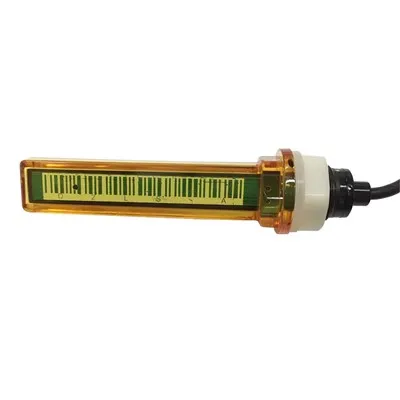
| Ultrasonic sensor (Mopeka Pro Check) | ±1–2% | $50–$80 | Precise measurement; smartphone monitoring |
| Ultrasonic sensor (Tank Utility Wi-Fi) | ±1–2% | $150–$200 | Remote monitoring via Wi-Fi |
| Cellular monitor (Generac G0070090) | ±1–2% | $199–$249 | Remote monitoring without Wi-Fi |
| Professional tank weighing | ±0.5% | Varies | Very precise measurement |
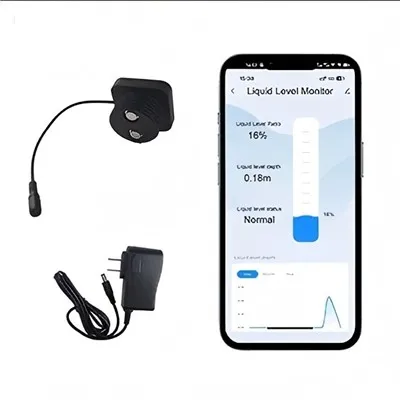
Using Ultrasonic Tank Sensors for Remote Monitoring
Why Use an Ultrasonic Sensor on a 500 Gallon Tank
| Benefit | What You Get |
|---|---|
| Higher accuracy | ±1–2% vs ±5–10% for float gauge |
| Remote monitoring | Check level from your phone, anywhere |
| Low-level alerts | App notifies you when tank reaches your set threshold |
| Usage tracking | See level history and consumption patterns |
| No manual checks | Set alerts and forget about it |
| Easy installation | Magnetic mount - no tools required |
Best Ultrasonic Sensors for 500 Gallon Tanks
| Product | Price | Connectivity | Remote Access? | Best For |
|---|---|---|---|---|
| Mopeka Pro Check | $50–$80 | Bluetooth | ❌ Range limited to ~30 ft | Home use; smartphone app |
| Tank Utility Wi-Fi | $150–$200 | Wi-Fi | ✅ Yes - anywhere with internet | Remote monitoring |
| Generac G0070090 | $199–$249 | 4G LTE Cellular | ✅ Yes - anywhere with cell signal | Remote cabins; vacation homes |
How to Install an Ultrasonic Sensor
| Step | Action |
|---|---|
| 1 | Download the app (Mopeka, Tank Utility, or Mobile Link for Generac) |
| 2 | Create an account |
| 3 | Install batteries in the sensor |
| 4 | Pair the sensor with your phone (Bluetooth, Wi-Fi, or cellular) |
| 5 | Enter tank size (500 gallon) in the app |
| 6 | Attach the sensor magnetically to the bottom center of the tank |
| 7 | Calibrate following in-app instructions |
| 8 | Set low-level alert threshold (e.g., 25%) |
How Often Should You Check Your 500 Gallon Tank Level?
Recommended Check Frequency
| Season | How Often to Check | Why |
|---|---|---|
| Heating season (Nov–Mar) | Weekly | High usage; faster depletion |
| Off-season (Apr–Oct) | Monthly | Lower usage; slower depletion |
| With ultrasonic sensor + alerts | App alerts you - check only when notified | Automatic monitoring |
Why Regular Checking Matters
| Problem | Cost / Consequence |
|---|---|
| Runout during heating season | No heat; pipes freeze; $5,000–$20,000+ damage |
| Emergency delivery fee | $100–$300+ extra per delivery |
| After-hours surcharge | $150–$500+ extra |
| System purging and pilot relights | $50–$150 for technician visit |
| Inconvenience | Days without heat or hot water |
Checking your tank weekly during heating season takes 30 seconds and costs $0. An emergency delivery costs $100–$300+. The math is simple.
When to Order More Propane for a 500 Gallon Tank
Optimal Reorder Points
| Gauge Reading | Gallons Remaining | Time to Order |
|---|---|---|
| 30–35% | 120–140 gal | Plan delivery within 1–2 weeks |
| 25–30% | 100–120 gal | Order now - ideal reorder point |
| 20–25% | 80–100 gal | Order immediately - limited buffer |
| Below 20% | < 80 gal | Emergency order - risk of runout |
Why Order at 25–30%
| Reason | Detail |
|---|---|
| Delivery takes 3–7 days | Normal season; can be 2 weeks in peak winter |
| Buffer for cold snaps | Sudden cold increases usage |
| Avoid emergency fees | Scheduled delivery = standard price; emergency = $100–$300+ extra |
| Prevents runout | 100–120 gallons gives 1–2 weeks of supply |
Order at 25–30% and you will never run out. Wait until 10–15% and you are risking emergency fees and runout.
Troubleshooting Gauge Problems
Problem 1: Needle Stuck or Not Moving
| Possible Cause | What to Do |
|---|---|
| Float is stuck inside tank | Tap the gauge gently; may free the float |
| Gauge is broken or damaged | Contact your propane supplier for replacement |
| Tank is actually full or empty | Verify by other means (professional inspection, ultrasonic sensor) |
Problem 2: Gauge Seems Inaccurate
| Symptom | Possible Cause | Solution |
|---|---|---|
| Reading does not match usage | Float calibration off | Install ultrasonic sensor for precision |
| Gauge has not moved in weeks | Float stuck or tank actually full | Tap gauge; if persists, contact supplier |
| Needle bounces or is erratic | Mechanical wear or damage | Replace gauge |
Problem 3: No Gauge on Tank
| Solution | Cost | Notes |
|---|---|---|
| Contact supplier to install gauge | $50–$150 | Recommended for tanks without gauges |
| Install ultrasonic sensor (Mopeka) | $50–$80 | Provides both gauge and remote monitoring |
| Use professional tank weighing | Varies | For one-time precise measurement |
Frequently Asked Questions
Q1: How do I check the level of a 500 gallon propane tank?
Locate the round float gauge on top of the tank (under a protective lid), read the percentage indicated by the needle, and convert to gallons using the formula: Gallons = 500 × Percentage × 0.8. A reading of 80% = 400 gallons (full), 50% = 200 gallons (half), 30% = 120 gallons (order propane), 20% = 80 gallons (order immediately). For more accurate readings and remote monitoring, install an ultrasonic tank sensor like Mopeka Pro Check or Generac G0070090.
Q2: How many gallons are in a 500 gallon tank at 30%?
A 500 gallon propane tank at 30% contains approximately 120 gallons of propane.
Calculation: 500 × 0.30 × 0.8 = 120 gallons
(The 0.8 factor accounts for the 80% maximum fill limit.)
Q3: Why does my 500 gallon tank gauge read 80% when full?
Because propane tanks are only filled to 80% capacity to allow for liquid expansion when temperatures rise. Propane expands approximately 1.5% for every 10°F temperature increase. The 20% headspace is a safety requirement. When your gauge reads 80%, your tank is properly and safely full.
Q4: How accurate is the gauge on a 500 gallon propane tank?
The built-in float gauge on a 500 gallon propane tank is accurate to approximately ±5–10%. It uses a mechanical float that rises and falls with the liquid level. For more precise readings (±1–2%), install an ultrasonic tank sensor like Mopeka Pro Check, Tank Utility, or Generac G0070090.
Q5: How often should I check my 500 gallon propane tank level?
| Season | Check Frequency |
|---|---|
| Heating season (Nov–Mar) | Weekly |
| Off-season (Apr–Oct) | Monthly |
| With ultrasonic sensor alerts | App notifies you - check when alerted |
Never let your tank drop below 20% without ordering propane. Delivery takes 3–7 days; runout can cost $100–$300+ in emergency fees.
Q6: When should I order more propane for my 500 gallon tank?
Order propane when your tank gauge reads 25–30% (100–120 gallons remaining). This gives you a 1–2 week buffer before runout, allowing time for delivery scheduling. Never let your tank drop below 20% (80 gallons) without ordering - you risk runout and emergency delivery fees.
Q7: Can I install a remote monitor on my 500 gallon propane tank?
Yes - ultrasonic tank sensors like Mopeka Pro Check ($50–$80), Tank Utility Wi-Fi ($150–$200), and Generac G0070090 ($199–$249) attach magnetically to the bottom of your 500 gallon tank and send level readings to your smartphone. These sensors provide ±1–2% accuracy and low-level alerts, making it easy to monitor your tank remotely without manual gauge checks.
Q8: What happens if my 500 gallon propane tank runs empty?
| Consequence | What Happens |
|---|---|
| No heat or hot water | Furnace and water heater stop working |
| Emergency delivery fee | $100–$300+ extra charge |
| Pilot light relights | $50–$150 for technician visit |
| System purge (if air in lines) | $50–$100 additional |
| Potential pipe freezing | $5,000–$20,000+ damage |
| Inconvenience | Days without heat or hot water |
Preventing runout is far cheaper than dealing with one. Monitor your tank, order at 25–30%, and consider automatic delivery from your supplier.
The Bottom Line: How to Check the Level of a 500 Gallon Propane Tank
Checking your 500 gallon propane tank level is simple: read the gauge on top of the tank, understand what the percentage means in gallons, and order at 25–30% to avoid runout and emergency fees. For convenience and precision, install an ultrasonic sensor that sends readings to your phone.
Key takeaways:
| Takeaway | Why It Matters |
|---|---|
| ✅ Gauge is on top of tank, under a lid | Lift lid to see the dial |
| ✅ Read percentage on 0–100% scale | Shows how full the tank is |
| ✅ 80% = 400 gallons = full | Tanks are filled to 80% max for safety |
| ✅ 30% = 120 gallons = order propane | Ideal reorder point |
| ✅ 20% = 80 gallons = order immediately | Do not wait any longer |
| ✅ Gauge accuracy is ±5–10% | Good for planning; ultrasonic is ±1–2% |
| ✅ Check weekly in heating season | Never be surprised by low propane |
| ✅ Install ultrasonic sensor for remote monitoring | Get alerts on your phone |
| ✅ Order at 25–30% to avoid emergency fees | Emergency delivery costs $100–$300+ |
| ✅ Formula: Gallons = 500 × % × 0.8 | Convert percentage to gallons |
Remember:
Gauge location: on top of tank, under protective lid
80% reading = tank is full (400 gallons)
30% reading = 120 gallons - order propane now
20% reading = 80 gallons - order immediately
Check weekly in winter, monthly in summer
Float gauges are ±5–10% accurate; ultrasonic sensors are ±1–2%
Remote monitors send alerts to your phone
Order at 25–30% for 1–2 week buffer
Emergency delivery adds $100–$300+ to your bill
A tank monitor ($50–$250) pays for itself after preventing one runout
Never let your tank drop below 20% without ordering
Reading your 500 gallon tank gauge takes 30 seconds. Do it weekly during heating season, order at 25–30%, and never deal with the hassle and cost of a propane runout.
Last updated: July 2026
Disclaimer: This guide provides general information about checking 500 gallon propane tank levels for educational purposes. Always follow your propane supplier's guidelines and manufacturer instructions. Propane is a combustible fuel - ensure proper safety practices, use propane detectors, and consult your supplier for specific guidance related to your tank and usage.