How To Check The Gas Level On My Propane Tank: Complete Methods Guide
In this guide: Every method for checking propane tank gas level - covering how to read built-in gauges on large residential tanks, the weighing method for BBQ tanks and small cylinders, the hot water trick for quick visual estimates, installing aftermarket gauges and sensors, using ultrasonic tank monitors for remote smartphone access, understanding what percentage readings mean, how to convert percentage to gallons, estimating remaining runtime, and answers to the most common questions about propane tank level checking.
How To Check The Gas Level On My Propane Tank - Quick Answer
There are five ways to check your propane tank gas level: (1) read the built-in float gauge on residential tanks (120–1,000 gallon) - look for the dial on top of the tank, (2) weigh small tanks (BBQ, RV) - total weight minus tare weight stamped on the collar equals propane remaining, (3) use the hot water method - pour hot water down the side and feel where the temperature changes, indicating the liquid level, (4) install an aftermarket gauge or inline pressure gauge (less accurate), or (5) use an ultrasonic tank sensor (Mopeka, Generac) for smartphone monitoring with ±1–2% accuracy. For large residential tanks, the built-in gauge shows percentage full (80% = full, 30% = order propane). For BBQ tanks, the weighing method is most accurate. For remote monitoring, ultrasonic sensors send readings to your phone.
Bottom line: Check your propane level before it runs out. Use the gauge for large tanks, weighing for small tanks, and install a smart monitor for convenience and remote access.
Method 1: Read the Built-In Gauge (Large Residential Tanks)
Where to Find the Gauge
| Tank Type | Gauge Location | What It Looks Like |
|---|---|---|
| Above-ground residential tank (120–1,000 gallon) | On top of the tank, under a hinged or screw-off lid | Round dial with 0–100% scale and needle pointer |
| Underground tank | On the dome/riser that sticks up from the ground | Round dial under a protective cover |
| Small vertical tank (100 lb) | On the tank collar or near the valve | Small round dial |
Step-by-Step: Reading the Gauge
| Step | Action |
|---|---|
| 1 | Walk to your propane tank |
| 2 | Locate the round dial on top of the tank |
| 3 | Lift or unscrew the protective lid |
| 4 | Look at the needle position on the 0–100% scale |
| 5 | Read the percentage indicated |
| 6 | Interpret the reading using the table below |
| 7 | Close the lid when done |
What the Percentage Means
| Gauge Reading | What It Means | Action |
|---|---|---|
| 80–100% | Full or nearly full (tanks filled to 80% max) | No action needed |
| 60–80% | Three-quarters to full | Monitor; no urgency |
| 50–60% | More than half full | Continue monitoring |
| 40–50% | Approaching half | Begin watching more closely |
| 30–40% | Getting low | Start planning a delivery |
| 20–30% | Low | Schedule propane delivery within 1–2 weeks |
| 10–20% | Very low | Order propane immediately |
| Below 10% | Critical | Order emergency delivery; risk of runout |
Key point: A reading of 80% means your tank is full. Tanks are never filled to 100% - the 20% headspace allows for propane expansion.
Converting Percentage to Gallons
Formula: Gallons Remaining = Tank Water Capacity × Gauge Percentage × 0.8
| Tank Size | At 50% | At 30% | At 20% | At 10% |
|---|---|---|---|---|
| 120 gallon | 48 gal | 29 gal | 19 gal | 10 gal |
| 250 gallon | 100 gal | 60 gal | 40 gal | 20 gal |
| 330 gallon | 132 gal | 79 gal | 53 gal | 26 gal |
| 500 gallon | 200 gal | 120 gal | 80 gal | 40 gal |
| 1,000 gallon | 400 gal | 240 gal | 160 gal | 80 gal |
Method 2: Weighing Method (BBQ Tanks, Small Cylinders)
When to Use This Method
| Tank Type | Has Gauge? | Best Method |
|---|---|---|
| 20 lb BBQ tank | ❌ Usually no gauge | Weighing method |
| 30 lb RV tank | ❌ Usually no gauge | Weighing method |
| 40 lb cylinder | ❌ No gauge | Weighing method |
| 100 lb cylinder | ⚠️ Sometimes | Weighing or gauge |
| Forklift cylinder | ❌ No gauge | Weighing method |
Step-by-Step: Weighing Your Tank
| Step | Action | Example (20 lb BBQ Tank) |
|---|---|---|
| 1 | Find the tare weight (TW) stamped on the tank collar | TW = 17 lbs |
| 2 | Place the tank on a bathroom scale or hanging scale | - |
| 3 | Read the total weight on the scale | Total = 22 lbs |
| 4 | Subtract tare weight from total weight | 22 - 17 = 5 lbs of propane |
| 5 | Convert pounds to gallons (1 gallon ≈ 4.24 lbs) | 5 ÷ 4.24 = 1.2 gallons |
How Full Is My Tank? (20 lb BBQ Tank)
| Total Weight | Propane Remaining | Tank Level |
|---|---|---|
| 37 lbs | 20 lbs | Full (100%) |
| 32 lbs | 15 lbs | 75% |
| 27 lbs | 10 lbs | 50% |
| 22 lbs | 5 lbs | 25% |
| 17 lbs | 0 lbs | Empty |
A full 20 lb BBQ tank weighs approximately 37 lbs (17 lb tare weight + 20 lb propane). When the total weight drops to 17–18 lbs, the tank is empty.
Method 3: Hot Water Method (Quick Visual Estimate)
When to Use This Method
You do not have a gauge or scale
You need a quick estimate
You are checking a BBQ tank or small cylinder
You want a visual confirmation
Step-by-Step: Hot Water Trick
| Step | Action | Why It Works |
|---|---|---|
| 1 | Bring a cup or pitcher of hot water | Water should be hot but not boiling |
| 2 | Pour the hot water slowly down the side of the tank | Start from the top and work down |
| 3 | Wait 5–10 seconds | Allows temperature difference to develop |
| 4 | Run your hand down the side of the tank | Feel for temperature change |
| 5 | Notice where it changes from warm to cool | Cool area = liquid propane; warm area = gas vapour |
| 6 | Estimate the level by the position of the temperature change | If change is halfway down, tank is ~50% full |
Why This Method Works
| Propane State | Temperature | What You Feel |
|---|---|---|
| Liquid propane (bottom of tank) | Cold (absorbs heat to vaporize) | Cool to the touch |
| Propane vapour (top of tank) | Warmer (ambient temperature) | Warm to the touch |
The hot water heats the metal tank, but the liquid propane inside keeps the lower portion cool. Where you feel the transition from warm to cool is approximately where the liquid propane level is.
Accuracy of the Hot Water Method
| Factor | Effect |
|---|---|
| Accuracy | Approximate - good for rough estimate (±15–20%) |
| Best for | BBQ tanks, small cylinders, quick checks |
| Limitations | Less accurate for very full or very empty tanks; affected by ambient temperature |
Method 4: Install an Aftermarket Gauge or Sensor
Types of Aftermarket Gauges
| Type | Cost | Installation | Accuracy | Best For |
|---|---|---|---|---|
| Inline pressure gauge | $15–$30 | Screws between tank and regulator | ❌ Low - pressure varies with temperature | Not recommended |
| Built-in tank gauge (replacement collar) | $30–$50 | Replaces tank collar | Medium | BBQ tanks |
| Magnetic level indicator | $10–$20 | Sticks to side of tank | Low - approximate | Visual reference only |
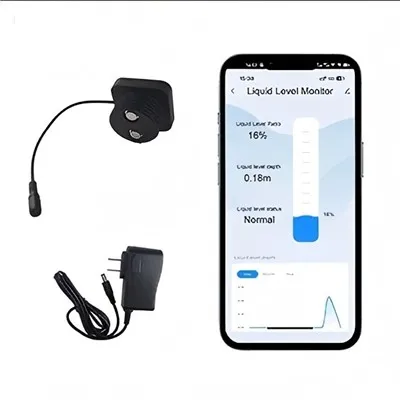
| Ultrasonic sensor (Mopeka Pro Check) | $50–$80 | Magnet on bottom of tank | ✅ High - ±1–2% | All tank sizes; smartphone monitoring |
| Cellular monitor (Generac G0070090) | $199–$249 | Magnet on bottom of tank | ✅ High - ±1–2% | Remote monitoring; no Wi-Fi needed |
Why Pressure Gauges Are NOT Recommended
| Problem | Explanation |
|---|---|
| Pressure ≠ Level | Pressure gauges measure PSI, not liquid level |
| Temperature effect | A warm day increases pressure even if tank is nearly empty |
| Misleading readings | Can show "full" when tank is actually low |
| Unreliable | Not accurate for determining how much propane remains |
Pressure gauges tell you if there is propane in the tank - not how much. A warm day can make a nearly empty tank read "full." Use float gauges, weighing, or ultrasonic sensors for accurate level reading.
Why Ultrasonic Sensors Are Best
| Benefit | What You Get |
|---|---|
| High accuracy | ±1–2% vs ±5–10% for float gauges |
| Remote monitoring | Check level from your phone |
| Low-level alerts | App notifies you when tank is low |
| Works on most tanks | BBQ tanks, RV tanks, residential tanks up to 1,000 gallon |
| Easy installation | Magnetic mount - no tools required |
| Battery powered | 1–2 year battery life |
Method 5: Smart Tank Monitors (Remote Smartphone Access)
Best Smart Monitors for Propane Tanks
| Product | Price | Connectivity | Remote Access? | Best For |
|---|---|---|---|---|
| Mopeka Pro Check | $50–$80 | Bluetooth | ❌ Range limited to ~30 ft | Home use; RVs |
| Mopeka Tank Check 2 | $40–$60 | Bluetooth | ❌ Range limited | Budget option |
| Tank Utility Wi-Fi | $150–$200 | Wi-Fi | ✅ Yes - anywhere with internet | Remote monitoring |
| Generac G0070090 | $199–$249 | 4G LTE Cellular | ✅ Yes - anywhere with cell signal | Remote cabins; vacation homes |
How to Install Mopeka Pro Check
| Step | Action |
|---|---|
| 1 | Download the Mopeka app (iOS or Android) |
| 2 | Create an account |
| 3 | Insert 2×AA batteries into the sensor |
| 4 | Pair the sensor with your phone via Bluetooth |
| 5 | Enter your tank size in the app |
| 6 | Attach the sensor magnetically to the bottom center of the tank |
| 7 | Calibrate following in-app instructions |
| 8 | Set low-level alert threshold (e.g., 20%) |
Which Method Should You Use?
Decision Guide by Tank Type
| Tank Type | Recommended Method | Why |
|---|---|---|
| Residential tank (120–1,000 gallon) | Built-in gauge + ultrasonic sensor | Gauge for quick checks; sensor for remote monitoring |
| BBQ tank (20 lb) | Weighing method or ultrasonic sensor | No built-in gauge; weighing is free; sensor is convenient |
| RV propane tank | Ultrasonic sensor (Mopeka) | No gauge on most RV tanks; Bluetooth monitoring from inside RV |
| Remote cabin tank | Cellular monitor (Generac G0070090) | Remote access without Wi-Fi; works anywhere with cell signal |
| 100 lb cylinder | Built-in gauge (if equipped) or weighing | Either method works |
| Any tank (budget option) | Hot water method | Free and quick, but approximate |
Estimating How Long Your Propane Will Last
How to Calculate Remaining Runtime
Formula: Days Remaining = Gallons Remaining ÷ Daily Usage
Average Daily Propane Usage
| Appliance | Daily Usage (Approx) |
|---|---|
| Furnace (heating season) | 5–15 gallons/day (varies by climate) |
| Water heater | 0.5–1 gallon/day |
| Stove / oven | 0.1–0.3 gallon/day |
| Clothes dryer | 0.1–0.3 gallon/day |
| BBQ grill | 0.1–0.3 gallon/hour of use |
| Generator (under load) | 2–3 gallons/hour |
Example Calculation
| Your Situation | Calculation |
|---|---|
| Tank size | 500 gallon |
| Gauge reading | 30% |
| Gallons remaining | 120 gallons |
| Daily usage | 8 gallons/day (heating season) |
| Days remaining | 120 ÷ 8 = 15 days |
Frequently Asked Questions
Q1: How do I check the gas level on my propane tank?
For residential tanks (120–1,000 gallon): Read the built-in float gauge on top of the tank - look for the round dial under a protective lid. For BBQ tanks and small cylinders: Use the weighing method - weigh the tank and subtract the tare weight (TW) stamped on the collar. For remote monitoring: Install an ultrasonic sensor like Mopeka Pro Check ($50–$80) for smartphone access to your tank level.
Q2: How do I check my propane tank without a gauge?
Use the weighing method: (1) find the tare weight (TW) stamped on the tank collar, (2) weigh the tank on a scale, (3) subtract tare weight from total weight = propane remaining in lbs, (4) divide by 4.24 to get gallons. Alternatively, use the hot water method: pour hot water down the side of the tank and feel where it changes from warm to cool - that is the liquid propane level.
Q3: How do I know when my propane tank is empty?
| Tank Type | How to Know It's Empty |
|---|---|
| BBQ tank (20 lb) | Total weight = tare weight (~17 lbs); no flame when you try to use it |
| Residential tank with gauge | Gauge reads 0–5% |
| Any tank | Appliances stop working; no gas flow |
Never run a tank completely empty - it can introduce air into the lines and require professional purging. Order propane when your tank reaches 20–30%.
Q4: How accurate is the hot water method for checking propane level?
The hot water method is approximate - accurate to about ±15–20%. It works by showing you where the liquid propane level is based on temperature difference (liquid propane is cooler than the gas vapour above it). It is useful for a quick visual estimate but not for precise measurement. For accuracy, use the weighing method or an ultrasonic sensor.
Q5: Why does my propane tank gauge read 80% when full?
Because propane tanks are filled to a maximum of 80% capacity to allow for liquid expansion. Propane expands when heated, and filling to 100% would create dangerous overpressure. The 20% headspace is a safety requirement. When your gauge reads 80%, your tank is properly and safely full.
Q6: Can I use a pressure gauge to check my propane level?
No - pressure gauges are not accurate for measuring propane level. Pressure varies with temperature, not just level. A warm day can make a nearly empty tank read "full" because pressure is higher. Pressure gauges only tell you if there is gas in the tank - not how much. Use float gauges, weighing, or ultrasonic sensors for accurate level reading.
Q7: How often should I check my propane tank level?
| Season | Check Frequency |
|---|---|
| Heating season (Nov–Mar) | Weekly |
| Off-season (Apr–Oct) | Monthly |
| With smart monitor | App alerts you - no manual check needed |
Never let your tank drop below 20% before ordering propane. Delivery can take 3–7 days - longer in peak season.
Q8: How do I check propane level in an RV tank?
Most RV propane tanks do not have built-in gauges. Use one of these methods: (1) Install an ultrasonic sensor (Mopeka Pro Check) - magnet on bottom of tank, readings sent to your phone via Bluetooth, (2) Use the weighing method if you can access the tank, (3) Install an aftermarket gauge on the tank, or (4) Monitor usage and refill based on estimated consumption. The Mopeka Pro Check is the most convenient and accurate solution for RV propane tanks.
The Bottom Line: How To Check The Gas Level On My Propane Tank
Checking your propane tank level is easy with the right method. For large residential tanks, read the built-in gauge. For BBQ tanks, use the weighing method or install an ultrasonic sensor. For remote monitoring, smart tank monitors send readings to your phone. Never let your tank drop below 20% without ordering more propane.
Key takeaways:
| Takeaway | Why It Matters |
|---|---|
| ✅ Large tanks: read the built-in gauge on top | Shows percentage full; 80% = full |
| ✅ BBQ tanks: use the weighing method | Total weight - tare weight = propane remaining |
| ✅ Hot water method: quick but approximate | Good for visual estimate when no other option |
| ✅ Ultrasonic sensors: most accurate | ±1–2% accuracy; smartphone monitoring |
| ✅ Pressure gauges: NOT recommended | Pressure varies with temperature, not level |
| ✅ Order at 25–30% | Gives 1–2 week buffer before runout |
| ✅ Never run completely empty | Air in lines requires professional purging |
| ✅ Check weekly in heating season | Avoid surprise runouts |
| ✅ Smart monitors alert you automatically | Set it and forget it |
| ✅ Know your tank size | Needed to convert percentage to gallons |
Remember:
Built-in gauge: on top of tank, under lid, reads percentage
Weighing method: total weight - tare weight = propane in lbs
Hot water method: pour hot water, feel temperature change
Ultrasonic sensors: most accurate, smartphone access
Pressure gauges are misleading - do not rely on them
80% gauge reading = tank is full
Order propane at 25–30% - never wait until 10%
Check weekly in winter, monthly in summer
Smart monitors pay for themselves after preventing one runout
Running out costs $100–$300+ in emergency fees
A 500 gallon tank at 30% has 120 gallons remaining
Pick the method that fits your tank and lifestyle. Check your level regularly. Order before you run out. It is that simple.
Last updated: July 2026
Disclaimer: This guide provides general information about checking propane tank levels for educational purposes. Always follow manufacturer instructions and your propane supplier's guidelines. Propane is a combustible fuel - ensure proper safety practices and use propane detectors in homes with propane appliances.