How To Read Your Propane Tank Gauge: The Complete 2026 Guide
Curious about how to read your propane tank gauge? This guide covers everything you need to know-from understanding gauge markings and percentages, to interpreting float gauges, reading ultrasonic digital monitors, calculating gallons remaining, knowing when to refill, and exactly how to never run out of propane again.
How To Read Your Propane Tank Gauge (Quick Answer)
The short answer: To read your propane tank gauge, look at the percentage dial on top of your tank. The needle points to a number from 0–100, which tells you how full your tank is. A reading of 80% means the tank is full (the maximum legal fill). A reading of 25% or below means it's time to schedule a refill. Always read the gauge when you haven't used propane for several hours for the most accurate measurement.
Why it matters: Most propane emergencies-running out during a cold snap, paying for emergency delivery, having appliances shut down mid-cooking-start with a misunderstood gauge. Learning to read your gauge correctly can save you $100–500 per year in emergency fills and prevent the dangers of running on empty.
Understanding Your Propane Tank Gauge
What Is a Propane Tank Gauge?
A propane tank gauge measures the liquid level inside your tank, displayed as a percentage of the tank's total capacity. It tells you how much propane you have left so you can plan refills before running out.
The gauge is mounted on top of your propane tank, where the fill valve and service valve are located. It's connected to a float mechanism inside the tank that rises and falls with the propane level.
The Gauge Dial Explained
Standard propane tank gauges display a percentage from 0–100%:
| Gauge Reading | What It Means | Action Required |
|---|---|---|
| 80% | Tank is full (maximum legal fill) | No action needed |
| 70–79% | Well-filled | No action needed |
| 50–69% | Comfortable level | Monitor, plan refill soon |
| 25–49% | Getting low | Schedule refill |
| 15–24% | Time to refill | Refill immediately |
| 10–14% | Critical | Refill as soon as possible |
| 0–9% | Nearly empty | Emergency-refill now |
Why Does the Gauge Stop at 80%?
This is one of the most misunderstood aspects of propane tanks.
The 80% fill rule: Propane tanks are legally filled to only 80% of their water capacity-not 100%. Here's why:
Propane expands with heat: Liquid propane expands approximately 2.5% for every 10°F temperature increase
The tank needs room: Without extra space, expanding propane creates dangerous pressure inside the tank
Safety regulations: DOT and safety codes require 80% maximum fill to prevent overpressure situations
The gauge shows 100% at 80% fill: When your gauge reads 80%, your tank is actually at its legal maximum
What happens if you overfill:
Dangerous pressure buildup
Safety relief valve releases propane (you pay for vented gas)
Risk of tank damage or failure
Potential fire or explosion hazard
Types of Propane Tank Gauges
Gauge Type 1: Float Gauge (Analog Dial) ⭐
The most common type found on residential propane tanks.
How it works:
A float ball sits on top of the liquid propane inside the tank
A connecting rod links the float to a needle on the gauge dial
As propane level drops, the float drops, moving the needle counterclockwise
As propane level rises, the float rises, moving the needle clockwise
How to read it:
Look at the dial face on top of your tank
Find the needle position (pointed end)
Read the number where the needle points (0–100)
The dial is typically marked in 10% increments (0, 10, 20, 30, 40, 50, 60, 70, 80)
Where to find it:
On top of the tank, next to the service valve
May have a clear plastic cover (gauge guard) over the dial
The dial face is usually white with black markings
Gauge Type 2: Rotary Gauge (Fixed Dial)
Common on ASME (RV) tanks and some residential tanks.
How it works:
A rotating dial with fixed percentage markings
An indicator arrow or pointer stays fixed while the dial rotates
Read the number where the indicator points to the percentage marking
How to read it:
Find the fixed arrow or pointer on the gauge body
Read the percentage marking that the arrow points to on the rotating dial
This reading is your fill percentage
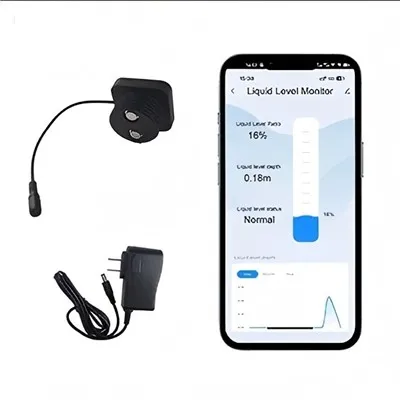
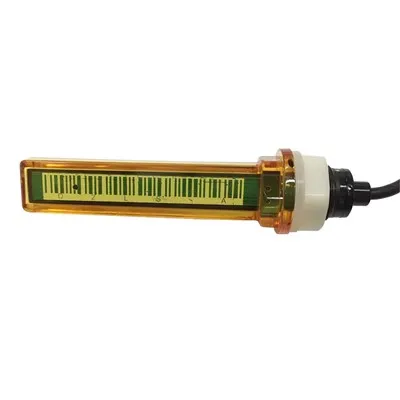
Gauge Type 3: Digital Monitor (Electronic)
Modern smart monitoring systems that display readings digitally.
How it works:
Ultrasonic sensor measures distance from the tank bottom to the propane surface
Microcontroller converts this to a fill percentage
Digital display shows the percentage and/or gallons remaining
How to read it:
Press the button or check the display on the monitor
Read the percentage shown (e.g., "78%" or "78% = 360 gal")
Some monitors show both percentage and estimated gallons
Popular digital monitors:
Mopeka Pro Check: $65–80, accurate to 95–98%
Mopeka Pro+ Cellular: $199–249, cellular remote monitoring
SmartTank Pro WiFi: $120–180, WiFi connected
Gauge Type 4: Fixed Liquid Level Gauge (Gauging Rod)
Used primarily in large commercial and industrial tanks.
How it works:
A calibrated rod is inserted into the tank through a measuring port
The wet portion of the rod indicates the liquid level
Read the measurement at the liquid line
How to read it:
Remove the gauge port cap
Slowly insert the gauging rod until it touches the tank bottom
Remove the rod and read where the wet line meets the dry line
Compare to the tank's measurement chart
How To Read a Standard Float Gauge: Step by Step
Reading Your Analog Gauge
Step 1: Locate the gauge
The gauge is on top of the tank, usually near the service valve. It has a circular dial face with numbers 0–80 (or 0–100). There may be a clear plastic cover over it.
Step 2: Check when to read
For the most accurate reading:
Wait 5–10 minutes after any propane usage stops
Avoid reading immediately after a delivery (let the propane settle)
Read in moderate temperatures (extreme cold or heat can affect readings)
Take the reading at eye level to see the needle position clearly
Step 3: Read the dial
Look directly down at the gauge dial. The needle points to a percentage:
80% = Full (the legal maximum)
50% = Half full
25% = Getting low-time to schedule refill
10% or below = Critical-refill immediately
Step 4: Convert percentage to gallons
To find how many gallons you have left:
text复制
Gallons remaining = Tank capacity × Gauge percentage Example (500-gallon tank at 40%): 500 × 0.40 = 200 gallons remaining
Common tank sizes and gallon conversions:
| Tank Size | 25% = ___ gal | 50% = ___ gal | 75% = ___ gal |
|---|---|---|---|
| 20 lb portable | 5.8 gal | 11.6 gal | 17.5 gal |
| 100 lb tank | 24 gal | 48 gal | 72 gal |
| 250 gallon | 50 gal | 100 gal | 150 gal |
| 500 gallon | 100 gal | 200 gal | 300 gal |
| 1,000 gallon | 200 gal | 400 gal | 600 gal |
Common Propane Gauge Reading Mistakes
Mistakes That Cost You Money ⭐
Mistake 1: Reading the gauge right after using propane
The problem: Using propane (running the furnace, cooking, using hot water) causes the propane to slosh and circulate, giving an inaccurate reading.
The fix: Wait 5–10 minutes after any propane use before reading the gauge. Let the propane settle so the float finds its true level.
Mistake 2: Confusing the 80% mark with 100%
The problem: Some gauges are marked to 100% even though 80% is the full mark. This makes people think they have 20% more propane than they actually have.
The fix: Know your tank's actual fill capacity. When the gauge reads 80%, your tank is at its legal maximum. A reading of 100% on some gauges actually indicates overfill, which is dangerous.
Mistake 3: Not accounting for temperature effects
The problem: Propane volume changes with temperature. On hot days, propane expands and may show a higher reading. On cold days, propane contracts and shows a lower reading.
The fix: Use temperature as context. If it's 90°F outside and your gauge shows 80%, the actual fill may be slightly less than 80% when the propane cools. Conversely, a cold tank at 80% may be overfilled when it warms up.
Mistake 4: Ignoring the gauge until it's too late
The problem: Many homeowners only check the gauge when the furnace won't start or the stove won't light.
The fix: Check your gauge monthly (at minimum) and especially before cold weather. Set calendar reminders at 50%, 25%, and 15% to schedule refills proactively.
Mistake 5: Trusting the gauge blindly after a delivery
The problem: After a propane delivery, the gauge may take 30–60 minutes to settle to the correct reading as the propane disperses and the tank settles.
The fix: Wait at least 1 hour after a delivery before reading the gauge for an accurate measurement.
How Often Should You Check Your Propane Gauge?
Recommended Checking Frequency
| Situation | Check Frequency | Why |
|---|---|---|
| Normal use (non-heating season) | Monthly | Monitor to plan ahead |
| Heating season (winter) | Every 2 weeks | Higher consumption |
| Extreme cold weather | Weekly | Rapid usage during cold snaps |
| After any propane use event | Before each use | Especially before cooking large meals |
| Before a trip or vacation | Yes | Ensure supply for when you're away |
| After a delivery | 1 hour after delivery | Verify fill level |
| If appliances seem underpowered | Immediately | Possible tank issue |
When To Refill Your Propane Tank
The Refill Schedule That Prevents Running Out
The golden rule: Refill when your gauge reaches 25–30%-not when it reaches 10–15%.
Why 25–30% instead of waiting until 10–15%:
It takes time to schedule and receive a delivery (1–7 days)
Unexpected cold weather increases usage dramatically
Emergency fills cost $50–150 more than scheduled fills
Running below 15% risks running completely empty
Empty tanks draw in air and moisture (expensive to fix)
The seasonal refill schedule:
| Season | When to Refill | Why |
|---|---|---|
| Spring (April–June) | At 30% | Pre-fill before summer, best pricing |
| Summer (July–August) | At 25% | Normal monitoring, enjoy the season |
| Fall (September–November) | At 35% | Pre-winter fill, prepare for heating season |
| Winter (December–February) | At 40% | Higher consumption, cold weather risk |
| Before a cold snap | At 40% | Top off before extreme cold hits |
| During extreme cold | At 50% | Fill more frequently in severe weather |
Emergency vs. scheduled refill costs:
| Situation | Typical Cost | Notes |
|---|---|---|
| Scheduled refill (normal) | $2.00–3.00/gal | Best pricing, no rush |
| Scheduled delivery fee | $30–80 | Waived by some suppliers for large orders |
| Expedited delivery | $50–150 extra | Delivery within 24–48 hours |
| Emergency/after-hours delivery | $100–300 extra | Nights, weekends, holidays |
| Running completely empty | $100–500 in damage | Air contamination, regulator issues |
Digital Propane Monitors: Modern Gauge Alternatives
Smart Monitoring for Accurate Readings ⭐
Digital propane monitors offer several advantages over traditional float gauges:
Advantages over analog gauges:
More accurate: 95–98% vs. 85–90% for analog
No moving parts: No float to stick or fail
Temperature compensated: More consistent readings across weather conditions
Remote access: Check level from your phone anywhere
Automatic alerts: Push notifications when level drops below threshold
Usage tracking: Track consumption over time
Top digital propane monitors:
| Monitor | Price | Connectivity | Accuracy | Best For |
|---|---|---|---|---|
| Mopeka Pro Check | $65–80 | Bluetooth | 95–98% | Value, accuracy |
| Mopeka Pro+ Cellular | $199–249 | 4G LTE | 95–98% | Remote monitoring |
| SmartTank Pro WiFi | $120–180 | WiFi | 93–96% | Home Assistant |
| Generac 4G LTE | $199–249 | 4G LTE | 90–95% | Full ecosystem |
Frequently Asked Questions
Q1: What does the gauge on my propane tank actually measure?
A: Your propane tank gauge measures the liquid level of propane inside the tank, displayed as a percentage. On a float gauge, a floating ball inside the tank rises and falls with the propane level, moving a needle on the dial. On a digital monitor, an ultrasonic sensor measures the distance from the tank bottom to the propane surface. Either way, the reading tells you what percentage of the tank's maximum capacity is filled with propane.
Q2: What does it mean when the propane gauge reads 80%?
A: When your propane gauge reads 80%, your tank is full-at its legal maximum fill capacity. The 80% mark is the maximum because propane expands with heat, and the tank needs 20% empty space to safely accommodate this expansion. A reading above 80% indicates overfilling, which is dangerous. When your gauge reads 80%, no more propane can be added until you use some.
Q3: What number should my propane gauge be at after a refill?
A: After a proper refill, your propane gauge should read 80% (not 100%). This is the legal maximum fill level. If the gauge reads below 80% after a refill, either the tank wasn't completely filled, or the reading was taken too soon after delivery (wait 30–60 minutes for the propane to settle). If the gauge reads above 80%, the tank has been overfilled, which is a safety concern.
Q4: How do I know if my propane tank gauge is accurate?
A: Test your gauge's accuracy with these methods:
After a delivery: Compare the gauge reading to the delivery receipt (gallons delivered vs. tank capacity)
Weigh the tank: Subtract the tare weight (stamped on the collar) from the total weight and divide by 4.2 lbs/gallon
Compare to a digital monitor: Install a digital monitor (Mopeka Pro Check: $65–80) and compare readings
Check when empty: When the tank runs out, the gauge should read 0%
Watch for drift: If the needle sticks, jumps erratically, or shows inconsistent readings, the gauge may be faulty
Q5: What is the lowest safe level on a propane tank gauge?
A: The lowest safe level depends on your situation, but here are the thresholds:
25%: Time to schedule a refill (don't wait any longer)
15%: Critical-refill as soon as possible, not a moment later
10% or below: Emergency-call for emergency delivery, you've waited too long
0%: Tank is empty-you've run out, which introduces air and moisture into the tank
The rule: Refill at 25–30% in normal conditions and at 35–40% during heating season. Never let the gauge drop below 15%.
Q6: Why does my propane gauge sometimes read differently at different times of day?
A: Temperature is the primary reason for gauge variations throughout the day:
Morning (cool): Gauge may read 2–5% lower than actual (propane contracts in cool temperatures)
Afternoon (warm): Gauge may read 2–5% higher than actual (propane expands in warmth)
After heavy use: Using large amounts of propane causes the tank to cool (propane absorbs heat as it vaporizes), potentially dropping the reading temporarily
The fix: Read your gauge at the same time of day for consistent comparisons. Morning readings before any usage give the most stable baseline.
Q7: What should I do if my propane gauge is stuck or not moving?
A: If your gauge is stuck or showing erratic readings:
Try tapping the gauge gently: Sometimes the float mechanism just needs a gentle tap to free it
Wait and re-read: Check again in 10–15 minutes after no propane is being used
Weigh the tank: Use the tank's tare weight to manually calculate remaining propane
Install a digital monitor: A Mopeka Pro Check ($65–80) bypasses the faulty gauge entirely
Call a propane professional: A stuck gauge may indicate a problem with the float or gauge mechanism
Important: If the gauge is stuck at a high reading when you know you should be low, don't assume you have more propane than you do. Call your supplier to confirm before running out.
Q8: Can a propane tank be overfilled even if the gauge reads less than 80%?
A: Yes-this is called "phantom full" and it's a real danger:
The gauge measures the liquid level at one specific point
If the tank is sitting on uneven ground, the liquid settles to one side
The float gauge reads the level at that side only, which may be different from the actual fill
A tank sitting at an angle can show 80% when it's actually overfilled
Overfilling causes dangerous pressure buildup when the tank warms up
What to do:
Ensure your tank is level when reading the gauge
Have your supplier check the fill level by weight at delivery
Use a digital monitor (Mopeka Pro Check) which is less affected by tank angle
Never rely on the gauge alone to determine if your tank is overfilled
Q9: Should I read my propane gauge in the morning or evening?
A: Morning readings are generally more accurate for these reasons:
The tank and propane have equilibrated overnight with minimal temperature fluctuation
No propane has been used for hours, so the float is at its true resting position
Morning readings before any daily activity give the most consistent baseline
You can then track how much propane you use throughout the day
When to check in the evening:
After a significant propane use event (e.g., a big dinner party)
Before going to bed during cold weather
When you want to track consumption over a specific period
Q10: How do I calculate how many days of propane I have left?
A: Calculate days remaining with this formula:
text复制
Days remaining = Gallons remaining ÷ Daily consumption rate Example: - Tank: 500 gallons at 25% = 125 gallons remaining - Daily consumption: 2 gallons/day (average winter heating use) - Days remaining = 125 ÷ 2 = 62.5 days
Daily consumption rates by season:
| Season | Average Daily Use (500 gal tank) | At 25% (125 gal) Lasts |
|---|---|---|
| Summer (no heating) | 0.5–1 gal/day | 125–250 days |
| Fall/Spring | 1–2 gal/day | 62–125 days |
| Winter (moderate use) | 2–4 gal/day | 31–62 days |
| Winter (heavy use, very cold) | 4–8 gal/day | 15–31 days |
| Emergency heat mode (extreme cold) | 8–15 gal/day | 8–15 days |
Track your actual usage: Record your gauge reading weekly and calculate your personal consumption rate. Your actual usage is the best predictor of how many days you have left.
Conclusion: How To Read Your Propane Tank Gauge
The quick guide to reading your propane gauge:
Locate the dial gauge on top of the tank
Read the percentage where the needle points
80% = full (legal maximum), 25% = time to refill
Convert to gallons: Tank capacity × percentage = gallons remaining
Check the gauge monthly minimum, every 2 weeks in winter
Install a digital monitor (Mopeka Pro Check: $65–80) for automatic alerts
The propane gauge reading checklist:
✅ Read when propane hasn't been used for 5–10 minutes
✅ Read at eye level for accuracy
✅ Know your tank's total capacity
✅ Refill at 25–30%, not at 10–15%
✅ Account for temperature variations
✅ Install a digital monitor for automatic alerts
✅ Check before cold weather and before trips
The numbers to remember:
80% = Full tank (legal maximum)
50% = Half full (comfortable)
25% = Time to schedule refill
15% = Critical-refill immediately
0% = Empty-you've run out (expensive mistake)
The bottom line: Reading your propane tank gauge is simple-find the dial, read the percentage, and know your refill threshold. The most expensive mistake homeowners make is not checking the gauge until it's too late. Check monthly, refill at 25–30%, and install a digital monitor for automatic alerts. Five minutes with your propane gauge today can save you $100–500 in emergency fills and a cold, inconvenient night without heat.
Last updated: July 2026
Disclaimer: This guide provides general information about reading propane tank gauges for educational purposes. Always follow manufacturer guidelines and propane safety regulations. For propane system inspection, gauge replacement, or refilling, consult a licensed propane professional.