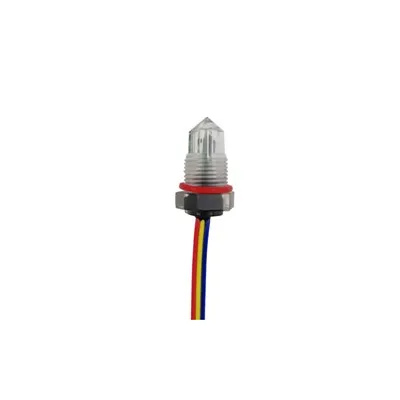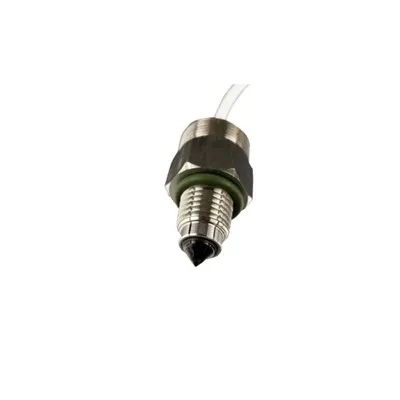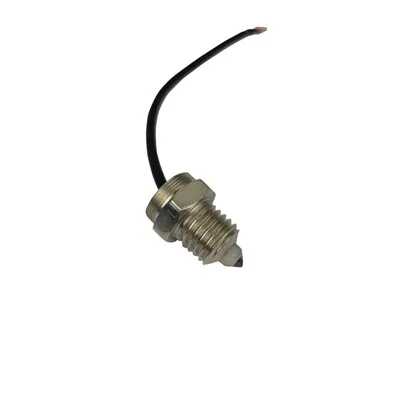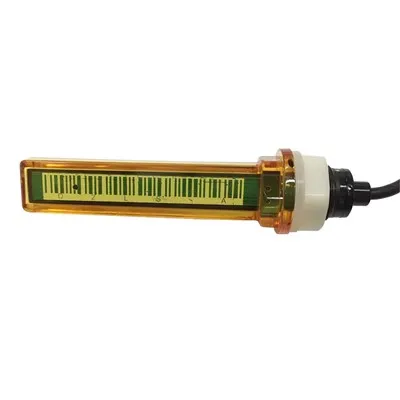
Displacer-Type Level Sensor
The displacer-type level transmitter replaces the traditional magnetic float with a displacer; the sensor is designed based on Archimedes' principle of buoyancy. This transmitter utilizes micro-metal diaphragm strain gauge technology to measure liquid levels, interface levels, or densities. During operation, routine configuration settings can be performed directly on-site using the device's physical buttons.
Float-Type Level Sensor
The float-type level transmitter consists of a magnetic float, a guide tube, a signal unit, an electronic unit, a junction box, and mounting hardware. Typically, the specific gravity of the magnetic float is less than 0.5, allowing it to float on the liquid surface and move vertically along the guide tube. The guide tube houses internal sensing elements which, under the influence of the external magnetic field, convert the detected liquid level into a resistance signal proportional to the level variation; the electronic unit then converts this signal into a standard output, such as 4–20 mA.
The level sensor features a modular circuit design, offering advantages such as acid resistance, moisture resistance, vibration resistance, and corrosion resistance. The internal circuitry incorporates a constant-current feedback loop and an internal protection circuit, ensuring that the maximum output current does not exceed 28 mA; this effectively safeguards the power supply and prevents damage to secondary instrumentation.
Hydrostatic Level Sensor
This transmitter operates based on the principle of measuring hydrostatic pressure. It typically employs a silicon pressure sensor to convert the measured pressure into an electrical signal; this signal is then amplified by an amplification circuit and compensated by a compensation circuit before being output as a standard current signal, such as 4–20 mA or 0–10 mA.