Automatic Propane Refills with Remote Tank Monitoring: The Complete 2026 Guide
Curious about automatic propane refills with remote tank monitoring? This guide covers everything you need to know-how the systems work, the best providers in 2026, pricing, setup requirements, smart home integration, and whether automatic propane delivery is right for you.
How Does Automatic Propane Refill with Remote Monitoring Work?
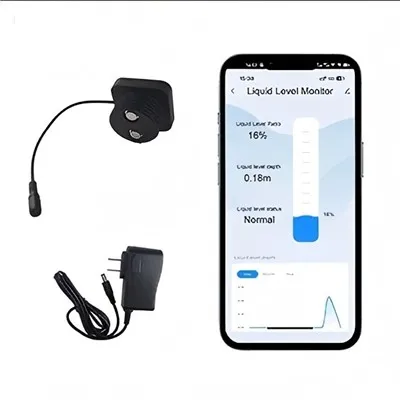
The short answer: Automatic propane refills with remote monitoring combine a smart tank sensor (like Mopeka Pro+ or Generac 4G LTE) with a propane supplier's delivery service. When your tank level drops to a preset threshold (typically 20–30%), your supplier automatically schedules a refill-no phone calls, no running out, no guessing.
Why it matters: Propane runs out at the worst moments: during cold snaps, mid-cooking, or in the middle of a camping trip. Automatic delivery eliminates that anxiety entirely. Your monitor tracks the level, your supplier watches the data, and propane arrives before you run low.
The Two Parts of the System
Automatic propane delivery requires two components working together:
Part 1: Smart Tank Monitor (your responsibility)
Installs on your propane tank
Tracks fill level in real time via 4G LTE or Bluetooth
Sends data to a smartphone app and-optionally-to your propane supplier
Sets low-level alerts before you run out
Part 2: Automatic Delivery Service (your supplier's responsibility)
Receives tank level data from your monitor
Schedules delivery when your tank reaches the agreed threshold
Delivers propane to your location
Bills you automatically
The key requirement: Both your monitor and your supplier must support data sharing. Not all propane suppliers offer automatic delivery, and not all monitors integrate with supplier platforms.
Best Automatic Propane Delivery Services in 2026
Major Propane Suppliers with Smart Delivery
| Supplier | Automatic Delivery | Monitor Integration | Coverage | Rating |
|---|---|---|---|---|
| AmeriGas | Yes (Smart Alien program) | Compatible with most monitors | Nationwide | ⭐⭐⭐⭐ |
| Ferrellgas | Yes (Plus & Go) | Monitor sales + delivery | Midwest/South | ⭐⭐⭐⭐ |
| Suburban Propane | Yes (Keep Full program) | Compatible with most monitors | Nationwide | ⭐⭐⭐⭐ |
| Paraco | Yes (Smart Delivery) | Proprietary + compatible | Northeast | ⭐⭐⭐⭐⭐ |
| Local/co-op suppliers | Varies by provider | Check local options | Regional | ⭐⭐–⭐⭐⭐⭐ |
How Major Suppliers Work
AmeriGas Smart Alien Program:
AmeriGas offers automatic delivery through their Smart Alien program
Customers receive a compatible tank monitor (sometimes free with enrollment)
When tank drops to ~20%, AmeriGas automatically schedules delivery
No surprise runs, no phone calls needed
Pricing: Often included with automatic delivery contract (may require minimum purchase)
Ferrellgas Plus & Go:
Mobile app lets you track usage and schedule deliveries
Automatic delivery option available for enrolled customers
Deliveries based on historical usage patterns and monitor data
Market area: Primarily Midwest and South
Suburban Propane Keep Full Program:
Automatic delivery based on usage history and tank monitor data
Price protection options available (lock in pricing)
"No run out" guarantee for enrolled customers
Priority service for Keep Full members
Paraco Smart Delivery (Top Pick for Northeast):
Proprietary smart monitoring platform
Automatic delivery with real-time data integration
Excellent customer service and reliable delivery
Best-in-class app and monitoring experience
Smart Tank Monitors That Enable Automatic Delivery
Monitors with Supplier Integration
| Monitor | Supplier Integration | Connectivity | Price | Score |
|---|---|---|---|---|
| Mopeka Pro+ Cellular | AmeriGas, Paraco, others | 4G LTE | $199–249 | ⭐⭐⭐⭐⭐ |
| Generac 4G LTE | Ferrellgas, others | 4G LTE | $199–249 | ⭐⭐⭐⭐ |
| AmeriGas-provided monitor | AmeriGas only | Cellular | Free (enrollment) | ⭐⭐⭐⭐ |
| Suburban Propane monitor | Suburban only | Cellular | Free (enrollment) | ⭐⭐⭐⭐ |
| Tank Utility | Multiple suppliers | Cellular | $99–149 + $9.95/mo | ⭐⭐⭐ |
Mopeka Pro+ Cellular - Best Monitor for Automatic Delivery ⭐
Why it works best:
4G LTE connectivity means reliable, always-on data
Multiple supplier integrations (not locked to one company)
99% accuracy ensures correct delivery timing
GPS tracking for security
Free app with no subscription fees
Compatible with AmeriGas, Paraco, and most regional suppliers
The supplier advantage: Because the Mopeka Pro+ is monitor-agnostic (not tied to one propane company), you can sign up for automatic delivery with any supplier that supports it. This gives you flexibility to choose the best price and service in your area.
Supplier-Provided Monitors ⭐
Pros:
Often provided free or at discount with enrollment
Guaranteed compatibility with supplier's platform
Supplier handles all technical support
Seamless data integration (monitor → supplier automatically)
Cons:
Tied to one supplier (no switching flexibility)
May only work with that specific company's tanks
Less advanced features than third-party monitors
If you switch suppliers, you may need new hardware
Benefits of Automatic Propane Delivery with Remote Monitoring
Why RVers and Homeowners Love This System
Benefit 1: Never Run Out of Propane ⭐ The primary advantage. Your tank level triggers a delivery before you hit empty. Cold weather, extended trips, busy schedules-no problem. Your supplier watches the data and acts before you're in crisis.
Benefit 2: No More Manual Tracking ⭐ No more guessing, checking gauges, or remembering to call for a refill. The monitor tracks everything. The supplier acts on the data. You just… have propane.
Benefit 3: Better Pricing ⭐ Many suppliers offer price incentives for automatic delivery customers:
Locked-in per-gallon pricing (protect against price spikes)
Waived hazmat/delivery fees
Discounted rates for commitment agreements
Free or discounted tank monitor hardware
Benefit 4: Usage Insights ⭐ Smart monitors track your propane consumption over time:
Gallons used per week/month/season
Usage patterns by temperature
Cost per gallon tracking
Predictive delivery timing based on your actual consumption
Benefit 5: Convenience for Remote RVs ⭐ If you store your RV at a remote location or seasonal campground:
No need to drive to check the tank
Delivery happens automatically while you're away
Works perfectly for seasonal RVers who visit periodically
GPS tracking lets you confirm the delivery location
Benefit 6: Emergency Protection ⭐ Cold snaps, unexpected guests, extended stays-your usage may spike. With automatic monitoring, the system adapts:
Higher usage triggers earlier delivery
Extra capacity ensures you're covered
No emergency "run out and pay rush fees" situations
How to Set Up Automatic Propane Delivery
Step-by-Step Setup Guide
Time required: 30–60 minutes (one-time setup)
Step 1: Choose Your Smart Tank Monitor
Before signing up with a supplier, decide on your monitor:
Option A: Supplier-provided monitor
Ask your current propane supplier about automatic delivery programs
They'll provide a compatible monitor
Simplest integration but less flexibility
Option B: Bring-your-own monitor (recommended)
Buy a Mopeka Pro+ Cellular ($199–249) or similar
Confirm it works with your preferred supplier
More flexibility and advanced features
No lock-in to one supplier
Step 2: Find an Automatic Delivery Supplier
Questions to ask potential suppliers:
Do you offer automatic propane delivery?
Do you integrate with [specific monitor brand]?
What's the minimum purchase commitment (gallons/year)?
Do you offer price lock or price cap options?
What's the delivery area (rural areas may have surcharges)?
What's the fee structure (delivery fees, hazmat, etc.)?
What happens if my tank monitor fails-will I still get delivery?
Step 3: Install Your Tank Monitor
If using a third-party monitor (e.g., Mopeka Pro+):
Mount the sensor on the bottom of your propane tank (Step-by-step in Part 2 guide)
Download the app and create account
Pair via 4G LTE (automatic, no WiFi needed)
Calibrate by weighing the tank and entering the actual level
Set alert thresholds (20% warning, 15% critical, 10% emergency)
Step 4: Enroll in Automatic Delivery
With your supplier:
Contact the supplier (call, website, or app)
Provide your address and tank location
Share your monitor data access (give supplier permission to view your tank level)
Some monitors share directly via supplier app integration
Others require you to add the supplier to your monitor's sharing list
Set your delivery threshold (typically 20–30% remaining)
Agree on pricing structure (variable, locked, or capped)
Set up payment method (credit card, autopay, etc.)
Review contract terms (minimum purchase, cancellation policy)
Step 5: Verify the System Is Working
Test the data flow:
Check your monitor app - does it show your current level?
Ask your supplier - can they see your tank level in their system?
Trigger a test alert - do you receive the notification?
Confirm supplier contact - do they have your correct phone/email for delivery notifications?
Set your preferences:
Preferred delivery days/times (if available)
Contact preferences (phone, text, email)
Emergency contact if you're unreachable
Backup contact for when you're traveling
Pricing and Costs
What You'll Pay for Automatic Propane Delivery
Monitor hardware cost:
Supplier-provided monitor: $0–50 (often free with enrollment)
Third-party monitor (Mopeka Pro+): $199–249 (one-time)
Propane pricing structures:
| Pricing Type | How It Works | Pros | Cons |
|---|---|---|---|
| Variable (market price) | Price fluctuates with market | Lower in warm months | Unpredictable, spikes in cold months |
| Locked price | Fixed price per gallon | Budget certainty | May pay more in low-price markets |
| Capped price | Price capped with floor | Protection from spikes | Pay premium for the cap |
| Budget billing | Equal monthly payments | Even cash flow | May overpay in low-usage months |
Automatic delivery commitments:
Minimum purchase: Most suppliers require 100–300 gallons/year
Contract length: 1–3 year contracts typical
Early cancellation: May pay fee or return free hardware
Delivery fees:
Some suppliers waive delivery fees for automatic delivery customers
Rural delivery may have surcharges ($1–5 per delivery)
Hazmat fees are typically unavoidable ($0.05–0.15/gallon)
Real-world cost example:
| Item | Cost |
|---|---|
| Monitor (one-time) | $0 (supplier-provided) or $224 (Mopeka Pro+, 5-yr) |
| Propane (500 gallons/year at $2.50/gal) | $1,250 |
| Delivery fee (waived for auto delivery) | $0 |
| Hazmat fee ($0.10/gal) | $50 |
| Annual total | ~$1,300 |
Automatic Delivery for RVs vs. Homes
RV-specific Considerations
For RVers:
Automatic delivery works best for park model RVs and permanent campsite setups
For mobile RVs with exchange tanks, automatic delivery is more complex
Many RVers use monitors for tracking but order refills manually
Best use case: Seasonal RV storage with fixed propane tank
Setup for RVs:
Install smart monitor on permanent tank
Enroll with local propane supplier for that storage location
Set delivery threshold at 25–30% (supplier may not deliver below 20%)
Use the monitor to track dual-tank setups
Home-specific Considerations
For homeowners:
Automatic delivery is very common for home propane
Most major suppliers offer it
Home tanks (250–500 gallons) are ideal for automatic delivery
Usage patterns are predictable (heating = high winter use)
Setup for homes:
Install monitor on home propane tank
Enroll with home propane supplier
Set threshold at 20–25%
Choose pricing structure (locked or variable)
Supplier delivers based on usage history and real-time data
Smart Home Integration
Connecting to Home Automation Systems
What works in 2026:
Smartphone apps (all monitors):
Mopeka Pro app: iOS and Android
Mobile Link app: Generac and compatible monitors
Supplier-specific apps: AmeriGas, Ferrellgas, Suburban
Home automation platforms:
Amazon Alexa: Some monitor apps support Alexa routines ("Alexa, check propane level")
Google Home: Limited integration but growing
Samsung SmartThings: No direct integration yet
Home Assistant: Advanced users can build custom integrations
Notifications:
Push notifications to phone
SMS text alerts
Email alerts
Some systems integrate with smart home alerts (Ring, etc.)
For RVers with smart home setups: The Mopeka Pro+ and Generac apps both work independently of home automation systems but send alerts to your phone anywhere in the world.
Frequently Asked Questions
Q1: Does automatic propane delivery cost more?
A: Not necessarily. While some suppliers charge slightly more per gallon for automatic delivery contracts, many offset this with waived delivery fees, price locks, and free hardware. Compare the all-in cost (propane price + fees + monitor cost) before assuming it's more expensive. Automatic delivery often costs the same or less than pay-as-you-go.
Q2: What if my propane tank is empty and no one is home to accept delivery?
A: Most suppliers can deliver without you present, provided:
The tank is accessible (not locked behind a fence with no key)
The area is safe for the delivery driver
There are no obstacles preventing truck access
Tips for remote delivery:
Leave instructions for the driver (gate code, tank location)
Ensure the area is clear of pets and obstructions
Consider a lock box for keys if needed
Communicate with your supplier about access issues
Q3: Can I still monitor my tank level with automatic delivery?
A: Yes, always. Automatic delivery doesn't replace your monitor-it adds supplier oversight. You still have full access to your tank level data via the monitor's app. In fact, you now have TWO layers of monitoring: your own alerts and your supplier's automatic scheduling.
Q4: What happens if I want to cancel automatic delivery?
A: It depends on your contract terms:
Month-to-month: Cancel anytime, no penalty
Annual contract: May owe early termination fee ($50–200)
Free hardware: May need to return the monitor or pay full retail price
Price lock: Cancellation may forfeit locked pricing on remaining gallons
Read the contract before signing. Always ask about cancellation terms upfront.
Q5: Is automatic propane delivery worth it for seasonal RVers?
A: It depends on your setup:
Permanent site with fixed tank: Yes, absolutely. One of the best conveniences for seasonal RVers.
Mobile RV with exchange tanks: Less applicable. Automatic delivery doesn't work for removable tanks.
Stored RV at remote location: Yes, if you have a permanent tank at the storage site. The supplier delivers while you're away.
Best use case: Park model RVs, permanent campsites, RVs stored at a fixed location with a dedicated propane tank.
Q6: How do suppliers know when to deliver?
A: They watch your monitor data (with your permission):
Your smart monitor sends level data to the cloud continuously
Your supplier's platform receives this data
When your tank reaches the agreed threshold (e.g., 20%), the system flags your account
The supplier schedules a delivery based on route efficiency and your location
You receive notification of the upcoming delivery
The threshold setting: Work with your supplier to set the right threshold. Too high (e.g., 40%) and you're paying for more frequent deliveries. Too low (e.g., 10%) and you're cutting it close.
Q7: What if my monitor loses cellular signal?
A: Your supplier has backup protocols:
Most suppliers use route-based delivery in addition to monitor data
They track your historical usage patterns
If they haven't received data for a while, they'll schedule based on typical consumption
Some suppliers offer a grace period (e.g., they'll deliver at 15% regardless of data)
For your own backup:
Check your app periodically (even if you have automatic delivery)
If you notice the data is stale, contact your supplier
Keep a manual gauge check as backup (weigh the tank monthly)
Q8: Can I use a third-party monitor with automatic delivery?
A: Usually yes, but confirm with your supplier first. Many suppliers accept data from third-party monitors (Mopeka, Generac, etc.) via integration or manual sharing. Some prefer you use their proprietary hardware. Always ask: "Can I use my own tank monitor with your automatic delivery program?"
Q9: How much propane should I have delivered at once?
A: Balance delivery frequency against price:
More frequent, smaller deliveries: Higher per-gallon cost (delivery fees spread across fewer gallons)
Less frequent, larger deliveries: Lower per-gallon cost but more capital tied up in propane
Annual budgeting: Calculate your annual usage, divide into 3–4 deliveries (spring, summer, fall fill-up, winter reserve)
The sweet spot: For most homeowners, 250–500 gallons per delivery, 3–4 times per year.
Q10: What if I want to switch propane suppliers with automatic delivery?
A: It's more complicated but possible:
Return the supplier-provided monitor (or pay full price)
Cancel the contract (may incur early termination fees)
Sign up with new supplier (may need new monitor or re-integration)
Transfer any price locks or caps (usually not transferable)
Tip: Choose your supplier carefully before committing to automatic delivery. Switching costs money and time.
Conclusion: Is Automatic Propane Delivery Right for You?
The automatic delivery advantage:
Never run out of propane unexpectedly
No more phone calls or manual ordering
Often includes better pricing and waived fees
Works perfectly for remote RV storage
Usage insights help you budget and optimize
The automatic delivery commitment:
May require annual contract
May tie you to one supplier
May include minimum purchase requirements
Not all areas have quality automatic delivery options
Best for automatic delivery:
✅ Homeowners with 250–500 gallon tanks
✅ Park model RVs with fixed propane tanks
✅ Seasonal RVers who store their rig at fixed locations
✅ Anyone who wants hands-off propane management
✅ Areas with reliable, quality propane suppliers
May not be worth it for:
❌ RVers with exchange tanks (mobile use)
❌ Very light propane users (<100 gallons/year)
❌ Areas with poor supplier options
❌ Those who prefer price flexibility (variable market pricing)
My recommendation: If you have a fixed propane tank (home or seasonal site) and a quality supplier offering automatic delivery, sign up. The convenience, price benefits, and peace of mind make it one of the easiest quality-of-life