Can you use a propane heater in an enclosed room?
Last November the temperature in my detached garage dropped to about 19°F, and I had a workbench project I'd promised myself I'd finish before Christmas. The house was off-limits - my partner had already staged a quiet mutiny about sawdust in the hallway. So I did what anybody does now: I went down a rabbit hole of propane heater reviews at 11pm, convincing myself that a small tank-top unit would be the cheap fix. The phrase I kept typing into search was exactly the one in this article's title: can you use a propane heater in an enclosed room?
Here's the short answer I wish somebody had shoved in my face on night one. You can run certain propane heaters indoors, but "enclosed" is doing a lot of work in that sentence, and most of the heaters people actually buy for a garage or a workshop are not the safe ones. The ones that are safe cost more, install differently, and still want you to crack a window. If you take nothing else from this, take that: the cheap portable ones and a sealed-up room are a genuinely bad combination, and not in a "you'll regret it later" way - in a "call an ambulance" way.
Why the question even exists comes down to what propane actually does when it burns. It pulls oxygen out of the air and pushes carbon dioxide and water vapor back in, and if the burn is incomplete - which happens more often than the marketing admits - it also makes carbon monoxide. Carbon monoxide is the quiet one. No smell, no taste, and by the time you feel woozy you're usually past the point of being able to walk to the door. An enclosed room with no fresh air moving through it is the worst case, because the oxygen just keeps dropping while the CO keeps climbing. I read one insurance adjuster's writeup that called unvented propane the "single most common cause of accidental CO poisoning tied to a heating appliance" in older homes. I can't fully verify that statistic, but it lines up with everything the fire marshal in my county tells people, and it matches the warning stickers on every heater box I've handled.
So that's the "why it's not enough" part. A space that's enclosed isn't just cold - it's a sealed box where the chemistry slowly goes the wrong direction, and your body gives you almost no early warning.
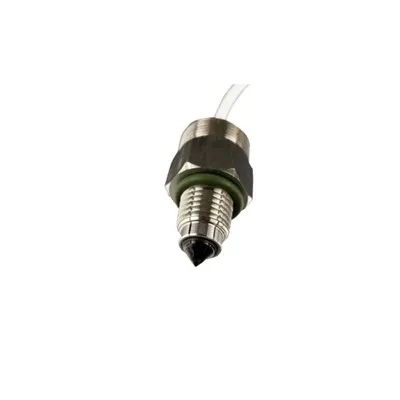
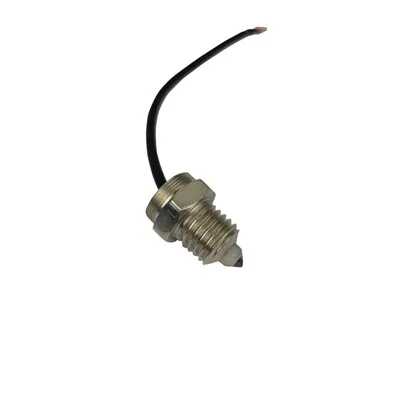
Now, if you keep digging, you'll hit the part that confused me for a week: the safety valves. This is where the "main line valve" comparisons actually matter, and almost nobody explains it clearly. The cheap little radiant heaters and the quality portable units both have a thing called a thermocouple - basically a heat sensor that holds the gas valve open only while the pilot or the burner is actually lit. If the flame blows out, the thermocouple cools, and the main gas valve shuts. Good. But a thermocouple only knows about the flame. It knows nothing about the air you're breathing. The feature you actually want in an enclosed space is an ODS - an oxygen depletion sensor. The ODS watches the oxygen level in the room, and if it drops below roughly 18 percent, it kills the gas entirely. That single difference is why a Mr. Heater "Buddy" with an ODS is sold as indoor-capable while a $40 hardware-store radiant heater without one is not. When you're comparing models, the main line valve setup - does it have an ODS, does it have a tip-over switch, is the thermocouple real or just decorative trim - is the whole ballgame. I've seen listings that bury the ODS spec three scrolls down behind the BTU number. Don't buy from those listings. And don't assume "has a pilot light" means "safe indoors" - the pilot is exactly what the thermocouple watches, and the thermocouple is exactly what misses the CO problem.
Let me talk models, because the abstract safety stuff doesn't mean much until you're holding a price tag. The one everybody starts with is the Mr. Heater Portable Buddy, model MH9BX. It puts out about 9,000 BTU on high, runs on a 1-pound propane cylinder, and as of this winter it's running around $110 to $130 depending on whether you catch it on sale at a big-box store. It has the ODS and a tip-over shutoff, and it's genuinely the unit I ended up keeping for the garage. The catch: a 1-pound bottle lasts maybe five or six hours, and at 9,000 BTU it'll take the edge off a small space but it will not heat a two-car garage to shirt-sleeve comfort in a real January. For that you'd step up to the Big Buddy, model MH18B, around $180 to $210, which doubles the output and can hook to a 20-pound tank with an adapter hose (another $25, and worth it). I ran the Big Buddy on a 20-pounder for a weekend and got close to three days of intermittent use before I swapped the tank.
If you want something that's actually meant to live on a wall, the Dyna-Glo and Bluegrass Living ventless units show up a lot. The Dyna-Glo RMC-FA125DGD, a forced-air propane heater, sits around $200 to $240 and moves a lot of air - too much air, honestly, for a small room; it's more of a jobsite beast than a garage companion. For an enclosed room you'd more likely look at a ventless blue-flame or infrared wall unit like the Bluegrass Living 30,000 BTU, roughly $280 to $330, which needs a wall bracket, a gas line or a heavy hose, and a permanent spot on the studs. And then there's the category that is actually the safest for enclosed spaces: a direct-vent or vented unit, something like the Mr. Heater MHVFB30NGT, which pulls combustion air from outside and exhausts outside through the same wall. Those start around $300 and climb past $500 once you add the vent kit and a proper install. Notice the pattern - the safer it is for an enclosed room, the more it costs and the less "portable" it is. There is no cheat code, and anybody telling you otherwise is selling the $40 one.
Installation is where people get surprised, and where the price tag on the box is only half the story. The portable Buddys are stupid simple: screw on a bottle, push the knob to pilot, hold the piezo clicker until it lights, then turn to high. Ten seconds, no tools. The ventless wall units are a different animal. You're mounting to a stud, running a propane line or a rated hose, and most towns want a permit and an inspection if it's a fixed appliance. I paid a plumber $180 to run a line for a friend's cabin unit, and that was on the cheap end because the tank was already sitting outside the wall. The direct-vent models are the worst for DIY - you're cutting a hole through the exterior wall, sealing it against weather, and if you mess up the concentric vent you've quietly built a slow leak that smells like nothing. I'd budget $400 to $700 all-in for a proper vented install if you're not doing it yourself, and honestly even handy people should let a pro do the venting. The gas line is not the place you learn by failing.
One thing that genuinely caught me off guard: insurance. I called my homeowner's carrier before I bolted anything to the wall, and the rep basically said unvented propane heaters are a yellow flag - some policies won't cover damage if an unvented unit was running at the time, or they'll raise your rate, or they want proof you've got a hardwired CO detector on the same circuit as the heater. The flip side is real, though. A few carriers, including one I looked at in the Farm Bureau network, will knock a small percentage off your premium if you install a monitored smoke-and-CO system, and a properly permitted direct-vent heater reads to an underwriter as a "responsible upgrade" rather than a "fire risk." So the safer unit doesn't just protect you - it can nudge your premium the right way, while the $40 radiant special in a sealed room can quietly void part of your coverage when you need it most. That's a ten-minute phone call I'd make before you buy anything.
On running cost, because the sticker price isn't the whole bill: a 20-pound propane tank runs me about $15 to $20 to refill where I live, and at the Buddy's burn rate that's somewhere in the neighborhood of 15 to 20 cents an hour on high - cheaper than running a 1500-watt electric heater if your power is pricey, and a lot cheaper than a kerosene smell you can't get out of the drywall. The ventless wall units drink more, obviously, but they're heating a whole room instead of a corner. None of this is precise to the penny; your tank exchange price and your local propane rate will move the number. The point is the operating cost is usually the small part. The install, the detector, and the habit of leaving a window open are the parts that decide whether you're warm or in trouble.
Now, the part that matters most: where these things actually belong. I've used the Buddy in three real situations, and they're not all the same. First, the garage, with the side door cracked about two inches and a CO detector clipped to the workbench - that's the only way I'll run it enclosed, and even then I keep sessions under a couple hours and I never leave it running and walk away. Second, during a two-day power outage last winter, it kept the mudroom livable while the furnace was dead; again, door open to the rest of the house, detector running, and I slept upstairs where the gas wasn't. Third - and this is the one people forget - outside. Under a pop-up tent at a tailgate, or on a covered porch with the wind at your back. Propane heaters are happiest outdoors, and the "indoor" models are really "indoor-with-a-window-open" models. The enclosed room with the door shut and no detector is the exact scenario that ends up in the local news once a winter.
There's also the tent-and-RV crowd, and I'll say this plainly because it's the deadliest misunderstanding out there: a propane heater inside a sleeping tent or a closed camper is how people die on camping trips. The Buddy is marketed for "enclosed spaces" in the RV sense, but an RV has gaps and roof vents a garage doesn't, and a nylon tent has none. Don't run one inside a tent. Don't.
A few quick things people actually ask me, answered the way I'd tell a neighbor:
Will a propane heater heat my whole basement? A ventless 30,000 BTU unit, maybe, if the basement is finished and not leaking air everywhere. A portable Buddy, no - it's a spot heater, not a furnace, and you should not be running it in a finished basement with the door closed anyway.
Do I really need the window open? Yes. Even with an ODS, you're trading indoor oxygen for combustion byproducts. Two inches of fresh air is not a lot to ask for not dying.
Is electric safer? For a sealed room, yes, almost always - no combustion, no CO. It costs more to run and it won't work in an outage, but "safe in a closed room" is exactly what electric gives you and propane doesn't.
What's the one thing to buy no matter what? A decent CO detector, $25, batteries you actually check. The heater is the easy decision. The detector is the one that matters when you're asleep.
So if you've read this far and you're still eyeing that $40 heater for the basement, let me be the annoying friend for a second. If you have the budget, spend the $120 on a Buddy with an ODS plus a $25 CO detector, crack a window, and call it done - you'll be safe, you'll be warm, and you'll sleep fine. If you're heating a room you actually live in, not just a workshop, save for the direct-vent unit and pay for the install; the couple hundred you "save" on the cheap route isn't worth the risk, and the key to staying protected is the habits you keep when you're not even thinking about it - detector batteries, a window, a timer in your head - not the heater itself. The propane will do its job. The rest is on you.