How Does Cold Weather Affect My Propane? The Complete Cold Weather Propane Guide
In this guide: Everything you need to know about how cold weather affects my propane - covering propane pressure changes in cold temperatures, regulator freeze-ups, the truth about propane freezing, appliance performance in winter, tank level monitoring, and the complete FAQ for 2026.
How Does Cold Weather Affect My Propane? Quick Answer
Cold weather affects propane in three main ways: it reduces propane vapor pressure inside the tank, it can cause regulator freeze-ups below approximately 20°F, and it makes the gauge reading less reliable on low-level tanks. Cold weather does not freeze propane (propane's freezing point is -306°F), does not crack propane tanks (tank steel is rated to -40°F), and does not stop propane from working - a full tank at 0°F still provides adequate pressure for all appliances. The practical cold weather effects that propane users actually experience are: reduced vapor pressure as temperature drops, which can affect performance on very low-level tanks below 20–30% in extreme cold; regulator ice blockages caused by Joule-Thomson cooling during gas flow, which block gas flow even from a full tank; and inaccurate gauge readings in cold weather, which can make a partially full tank appear to have more or less propane than it actually does. Preparing your propane system for cold weather means: keeping tanks above 30% full, adding propane de-icer before the first freeze, installing a regulator cover before the first frost, and monitoring tank levels more frequently during cold spells.
Propane Pressure in Cold Weather: What Actually Happens
The Physics of Temperature and Pressure
The most fundamental way cold weather affects propane is through vapor pressure. Understanding this relationship is the key to understanding every other cold weather effect on your propane system:
Propane vapor pressure at cold weather temperatures:
| Temperature | Approximate Tank Pressure (PSIG) | What This Means in Practice |
|---|---|---|
| 70°F | ~125 PSIG | Normal operating pressure |
| 60°F | ~110 PSIG | Normal - minor decrease |
| 50°F | ~95 PSIG | Normal - appliance performance unaffected |
| 40°F | ~80 PSIG | Normal - slight pressure reduction |
| 30°F | ~65 PSIG | Adequate for all appliances |
| 20°F | ~42 PSIG | Minimum for reliable appliance function; monitor level closely |
| 10°F | ~33 PSIG | Marginal on low tanks; de-icer essential |
| 0°F | ~28–36 PSIG | Minimum on full tanks; insufficient on tanks below 20% |
| -10°F | ~22–28 PSIG | Only with high fill levels; low tanks will not perform reliably |
What this means for your appliances: All propane appliances are designed to operate with a minimum inlet pressure of approximately 10–15 PSIG. At 0°F, a tank at 30% fill still holds approximately 30–40 PSIG - well above the minimum. Only a tank at very low levels (below 15–20%) in extreme cold (below 0°F) would drop to insufficient pressure. The practical implication: the single most important thing you can do to protect propane performance in cold weather is keep your tank above 30% full. A 30% full tank at 0°F has more than enough pressure for all appliances.
Why pressure decreases in the cold: Propane is stored as a liquid under its own vapor pressure. As temperature drops, the molecules in the propane vapor slow down and exert less pressure on the liquid surface. This is basic thermodynamics - Charles's Law and the Ideal Gas Law in action. The vapor pressure decrease is proportional to the temperature decrease, and it is completely predictable and normal. The tank itself is unaffected; only the pressure inside changes.
The Truth About Propane Freezing in Cold Weather
Separating Fact from Fear
One of the most common propane safety questions during cold weather is whether propane can freeze. The answer, backed by basic chemistry, should put this concern to rest:
The propane freezing point - the definitive numbers:
| Property | Value | Why It Matters |
|---|---|---|
| Propane freezing point | -306°F (-188°C) | This is the only temperature at which propane freezes |
| Coldest recorded temperature on Earth | -128.6°F at Vostok, Antarctica | Recorded July 21, 1983 |
| Coldest in North America | -81°F in Snag, Yukon | Recorded February 3, 1947 |
| Tank steel rating | -40°F (-40°C) | Structural limit, far below any inhabited-region temperature |
| Propane boiling point | -44°F (-42°C) | Below this, propane would boil at atmospheric pressure |
The gap between propane's freezing point and Earth's coldest recorded temperature is 177 degrees Fahrenheit. There is no temperature on Earth - including Antarctica in winter - that can freeze propane inside a properly maintained tank. Your propane will not freeze in any cold weather scenario you will ever encounter.
What people call "propane freeze" is almost always regulator ice:
The most common cold weather propane problem - sometimes called "propane freeze" - is actually ice forming inside the regulator, not inside the propane tank. This happens because:
During normal gas flow, propane expands rapidly through the regulator, dropping from approximately 300 PSIG inside the tank to 0.4 PSIG at the appliance. This rapid expansion causes Joule-Thomson cooling - the same effect that makes a compressed air duster can feel cold when you release the gas. In cold weather below approximately 20°F, this cooling effect combines with ambient cold to drop the regulator's internal temperature below 32°F. Moisture in the propane vapor freezes as ice inside the regulator mechanism, blocking gas flow. The tank is completely full. The propane is liquid. The regulator is frozen.
How Cold Weather Affects Your Propane Gauge
Why Gauges Lie in Cold Weather
Another common cold weather question is whether propane tank gauges are accurate in winter. The answer is: partially, and the discrepancy can be dangerous if you rely on the gauge alone:
How temperature affects propane tank gauge readings:
| Tank Fill Level | Gauge Reading at 70°F | Gauge Reading at 20°F | Actual Level at 20°F | Why |
|---|---|---|---|---|
| 80% full | 80% | 80% | 80% | Full tank pressure is stable |
| 50% full | 50% | 45–50% | ~50% | Minor error; gauge roughly accurate |
| 30% full | 30% | 20–25% | ~30% | Gauge underreads in cold - appears lower than actual |
| 10% full | 10% | 0–5% | ~10% | Gauge may read empty when tank is 10% full |
Why gauges become inaccurate in cold weather: Propane tank gauges measure the liquid level inside the tank using a float mechanism. In cold weather, the liquid propane contracts slightly as temperature drops. This contraction causes the float to sink slightly, making the gauge read lower than the actual fill level. Conversely, when a cold tank warms up, the liquid expands and the gauge reads higher. This is why a gauge that reads "empty" on a cold morning may read 20–30% after the tank warms in the sun - the tank was never actually empty; the cold was making the gauge underread.
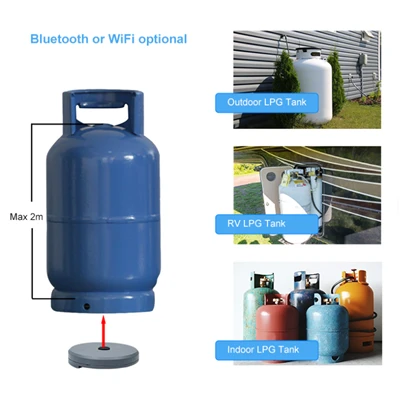
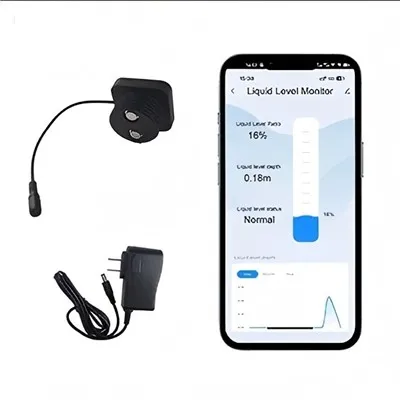
The danger of relying on gauge readings in cold weather: If you see your gauge at 25% on a cold morning and assume you have several days of propane left, you may actually have 30–35% - the gauge is underreading. More dangerously: if you see your gauge at 5% and assume you are nearly empty, you might be at 15–20% - still with days of supply remaining. The solution is to use multiple indicators: weigh the tank occasionally (the most accurate method), monitor consumption rate over time, and use an electronic propane monitor (Mopeka Pro Check, Generac G0070090, Tank Utility) that sends smartphone alerts at specific fill thresholds regardless of temperature.
Regulator Freeze-Ups: The Most Common Cold Weather Propane Problem
Prevention and Solution
The regulator freeze-up is the cold weather propane issue that affects the most propane users. Understanding how it happens, how to prevent it, and how to fix it is essential winter propane knowledge:
How a regulator freeze-up occurs - the step by step process:
| Step | What Happens | Temperature | Result |
|---|---|---|---|
| 1 | Propane flows through regulator | Normal | Gas flow to appliance |
| 2 | Propane expands from ~300 PSIG to 0.4 PSIG | Joule-Thomson cooling drops 20–40°F | Regulator internal temperature falls |
| 3 | Ambient air temperature is below 20°F | Cold weather | Combined ambient + JT cooling |
| 4 | Regulator internal temperature drops below 32°F | Freezing point of water | Moisture in propane vapor freezes as ice |
| 5 | Ice accumulates on regulator valve mechanism | Sustained cold | Gas flow blocked |
| 6 | Appliance shuts off or flame goes out | No gas reaching appliance | "Propane freeze" - but it is the regulator |
Why the regulator and not the tank: The tank contains liquid propane under relatively stable pressure conditions. The regulator is the point of most dramatic pressure change - from 300 PSIG to 0.4 PSIG in an instant. This pressure drop is the source of Joule-Thomson cooling. The regulator's internal valve is the coldest point in the propane system precisely because it is where the greatest pressure reduction occurs.
How to prevent regulator freeze-ups:
| Prevention Method | Cost | Effective to | Application |
|---|---|---|---|
| Propane de-icer (methanol) | $5–$8/season | All temperatures | Add before first cold snap; reapply with each fill Oct–Mar |
| Regulator cover | $10–$50 | Extends operation 10–20°F lower | Install before first frost; essential below 20°F |
| Keep tank above 30% full | Free | Maintains stable pressure | Monitor level; refill before dropping below 30% |
| Brush snow off regulator | Free | Prevents ice accumulation | After every significant snowfall |
| Avoid snow berm around tank | Free | Prevents insulating snow trap | Clear snow from around tank base and regulator |
How to thaw a frozen regulator: If your regulator freezes, turn off the main tank valve and all propane appliances immediately. Use a hair dryer or heat gun on the lowest setting to gently warm the regulator body - never use an open flame. Once thawed, gas flow should resume. Add propane de-icer to the tank before reconnecting. If the regulator freezes repeatedly, it may be damaged or at the end of its service life - consult a propane professional.
Cold Weather Propane Tank Performance by Tank Size
What to Expect From Different Tanks in Winter
Different propane tank sizes handle cold weather differently. Understanding how your tank size affects cold weather performance helps you plan appropriately:
Cold weather propane tank performance by size:
| Tank Type | Size | Cold Weather Performance | Winter Considerations |
|---|---|---|---|
| Portable cylinder | 1–5 lbs | Poor in extreme cold | Small volume = rapid pressure drop; do not rely on for heating |
| BBQ tank | 20 lbs | Moderate - fine for grilling, marginal for heating | Refill before cold season; monitor level |
| RV tank | 20–30 lbs | Moderate - monitor closely | Dual-tank setup recommended; switch tanks at 30% |
| Large cylinder | 33–100 lbs | Good - stable for most appliances | Monitor level; de-icer essential below 20°F |
| ASME tank (RV/portable) | 420 lbs | Good - thermal mass helps | Maintain above 30%; standard de-icer protocol |
| Stationary tank | 250–1,000+ gallons | Excellent - huge thermal mass | Stable year-round; de-icer in severe cold |
The thermal mass advantage of larger tanks: Large stationary propane tanks (250 gallons and above) have significant thermal mass - the large volume of liquid propane and the tank steel absorb and release heat slowly, buffering against rapid temperature changes. This means large tanks experience less dramatic pressure swings in cold weather than small portable cylinders. A 500-gallon stationary tank at 30% fill in 10°F weather has far more stable pressure than a 20-pound BBQ tank at the same fill level and temperature.
Essential Cold Weather Propane Checklist
What Every Propane User Should Do Before Winter
These are the preparation steps that prevent cold weather propane problems. Complete them before the first freeze:
Fall propane preparation checklist:
| Step | Task | Details | Timing |
|---|---|---|---|
| 1 | Schedule propane delivery | Fill tank above 50% before heating season | October |
| 2 | Add propane de-icer | Methanol or ethanol - 1 oz per 20 lbs tank | Before first freeze |
| 3 | Install regulator cover | Rated 10°F below expected low temperature | Before first frost |
| 4 | Inspect tank for rust and damage | Surface rust is cosmetic; deep rust needs attention | October |
| 5 | Check tank retest date | Replace if past retest date (stamped on collar) | Before heating season |
| 6 | Inspect regulator and connections | Look for wear, corrosion, ice damage | October |
| 7 | Test all propane appliances | Furnace, water heater, stove, fireplace | Before heating season |
| 8 | Clear vegetation from around tank | Minimum 5 feet clearance maintained | Before first snow |
| 9 | Consider electronic tank monitor | Mopeka Pro Check or Generac G0070090 | Before heating season |
| 10 | Plan delivery schedule | Set up automatic delivery or weekly level checks | October |
Frequently Asked Questions
Q1: How does cold weather affect my propane?
Cold weather affects your propane in three main ways: it reduces propane vapor pressure inside the tank (a full tank at 70°F holds approximately 125 PSIG; at 0°F, approximately 28–36 PSIG - still adequate for all appliances if the tank is above 30% full), it can cause regulator ice blockages below approximately 20°F when moisture in the propane vapor freezes inside the regulator mechanism (the most common cold weather propane problem), and it makes tank gauge readings less accurate, causing gauges to underread fill levels in cold weather. Cold weather does not freeze propane (propane's freezing point is -306°F), does not crack propane tanks (steel rated to -40°F), and does not stop a full or near-full tank from working reliably at any temperature above approximately -20°F with adequate fill levels. The practical cold weather actions are: keep your tank above 30% full, add propane de-icer before the first freeze, install a regulator cover before the first frost, and monitor your tank level more frequently during cold snaps.
Q2: Will my propane freeze in cold weather?
No - your propane will not freeze in any cold weather scenario you are likely to encounter. Propane's freezing point is -306°F (-188°C), which is 177 degrees colder than the coldest temperature ever recorded on Earth's surface (-128.6°F at Vostok Station, Antarctica). The tank steel is rated to -40°F (-40°C), also far below any natural outdoor temperature. There is no outdoor temperature in any inhabited region, in any state, province, or country, that approaches propane's freezing point. The "propane freeze" that some users experience is almost always ice forming inside the regulator - moisture in the propane vapor freezing at approximately 32°F - not the propane itself freezing. This is prevented with propane de-icer and a regulator cover.
Q3: Will my propane tank pressure be enough in cold weather?
Your propane tank pressure will be enough in cold weather as long as your tank is above 30% full and the temperature is above approximately -10°F. At 0°F, a tank at 30% fill holds approximately 30–40 PSIG - well above the 10–15 PSIG minimum required by propane appliances. The practical threshold for concern is very low tank levels (below 20–30%) combined with extreme cold (below 0°F). The single most important thing you can do to ensure adequate pressure in cold weather is keep your tank above 30% full. If your tank is 50% full or above, you have more than enough pressure at any natural outdoor temperature.
Q4: Why does my propane gauge read differently in cold weather?
Your propane gauge reads differently in cold weather because of thermal contraction of the liquid propane inside the tank. As temperature drops, the liquid propane contracts slightly, causing the float mechanism inside the gauge to sink lower. This makes the gauge read lower than the actual fill level - a tank that is actually 30% full may read 20–25% on a cold morning. When the tank warms up, the liquid expands and the gauge reads higher. This is why a gauge that reads near-empty on a cold morning may show 20–30% after the tank warms in the sun - the tank was never actually near empty. To get accurate readings in cold weather, use the tank weight method (weigh the tank and subtract the tare weight stamped on the collar), or use an electronic propane monitor that provides temperature-compensated readings.
Q5: How do I prevent regulator freeze-ups in cold weather?
You prevent regulator freeze-ups in cold weather with three steps: add propane de-icer to the tank before the first freeze (methanol or ethanol-based, approximately 1 oz per 20 lbs tank capacity - available as Gold期 Propane De-Icer or Heet), install a regulator cover before the first frost (insulates the regulator body and extends reliable operation by 10–20°F), and keep the tank above 30% full to maintain stable vapor pressure. Propane de-icer absorbs moisture in the propane system before it can freeze inside the regulator. The regulator cover insulates the regulator against ambient cold and Joule-Thomson cooling. These two steps prevent approximately 95% of all regulator freeze-ups. If your regulator does freeze, thaw it gently with a hair dryer on low heat - never use an open flame - and add de-icer before using the tank again.
The Bottom Line
Cold weather affects propane primarily through three mechanisms: pressure reduction (manageable by keeping tanks above 30% full), regulator ice blockages (preventable with de-icer and regulator covers), and inaccurate gauge readings (compensated by using tank weight or electronic monitors). Cold weather does not freeze propane, does not crack propane tanks, and does not stop a properly maintained propane system from working reliably at any temperature above -10°F with adequate fill levels. The cold weather propane preparation steps are straightforward: add de-icer before the first freeze, install a regulator cover before the first frost, keep tanks above 30% full through winter, monitor tank levels more frequently during cold snaps, and clear snow from around the regulator after storms. These steps cost under $30, take less than an hour to complete, and eliminate approximately 95% of all cold weather propane problems. Your propane system will serve you reliably through any winter - if you give it the basic preparation it needs.
Last updated: July 2026
Disclaimer: This guide provides general information about how cold weather affects my propane for educational purposes. Propane is a flammable gas - if you smell propane gas, evacuate immediately, do not operate electrical devices, and call your propane supplier or 911. Never use an open flame to thaw a propane regulator. Store propane tanks only in well-ventilated outdoor areas as required by NFPA 58 and local fire codes. Perform regular maintenance on propane systems before and during cold weather. Inspect propane tanks for physical damage, corrosion, and age-related wear. Replace damaged or expired propane tanks and regulators. This guide is not affiliated with, endorsed by, or sponsored by any propane equipment manufacturer.