How Often Should You Schedule a Propane Delivery? The Complete Homeowner's Guide
In this guide: Everything you need to know about how often you should schedule a propane delivery - covering delivery frequency by tank size, season, usage, and climate, plus the complete FAQ for 2026.
How Often Should You Schedule a Propane Delivery? Quick Answer
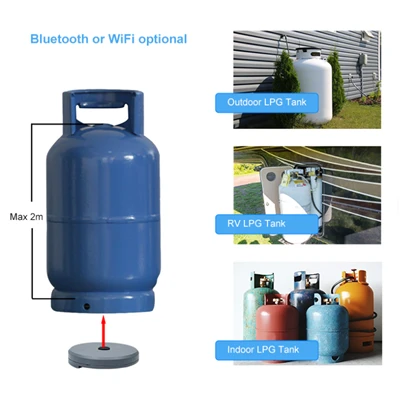
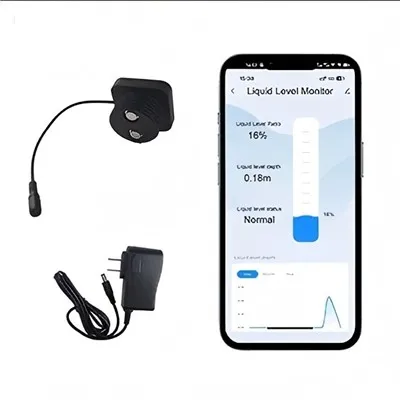
You should schedule a propane delivery when your tank reaches 20–30% capacity - typically every 6–10 weeks during winter for an average home, and every 8–16 weeks during summer. The exact frequency depends on five factors: your tank size, your home's propane consumption rate, the outdoor temperature (cold weather dramatically increases propane usage), whether you use propane for heating or just for hot water and cooking, and your delivery plan type (automatic vs. will-call). A 250-gallon tank on a home using propane for heating, hot water, cooking, and clothes drying in a cold climate needs refilling approximately every 6–8 weeks in winter and every 10–14 weeks in summer. A 500-gallon tank provides longer intervals - approximately every 10–14 weeks in winter and every 14–20 weeks in summer. The most important rule: never let your tank drop below 10%. Running completely empty allows air and moisture to contaminate your system, requiring a $100–$300 professional purge before you can resume using propane. Installing a wireless tank monitor that sends alerts at 20–30% tank level is the easiest way to stay ahead of deliveries and avoid running critically low.
Propane Delivery Frequency by Tank Size
How Tank Capacity Affects Delivery Timing
Your propane tank size is the single biggest factor determining how often you need a delivery:
Propane delivery frequency by tank size:
| Tank Size | Gallons Delivered (20%→80% fill) | Winter Delivery Frequency | Summer Delivery Frequency | Annual Deliveries (Average) |
|---|---|---|---|---|
| 120 gallons (small above-ground) | ~72 gallons | Every 3–5 weeks | Every 6–10 weeks | 10–15 deliveries/year |
| 250 gallons (standard above-ground) | ~150 gallons | Every 6–8 weeks | Every 10–14 weeks | 6–10 deliveries/year |
| 500 gallons (large above-ground or underground) | ~300 gallons | Every 10–14 weeks | Every 14–20 weeks | 4–7 deliveries/year |
| 1,000 gallons (large underground) | ~600 gallons | Every 16–22 weeks | Every 22–30 weeks | 3–5 deliveries/year |
Why winter delivery frequency increases: Propane consumption roughly doubles in winter for homes using propane for heating. A home that uses 50 gallons per month in summer may use 100–120 gallons per month in the coldest winter months - doubling the rate at which your tank empties. This is why many homeowners are surprised by the frequency of winter deliveries compared to summer.
How Usage Patterns Affect Delivery Frequency
What Drives Your Propane Consumption
Understanding what consumes propane in your home helps you predict delivery needs accurately:
Propane consumption by appliance:
| Appliance | Average Annual Gallons | Monthly Consumption | Delivery Impact |
|---|---|---|---|
| Propane furnace (primary heat) | 500–1,200 gallons/year | 40–100 gallons/month (winter) | Highest impact; winter-only driver |
| Propane water heater | 200–400 gallons/year | 17–33 gallons/month | Year-round; consistent |
| Propane cooktop/range | 30–60 gallons/year | 2.5–5 gallons/month | Year-round; low volume |
| Propane clothes dryer | 20–40 gallons/year | 1.5–3 gallons/month | Year-round; low volume |
| Propane fireplace | 50–150 gallons/year | 4–12 gallons/month (when used) | Seasonal; variable |
| Propane garage/workshop heater | 50–200 gallons/year | 4–16 gallons/month (winter) | Seasonal; variable |
| Average home (heat + water + cooking) | 800–1,400 gallons/year | 67–117 gallons/month | - |
The heating season effect: For homes using propane for heating, the heating season (November through March in most climates) typically accounts for 60–75% of annual propane consumption. This means that if your tank holds 250 gallons and you use propane for heating, hot water, and cooking, you might consume 50 gallons per month in summer but 100–115 gallons per month in winter - nearly double the summer rate. This seasonal variation is the primary reason delivery frequency changes throughout the year.
Seasonal Delivery Timing
When to Schedule Deliveries Throughout the Year
Strategic delivery timing - both within the year and within each season - affects both cost and reliability:
Monthly propane delivery recommendations:
| Month | Delivery Priority | Strategic Reason |
|---|---|---|
| January | Highest priority | Peak heating demand; tank depletes fastest; avoid running out in coldest month |
| February | High priority | Second-coldest month; continue monitoring closely |
| March | Moderate | Demand declining; good time to fill if tank is low |
| April | Low | Lowest demand season begins; tank should stabilize |
| May | Low | Pre-summer fill; lock in lower prices if using pre-buy program |
| June | Low | Lowest demand; ideal time for annual fill and maintenance |
| July | Low | Continue at low consumption rate; monitor but don't rush |
| August | Moderate | Demand begins to tick up slightly; start watching levels |
| September | Moderate | Pre-heating-season fill; good time to lock in pricing |
| October | High priority | Heating season approaching; ensure tank is full going into winter |
| November | High priority | First month of heavy heating use; monitor tank level closely |
| December | Highest priority | Peak winter demand begins; never run low entering December |
The October fill strategy: The single most important delivery timing strategy is filling your tank in September or early October, before the heating season begins. A full tank entering winter provides a safety buffer and means you are less likely to need emergency delivery in January or February - when both demand and emergency delivery fees are at their highest.
Climate and Regional Factors
How Weather Affects Your Delivery Schedule
The climate you live in dramatically affects how often you need propane delivered:
Climate impact on propane delivery frequency:
| Climate Zone | Heating Degree Days (HDD) | Winter Gallons/Month (2,000 sq. ft.) | Annual Gallons | Deliveries/Year |
|---|---|---|---|---|
| Warm (Gulf Coast, Southern FL) | <2,000 HDD | 20–40 gallons/month | 300–500 gallons | 2–4 deliveries |
| Moderate (Mid-Atlantic, NC, SC) | 2,000–4,000 HDD | 40–70 gallons/month | 500–800 gallons | 4–7 deliveries |
| Cold (New England, Midwest, Mountain states) | 4,000–7,000 HDD | 70–100 gallons/month | 800–1,200 gallons | 6–10 deliveries |
| Very Cold (Northern Plains, Upper Midwest) | 7,000–10,000 HDD | 100–140 gallons/month | 1,200–1,800 gallons | 8–14 deliveries |
| Arctic (AK, Northern MN, ND) | >10,000 HDD | 140–200+ gallons/month | 1,800–2,500 gallons | 12–18 deliveries |
The heating degree day concept: Heating Degree Days (HDD) measure how cold a location is and how long it stays cold. Higher HDD means more heating demand and more propane consumption. A home in Minneapolis, Minnesota (8,000 HDD) uses approximately 2–3 times more propane for heating than a home in Charlotte, North Carolina (3,000 HDD). This is why delivery frequency varies so dramatically by geography.
Automatic Delivery vs. Will-Call: Which Affects Frequency
How Your Delivery Plan Changes Your Schedule
Your chosen delivery plan determines who is responsible for monitoring and scheduling deliveries:
Automatic vs. will-call delivery frequency:
| Factor | Automatic Delivery | Will-Call Delivery |
|---|---|---|
| Who schedules | Supplier monitors and schedules | You monitor and call to order |
| Typical winter frequency | Supplier manages automatically | Same physical frequency - but you control timing |
| Risk of running out | Very low | Moderate - if you forget to order |
| Tank level at delivery | Supplier delivers at ~20–30% | You order when you reach ~20–30% |
| Price control | Market rate; no timing advantage | You choose when to buy - buy in summer, save money |
| Best for | Hands-off homeowners | Budget-conscious homeowners who want pricing control |
| Recommended monitor | Optional but helpful | Essential - wireless tank monitor strongly recommended |
The will-call timing advantage: Will-call delivery gives you control over when you purchase propane - which means you can buy in summer when prices are 15–25% lower than winter prices. A homeowner who buys all their propane in summer (June–September) at $2.20/gallon instead of $3.20/gallon in winter saves approximately $300–$500 per year on an 800-gallon annual consumption. This savings comes at the cost of actively managing your tank level and ordering before you run critically low.
Signs You Need a Propane Delivery
Warning Signals Every Homeowner Should Know
Know these signs that a delivery is needed - before you run out:
Propane delivery warning signs:
| Warning Sign | Tank Level Estimate | Action Required |
|---|---|---|
| Tank gauge reads 30% | Normal reorder point | Contact supplier; schedule delivery |
| Tank gauge reads 20% | Time to reorder now | Contact supplier immediately; avoid any further delay |
| Tank gauge reads 15% | Danger zone | Emergency delivery may be needed; contact supplier immediately |
| Tank gauge reads 10% | Critical - do not run appliances | Emergency delivery required; do not use propane appliances |
| Appliances flickering or pilot lights going out | Possible low pressure from low tank | Check tank level immediately; call supplier |
| Furnace runs constantly without heating adequately | Possible supply issue | Check tank level; contact supplier |
| Strong propane smell (when no appliances are running) | Possible leak or empty tank running on vapor | Evacuate; call 911; contact supplier from outside |
The Cost of Running Out
Why Delivery Timing Matters Financially
Running out of propane costs money beyond just the inconvenience:
Running out of propane - the true cost:
| Consequence | Cost | Details |
|---|---|---|
| Emergency delivery fee | $50–$150 | Surcharge for urgent, off-schedule delivery |
| System purge fee | $100–$300 | Required when air enters the system from running empty |
| Service call fee | $75–$150 | Technician visit to restore service |
| Potential appliance damage | $100–$500 | Contaminants from empty tank can damage regulators and appliances |
| Total cost of running out | $225–$950 | More than the cost of a missed routine delivery |
| Prevention cost (tank monitor) | $80–$250 (one-time) | Eliminates the risk of running empty |
How to Calculate Your Delivery Needs
A Simple Formula for Predicting Propane Usage
Use this method to estimate your next delivery date:
Propane delivery calculation:
| Step | Calculation | Example |
|---|---|---|
| 1. Estimate monthly consumption | Sum your appliance usage from the table above | 2,000 sq. ft. home: 90 gallons/month (winter) |
| 2. Check tank capacity | Tank size × desired reorder % | 250 gal × 0.30 = 75 gallons at reorder point |
| 3. Calculate weeks of supply | Gallons at reorder ÷ weekly consumption | 75 gal ÷ 22.5 gal/week = 3.3 weeks |
| 4. Schedule delivery | Order when tank reaches reorder point | Order at 30% - 3 weeks before empty |
Frequently Asked Questions
Q1: How often should you schedule a propane delivery?
You should schedule a propane delivery when your tank reaches 20–30% capacity - not when it is nearly empty. For a 250-gallon tank on a home using propane for heating in a cold climate, this means scheduling a delivery approximately every 6–8 weeks during winter and every 10–14 weeks during summer. For a 500-gallon tank, the intervals are approximately 10–14 weeks in winter and 14–20 weeks in summer. The exact frequency depends on your tank size, how many propane appliances you use, whether you heat with propane, your local climate, and the season. The most reliable method for determining delivery frequency is to track your actual consumption over a full year - your propane supplier can provide this data from your delivery history. In general, plan on 6–10 deliveries per year for an average home with a 250-gallon tank, and 4–7 deliveries per year for a home with a 500-gallon tank.
Q2: How many gallons of propane does an average home use per month?
An average home using propane for heating, hot water, cooking, and clothes drying uses approximately 40–100 gallons per month during the heating season (November through March) and approximately 20–40 gallons per month during the non-heating season (April through October). The wide range reflects differences in home size, climate, insulation quality, thermostat settings, and the number of propane appliances. A 1,500 sq. ft. home in a moderate climate using propane for heating and hot water might use 45 gallons/month in winter and 22 gallons/month in summer. A 2,500 sq. ft. home in a cold climate using propane for all five major appliances might use 100 gallons/month in winter and 35 gallons/month in summer. Your propane supplier's delivery history provides the most accurate estimate for your specific home.
Q3: What happens if you run out of propane?
If you run out of propane, your appliances stop working immediately. More significantly, running the tank completely empty allows air and moisture to enter the system - contamination that prevents the remaining propane vapor from igniting properly. When this happens, your propane supplier must perform a system purge ($100–$300) before refilling the tank. A service technician may also need to relight your pilot lights and check your appliances. Emergency delivery fees add another $50–$150. Total cost of running out: $225–$950. To avoid this, set reorder alerts at 20–30% tank level using a wireless tank monitor, never let the tank drop below 10%, and schedule deliveries proactively - not reactively. If you smell propane after an empty tank has been refilled, leave the home immediately and call 911, as air in the system can cause irregular combustion.
Q4: Should I use automatic delivery or will-call for propane?
Use automatic delivery if you prefer convenience and want to eliminate the responsibility of monitoring your tank level. With automatic delivery, your propane supplier tracks your usage history, weather data, and tank levels to schedule deliveries before you run low. The trade-off is that you have less control over purchase timing - automatic delivery customers typically pay market rates without the option to buy strategically in summer. Use will-call delivery if you want control over when you purchase propane and want to take advantage of summer pricing (15–25% lower than winter prices). The trade-off is that you must actively monitor your tank level and remember to order before you run critically low. Whether you choose automatic or will-call delivery, installing a wireless tank monitor that sends alerts to your phone is strongly recommended - it eliminates the risk of running out regardless of which delivery plan you use.
Q5: How do I know when my propane tank is getting low?
You know your propane tank is getting low by: checking the tank gauge (located on the tank itself) - if it reads below 30%, it is time to contact your supplier; using a wireless tank monitor that sends automatic alerts to your phone when the tank drops to your chosen threshold (recommended: 25–30%); watching your appliances - flickering burners, a yellow furnace flame instead of blue, or pilot lights going out frequently can indicate low tank pressure; noting delivery frequency - if you are getting deliveries more frequently than expected, your consumption may be higher than estimated; and using your delivery history - your supplier can tell you your average consumption rate per degree-day, which helps predict when your next delivery is needed. The best approach is to install a wireless tank monitor ($80–$250) that sends automatic notifications - this eliminates the need to manually check your gauge and ensures you never miss a reorder point.
The Bottom Line
How often you should schedule a propane delivery depends on your tank size, climate, usage patterns, and season - but the universal rule is: reorder when your tank reaches 20–30% capacity, never let it drop below 10%, and never wait until you are running on fumes to call your supplier. For most homeowners with a 250-gallon tank in a cold climate, this means scheduling a delivery every 6–8 weeks during winter heating season and every 10–14 weeks during summer. The two biggest factors that change delivery frequency are climate (cold climates consume 2–3x more propane for heating than warm climates) and the number of propane appliances (homes using propane for heating, hot water, cooking, and clothes drying consume significantly more than homes using propane for hot water and cooking alone). The best investment for managing delivery frequency is a wireless tank monitor that sends automatic alerts to your phone - a $80–$250 device that pays for itself the first time it prevents an emergency delivery fee of $50–$150 and a system purge costing $100–$300. Schedule proactively, buy strategically in summer when prices are lowest, and your propane supply will be one less thing to worry about all year.
Last updated: July 2026
Disclaimer: This guide provides general information about propane delivery frequency for educational purposes. Actual consumption rates and delivery frequency vary by home, climate, and usage patterns. Contact your propane supplier for personalized delivery recommendations based on your actual consumption history. This guide is not affiliated with, endorsed by, or sponsored by any propane equipment manufacturer.