How to Tell If a Propane Tank Is Full or Empty Without Opening It
7 Simple Methods to Check Your Propane Level Without Opening the Tank
Introduction: Why Check Propane Levels Without Opening?
Knowing how to tell if a propane tank is full or empty without opening it is an essential skill for RV owners, campers, homeowners, and anyone who uses propane for heating, cooking, or grilling. Checking propane levels safely without opening the tank valve helps you:
Avoid running out of fuel during critical times
Prevent safety hazards from improper handling
Plan refills before you actually run out
Save money on emergency propane deliveries
Monitor usage for better budgeting
In this comprehensive guide, we'll cover 7 proven methods to check your propane tank level without opening it, ranging from simple DIY techniques to modern smart technology solutions.
Method 1: The Hot Water Test (Quick & Easy)
What You Need
Hot water (from tap or kettle)
Your hands
How It Works
The hot water test uses the principle that liquid propane absorbs heat differently than the empty vapor space in the tank. When you pour hot water down the side of the tank, the metal above the propane level will feel warm, while the metal below (where liquid propane is) will feel cool.
Step-by-Step Instructions
Heat the water: Heat water until it's hot but not boiling (about 120-140°F or 50-60°C)
Pour down the tank: Carefully pour the hot water down the side of the propane tank, starting from the top
Feel the tank: Run your hand down the side of the tank from top to bottom
Identify the level:
Cool area = Liquid propane present (tank has fuel)
Warm area = Empty space (no propane)
The transition point = Your current propane level
What the Results Mean
| Sensation | Tank Level | Action Needed |
|---|---|---|
| Cool from bottom to top | Full or nearly full | ✅ Good for now |
| Cool only at bottom quarter | 25% remaining | ⚠️ Plan refill soon |
| Cool only at very bottom | Nearly empty | 🚨 Refill immediately |
| Warm entire tank | Empty | 🚨 Out of propane |
Pros and Cons
✅ Pros:
Free and requires no tools
Works on any propane tank
Quick results (under 1 minute)
Safe when done correctly
❌ Cons:
Rough estimate only (not precise)
Requires hot water source
Can be difficult on very large tanks
Weather conditions can affect accuracy
Safety Tips
Use water that's hot but not boiling
Be careful not to burn yourself
Don't use this method on frozen tanks
Keep water away from tank valves and connections
Method 2: Check the Built-In Gauge (Most Accurate)
What You Need
Propane tank with gauge (most 20 lb and larger tanks have them)
How It Works
Most propane tanks come with a built-in pressure gauge that indicates the approximate fill level. The gauge measures tank pressure, which correlates to propane volume.
How to Read the Gauge
Locate the gauge: Find the round dial on top of your propane tank, usually near the valve
Read the percentage: The gauge shows a percentage from 0% to 100%
Interpret the reading:
80% = Full (tanks are only filled to 80% for safety expansion)
50% = Half full
25% = Quarter full
10% or below = Nearly empty, refill soon
Understanding Gauge Accuracy
| Gauge Reading | Actual Level | Status |
|---|---|---|
| 80% | Full (safety limit) | ✅ Full tank |
| 60-70% | 60-70% full | ✅ Good level |
| 40-50% | Half full | ✅ Monitor usage |
| 20-30% | Quarter to third full | ⚠️ Plan refill |
| 10-20% | Low | 🚨 Refill soon |
| 0-10% | Nearly empty | 🚨 Refill immediately |
Important Note: Propane gauges measure pressure, not liquid volume directly. Temperature affects pressure readings, so gauges are approximate (±10% accuracy).
When Gauges Are Most Accurate
At moderate temperatures (60-80°F / 15-27°C)
When tank has been stationary for several hours
On tanks less than 10 years old
Pros and Cons
✅ Pros:
Most accurate non-invasive method
Built into most tanks
Easy to read
No additional cost
❌ Cons:
Not all tanks have gauges (small tanks often don't)
Affected by temperature
Can be inaccurate on older tanks
Requires you to be at the tank
Method 3: The Weight Method (Most Precise)
What You Need
Bathroom scale or luggage scale
Knowledge of your tank's empty weight (tare weight)
How It Works
Propane has a known weight per gallon (approximately 4.2 lbs per gallon). By weighing the tank and subtracting the empty tank weight, you can calculate exactly how much propane remains.
Step-by-Step Instructions
Find the tare weight: Look for "TW" stamped on the tank collar (e.g., "TW 17.5" means empty tank weighs 17.5 lbs)
Weigh the tank: Place the tank on a scale and record the total weight
Calculate propane weight:
Total weight - Tare weight = Propane weight
Example: 35 lbs total - 17.5 lbs tare = 17.5 lbs propane
Calculate gallons:
Propane weight ÷ 4.2 lbs/gallon = Gallons remaining
Example: 17.5 lbs ÷ 4.2 = 4.17 gallons
Calculate percentage:
(Gallons remaining ÷ Total capacity) × 100 = Percentage full
Example: (4.17 ÷ 5) × 100 = 83% full
Common Tank Sizes and Weights
| Tank Size | Empty Weight (Tare) | Full Weight | Propane Weight |
|---|---|---|---|
| 1 lb (camping) | 1-1.5 lbs | 2.5-3 lbs | 1 lb |
| 5 lb | 6-7 lbs | 12-13 lbs | 5 lbs |
| 10 lb | 10-12 lbs | 22-24 lbs | 10 lbs |
| 20 lb (grill) | 16-18 lbs | 37-38 lbs | 20 lbs |
| 30 lb (RV) | 23-25 lbs | 53-55 lbs | 30 lbs |
| 40 lb | 28-30 lbs | 68-70 lbs | 40 lbs |
| 100 lb | 70-75 lbs | 170-175 lbs | 100 lbs |
Quick Reference for 20 lb Grill Tanks
| Total Weight | Propane Level | Status |
|---|---|---|
| 37-38 lbs | Full (20 lbs) | ✅ Full |
| 30 lbs | ~50% (12.5 lbs) | ✅ Half full |
| 25 lbs | ~25% (7.5 lbs) | ⚠️ Low |
| 20 lbs | ~10% (2.5 lbs) | 🚨 Very low |
| 17-18 lbs | Empty (0 lbs) | 🚨 Empty |
Pros and Cons
✅ Pros:
Most accurate method
Works on all tank sizes
No special equipment needed (just a scale)
Precise gallon calculation possible
❌ Cons:
Requires lifting the tank
Need to know tare weight
Math calculations required
Not practical for very large tanks
Method 4: Use a Propane Tank Gauge Tool (Convenient)
What You Need
Magnetic propane tank gauge (available online or at hardware stores, $10-30)
Or ultrasonic propane sensor ($50-200)
How It Works
Magnetic gauges attach to the outside of the tank and use temperature differential or ultrasonic technology to estimate propane levels without opening the tank.
Types of Gauge Tools
1. Magnetic Temperature Strip Gauges
Price: $10-20
How it works: Similar to hot water test but reusable
Accuracy: ±15-20%
Best for: Quick estimates
2. Digital Ultrasonic Gauges
Price: $50-150
How it works: Ultrasonic waves measure liquid level
Accuracy: ±5-10%
Best for: More precise measurements
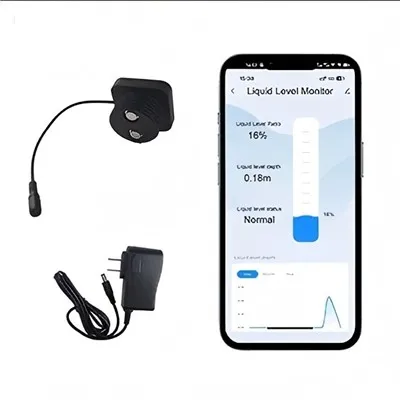
3. Smart Propane Sensors
Price: $50-250
How it works: Bluetooth or WiFi connectivity to smartphone
Accuracy: ±2-5%
Best for: Remote monitoring, frequent users
Popular Propane Gauge Tools
| Product | Type | Price | Accuracy | Best For |
|---|---|---|---|---|
| Mopeka Pro Check | Smart/Bluetooth | $65-73 | ±5% | RV owners, frequent users |
| AP Products Gauge | Magnetic | $15-25 | ±15% | Budget option |
| Flame King Gauge | Magnetic | $10-20 | ±20% | Basic monitoring |
| Generac 4G LTE | Smart/Cellular | $199-249 | ±3% | Remote monitoring |
How to Use a Magnetic Gauge
Clean the tank surface: Wipe the side of the tank where you'll attach the gauge
Attach the gauge: Place the magnetic gauge on the lower half of the tank
Wait for reading: Allow 30 seconds to 2 minutes for the gauge to stabilize
Read the level: Check the indicator for your propane percentage
Pros and Cons
✅ Pros:
Reusable (unlike hot water test)
Easy to read
Portable between tanks
Some offer smartphone connectivity
❌ Cons:
Additional cost
Accuracy varies by product
May require batteries
Some require app installation
Method 5: Listen for the Slosh Test (Basic)
What You Need
Your ears
Ability to gently move the tank
How It Works
Liquid propane sloshes differently than empty space. By gently rocking the tank, you can hear the liquid moving inside, giving you a rough idea of how much remains.
Step-by-Step Instructions
Ensure safety: Make sure tank valve is closed and tank is secure
Gently rock the tank: Carefully tilt the tank back and forth (only a few inches)
Listen carefully:
Heavy sloshing = Tank has significant liquid
Light sloshing = Tank is getting low
No sloshing = Tank may be empty or nearly empty
Feel the weight: Heavier tanks have more propane
What to Listen For
| Sound | Estimated Level | Action |
|---|---|---|
| Heavy, slow slosh | 50-100% full | ✅ Good level |
| Medium slosh | 25-50% full | ✅ Monitor usage |
| Light, quick slosh | 10-25% full | ⚠️ Plan refill |
| No slosh or very light | 0-10% full | 🚨 Refill immediately |
Important Safety Warning
⚠️ Only attempt this on small, portable tanks (20 lb or less) ⚠️ Never rock large stationary tanks ⚠️ Always ensure valve is closed ⚠️ Be gentle-never shake violently
Pros and Cons
✅ Pros:
Free and requires no tools
Works without any equipment
Quick assessment
❌ Cons:
Very rough estimate
Safety concerns with larger tanks
Requires physical handling
Not accurate for small amounts
Method 6: Check the Frost Line (Cold Weather Method)
What You Need
Cold weather (below 40°F / 4°C)
Propane in use or recently used
How It Works
When propane vaporizes for use, it absorbs heat, causing the tank exterior to become cold. The point where frost or condensation forms on the tank indicates the liquid propane level.
Step-by-Step Instructions
Use some propane: Turn on an appliance to draw propane from the tank
Wait for cooling: Allow 5-15 minutes for the tank to cool
Observe the tank: Look for frost or heavy condensation on the tank exterior
Identify the level: The frost line indicates the top of the liquid propane
What the Frost Line Tells You
| Frost Pattern | Propane Level | Status |
|---|---|---|
| Frost from bottom to near top | 75-100% full | ✅ Full tank |
| Frost covers bottom half | 40-60% full | ✅ Good level |
| Frost only on bottom quarter | 20-30% full | ⚠️ Getting low |
| Minimal or no frost | <20% full | 🚨 Very low |
When This Method Works Best
Cold weather (below 40°F / 4°C)
High humidity
When propane is actively being used
On metal tanks (not composite)
Pros and Cons
✅ Pros:
Free visual indicator
No tools required
Works while propane is in use
❌ Cons:
Only works in cold weather
Requires propane usage
Not accurate in warm weather
Condensation can be misleading
Method 7: Smart Propane Monitors (High-Tech Solution)
What You Need
Smart propane sensor ($50-250)
Smartphone with app
Bluetooth or WiFi connection
How It Works
Smart propane sensors attach to your tank and use ultrasonic or magnetic technology to measure propane levels. They transmit data to your smartphone via Bluetooth or WiFi, allowing you to check levels remotely without visiting the tank.
Types of Smart Monitors
Bluetooth Smart Sensors
Range: 10-30 feet (3-10 meters)
Price: $50-100
Best for: RVs, grills near your home
Examples: Mopeka Pro Check, Lippert OneControl
WiFi Smart Sensors
Range: Anywhere with internet
Price: $100-200
Best for: Home propane tanks with WiFi coverage
Examples: Rochester SmartTank
Cellular Smart Sensors
Range: Anywhere with cellular coverage
Price: $150-250
Monthly fee: Often $3-10 (some exceptions)
Best for: Remote properties, frequent travelers
Examples: Generac 4G LTE, Mopeka Pro+ Cellular
Top Smart Propane Monitors
| Product | Connection | Price | Accuracy | Best For |
|---|---|---|---|---|
| Mopeka Pro Check | Bluetooth | $65-73 | ±5% | RVs, budget option |
| Generac 4G LTE | Cellular | $199-249 | ±3% | Remote monitoring |
| Mopeka Universal Bundle | Bluetooth | $170.99 | ±5% | Dual tank RVs |
| Lippert OneControl | Bluetooth | $40-80* | ±5% | OneControl users |
| Rochester SmartTank | WiFi | $150-200 | ±5% | Homeowners |
*Requires OneControl Gateway ($150-300)
How to Install and Use
Purchase the sensor: Choose based on your needs (Bluetooth, WiFi, or Cellular)
Download the app: Install the manufacturer's app on your smartphone
Attach the sensor: Follow instructions to mount on your tank (usually magnetic)
Pair and configure: Connect sensor to app and enter tank information
Monitor remotely: Check propane levels anytime from your phone
Pros and Cons
✅ Pros:
Most accurate non-invasive method
Check levels without visiting tank
Historical tracking and alerts
No guessing or estimation
Some work remotely (WiFi/Cellular)
❌ Cons:
Higher cost than free methods
Requires smartphone and app
Battery maintenance
Some require monthly fees
Technology learning curve
Comparison: All 7 Methods
| Method | Cost | Accuracy | Ease of Use | Best For |
|---|---|---|---|---|
| Hot Water Test | Free | ±20% | Easy | Quick estimate |
| Built-In Gauge | Free | ±10% | Very Easy | Most tanks |
| Weight Method | Free* | ±2% | Moderate | Precision needed |
| Gauge Tool | $10-30 | ±15% | Easy | Reusable option |
| Slosh Test | Free | ±30% | Easy | Small tanks only |
| Frost Line | Free | ±15% | Easy | Cold weather |
| Smart Monitor | $50-250 | ±3-5% | Easy | Convenience, accuracy |
*Requires a scale
Which Method Should You Use?
Quick Decision Guide
| Your Situation | Recommended Method | Why |
|---|---|---|
| Need quick estimate now | Hot Water Test | Fast, free, no tools |
| Want most accurate without tools | Built-In Gauge | Standard on most tanks |
| Need precise measurement | Weight Method | Most accurate calculation |
| Want reusable solution | Gauge Tool | Pay once, use repeatedly |
| Have small portable tank | Slosh Test | Quick physical check |
| Cold weather, tank in use | Frost Line | Visual indicator |
| Want convenience & accuracy | Smart Monitor | Best overall experience |
For RV Owners
Best Methods:
Smart Monitor (Mopeka Pro Check) - Best for frequent travelers
Built-In Gauge - Check before each trip
Hot Water Test - Quick check at campsite
For Homeowners
Best Methods:
Built-In Gauge - Check regularly
Smart Monitor (WiFi or Cellular) - Remote monitoring
Weight Method - Precise measurement before winter
For Grill Users
Best Methods:
Weight Method - Most accurate for 20 lb tanks
Hot Water Test - Quick pre-cook check
Smart Monitor - If you grill frequently
Safety Tips for Checking Propane Levels
⚠️ Important Safety Guidelines
Never open the tank valve to check levels
Opening the valve releases propane
Creates fire and explosion risk
Unnecessary for level checking
Check for leaks regularly
Use soapy water on connections
Look for bubbles indicating leaks
Never use open flame to check for leaks
Handle tanks properly
Always close valve when not in use
Store tanks upright and secure
Keep away from heat sources
Transport with valve closed and cap on
Know the signs of low propane
Weak flame on appliances
Appliances not working properly
Gauge reading below 20%
Weight significantly reduced
When to refill
At 20-25% remaining (don't wait until empty)
Before long trips or important events
When gauge shows low
If you notice weak appliance performance
Emergency Procedures
If you smell propane:
Do not ignite anything
Extinguish all flames
Leave the area immediately
Call emergency services from a safe distance
Do not return until cleared by professionals
Frequently Asked Questions (FAQ)
Q1: Can I check propane level by shaking the tank?
A: Gently rocking small tanks (20 lb or less) can give you a rough idea through the sloshing sound, but this is not accurate and can be unsafe. Use the weight method or hot water test for better results. Never shake large tanks violently.
Q2: How accurate is the hot water test?
A: The hot water test provides a rough estimate (±20% accuracy). It's good for determining if you have significant propane or if you're running low, but not for precise measurements.
Q3: Why do propane tanks only fill to 80%?
A: Propane expands when heated. Tanks are filled to only 80% capacity to leave room for expansion and prevent dangerous pressure buildup. A tank showing 80% on the gauge is actually full.
Q4: Can I use a bathroom scale to weigh my propane tank?
A: Yes! A standard bathroom scale works well for weighing propane tanks up to 40 lbs. For larger tanks, you may need a heavy-duty scale or commercial scale.
Q5: Do all propane tanks have gauges?
A: No. Small tanks (1 lb camping canisters) typically don't have gauges. Most 20 lb grill tanks and larger have gauges, but some older or budget tanks may not.
Q6: How long does a 20 lb propane tank last?
A: It depends on usage:
Grill: 18-20 hours of cooking time
Heater: 10-20 hours (depending on BTU rating)
RV appliances: Varies widely based on usage
Fire pit: 4-8 hours
Q7: Can temperature affect propane gauge readings?
A: Yes. Propane pressure changes with temperature. Gauges may read slightly lower in cold weather and higher in hot weather. For most accurate readings, check when temperature is moderate (60-80°F).
Q8: Is it safe to transport a propane tank in my car?
A: Yes, if done properly:
Keep tank upright and secure
Ensure valve is closed and cap is on
Transport in well-ventilated area (truck bed preferred)
Never leave in enclosed hot vehicle for extended periods
Maximum 4-5 tanks in personal vehicle (check local regulations)
Q9: How do I know if my propane tank is expired?
A: Check the manufacturing date stamped on the tank collar. Propane tanks must be recertified 12 years from manufacture date, then every 5 years. Look for:
Date stamp (MM-YY format)
Rust or damage
Valve condition
Q10: What's the best method for checking propane in cold weather?
A: In cold weather, the frost line method works well when propane is in use. Alternatively, the weight method is accurate regardless of temperature. Avoid the hot water test in freezing conditions.
Troubleshooting Common Issues
Issue 1: Gauge Always Shows Empty or Full
Possible Causes:
Faulty gauge
Temperature extremes affecting reading
Tank not used recently (pressure equalized)
Solutions:
Try the weight method for verification
Wait for moderate temperature and check again
Replace gauge if consistently inaccurate
Issue 2: Hot Water Test Shows Inconsistent Results
Possible Causes:
Water not hot enough
Tank surface dirty or painted
Weather conditions affecting results
Solutions:
Use hotter water (but not boiling)
Clean tank surface before testing
Repeat test in different conditions
Issue 3: Smart Sensor Won't Connect
Possible Causes:
Bluetooth/WiFi not enabled
Out of range
Low sensor battery
Solutions:
Check phone settings
Move closer to tank
Replace sensor batteries
Issue 4: Weight Calculation Seems Wrong
Possible Causes:
Wrong tare weight used
Scale not calibrated
Math error
Solutions:
Double-check tare weight stamp on tank
Use different scale to verify
Recalculate carefully
Conclusion
Knowing how to tell if a propane tank is full or empty without opening it is an invaluable skill that saves time, money, and ensures safety. Whether you prefer simple DIY methods like the hot water test or weight method, or you invest in modern smart technology, there's a solution for every situation and budget.
Key Takeaways:
Hot water test: Best for quick, free estimates
Built-in gauge: Most convenient for tanks that have them
Weight method: Most accurate for precise measurements
Smart monitors: Best for convenience and remote monitoring
Never open the tank valve to check levels
Choose the method that best fits your needs, and always prioritize safety when handling propane tanks.
Related Guides
Best Propane Tank Sensors 2026: Top smart monitors reviewed
RV Propane Management Guide: Tips for managing propane on the road
Propane Safety 101: Essential safety information for propane users
How to Refill a Propane Tank: Step-by-step refill guide
Propane vs. Natural Gas: Comparison for home heating
Last Updated: July 2026
Disclaimer: This guide is for informational purposes only. Always follow manufacturer instructions and safety guidelines when handling propane. If unsure, consult a professional propane technician.