Understanding Capacitive Level Measurement Techniques
Capacitive level measurement is a method used to detect or measure the level of liquids, powders, granules, slurries, and other materials inside a tank, vessel, silo, or process container. It works by sensing changes in electrical capacitance between a probe and a reference point, such as a vessel wall or a second electrode. As the material level rises or falls, the electrical properties around the sensor change, allowing the system to determine whether material is present or to calculate a continuous level reading.
In industrial environments, Capacitive Level Measurement is valued because it can be applied to many different materials, including conductive and non-conductive substances. It is widely used in process automation where accurate, reliable level information helps operators control filling, emptying, batching, inventory, and safety systems.
What Is Capacitance in Level Measurement?
Capacitance is the ability of a system to store an electrical charge. In a typical level measurement setup, a probe installed inside a vessel acts as one plate of a capacitor. The vessel wall, a second probe, or a grounded reference acts as the other plate. The material between them serves as the dielectric, meaning it influences how much electrical energy can be stored.
When air surrounds the probe, the capacitance has one value. When liquid, powder, or another process material surrounds the probe, the capacitance changes. The sensor electronics detect this change and convert it into a level signal.
In simple terms:
More material around the probe usually means a different capacitance reading.
The sensor measures that change.
The control system interprets the signal as a point level or continuous level value.
This principle makes capacitive sensors useful for detecting whether material has reached a certain height or for monitoring the changing level across a wider range.
How Capacitive Level Measurement Works
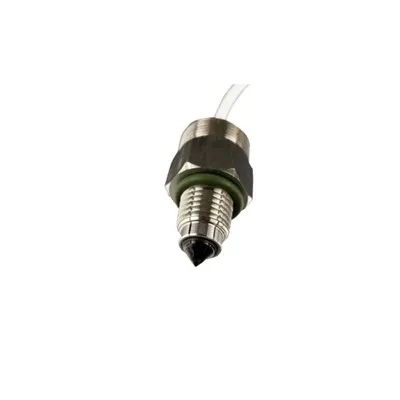
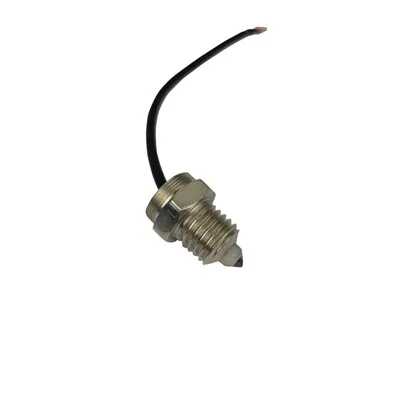
A capacitive level sensor typically includes a probe, electronic circuitry, insulation, and a process connection. The probe is inserted into the tank or mounted at a specific point on the vessel. The electronics apply a small electrical signal and measure the capacitance between the probe and the reference point.
The measurement depends on the dielectric constant of the surrounding medium. Air has a low dielectric constant, while many liquids and solids have higher values. When the process material replaces air around the probe, the sensor detects the resulting shift in capacitance.
There are two common measurement approaches:
Point level detection
Point level sensors indicate whether material is present or absent at a specific locati0n. They are often used for high-level alarms, low-level alarms, dry-run protection, overflow prevention, and pump control.
Continuous level measurement
Continuous systems measure the level over a range and provide an output that represents how full the vessel is. These systems may send a signal to a controller, display, PLC, or broader automation platform.
Both approaches support process reliability, but they serve different operational needs. Point level detection is best for on-off decisions, while continuous measurement is better for tracking trends, inventory, and precise process control.
Why Capacitive Sensors Are Used in Industry
Capacitive sensors are popular because they are versatile, compact, and suitable for many process conditions. They can be used in tanks containing water-based liquids, oils, chemicals, grains, plastic pellets, powders, adhesives, and other materials, depending on the sensor design.
Key advantages include:
No moving parts: This helps reduce mechanical wear and maintenance needs.
Fast response: Sensors can detect level changes quickly, supporting automated control.
Flexible installation: Probes can often be mounted vertically, horizontally, or at a specific detection point.
Suitability for solids and liquids: Capacitive technology can work across a wide range of media.
Integration with process automation: Sensor outputs can connect to PLCs, relays, transmitters, and monitoring systems.
Because of these advantages, capacitive level measurement is often selected when a simple float switch is not ideal or when contact-based measurement is acceptable for the application.
Common Applications
Capacitive level measurement is used across many industrial and commercial processes. Typical applications include:
High-level and low-level alarms in storage tanks
Level monitoring in chemical processing vessels
Powder and bulk solid detection in silos
Pump protection in liquid handling systems
Batch control in food and beverage production
Interface detection between different materials
Level control in water treatment processes
Inventory monitoring in process tanks
In process automation, these measurements help reduce manual inspection, improve consistency, and prevent costly errors such as overfilling, running pumps dry, or interrupting production due to inaccurate material levels.
Conductive vs. Non-Conductive Materials
One reason capacitive technology is widely used is that it can be adapted for both conductive and non-conductive materials. However, the sensor configuration may vary.
For conductive liquids, the probe is often insulated to prevent direct electrical contact from interfering with the measurement. The conductive material itself can act as part of the measurement system, and the sensor detects changes as the material contacts or surrounds the insulated probe.
For non-conductive materials, such as oils, plastics, or dry powders, the dielectric constant becomes especially important. The sensor must be sensitive enough to distinguish between air and the process material. Materials with very low dielectric constants may require specialized sensor designs, careful calibration, or different installation methods.
Factors That Affect Measurement Accuracy
Capacitive level measurement can be highly effective, but performance depends on proper application. Several conditions can influence accuracy and reliability:
Dielectric constant: Materials with higher dielectric constants are generally easier to detect.
Material buildup: Coating or residue on the probe can change the measured capacitance.
Temperature and pressure: Extreme process conditions may require specific probe materials and electronics.
Moisture content: In powders or granular materials, changes in moisture can affect dielectric properties.
Foam, turbulence, or splashing: These can create unstable readings in some liquid applications.
Vessel material: Metal and non-metal tanks may require different grounding or reference configurations.
Probe length and placement: Incorrect positioning can cause false readings or poor sensitivity.
Good sensor selection, correct installation, and proper calibration help minimize these issues.
Point Level vs. Continuous Capacitive Measurement
Although both methods use the same basic principle, point level and continuous level measurement are used differently.
A point level capacitive sensor acts like a switch. It changes state when material reaches the probe. This is useful when the process only needs to know whether the level is above or below a set point.
A continuous capacitive level sensor provides a proportional reading across a measurement range. Instead of a simple on-off signal, it may output a variable signal that represents the level. This is useful when operators need to monitor tank volume, control dosing, or automate filling and draining cycles.
Choosing between them depends on the process goal. If the application only needs an alarm, point detection may be enough. If the application needs ongoing visibility, continuous measurement is usually more appropriate.
Installation Considerations
Proper installation is essential for dependable results. The probe should be positioned where it can detect the true material level without being affected by inlet streams, agitators, heavy buildup, or vessel obstructions. In tanks with turbulent liquids, the sensor may need shielding or placement away from strong flow patterns.
For bulk solids, probe placement should account for material angle of repose, bridging, dust, and vibration. In some cases, the actual surface of the material may not be flat, so the sensor should be installed where it provides the most useful process indication.
Grounding is also important, especially in non-metallic vessels. A stable reference point helps the sensor electronics interpret capacitance changes correctly. Manufacturers typically provide installation guidance based on vessel type, material, and measurement range.
Benefits for Process Automation
Capacitive level measurement supports process automation by providing dependable level data to control systems. When connected to automation equipment, these sensors can help trigger alarms, stop pumps, open valves, start filling cycles, or send level information to operators.
The result is better process visibility and reduced dependence on manual checks. Automated level measurement can also improve safety by preventing spills, protecting equipment, and helping maintain consistent production conditions.
For facilities handling multiple materials or operating continuous processes, capacitive sensors can be part of a larger measurement strategy alongside pressure, radar, ultrasonic, or weight-based technologies.
Limitations to Understand
Like any measurement technology, capacitive level measurement is not perfect for every situation. Heavy coating, sticky materials, changing product composition, low dielectric materials, or poor grounding can create challenges. Some applications may require compensation features, advanced calibration, or alternative technologies.
It is also important to confirm compatibility with the process material. Chemical resistance, sanitary requirements, explosion-rated environments, and high-temperature service may all influence sensor selection.
Choosing the Right Capacitive Level Sensor
When selecting a capacitive level sensor, consider the material being measured, the vessel type, process conditions, required output, and whether the application needs point detection or continuous measurement. Important questions include:
Is the material liquid, powder, slurry, or granular solid?
Is it conductive or non-conductive?
What is the dielectric constant?
Will the material coat or build up on the probe?
Is the vessel metal or non-metallic?
Are temperature, pressure, or chemical compatibility concerns present?
Does the system need a switch output, analog output, or digital communication?
Answering these questions helps ensure the sensor is matched to the process rather than selected only by size or cost.
The Bottom Line
Capacitive level measurement is a practical and adaptable technique for detecting and monitoring material levels in tanks, vessels, and silos. By measuring changes in capacitance caused by the presence of process material, capacitive sensors can provide reliable point level or continuous level information.
For many industries, this technology offers a strong balance of simplicity, flexibility, and automation value. When properly selected and installed, capacitive level measurement can improve process control, reduce downtime, and support safer, more efficient operations.