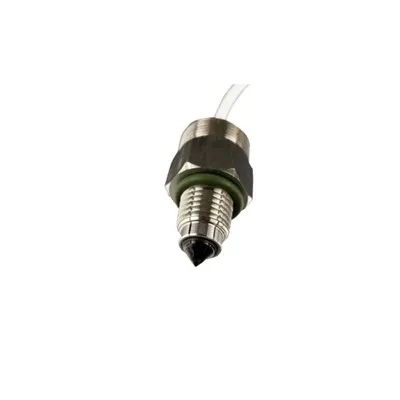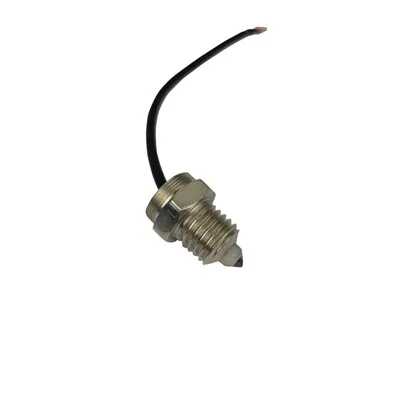
Advantages of Capacitive Water Level Sensors
Capacitive water level sensors are becoming the go-to choice when you need reliable level feedback without moving parts, exposed floats, or constant maintenance. Whether you're building Arduino water level monitoring for a hobby project or designing industrial tank level measurement for harsh environments, capacitive sensing stands out because it can be accurate, durable, and adaptable-even for plastic tank level detection where other methods struggle.
What a capacitive water level sensor is (and why it's different)
A capacitive water level sensor is a type of water level sensor that infers liquid level by measuring changes in capacitance caused by the liquid's presence. In many designs it can act as a water detection sensor (detecting "wet vs. dry") or provide continuous level data for low power level monitoring.
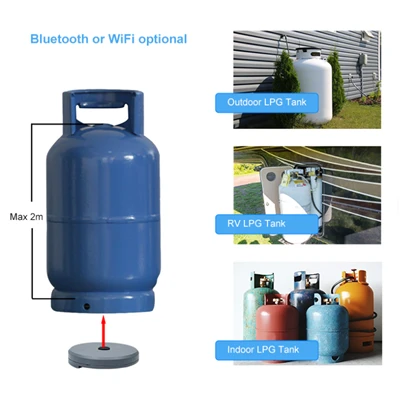
Unlike probes that must touch the liquid, many models support non-contact liquid level measurement, detecting through non-metal tank walls-making them a strong ultrasonic level sensor alternative when foam, condensation, or tight mounting clearances create issues.
The capacitive level sensing principle (in plain language)
The capacitive level sensing principle is simple: capacitance depends on the geometry of electrodes and the material between them. When water rises near the sensor, the effective capacitance changes because the dielectric constant of water is much higher than air and many plastics. The sensor electronics track that change and convert it into a level signal (digital, analog, PWM, I²C, etc.).
Key implication: because materials matter, wall thickness, tank material, and liquid composition affect readings-so calibration and mounting quality are critical.
Advantages that make capacitive sensing a top pick
1) Non-contact, sealed measurement for cleaner systems
A major benefit is non-contact liquid level measurement: the sensing electrode can sit outside a container. That means:
No wetted parts (better for hygiene and corrosion resistance)
Fewer leak paths (no tank penetrations needed in many installs)
Great fit for plastic tank level detection where you can read through the wall
For many users searching "best liquid level sensor for tanks," this is the deciding advantage-especially for RV tanks, dispensers, water treatment skids, and chemical totes (with appropriate compatibility checks).
2) Works where floats and mechanical sensors fail
Mechanical sensors can stick, wear, or jam. Capacitive sensors have no moving parts, which helps in:
Dirty water or scaling environments
High-vibration equipment
Tight spaces where floats can't move freely
3) Low power options for battery and remote monitoring
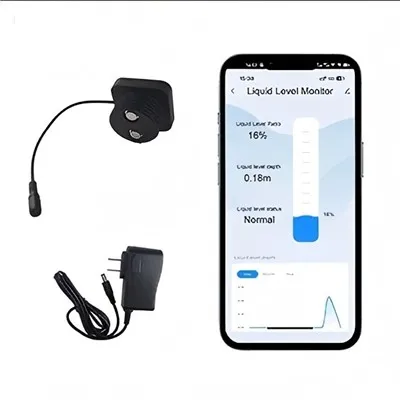
For battery devices, low power level monitoring is possible by duty-cycling measurements (wake, sample, sleep). Many capacitive ICs and modules support low-current operation, making them suitable for:
Remote cistern alarms
Smart dispensers
IoT tank telemetry nodes
4) Reliable level detection in a wide range of tank shapes
Because a capacitive sensor can be implemented as strips, rings, or PCB electrodes, it adapts to:
Tall narrow tanks
Flat reservoirs
Custom enclosures and irregular geometries
This flexibility is a big advantage in OEM designs and industrial tank level measurement retrofits.
Conductive vs capacitive level sensors: what you gain (and what you avoid)
A frequent comparison is conductive vs capacitive level sensors. Conductive sensors typically require the liquid to conduct electricity and often involve electrodes in contact with the liquid. Capacitive sensors can work with non-conductive containers and can often detect without contact.
Capacitive advantages over conductive:
Less electrode fouling and corrosion risk
Works through many non-metal walls
Better suited to sealed systems and cleaner designs
Conductive advantages (when applicable):
Often simpler for direct "point level" in conductive liquids
Can be less sensitive to external mounting variables
If your liquid conductivity varies (purified water vs mineralized water), capacitive may be more stable-provided you install and calibrate correctly.
Ultrasonic level sensor alternative: when capacitive wins
Ultrasonic sensors measure distance to the surface, so they can struggle with foam, turbulence, angled surfaces, or heavy condensation. A capacitive approach can be a strong ultrasonic level sensor alternative when:
Headspace is cramped
The tank has internal structures
Foam/steam interferes with acoustic returns
You prefer external mounting and simpler wiring
Practical tips: waterproof level sensor installation that actually holds up
Even great sensors fail when mounted poorly. For waterproof level sensor installation, focus on:
Mounting surface: clean, dry, and flat; avoid seams and ribs on plastic tanks
Consistent pressure/contact: use recommended adhesive pad, clamp, or bracket
Cable strain relief: prevent micro-movement that changes capacitance
Shielding/grounding: follow vendor guidance to reduce EMI and hand-proximity effects
Avoid metal nearby: metal brackets or pipes close to the sensing face can distort the field
For through-wall installs, note that thick walls reduce sensitivity; choose a sensor rated for your wall thickness and material.
Calibration: how to calibrate level probe (and when you must)
Many point-level devices are factory-set, but continuous measurement often needs setup. If you're wondering how to calibrate level probe for capacitive systems, a practical approach is a 2-point (or multi-point) calibration:
Empty reference: record output when the tank is at known "empty" (or lowest usable level).
Full reference: record output at "full" (or a known high level).
Map the curve: for irregular tanks, add mid-level points and use a lookup table.
Lock the install first: calibrate only after mounting is final-moving the sensor later changes everything.
For Arduino water level monitoring, store calibration constants in EEPROM and re-check after installation changes or seasonal temperature swings.
Troubleshooting: why sensor gives false readings
Searches like "why sensor gives false readings" are common because capacitive sensors can be sensitive to their environment. Typical causes include:
Moisture film or condensation on the outside of the tank
Nearby hands/cables changing the electric field
Foam, bubbles, or splashing near the sensing zone
Wall thickness variation or ribs behind the sensor
EMI from motors, inverters, or poorly routed power lines
Fixes often come down to better mounting, shielding, filtering, and calibration-not replacing the sensor.
Stability over time: drift compensation in capacitive sensing
Capacitance can drift due to aging adhesives, slow moisture changes, or electronics temperature drift. Good designs include drift compensation in capacitive sensing, such as:
Auto-baselining when "empty" is detected
Periodic re-zero routines during known states
Digital filtering and hysteresis for point-level thresholds
This is especially helpful when tanks sit outdoors or in humid utility rooms.
Temperature effects on level sensors (what to expect)
Temperature effects on level sensors matter because dielectric properties can change with temperature, and plastic tanks expand/contract slightly. Practical steps:
Calibrate near your normal operating temperature when possible
Use sensors with built-in temperature compensation if the environment swings widely
Add software deadbands/hysteresis for alarm thresholds to prevent chatter
Takeaway: when capacitive is the best choice
If you need a robust water level sensor that can be sealed, low-maintenance, and adaptable-especially for plastic tank level detection-a capacitive water level sensor is often the most practical option. Get the most from it by prioritizing mounting quality, thoughtful calibration, and noise/temperature management, and you'll have dependable level data from simple "water present" detection to full industrial tank level measurement.
(Estimated article body word count: ~990)