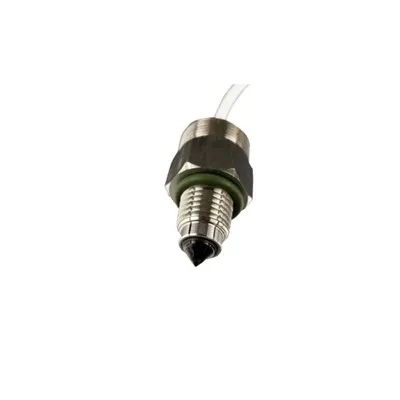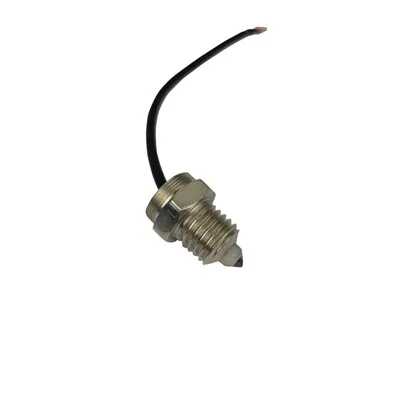
Comparing Doppler and transit time ultrasonic flow meters
Ultrasonic flow meters are widely used in industrial environments because they measure flow without requiring moving parts inside the pipe. That makes them attractive for applications where low maintenance, non-intrusive installation, and reliable monitoring matter. But not all ultrasonic technology works the same way.
Two of the most common flow meter types are Doppler ultrasonic flow meters and transit time ultrasonic flow meters. Both use sound waves to estimate flow, but they rely on different physical principles, perform best in different fluids, and offer different levels of flow meter accuracy depending on the application.
Understanding those differences is essential before choosing an instrument for water, wastewater, chemicals, slurries, oils, or process fluids.
How ultrasonic flow measurement works
Ultrasonic measurement uses high-frequency sound signals to evaluate how fast liquid is moving through a pipe. Instead of using a mechanical turbine, paddlewheel, or obstruction, ultrasonic sensors send acoustic signals through the pipe wall and fluid.
This approach is especially useful when you want to avoid pressure loss, reduce maintenance, or measure flow in pipes that are difficult to cut into. Many industrial flow meters using ultrasonic technology are available as clamp-on devices, meaning the sensors mount externally on the pipe. Others are inline meters installed directly into the piping system.
The key difference between Doppler and transit time designs is what the meter listens for:
Doppler flow meters measure frequency shifts caused by particles, bubbles, or suspended solids moving with the fluid.
Transit time meters measure how long it takes ultrasonic signals to travel with and against the flow.
That single difference determines where each technology works best.
What are Doppler flow meters?
Doppler flow meters use the Doppler effect, the same general principle behind the change in pitch you hear when a vehicle passes by. In a flow measurement application, the meter sends an ultrasonic signal into the pipe. That signal reflects off suspended particles, air bubbles, or solids in the liquid. As those reflectors move with the fluid, the frequency of the returning signal changes.
The meter calculates velocity based on that frequency shift. Once velocity is known, the meter can estimate volumetric flow if the pipe size and internal conditions are known.
Doppler meters are best suited for liquids that are not clean. They need reflectors in the fluid to return a usable signal. Wastewater, sludge, mining slurry, certain chemical mixtures, aerated liquids, and fluids with suspended solids are common examples.
Advantages of Doppler meters
Doppler meters are often selected when the fluid is dirty, opaque, or contains entrained gases. They can perform well in conditions where other ultrasonic meter types struggle to maintain a clean signal path.
Key advantages include:
Effective for wastewater, sludge, slurry, and aerated liquids
Often available in clamp-on configurations
No moving parts in the flow stream
Minimal pressure loss when installed externally
Useful when cutting into the pipe is impractical
Can be a practical option for retrofit flow monitoring
Limitations of Doppler meters
The biggest limitation is that Doppler meters require suspended particles or bubbles. If the liquid is too clean, there may not be enough reflected signal for accurate measurement.
Doppler flow meter accuracy can also be affected by inconsistent particle distribution, changing solids content, poor pipe conditions, or unstable flow profiles. If the particles do not move at the same velocity as the liquid, the meter may measure particle velocity rather than true average fluid velocity.
What are transit time ultrasonic flow meters?
Transit time ultrasonic flow meters use a pair of transducers to send sound pulses diagonally across the pipe. One signal travels downstream with the flow, while another travels upstream against the flow. The downstream signal arrives slightly faster than the upstream signal.
The meter measures this time difference and converts it into flow velocity. Because the calculation depends on signal travel time through the fluid, transit time meters work best when the liquid allows sound to pass cleanly through it.
These meters are commonly used with clean or relatively clean liquids, including treated water, process water, oils, refined chemicals, cooling water, and many low-solids fluids.
Advantages of transit time meters
Transit time meters are often preferred when high flow meter accuracy is required in clean liquid applications. They can provide stable, repeatable measurements when the pipe is full, the fluid is acoustically suitable, and installation conditions are correct.
Key advantages include:
Strong performance in clean liquids
High repeatability in stable flow conditions
No moving parts
Clamp-on and inline options available
Suitable for many water, oil, and chemical applications
Often used for energy monitoring, process control, and custody-adjacent measurement where appropriate meter design is selected
Transit time technology can also support more advanced configurations, such as multiple acoustic paths, to improve accuracy across different flow profiles.
Limitations of transit time meters
Transit time meters generally do not perform well in liquids with high levels of solids, heavy aeration, or dense bubbles. These conditions can scatter or block the ultrasonic signal, reducing measurement reliability.
Accuracy also depends heavily on installation quality. Pipe material, wall thickness, liner condition, transducer spacing, straight pipe runs, and fluid properties can all influence results. A transit time meter installed on a poor measurement point may underperform even if the technology itself is well suited to the fluid.
Key differences between Doppler and transit time meters
When comparing Doppler and transit time ultrasonic flow meters, the most important question is not which technology is better overall. The better question is: which technology matches the fluid and installation conditions?
Doppler meters need particles or bubbles. Transit time meters need a clean acoustic path. Doppler is often more tolerant of dirty liquids, while transit time is usually more accurate in clean liquids.
Think of the difference this way:
Choose Doppler when the liquid contains suspended solids, bubbles, sludge, or slurry.
Choose transit time when the liquid is clean, consistent, and acoustically transparent.
For example, a municipal wastewater line may be a strong candidate for Doppler technology because the fluid contains suspended material. A chilled water loop in a commercial facility is usually better suited to transit time technology because the liquid is relatively clean and stable.
Comparing accuracy expectations
Flow meter accuracy is one of the most important selection factors, but it should always be considered in context. Manufacturer specifications are typically based on controlled conditions. Real-world accuracy depends on pipe condition, installation, calibration, fluid characteristics, and flow profile.
Transit time meters often deliver better accuracy in clean liquids because the measurement is based on precise timing differences between ultrasonic signals. When installed correctly, they can be highly repeatable and suitable for demanding process applications.
Doppler meters can provide dependable measurement in dirty liquids, but their accuracy depends on the quality and consistency of the reflectors in the fluid. If solids concentration changes significantly, or if bubbles appear and disappear unpredictably, readings may vary.
For both technologies, accuracy improves when:
The pipe is full
The flow profile is stable
The meter is sized and configured correctly
Transducers are installed carefully
Pipe material and dimensions are entered accurately
The measurement locati0n has adequate straight run
The fluid conditions match the selected technology
Installation considerations
Ultrasonic industrial flow meters are popular partly because many models can be installed without cutting into the pipe. However, clamp-on installation still requires care.
Before installation, confirm the pipe material, outside diameter, wall thickness, liner details, and fluid type. The transducers must be positioned correctly and coupled properly to the pipe surface. Paint, corrosion, scale, or rough surfaces can interfere with signal transmission.
For transit time meters, alignment and spacing are especially important because the meter depends on precise signal timing. For Doppler meters, the installation must support reliable reflection from particles or bubbles in the fluid.
Inline ultrasonic meters can reduce some uncertainty because the measurement section is controlled by design. However, they require pipe modification and may involve more downtime during installation.
Application examples
Doppler ultrasonic flow meters are commonly used in:
Wastewater collection and treatment
Sludge and slurry lines
Mining and mineral processing
Pulp and paper processes
Liquids with entrained air
Temporary flow surveys in dirty fluids
Transit time ultrasonic flow meters are commonly used in:
Potable water and process water
Cooling and heating loops
Refined oils and fuels
Clean chemical transfer
Energy and thermal flow monitoring
Industrial process control
These examples are not absolute rules. Some fluids fall between categories, and site testing may be needed when conditions are uncertain.
How to choose the right ultrasonic meter
Start with the fluid. If it is clean and free of significant bubbles or solids, transit time is usually the better fit. If it contains suspended solids, sludge, or aeration, Doppler may be more reliable.
Next, consider the purpose of the measurement. A temporary troubleshooting survey may not require the same accuracy as a permanent process control installation. Monitoring trends, verifying pump performance, balancing systems, and supporting regulatory reporting may all have different requirements.
Also review the physical installation. A technically suitable meter can still perform poorly if installed near elbows, valves, pumps, partially filled pipes, or turbulent flow disturbances.
Before selecting a meter, define:
Fluid type and cleanliness
Expected flow range
Pipe size and material
Required accuracy and repeatability
Permanent or temporary installation needs
Clamp-on or inline preference
Process temperature and pressure conditions
Available straight pipe length
Maintenance and calibration expectations
Common selection mistakes to avoid
One of the most common mistakes is choosing transit time technology for a liquid that is too dirty or aerated. Another is choosing Doppler for a clean liquid that lacks reflectors. In both cases, the issue is not necessarily meter quality. It is a mismatch between technology and application.
Other mistakes include:
Ignoring pipe wall buildup or liners
Installing sensors too close to flow disturbances
Assuming clamp-on meters require no setup expertise
Overlooking low-flow performance requirements
Comparing accuracy claims without checking test conditions
Failing to verify whether the pipe is always full
Final guidance
Doppler and transit time meters are both valuable ultrasonic measurement tools, but they solve different problems. Doppler flow meters are usually the practical choice for dirty, aerated, or solids-bearing liquids. Transit time ultrasonic flow meters are typically preferred for clean liquids where higher accuracy and repeatability are needed.
The best choice depends on fluid condition, installation environment, and the level of confidence required from the measurement. By matching the technology to the application, industrial users can improve reliability, reduce maintenance, and get more meaningful flow data from their measurement system.