Detecting the amplitude of waves on water
When a wave travels across the surface of water, it rises above and falls below a resting level. The amplitude of water waves is the maximum vertical distance from that resting water level to the crest or trough of the wave. In simple terms, amplitude tells you how "tall" or "strong" a wave's disturbance is.
Amplitude is one of the most important measurements in wave science because it helps describe wave energy, motion, and behavior. Whether you are studying ripples in a pond, waves in a wave tank, ocean swells, or small disturbances caused by a dropped object, understanding amplitude helps explain how water moves and how waves transfer energy.
What Does Amplitude Mean in Physics?
In physics, amplitude is the maximum displacement of a vibrating or oscillating object from its equilibrium position. The equilibrium position is the normal resting position before the disturbance occurs.
For water waves, the equilibrium position is the calm, flat water surface. When a wave passes through, the surface moves upward to form a crest and downward to form a trough. The amplitude in physics is measured from the calm water level to either the highest point of the crest or the lowest point of the trough.
It is important not to confuse amplitude with wave height. Wave height is the vertical distance from the trough to the crest. Amplitude is half of that distance for a symmetrical wave.
For example, if the distance from the trough to the crest is 20 centimeters, the amplitude is about 10 centimeters.
Why the Amplitude of Waves Matters
The amplitude of waves is closely related to the amount of energy carried by the wave. In general, waves with larger amplitudes carry more energy than waves with smaller amplitudes.
This is easy to observe in everyday life. A tiny ripple on a pond has a small amplitude and very little energy. A large ocean wave has a much greater amplitude and can move boats, reshape shorelines, or exert strong forces on structures.
Amplitude matters in many settings, including:
Physics experiments, where students study wave motion and energy transfer
Oceanography, where scientists monitor wave conditions and sea states
Engineering, where designers evaluate wave forces on docks, ships, and coastal structures
Environmental monitoring, where wave activity affects erosion and sediment movement
Recreation and safety, where wave size influences swimming, boating, and surfing conditions
How Is the Amplitude of Water Waves Detected?
Detecting the amplitude of water waves means measuring how far the water surface moves above or below its undisturbed level. The best method depends on the size of the wave, the setting, and the accuracy needed.
Some methods are simple enough for a classroom demonstration. Others require sensors, cameras, or specialized instruments.
Common Methods for Measuring or Estimating Amplitude
1. Visual Measurement with a Ruler or Scale
One of the simplest ways to estimate amplitude is to place a ruler or vertical scale next to the water and observe the crest and trough levels.
This method works best in controlled environments such as:
A ripple tank
A wave tray
A small aquarium
A classroom wave experiment
To estimate amplitude visually:
Mark the calm water level.
Generate a wave.
Observe the highest crest or lowest trough.
Measure the vertical distance from the calm level to that point.
This method is easy to understand, but it may not be very precise if the waves move quickly or if the water surface is difficult to see clearly.
2. Measuring Wave Height and Dividing by Two
If you can measure the total vertical distance between a wave crest and trough, you can estimate amplitude by dividing that value by two.
For example:
Crest-to-trough wave height: 40 centimeters
Estimated amplitude: 20 centimeters
This approach assumes the wave is reasonably symmetrical. Many ideal physics examples use symmetrical waves, but real water waves can be irregular, especially in oceans, rivers, or windy conditions.
3. Video Recording and Frame Analysis
Video analysis is useful when waves move too quickly for accurate visual measurement. A camera records the water surface, and the footage is analyzed frame by frame.
For better results, researchers or students often include a ruler, grid, or known reference object in the frame. This allows the vertical motion of the water surface to be measured from the video.
Video analysis can be helpful for:
Lab experiments
Ripple tank observations
Small-scale wave studies
Comparing wave amplitudes under different conditions
The accuracy depends on camera quality, lighting, frame rate, and how clearly the wave surface can be identified.
4. Float or Buoy Measurements
A floating object can move up and down as waves pass. By tracking the vertical motion of the float, the amplitude can be estimated.
This method is commonly used in larger bodies of water. A buoy may contain sensors that record vertical displacement over time. These measurements can help estimate wave amplitude, wave height, period, and overall sea conditions.
A simple classroom version might use a cork or small floating marker. A more advanced version might use a buoy with electronic sensors.
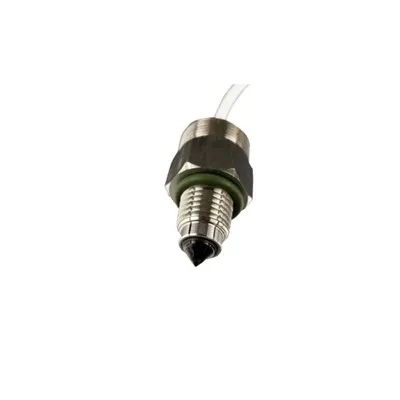
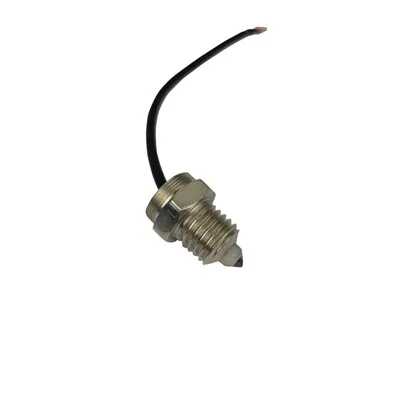
5. Pressure Sensors
Water pressure changes as waves pass over a sensor placed below the surface. By measuring pressure variations, scientists can estimate wave characteristics, including amplitude.
This method is especially useful when direct surface observation is difficult. It is often used in field studies, coastal monitoring, and oceanographic research.
However, pressure-based estimates require interpretation because pressure changes depend on water depth, sensor placement, and wave frequency.
6. Ultrasonic, Laser, or Radar Sensors
Non-contact sensors can measure the distance between the sensor and the moving water surface. As the wave rises and falls, the measured distance changes. These changes can be used to calculate amplitude.
These tools are useful when precise measurements are needed or when placing equipment in the water is inconvenient.
Examples include:
Ultrasonic distance sensors above a wave tank
Laser displacement sensors in laboratory settings
Radar systems used for ocean and coastal monitoring
These methods can be more accurate than visual observation, but they may require calibration and controlled conditions.
Simple Example: Measuring Amplitude in a Wave Tank
Imagine a student creates waves in a shallow tray of water. Before making waves, the student marks the calm water level on a clear side wall. Then the student gently taps the water to create ripples.
If the crest rises 2 centimeters above the calm level, the amplitude is 2 centimeters. If the trough falls 2 centimeters below the calm level, that also indicates an amplitude of 2 centimeters for a symmetrical wave.
If the crest is 3 centimeters above calm level and the trough is 2 centimeters below it, the wave is not perfectly symmetrical. In that case, the student may record crest amplitude and trough amplitude separately or calculate an average displacement, depending on the experiment's purpose.
Factors That Affect Water Wave Amplitude
Several factors can influence the amplitude of water waves:
Energy input: Stronger disturbances usually create larger amplitudes.
Wind strength: In natural water bodies, stronger winds can generate larger waves.
Distance traveled: Waves may lose amplitude as energy spreads out or is absorbed.
Water depth: Shallow water can change wave shape and behavior.
Obstacles: Rocks, walls, shorelines, and barriers can reflect or reduce waves.
Interference: When waves meet, they can combine to form larger or smaller amplitudes.
Because real water surfaces are often complex, amplitude may vary from one wave to the next.
Amplitude vs. Frequency vs. Wavelength
Amplitude is only one part of wave description. To fully understand a water wave, it helps to know several related terms.
Amplitude: Maximum displacement from the resting water level.
Wave height: Distance from trough to crest.
Wavelength: Distance from one crest to the next crest.
Frequency: Number of waves passing a point per second.
Period: Time it takes one full wave cycle to pass a point.
Amplitude describes vertical size, while wavelength describes horizontal spacing. Frequency and period describe timing.
Common Mistakes When Measuring Amplitude
A common mistake is measuring from crest to trough and calling that amplitude. That measurement is wave height, not amplitude.
Another mistake is ignoring the resting water level. Amplitude must be measured from the equilibrium level, not from the bottom of the container or from an arbitrary reference point.
It is also important to remember that real waves may not be perfectly uniform. In rough water, it may be better to measure several waves and calculate an average amplitude.
Frequently Asked Questions
What is the amplitude of water waves?
The amplitude of water waves is the maximum vertical distance between the calm water level and the crest or trough of a wave. It shows how far the water surface moves from its resting position.
Is amplitude the same as wave height?
No. Wave height is the distance from the trough to the crest. Amplitude is the distance from the resting level to the crest or trough. For a symmetrical wave, amplitude is half the wave height.
What unit is used to measure amplitude?
Amplitude is measured in units of length, such as millimeters, centimeters, meters, or feet. In physics and scientific contexts, meters are commonly used.
How can you measure amplitude at home or in class?
You can use a clear container, water, a ruler, and a small disturbance such as a tap or dropped object. Mark the calm water level, create a wave, and measure how far the crest rises above that level.
Does a larger amplitude mean more energy?
Generally, yes. A wave with a larger amplitude usually carries more energy than a wave with a smaller amplitude, assuming other wave conditions are similar.
Key Takeaway
Detecting the amplitude of waves on water means measuring how far the water surface moves from its calm, resting level. The method can be as simple as using a ruler in a classroom wave tank or as advanced as using buoys, pressure sensors, lasers, or radar systems. Understanding amplitude helps explain wave energy, water movement, and the behavior of waves in both controlled experiments and natural environments.