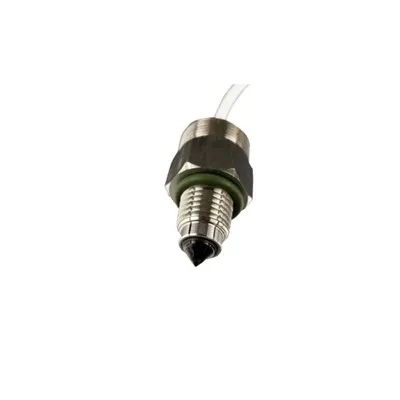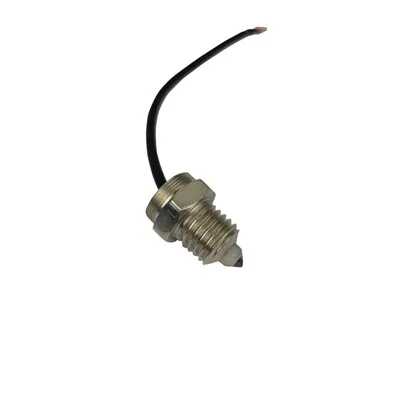
Float Switches: Applications, Wiring, and Buying Guide
A float switch is the simplest, most dependable way to automate "is the tank full or empty?" decisions. It uses a buoyant float that follows the liquid surface and trips an electrical contact at a set level. But specifying the right float switch is only half the job - the other half is wiring it correctly to a pump, alarm, or PLC so the control logic actually does what you intend. This guide is the practical companion to our float/level switch overview and product types guide: it covers how float switches are applied in real systems, how to wire and logic them, and exactly what to check before you buy.
What Is a Float Switch? (Brief)
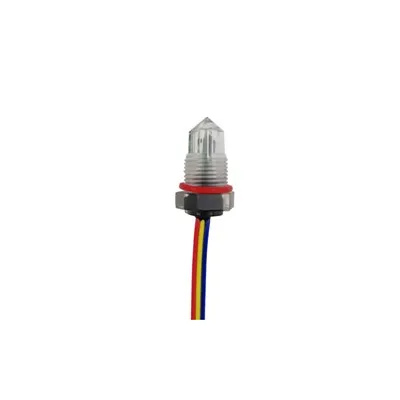
A float switch is a point-level sensor. A float lighter than the displaced liquid rides the surface; a magnet inside the float actuates a sealed reed switch (or, in heavier designs, a micro-switch) when the level reaches the trip point. The output is a binary contact - normally open (NO), normally closed (NC), or changeover (SPDT) - that a controller reads as "liquid present / not present at this height."
It is not a continuous level transmitter. For the full working principle, see the float/level switch overview; for form factors, see float level switch product types.
Core Application Modes
Every float-switch installation reduces to one of four control modes:
Auto-fill (top-up). The pump or valve fills the tank; when the liquid reaches the high-level float, the circuit stops the fill. Used for makeup water, buffer tanks, and booster systems.
Auto-drain (pump-down). A pump removes liquid; when the level drops to the low-level float, the circuit stops the pump. Classic sump, effluent, and condensate duty.
High-level alarm / overfill protection. A single float at the maximum safe level triggers an alarm or independent shutdown. Often a separate, redundant device from the main control.
Low-level cutoff / dry-run protection. A float at the minimum level stops a pump or heater before it runs dry.
Most pump-control systems combine modes 1 and 2 using two floats on one stem (or two separate switches): an upper float for pump-on/high-level and a lower float for pump-off/low-level.
Application Setups
| Application | Typical Float Type | Control Mode | Key Notes |
|---|---|---|---|
| Sump / effluent pump | Cable-operated dual float | Auto-drain | Float hangs free; handles debris; pump-down logic |
| Water storage (auto-fill) | Top-mount vertical dual float | Auto-fill | Two-point control; add high-level alarm float |
| Fuel / diesel tank | Horizontal side-mount (SS, Buna-N) | High-level alarm + low cutoff | Side wall keeps top sealed; verify fuel compatibility |
| Chemical tank | PVDF or PP vertical float | Auto-fill / alarm | Check chemical resistance; IS if hazardous area |
| Pressurized hydraulic reservoir | Flanged high-pressure float | Low cutoff | Confirm pressure + temperature - see high-pressure guide |
| Food / pharma vessel | Top-mount polished SS316L | Auto-fill / alarm | Electronics outside tank; sanitary finish (3-A/EHEDG) |
| Hazardous (ATEX/IECEx) area | Intrinsically safe float | Any | Certified device + barrier - see IS guide |
| High-temperature service | High-temp-rated SS float | Alarm / cutoff | See high-temp float profile |
Wiring and Control Logic
This is where most float-switch projects succeed or fail. The float only provides a dry contact; the logic comes from how you wire NO/NC and whether you insert a relay.
NO vs NC Selection Drives the Logic
Auto-fill (stop on high): wire the high float as NC so the fill circuit is closed (running) until the float rises and opens the contact at the set level. If the float fails open, the fill stops - fail-safe.
Auto-drain (start on high): wire the pump-start float as NO so the pump is off until the float rises and closes the contact at the high level.
Overfill protection: use NC so the alarm/shutdown circuit is energized (normal) and de-energizes (trips) when the float opens at high level. A broken wire therefore also trips the alarm - fail-safe.
This "fail-safe by contact state" thinking is the single most important wiring rule. Decide what should happen if the wire breaks, then choose NO or NC accordingly.
Reed Contact Rating - Always Use a Relay for Loads
Most float switches use a reed switch rated for only 0.5–2 A. Wiring a pump motor or heater directly across the reed welds the contacts shut and destroys the switch. The correct topology:
Float reed contact → interposing relay coil → relay contacts → pump/contactor
The float only switches the low-current relay coil; the relay handles the load. For PLC systems, the reed connects to a digital input, and the PLC logic drives the pump through an output module.
Dual-Float Pump Control Logic
Two floats set the pump duty band:
Lower float (pump-off): NC contact that opens when the level falls - pump stops.
Upper float (pump-on): NO contact that closes when the level rises - pump starts.
The vertical gap between them is the switching differential (hysteresis). Too small a gap → short-cycling; too large → wasted tank capacity. Size the gap for the pump's minimum run time and the inflow rate.
Solid-State (PNP/NPN) Float Switches
Some floats output a solid-state signal (PNP sourcing or NPN sinking) instead of a mechanical contact. These connect directly to a PLC digital input like any proximity sensor and eliminate contact wear - valuable in high-cycle duty. Our float vs capacitive comparison covers output options.
Simple Logic Summary
| Goal | Float State | Wiring | Result on Trip |
|---|---|---|---|
| Stop fill at high | NC | Series with fill valve | Contact opens → fill stops |
| Start pump at high | NO | To pump relay | Contact closes → pump starts |
| Overfill alarm | NC | To alarm | Contact opens → alarm trips |
| Dry-run cutoff | NC | Series with pump | Contact opens → pump stops |
Buying Checklist
Before ordering, confirm these ten points (consolidated from our selection problems guide):
Liquid name and concentration - for chemical compatibility
Minimum specific gravity - float must be rated below the actual SG (including temperature effects)
Operating temperature - at the switching point and any steam/cleaning excursion
Operating pressure - gauge/absolute; threaded vs flanged connection
Tank connection - NPT/BSP thread size, or flange rating
Number of points - single, dual, or multi-point
Wetted material - PP, PVDF, SS316L, or Hastelloy
Electrical requirement - NO/NC/SPDT or solid-state; contact/load current
Environment - IP65/67/68, washdown, outdoor, submersion
Certifications - ATEX/IECEx (hazardous), FDA/3-A (hygienic), UL/CSA
Float Switch Types at a Glance
To match the right form to the job, the main float-switch families are: vertical (float on an upright stem, multi-point capable), horizontal/side-mount (pivots on a side-wall axis, seals the tank top), cable-operated (float on a flexible cable, body above tank - ideal for sumps), top-mount (stem hangs from the tank top, electronics outside), high-pressure (flanged, pressure-rated), solid-state (PNP/NPN output), and intrinsically safe (ATEX/IECEx certified). Each is detailed with selection rules in our product types guide and the vertical float switch deep dive.
Installation and Commissioning
Mount truly vertical (vertical stem types) or at the correct pivot height (side-mount). A tilted stem binds the float - the most common field complaint.
Confirm thread/flange before install; a mismatch means a leak or a useless fitting.
Use a stilling tube or cage in turbulent or agitated tanks so the float does not bounce and chatter.
Test by hand: before energizing the pump, manually raise and lower the float and verify the contact changes state and the logic reacts correctly.
Verify fail-safe: simulate a broken wire (or lift the float to its trip point) and confirm the system goes to the safe state.
Set the differential: position the two floats to give the pump an adequate run band.
For tank-automation system design, see our level switches for tank automation guide.
Maintenance and Troubleshooting
Float switches are low-maintenance, but a few failure modes dominate:
Float stuck on stem - debris, scale, or tilt. Clean, re-plumb, or switch to a cable float / stilling tube.
Contacts welded shut - reed overloaded by a direct motor load. Add the interposing relay.
No trip - liquid SG below the float rating, or float fouled. Confirm SG; clean or replace.
Chatter / short-cycling - insufficient differential or turbulence. Increase float gap; add stilling tube.
False alarm - condensation on a side-mount pivot or coating on the float. Inspect and clean.
Our common selection problems guide details each of these with fixes.
When Not to Use a Float Switch
Float switches are not universal. Choose an alternative when:
The liquid is opaque or coating (prism fouls) → optical or vibrating-fork switch
The surface is foamy or turbulent and a stilling tube is impractical → guided-wave radar or vibrating fork
No moving parts are allowed (hygienic/ultrapure) → optical switch
You need exact continuous level → radar/ultrasonic/hydrostatic transmitter (see how to measure level and measure with pressure)
The area is hazardous → certified IS float or IS radar
The broader decision is in our choosing the right level switch guide and the ultimate guide to liquid level switches.
FAQ: Float Switches
Can a float switch control a pump directly?
Not safely. The reed contact (0.5–2 A) cannot carry a pump motor's inrush current. Wire the float to an interposing relay or contactor coil; the relay switches the pump. In PLC systems, the float feeds a digital input and the PLC drives the pump output.
Should overfill protection be NO or NC?
Use NC. A normally-closed contact keeps the alarm/shutdown circuit energized during normal operation and de-energizes (trips) when the float opens at high level - or if the wire breaks. This fail-safe behavior is essential for overfill protection.
How many floats do I need for pump control?
Typically two: an upper float (pump-on at high level) and a lower float (pump-off at low level). A single float only gives one threshold. Add a third independent float for a separate high-level alarm.
Can float switches be submerged or used outdoors?
Yes, if rated. Choose IP67/IP68 housings for submerged or washdown duty, and verify the cable and connector rating for outdoor or chemical exposure. Cable-operated floats are commonly submerged in sump pits.
How long do float switches last?
In clean water with light duty, 5–10 years is typical. Life shortens with aggressive chemicals, high switching frequency, or contact overload. The reed rating and chemical compatibility dominate service life.
Can a float switch measure continuous (exact) level?
No. It is a point-level device - it reports whether liquid is at a set height, not the exact fill percentage. For continuous measurement, use a transmitter (radar, ultrasonic, hydrostatic, or magnetostrictive). See our continuous vs point-level guide.
Are float switches suitable for dirty or wastewater?
Yes, especially cable-operated floats and large-chamber vertical types, which tolerate debris better than small stem floats. In heavily scaling or sticky service, a no-moving-parts switch (optical or vibrating fork) may be more reliable. Regular inspection is recommended.
Horizontal or vertical float switch - which should I choose?
Choose vertical when the tank top is accessible and you need two or more points on one stem (pump control). Choose horizontal/side-mount when the tank top must stay sealed or is occupied, and a single side-wall point is enough. Choose cable-operated for deep or hard-to-access tanks where the switch body must sit above the liquid. The trade-offs are compared in our product types guide.
Conclusion
A float switch is the lowest-cost, most field-proven way to automate tank fill, drain, alarm, and dry-run protection - but only when the float is matched to the liquid and the wiring logic is designed fail-safe. Pick the contact state (NO/NC) by asking "what happens if the wire breaks?", always switch loads through a relay, set the dual-float differential for a sane pump duty cycle, and add an independent high-level backup where overfill matters. Do those four things and a float switch will run dependably for years.
For deeper reading, see our float/level switch overview, float level switch product types, vertical float switches, choosing the right level switch, and the ultimate guide to liquid level switches. The full index is in the float switches & level sensors archives.