Fundamentals of Water Level Measurement
Why accurate level measurement matters
Water is simple to see, but not always simple to measure. In a tank, reservoir, wet well, boiler, canal, cooling system, or process vessel, the actual water level affects safety, efficiency, product quality, equipment life, and operating cost. Too little water can expose pumps, heaters, or intake lines. Too much water can cause overflow, contamination, pressure problems, or environmental discharge.
That is why water level measurement is a foundational part of many industrial, commercial, agricultural, municipal, and residential systems. The goal is not only to know how much water is present, but also to use that information for monitoring, alarms, automation, and water level control.
What is water level measurement?
Water level measurement is the process of determining the height, depth, or volume of water in a defined space. Depending on the application, the measurement may be expressed as:
Distance from a sensor to the water surface
Depth of water from the bottom of a tank or basin
Percentage full
Total volume
High, low, or intermediate level status
Some systems only need a simple signal, such as "full" or "empty." Others require continuous readings that show the exact level in real time. The best method depends on the vessel shape, water quality, temperature, pressure, accuracy needs, installation conditions, and whether the measurement will be used for basic monitoring or automated control.
Common applications
Water level sensors are used anywhere water needs to be monitored, stored, moved, treated, or controlled. Common applications include:
Storage tanks and header tanks
Sump pits and lift stations
Wastewater treatment plants
Drinking water reservoirs
Irrigation systems
Cooling towers
Boilers and condensate tanks
Flood monitoring stations
Chemical dilution systems
Aquaculture tanks and ponds
Rainwater harvesting systems
Industrial process vessels
In each case, the measurement environment matters. Clean water in a closed tank is very different from turbulent wastewater with foam, grease, sediment, or floating debris. Choosing the right technology starts with understanding the process conditions.
Point level vs. continuous level measurement
Most water level measurement systems fall into two broad categories: point level measurement and continuous level measurement.
Point level measurement
Point level devices detect whether water has reached a specific height. They are often used for pump start and stop commands, overflow prevention, dry-run protection, and high or low alarms.
Examples include float switches, conductive probes, optical switches, and capacitance switches. These devices are usually simple, cost-effective, and reliable when the application only requires on-off detection.
Continuous level measurement
Continuous devices provide an ongoing measurement across a range. Instead of only reporting whether the water is above or below a fixed point, they show the actual level at any moment.
Continuous water level sensors are commonly used when operators need trend data, remote monitoring, inventory estimates, process control, or precise filling and emptying. Examples include ultrasonic, radar, pressure, hydrostatic, and capacitance transmitters.
Main types of water level sensors
Float sensors
Float sensors use a buoyant float that rises and falls with the water surface. The float may activate a switch mechanically or magnetically. These sensors are common in sumps, tanks, pumps, and simple level alarm systems.
Key advantages include low cost, easy installation, and simple operation. Limitations include moving parts, possible fouling, and reduced reliability in turbulent or debris-filled water.
Pressure and hydrostatic sensors
Hydrostatic sensors measure the pressure created by the height of water above the sensor. Since water pressure increases with depth, the sensor can calculate the level based on the pressure reading.
These sensors are useful in wells, reservoirs, tanks, and open channels. They work well where surface foam or vapor may interfere with non-contact sensors. However, density changes, sludge buildup, and sensor placement can affect accuracy.
Ultrasonic level sensors
Ultrasonic sensors send sound pulses toward the water surface and measure the time it takes for the echo to return. The sensor calculates the distance to the surface and converts that distance into a level reading.
Ultrasonic water level sensors are popular because they are non-contact, relatively easy to install, and suitable for many tanks and basins. They may be affected by foam, heavy vapor, condensation, narrow tank geometry, turbulence, or obstructions in the sound path.
Radar level sensors
Radar sensors use electromagnetic waves instead of sound. Like ultrasonic sensors, they measure the distance to the water surface, but they are typically more resistant to vapor, temperature variation, and some challenging process conditions.
Radar is often selected for demanding installations where accuracy, reliability, and low maintenance are priorities. It may cost more than basic technologies, but it can perform well in environments where other methods struggle.
Conductive level sensors
Conductive sensors detect water by using its ability to conduct electricity. When water touches the probe, it completes an electrical circuit and triggers a level signal.
This approach is simple and effective for conductive liquids, including many water-based applications. It is less suitable for very pure water, non-conductive liquids, or environments where coating and corrosion may occur.
Capacitive level sensors
Capacitive sensors detect changes in capacitance caused by the presence or absence of water near the sensing element. They can be used for point or continuous measurement, depending on the design.
They are useful in tanks where mechanical floats are not ideal, but calibration and material buildup should be considered. Water properties, tank wall material, and installation geometry can all influence performance.
Optical level sensors
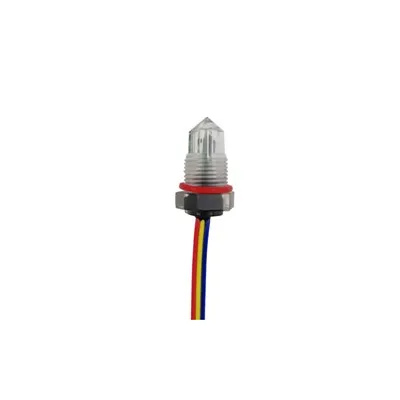
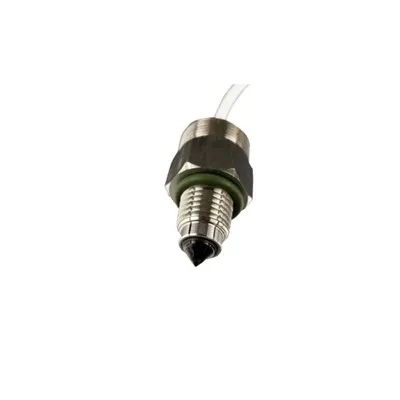
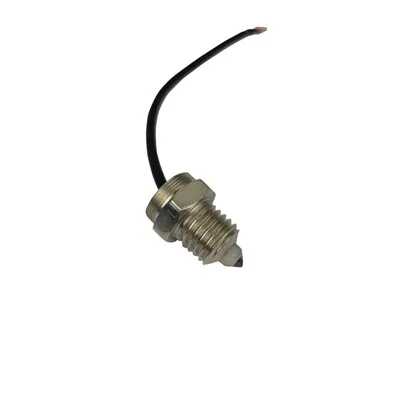
Optical sensors use light to detect whether the sensing tip is in air or water. They are compact and often used for small tanks, appliances, laboratory equipment, and leak detection.
They offer fast response and no moving parts, but the optical surface must remain clean. Fouling, bubbles, or residue can interfere with detection.
How water level control works
Water level control uses measurement signals to maintain water within a desired range. A basic control system includes three elements:
A sensor that detects the current level
A controller that compares the level to a desired setpoint
An output device such as a pump, valve, alarm, or relay
For example, in a sump system, a low-level sensor may stop the pump to prevent dry running, while a high-level sensor may start the pump when water rises. In a storage tank, water level control may open a fill valve when the tank is low and close it when the tank reaches the target level.
More advanced systems may use programmable controllers, variable-speed pumps, remote dashboards, data logging, and alarm notifications. The level signal can also be integrated into broader automation systems for process optimization and predictive maintenance.
Factors to consider when choosing a sensor
Selecting the right sensor is not only about accuracy. It is about matching the technology to the application. Important factors include:
Measurement type: Decide whether you need point level detection or continuous measurement.
Water quality: Consider whether the water is clean, dirty, corrosive, aerated, foamy, or filled with solids.
Tank or basin design: Look at depth, shape, mounting access, internal obstructions, and available headroom.
Contact vs. non-contact: Contact sensors may be practical and affordable, while non-contact sensors can reduce maintenance in dirty or corrosive environments.
Accuracy requirements: A simple alarm may need only basic detection, while process control may require tighter measurement tolerance.
Temperature and pressure: Confirm that the sensor can handle the operating conditions.
Output signal: Common outputs include relay, analog, digital, and communication-based signals for integration with control systems.
Maintenance access: Choose a design that can be inspected, cleaned, calibrated, or replaced safely.
Environmental exposure: Outdoor installations may require protection from weather, flooding, UV exposure, lightning, or freezing.
Installation best practices
Even a high-quality sensor can perform poorly if it is installed incorrectly. Good installation improves accuracy, reliability, and service life.
Use these best practices as a starting point:
Mount sensors where the water surface is representative of the actual level.
Avoid locations near inlets, agitators, splashing, or strong turbulence when possible.
Keep non-contact sensors clear of beams, ladders, pipes, foam, and other obstructions.
For pressure sensors, install at a stable reference point and protect the sensing port from sludge or impact.
Use stilling wells or damping features when water movement causes unstable readings.
Follow manufacturer guidance for wiring, grounding, sealing, and signal cable routing.
Provide safe access for inspection and maintenance.
Test alarm points and control outputs before relying on the system.
Calibration and maintenance basics
Calibration confirms that the sensor reading matches the actual water level. Some sensors need periodic calibration, while others require only initial setup and occasional verification. The maintenance schedule depends on the technology and environment.
Common maintenance tasks include:
Inspecting sensors for fouling, corrosion, or physical damage
Cleaning floats, probes, optical tips, or pressure ports
Verifying high-level and low-level alarms
Checking wiring, seals, and conduit entries
Comparing sensor output with a manual level reading
Reviewing control settings after process changes
Dirty water, wastewater, and outdoor installations usually require more frequent inspection than clean indoor tanks.
Common problems and how to prevent them
Many water level measurement issues are caused by installation conditions rather than sensor failure. Common problems include unstable readings, false alarms, slow response, signal loss, and incorrect level values.
To reduce these issues:
Match the sensor technology to the water conditions.
Protect sensors from debris, coating, and mechanical damage.
Avoid placing sensors in highly turbulent zones.
Use proper cable shielding and grounding for electrical noise reduction.
Confirm that the control system is configured for the correct range and output type.
Build in alarms for sensor failure, abnormal readings, or unexpected level changes.
A reliable system often combines the right sensor with good mounting, practical maintenance access, and thoughtful water level control logic.
Frequently asked questions
What is the most accurate method for water level measurement?
There is no single best method for every application. Radar, pressure, and ultrasonic sensors can all provide accurate continuous readings when properly selected and installed. The most accurate option depends on the vessel, water condition, required range, and operating environment.
Which sensor is best for dirty water or wastewater?
Non-contact radar or ultrasonic sensors are often considered because they avoid direct contact with the liquid. Hydrostatic sensors can also work well, but they may need protection from sludge and debris. The best choice depends on foam, turbulence, solids, and maintenance access.
Can one sensor control a pump automatically?
Yes, if the sensor output is connected to a suitable controller, relay, or pump control panel. Many systems use separate start and stop points to prevent rapid cycling and maintain a stable operating range.
What is the difference between a level switch and a level transmitter?
A level switch usually provides a simple on-off signal at a specific point. A level transmitter provides a continuous signal that represents the measured level across a range.
How often should water level sensors be checked?
Inspection frequency depends on the application. Clean water systems may need only periodic verification, while wastewater, industrial, or outdoor systems may require more frequent checks due to fouling, weather exposure, and harsh operating conditions.
Key takeaway
Effective water level measurement starts with understanding the application. A simple float switch may be ideal for a basic tank alarm, while a radar or hydrostatic transmitter may be better for continuous monitoring in a demanding environment. By choosing the right water level sensors, installing them correctly, and maintaining a practical water level control strategy, operators can improve reliability, protect equipment, and keep water systems running safely and efficiently.