How does water leakage detection technology work
Water leaks rarely announce themselves. A pinhole in copper, a slow toilet flapper, or a cracked fitting behind drywall can waste thousands of gallons before you notice a stain. That's why modern water leakage detection technology focuses on two goals: spot the leak early and help you stop it fast. If you've ever searched "How does water leakage detection technology work?" this guide breaks down the main methods, what they're best at, and how to choose the right setup for your home or apartment.
What water leakage detection technology is trying to measure
At a high level, most water leak sensors and monitoring systems look for one (or more) of these signals:
Presence of water where it shouldn't be (surface moisture)
Unusual flow patterns (continuous or abnormal usage)
Pressure changes that indicate a breach
Sound/vibration signatures made by escaping water
Temperature differences caused by wet materials or evaporative cooling
Those signals power the most common water leak detection system types below.
Water leak detection system types (and how each works)
1) Point sensors (spot detectors)
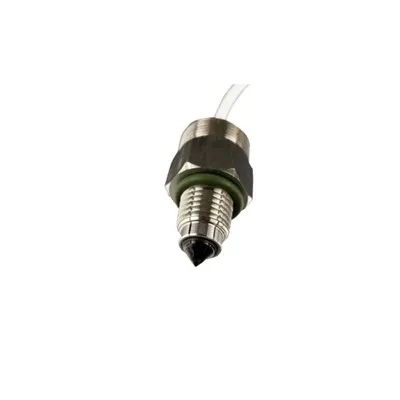
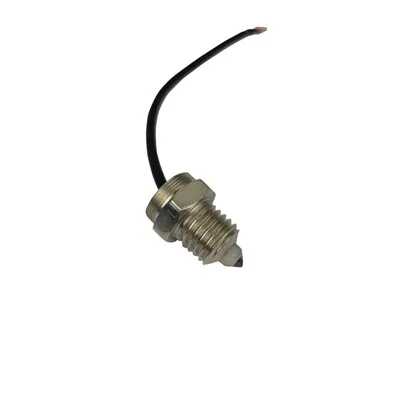
These are the small "puck" style sensors you place near risk areas-under sinks, behind toilets, by water heaters, dishwashers, and HVAC condensate pans.
How they work: metal probes or a sensing pad detect conductivity when water bridges the contacts. The sensor then triggers a siren and/or sends an app push notification to prevent water damage with leak alerts.
Best for: fast detection of obvious puddles; best water leak detectors for apartments because they're cheap, portable, and don't require plumbing changes.
Limitations: they won't detect a leak that stays inside a wall or ceiling until water reaches the sensor.
2) Rope or cable sensors (linear detection)
A cable runs along a baseboard, around a water heater, or across a mechanical room floor.
How they work: the cable senses moisture anywhere along its length, giving broader coverage than a single spot sensor.
Best for: laundry rooms, basements, and areas where water could travel.
3) Whole-home flow monitoring + shutoff
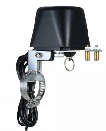
This is the "smart meter" approach, often paired with an automatic shutoff valve leak protection device on the main line.
How it works: a clamp-on ultrasonic flow meter or in-line turbine/impeller measures flow and learns usage patterns. Many systems use real time water usage analytics to flag continuous flow (like a running toilet) or abnormal spikes (like a burst hose). If risk is high, the shutoff closes automatically.
Best for: catching leaks that never puddle (toilets, irrigation, slab line leaks) and reducing catastrophic damage.
Limitations: may not pinpoint the exact fixture without additional sensors.
4) Leak detection using pressure testing (smart pressure monitoring)
Some systems watch pressure behavior, while plumbers may do formal leak detection using pressure testing during diagnosis.
How it works: if the system is isolated and pressure drops over time, there's likely a leak. Smart devices may detect rapid pressure transients linked to bursts or fixture events.
Best for: confirming a suspected hidden leak; plumbing leak detection in complex systems.
Limitations: pressure changes can be affected by temperature, municipal fluctuations, or appliances-so tuning matters.
5) Acoustic leak detection sensors
This is a staple in professional work and is increasingly used in advanced residential tools.
How it works: leaks generate high-frequency noise and vibration as water escapes under pressure. Acoustic leak detection sensors (contact microphones or ground mics) listen through pipe walls, flooring, or soil. Technicians compare sound intensity across points to narrow the leak locati0n.
Best for: underground supply lines, municipal systems, and water leak detection for slab leaks when the leak is pressurized.
Limitations: noisy environments, plastic piping, and low-pressure leaks can be harder to "hear."
6) Ultrasonic: ultrasonic leak detection vs acoustic
People often ask about ultrasonic leak detection vs acoustic.
Acoustic usually refers to audible-to-near-ultrasonic vibration conducted through pipe/material.
Ultrasonic detection often focuses on higher-frequency components and can also be used for non-contact air/gas leaks; for water, it's most effective when specialized tools filter and amplify the leak's ultrasonic signature.
Practical takeaway: both are "sound-based," but tool design and frequency filtering differ. For homeowners, you'll more commonly encounter flow-monitor "ultrasonic" meters than true ultrasonic listening devices.
7) Infrared thermography for leak detection
Infrared thermography for leak detection is popular for locating moisture patterns without opening walls.
How it works: wet materials can show temperature differences due to evaporative cooling and heat transfer. Thermal cameras highlight anomalies, guiding where to inspect further.
Best for: non-invasive "where is it coming from?" surveys behind drywall or under flooring.
Limitations: IR doesn't see water directly-it sees temperature patterns. You still confirm with a moisture meter and visual inspection.
8) IoT water monitoring for homes (the connectivity layer)
IoT water monitoring for homes ties sensors, valves, and analytics into one system.
How it works: sensors connect via Wi‑Fi, Zigbee, Z‑Wave, Thread, or Bluetooth to a hub/app. Cloud or local rules trigger notifications, valve shutoff, and event logs.
Best for: remote properties, frequent travelers, and anyone who wants automation plus history.
How to detect hidden pipe leaks (a practical playbook)
If you're trying to learn how to detect hidden pipe leaks, use this sequence:
Check your meter: turn off all water; if the meter still moves, you likely have a leak.
Look for pattern clues: warm spots on floors, musty smells, peeling paint, or recurring mold.
Use flow analytics: a whole-home monitor can reveal continuous flow at 0.1–0.3 GPM levels.
Isolate zones: shut off fixtures/branches if possible to narrow the line.
Confirm with pros: acoustic/thermal tools can locate with less demolition.
Smart water leak detector installation guide (quick-start)
A basic smart water leak detector installation guide:
Place spot sensors at the lowest point near risk (under supply lines, trap, valve connections).
Keep probes flat on the surface; avoid placing on thick rugs.
Test alerts monthly (siren + app push).
For whole-home shutoff: install on the main after the meter (often requires a plumber); run calibration and label appliance events.
Enable notifications for: continuous flow, burst detection, and "away mode."
Pros and cons of modern leak detection
Pros
Faster discovery to prevent water damage with leak alerts
Can reduce insurance claims and repair scope
Whole-home systems catch silent leaks (toilets, irrigation)
Real time water usage analytics can cut bills
Cons
Upfront cost and occasional subscription fees
Installation complexity for main-line shutoff
Wi‑Fi or power outages can affect cloud-only systems
Risk of troubleshooting false leak alarms if sensitivity is too high
Troubleshooting false leak alarms (common causes)
If you're troubleshooting false leak alarms, check:
Condensation from cold pipes/HVAC pans (add insulation or move the sensor slightly)
Sensor placed where splashes happen (dishwasher kickplate area)
Low batteries or poor signal causing intermittent reports
Water-softener regen cycles or irrigation schedules confusing flow algorithms
Water hammer events (add arrestors or adjust detection settings)
When to call a pro (and what it may cost)
If you suspect a slab or underground leak, or you've got unexplained meter movement, a professional leak detection service cost often reflects equipment and time (acoustic locati0n, thermal imaging, pressure isolation). Pricing varies widely by region and complexity, but it's usually far less than uncontrolled water damage-and it can reduce unnecessary wall/floor demolition.
FAQ
What are the best placements for water leak sensors?
Under sinks, behind toilets, beside water heaters, under dishwashers, laundry supply valves, and HVAC condensate areas-anywhere a small drip could become a flood.
Do I need whole-home monitoring if I already have spot sensors?
Spot sensors are great for puddles. Whole-home monitoring helps catch "no puddle" leaks (toilets, irrigation, pinholes) and can trigger automatic shutoff valve leak protection.
Can these systems detect slab leaks?
Yes-especially flow monitoring for continuous loss and professional acoustic leak detection sensors for locating water leak detection for slab leaks.
Takeaways
Water leakage detection technology works by sensing water presence, abnormal flow, pressure loss, sound/vibration, or thermal patterns-often combining several for accuracy. For most homes, a layered approach wins: spot water leak sensors for local risks, plus whole-home monitoring (ideally with shutoff) for hidden or catastrophic events. Set alerts, test monthly, and treat repeated "mystery" usage as a sign to escalate to advanced diagnostics.
Estimated word count (article body): ~990 words.