What Sensor Detects Liquid Levels?
A liquid level sensor detects the presence, absence, or height of a liquid in a tank, container, pipe, or reservoir. The right sensor depends on what you need to measure: a simple point level, a continuous level, the type of liquid, the container material, environmental conditions, and required accuracy.
In most applications, the sensors used to detect liquid levels include optical liquid level sensors, capacitive liquid level sensors, float switches, ultrasonic sensors, pressure sensors, and conductive probes. Each works differently, so choosing the best option starts with understanding the measurement goal.
What Is a Liquid Level Sensor?
A liquid level sensor is a device that identifies whether liquid is present at a certain point or measures how much liquid is inside a vessel. These sensors are commonly used in water tanks, chemical containers, food and beverage systems, medical devices, industrial equipment, fuel systems, and wastewater applications.
Liquid level sensors generally fall into two categories:
Point level sensors: Detect whether liquid has reached a specific level, such as "full," "empty," or "low."
Continuous level sensors: Measure the changing liquid level across a range and provide ongoing level data.
Common Sensor Types That Detect Liquid Levels
Optical Liquid Level Sensors
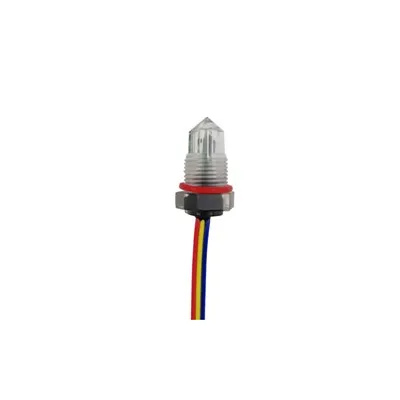
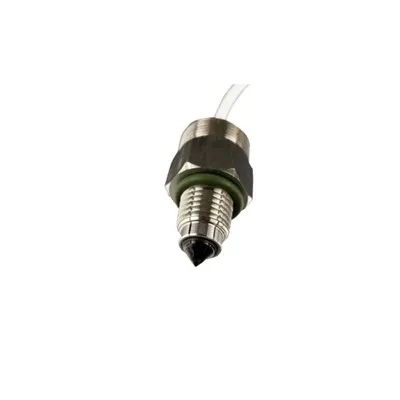
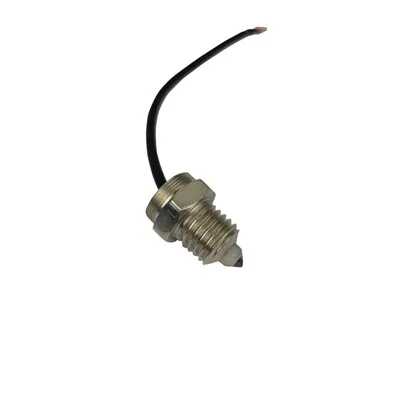
Optical liquid level sensors use infrared light to detect whether liquid is present. A sensor emits light through a prism or lens. When the sensor is in air, the light reflects back in one pattern. When liquid covers the sensor tip, the light refracts differently, triggering a level signal.
These sensors are compact, fast, and reliable for point-level detection. They are often used where mechanical movement is undesirable.
Best for:
Small tanks or compact equipment
Medical and laboratory devices
Leak detection
Clean liquids
Applications requiring fast response
Key advantages:
No moving parts
Accurate point-level detection
Small size
Low maintenance
Potential limitations:
May not be ideal for heavily coating, foaming, or dirty liquids
Typically used for point detection rather than continuous measurement
Capacitive Liquid Level Sensors
Capacitive liquid level sensors detect changes in capacitance caused by the presence of liquid. As the liquid level changes, the electrical field around the sensor changes. The sensor converts that change into a level reading or switching output.
Capacitive sensors can detect many liquids, including water, oils, chemicals, and some viscous materials. They can often detect liquid through non-metallic container walls, depending on the setup.
Best for:
Plastic tanks
Chemical storage
Non-contact detection through container walls
Oils, water-based liquids, and viscous fluids
Point or continuous level measurement
Key advantages:
Can work without direct contact in some applications
Suitable for a wide range of liquids
No moving parts
Useful for both point and continuous sensing
Potential limitations:
Calibration may be needed for different liquids
Foam, buildup, or changing dielectric properties can affect accuracy
Float Switches
Float switches use a buoyant float that rises or falls with the liquid. When the float reaches a certain position, it triggers a switch.
Best for:
Simple tank level control
Pump protection
High-level or low-level alarms
Water and compatible fluids
Float switches are cost-effective and easy to understand, but they include moving parts that can wear, stick, or become obstructed.
Ultrasonic Level Sensors
Ultrasonic sensors measure distance by sending sound waves toward the liquid surface and timing the echo return. They are commonly used for non-contact continuous level measurement.
Best for:
Large tanks
Wastewater systems
Non-contact measurement
Continuous monitoring
They work well in many industrial settings but can be affected by foam, vapor, turbulence, temperature changes, or obstructions inside the tank.
Pressure Level Sensors
Pressure sensors estimate liquid level by measuring hydrostatic pressure at the bottom of a tank. The deeper the liquid, the higher the pressure.
Best for:
Continuous tank level measurement
Water, fuel, and process liquids
Sealed or open tanks
Applications where bottom-mounted sensing is practical
Pressure sensors are reliable, but readings depend on liquid density and proper installation.
Conductive Level Sensors
Conductive sensors use electrodes to detect electrically conductive liquids. When liquid touches the probes, it completes an electrical circuit.
Best for:
Water and conductive liquids
Boiler systems
Simple high/low alarms
They are not suitable for non-conductive liquids such as many oils or solvents.
How to Choose the Right Liquid Level Sensor
When comparing liquid level sensors, consider:
Liquid type: Is it water, oil, chemical, fuel, food-grade liquid, or slurry?
Measurement need: Do you need point detection or continuous level measurement?
Contact requirements: Can the sensor touch the liquid, or is non-contact sensing preferred?
Tank material: Plastic, metal, glass, and composite tanks may require different sensing methods.
Cleanliness: Dirty, sticky, foamy, or viscous liquids can affect sensor performance.
Environment: Temperature, pressure, vibration, and humidity matter.
Maintenance expectations: Sensors with no moving parts usually require less maintenance.
Accuracy and response time: Some applications need only a simple alarm, while others require precise level data.
For compact point-level detection, optical liquid level sensors are often a strong choice. For flexible detection across various liquids and container types, capacitive liquid level sensors are frequently considered. For large tanks and continuous measurement, ultrasonic or pressure-based sensors may be more appropriate.
FAQ
What sensor detects liquid levels?
Liquid levels can be detected by optical, capacitive, float, ultrasonic, pressure, and conductive sensors. The best choice depends on the liquid, tank design, accuracy needs, and whether you need point or continuous measurement.
Are optical liquid level sensors accurate?
Yes, optical liquid level sensors are accurate for point-level detection, especially in clean liquids and compact systems. They are not typically used when a continuous level reading is required.
Can capacitive liquid level sensors detect through plastic?
In many applications, capacitive liquid level sensors can detect liquid through non-metallic tank walls, such as plastic. Performance depends on wall thickness, liquid properties, and sensor calibration.
Which liquid level sensor has no moving parts?
Optical, capacitive, ultrasonic, pressure, and conductive sensors generally have no moving mechanical float. This can reduce wear and maintenance compared with traditional float switches.
What is the best liquid level sensor?
There is no single best sensor for every application. The best liquid level sensor is the one that matches the liquid properties, tank design, measurement range, required output, and operating environment.