A water leak is one of those home problems you usually notice far too late.
You might spot a damp patch under the kitchen sink. Maybe the washing machine hose has started dripping. Or, worse, you come home from a weekend away to find that a small leak has been running for two days.
That is where a Leak Detector + Smart Valve Controller + Level Sensor Solution starts to make sense.
A basic leak detector can tell you that something has gone wrong. A smart shut-off valve can potentially stop the water. And a tank level sensor deals with a slightly different problem altogether: knowing how much water is actually in a tank before it overflows or runs dry.
I spent some time looking through FineHerc's product range to see how these products fit together, what they actually do, and-perhaps more importantly-whether they are worth installing in a real home or water-management system.
My short answer?
For anyone who travels frequently, manages a water tank, or simply doesn't want a tiny plumbing failure turning into a major repair bill, the idea is surprisingly compelling. But you don't necessarily need every sensor FineHerc makes.
Here's what I'd buy, where I'd install it, and where I'd save my money.
The Problem With Ordinary Leak Detectors
Let's start with the obvious question: why not just buy a cheap leak alarm?
For many people, that is perfectly reasonable.
Put one under the washing machine, another near the water heater, and perhaps one underneath the kitchen sink. If water reaches the sensor, your phone gets an alert.
The problem is what happens after the alert.
You're at work.
You're on a flight.
You're staying 500 miles away.
The sensor can tell you there is water on the floor, but it cannot necessarily stop the water from flowing.
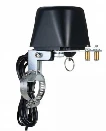
That's the main reason I find FineHerc's LDS002 Smart Water Shut Off Valve more interesting than a standalone leak alarm.
The concept is straightforward:
Leak detected → alert sent → valve closes → water supply is stopped.
That's a much more useful chain of events when nobody is home.
FineHerc LDS002: The Product I'd Look At First
The LDS002 is FineHerc's smart water shut-off solution designed to work with leak detection.
The idea is simple but useful: instead of simply warning you that water has escaped, the system can be used to control the water supply itself.
That's an important distinction.
A water leak detector is essentially an alarm.
A smart valve controller is an action.
And when the two work together, you get something closer to an actual water-protection system.
For a typical home, I would consider placing leak sensors near the washing machine, dishwasher, water heater, kitchen sink and other areas where a burst hose or failed fitting could cause significant damage.
The valve then becomes the central point of control.
And I particularly like the idea of having manual control available. Smart-home equipment is great when everything works, but nobody wants to be locked out of their own water supply because the Wi-Fi router has decided to misbehave.
Smart Valve vs. Your Existing Main Water Valve
This is probably the biggest question most homeowners will have.
"If I already have a main shut-off valve, why do I need another one?"
Because your existing valve normally requires you to be there.
Imagine a washing machine hose bursts at 2 a.m.
With a traditional setup:
Hose bursts → water flows → nobody notices → damage gets worse.
With an automatic shut-off system:
Hose bursts → sensor detects water → system reacts → valve closes.
That difference is the whole point.
You're not replacing basic plumbing with technology for the sake of technology. You're adding an automatic response to something that otherwise requires human intervention.
And when you're away from home, that response can be far more valuable than another smartphone notification.
Installation Is the Catch
This is where I would be slightly more cautious.
Installing a leak sensor is easy.
Installing a smart water valve is not necessarily difficult, but it is a plumbing job.
Before ordering the LDS002, you should check the size and configuration of your existing water line and make sure the valve is compatible with your plumbing system.
You may also need adapters, fittings or other plumbing hardware.
If you are comfortable working with household plumbing, this may be a manageable DIY project.
If you are not, hire a plumber.
I would much rather pay for a proper installation than save a few pounds and discover that my new anti-leak system has created a new leak.
How Much Does Installation Cost?
The final installation cost depends heavily on the property and plumbing configuration.
For budgeting purposes, think of the total project as three separate costs:
The sensor or valve itself
Additional fittings or electrical accessories
Installation labour
The first part is relatively easy to calculate.
The other two depend heavily on your location.
That is also why I wouldn't trust a review claiming that a smart valve costs exactly a certain amount to install. A straightforward exposed-pipe installation and a complicated retrofit behind kitchen cabinets are two completely different jobs.
The Other Half of the Equation: Tank Level Monitoring
Here's where things get slightly confusing.
A leak detector and a level sensor are not the same thing.
A leak detector asks:
"Is water somewhere it shouldn't be?"
A level sensor asks:
"How much liquid is inside this tank?"
If you have a rooftop water tank, rainwater tank, irrigation reservoir or industrial liquid container, you probably care more about the second question.
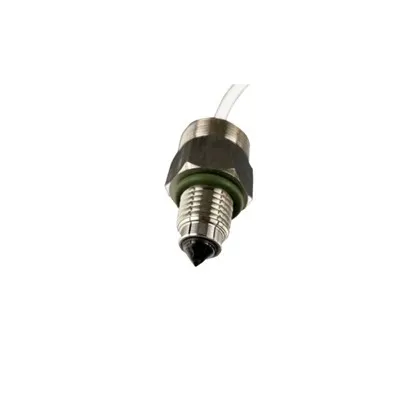
That's where the FineHerc LS001 becomes interesting.
FineHerc LS001: A Practical Tank Level Sensor
The LS001 is designed for liquid-level monitoring, making it more appropriate for tanks and reservoirs than a simple floor-level leak detector.
The biggest advantage of using a dedicated level sensor is that you can monitor the liquid level before a problem occurs.
Think about a rooftop water tank.
You don't necessarily want to wait until water starts spilling over the side before discovering that something has gone wrong.
Likewise, you don't want a pump running when the tank is nearly empty.
A properly configured level monitoring system can provide useful high- and low-level information and make it easier to manage the water supply.
Instead of climbing onto the roof every few days to check the tank manually, you can monitor the situation remotely when the system supports remote connectivity.
That's a much more sensible use of smart technology than putting an app on your toaster.
LS001 vs. a Traditional Float Switch
A traditional float switch is cheap, simple and proven.
That's important.
You shouldn't automatically replace a low-cost mechanical solution with a smart sensor just because it has modern electronics.
A float switch can be perfectly adequate if all you need is a basic high/low-level control.
The LS001 becomes more attractive when your application requires more flexible monitoring, remote visibility or integration with a broader water-management system.
For example, a smart setup could potentially work like this:
Tank level low → pump starts.
Tank reaches upper level → pump stops.
That starts to look less like a single sensor and more like a complete Level Sensor Solution.
What About the DLS002?
Not every liquid-level application needs the same type of sensor.
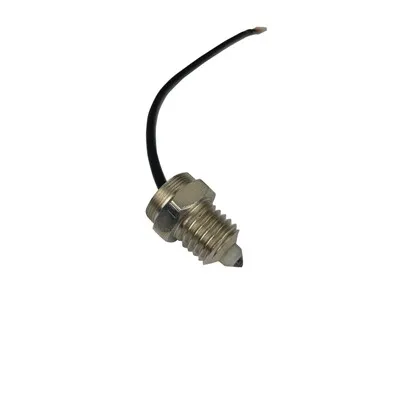
The DLS002 is intended for liquid-level detection in applications where compact and reliable sensing is more important than complicated tank monitoring.
This kind of sensor can make sense in smaller liquid containers, equipment, appliances and other systems where you simply need to know whether liquid has reached a particular point.
And that's worth remembering when choosing a sensor.
More technology does not automatically mean a better solution.
If your application only needs a simple level signal, there is little point installing a complicated system that measures more information than you actually need.
What I'd Buy for Different Situations
This is probably the most useful way to look at the FineHerc range.
For a Family Home
I'd start with the LDS002 if water damage is the main concern.
Put leak sensors near the washing machine, water heater, dishwasher and other vulnerable areas.
The important feature isn't the notification.
It's the automatic shut-off.
For a Holiday Home
I'd put automatic shut-off even higher on the list.
A holiday home can sit empty for days or weeks.
That's exactly when a small leak can become a very expensive one.
If you are not there to turn off the main valve, an automatic system becomes much more valuable.
For a Rooftop Water Tank
The LS001 makes more sense.
Remote level monitoring is much more useful than a simple floor-level leak detector.
You want to know what is happening inside the tank before it becomes an emergency.
For a Small Liquid Container
I'd look at the DLS002 if your application only requires straightforward liquid-level detection.
There is no reason to pay for advanced monitoring if your equipment simply needs to know whether the liquid has reached a specific point.
Can a Smart Water System Lower Your Insurance Premium?
Maybe.
And that's deliberately not a more confident answer.
Some insurers offer discounts or incentives for approved leak detection and automatic shut-off systems. Others don't.
The key word is approved.
Before buying the equipment, ask your insurance provider whether an automatic water shut-off system qualifies for a discount and whether there are specific certification or installation requirements.
Don't buy the system assuming you'll automatically get a specific percentage off your home insurance.
You might.
You might not.
Insurance companies have a talent for making simple questions surprisingly complicated.
Is FineHerc Worth Considering?
I'd say yes, particularly if you're looking for something beyond a basic water alarm.
The biggest strength of the FineHerc approach is that its products can cover different parts of the problem:
Leak Detector
Detects unwanted water.
Smart Valve Controller
Can automatically stop the water supply.
Level Sensor
Monitors liquid levels in tanks and containers.
Put those pieces together and you get a much more complete Leak Detector + Smart Valve Controller + Level Sensor Solution.
But I wouldn't buy the whole range just because you can.
A homeowner with a normal apartment may only need one or two leak sensors.
A property with a water tank has a completely different requirement.
And an OEM or industrial application may need a compact liquid-level sensor rather than a Wi-Fi device.
The right solution depends on the actual problem.
Pros and Cons
Pros
Automatic water shut-off can prevent leaks from becoming much worse
LDS002 provides a practical way to connect leak detection with water shut-off
Smart control can be useful when nobody is home
LS001 is suited to tank-level monitoring applications
DLS002 can be considered for compact liquid-level detection
Different sensor types allow the system to be matched to different applications
A combined solution can cover both leak prevention and tank monitoring
Cons
Smart valve installation can require professional plumbing
Existing pipe size and fittings must be checked before installation
Not every application needs a smart sensor
More sophisticated systems can cost more than a basic float switch or leak alarm
Insurance discounts depend on the insurer and local requirements
Product specifications and pricing should be confirmed with FineHerc before purchase
FAQ
What is the difference between a Leak Detector and a Level Sensor?
A leak detector identifies unwanted liquid in a specific area. A level sensor measures the amount or position of liquid inside a container or tank.
Does the FineHerc LDS002 automatically shut off the water?
The LDS002 is designed as a smart water shut-off solution. The exact automatic shut-off configuration depends on the connected leak detection system and installation.
What is the FineHerc LS001 used for?
The LS001 is intended for liquid-level monitoring applications, making it more suitable for tanks, reservoirs and other liquid-storage systems than a simple leak detector.
What is the DLS002 used for?
The DLS002 is designed for liquid-level detection and can be considered for applications where a compact sensor is needed to determine whether liquid has reached a specific level.
Do I need a plumber to install a smart water valve?
For a standalone level sensor, installation may be relatively straightforward. For a smart valve installed into a household water line, professional plumbing is recommended unless you already have the necessary experience.
Is a smart water shut-off valve worth it?
If you have expensive flooring, a second home, a rental property, valuable equipment, or simply travel frequently, I think the answer is much more likely to be yes.
Final Verdict: The Best Water Protection Is the Kind That Works When You're Away
There is a temptation with smart-home technology to make everything sound revolutionary.
A Wi-Fi sensor isn't revolutionary.
But stopping a serious water leak before it turns into thousands of dollars in damage?
That's useful.
That's why I'd look at FineHerc's products less as individual gadgets and more as pieces of a Leak Detector + Smart Valve Controller + Level Sensor Solution.
The LDS002 is the one I'd consider first for automatic leak protection.
The LS001 makes more sense for tank and reservoir level monitoring.
And the DLS002 is worth considering when you need straightforward liquid-level detection in a more compact application.
If you have the budget, I'd spend it on automatic shut-off before fancy notifications.
Because when you're standing next to the leak, you can turn the water off yourself.
The real value of a smart water protection system is what happens when you're not home.