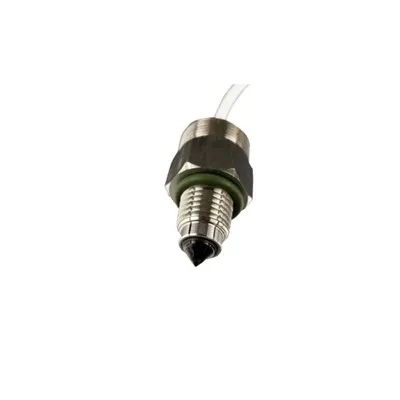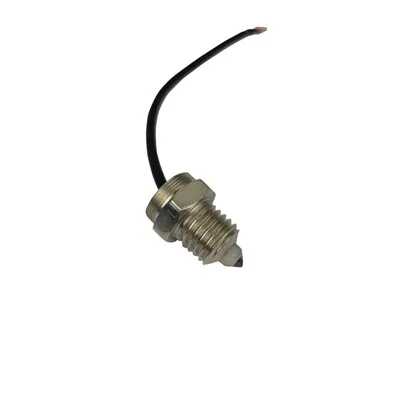
Level Switches
The complete guide to level switches: what a level switch is (a point-level sensing device that outputs a binary on/off signal when liquid reaches a set point), the anatomy of a level switch (sensing element → switching element → output stage → process connection - the "switch inside the switch"), level switch vs level sensor vs level transmitter, the switching elements (reed switch, relay, PNP/NPN transistor, Namur, TRIAC/AC solid-state), the types of level switches (float, capacitive, vibrating fork, conductive, optical TIR, ultrasonic point, RF admittance, radar point), how a level switch works end to end (liquid reaches the tip → the sensing element detects → the switching element changes state → the output drives the PLC input), how to choose one (media → process → connection → environment → output), the applications (water, chemical, food, oil & gas, power, pharma), how to wire a level switch to a PLC (dry contact into a digital input, PNP/NPN polarity, Namur barriers, input filtering, and the common mistakes), the FAQ, and the bottom line.
Level Switches - Quick Answer
A level switch is a point-level sensing device that answers one binary question - "is the liquid at this level?" - and outputs the answer as a simple on/off signal (dry contact, PNP/NPN transistor, or Namur current) that a PLC, relay, or alarm system acts on immediately: stop the pump, close the valve, sound the alarm. Inside every level switch are four parts doing four jobs - the sensing element (float, probe, fork, prism, electrode) detects the liquid, the switching element (reed switch, relay, transistor) changes state, the output stage (dry contact, PNP/NPN, Namur, 4–20 mA) delivers the signal to the controller, and the process connection (thread, flange, clamp) mounts it to the tank. The types are decided by the media and the process: float for simple open tanks, capacitive for non-metallic tanks and interface, vibrating fork for "almost everything," conductive for water-based media at the lowest cost, optical TIR for clean liquids with no moving parts, ultrasonic point for foam and viscous media, RF admittance for coating-prone media, and radar point for non-contact overfill protection. Choosing one is a five-step funnel - media → process → connection → environment → output - and wiring it correctly is a five-point checklist - dry contact into a digital input, PNP sourcing into the right terminal, NPN sinking for legacy inputs, Namur into an intrinsic-safety barrier, and input filtering to reject slosh chatter. A level switch is the simplest device in automation - one question, one bit, one job - and it is the device that stops the overflow, protects the pump, and keeps the process running. (The family: Guide to Liquid Level Sensors; the automation view: Level Switches for Tanks for Automation.)
What Is a Level Switch?
The Anatomy: Four Parts, Four Jobs
The anatomy:
| Part | Job | Examples |
|---|---|---|
| Sensing element | Detects the liquid | Float, probe, fork, prism, electrode |
| Switching element | Changes state | Reed switch, relay, transistor |
| Output stage | Delivers the signal | Dry contact, PNP/NPN, Namur, 4–20 mA |
| Process connection | Mounts to the tank | Thread, flange, clamp |
The "switch inside the switch": A level switch is a complete device with four parts, each doing one job. The sensing element is the part that actually detects the liquid - a float riding the surface, a probe measuring capacitance, a fork sensing vibration damping, a prism sensing refractive index, an electrode sensing conductivity. The switching element is the part that changes state when the sensing element says "liquid is here" - a reed switch snapped by a magnet, a relay energized by the electronics, a transistor turned on. The output stage is the part that delivers the signal to the outside world - a dry contact the PLC reads as open or closed, a PNP/NPN transistor the PLC reads as high or low, a Namur current step the barrier reads as 8 or 16 mA. The process connection is the part that mounts the device to the tank - a thread for small lines, a flange for vessels, a hygienic clamp for food and pharma. Understanding the anatomy explains everything about level switches: why a "float switch" and a "vibrating fork switch" are different sensing elements but identical output stages; why you can buy the same switching element in a hundred different bodies; and why the datasheet's real information is spread across all four parts, not just the sensing principle. (The same device view, sensor-wide: What Is a Liquid Level Sensor?)
Level Switch vs Level Sensor vs Level Transmitter
Three Words, Three Jobs
The distinction:
| Term | Meaning | Output |
|---|---|---|
| Level switch | Point-level device | Binary on/off |
| Level sensor | Generic term, any level device | Either |
| Level transmitter | Continuous level device | 4–20 mA, digital |
The vocabulary of level measurement, one table: The three words are used interchangeably in casual conversation and mean different things on a datasheet. A level switch is a point-level device - it answers "is the liquid at this level?" with a binary on/off output, and it is used for alarms, interlocks, and pump protection. A level sensor is the generic term covering any device that senses level - switches and transmitters both qualify, which is why "level sensor" appears on both categories. A level transmitter is a continuous level device - it answers "how much liquid is there?" with a 4–20 mA or digital output, and it is used for inventory, control loops, and gauging. In purchasing, the word matters: order a "level switch" and you get a binary device; order a "level sensor" and you may get either. The practical rule: if the job is a threshold - stop, start, alarm, interlock - you want a switch; if the job is a number - how many gallons, what percentage - you want a transmitter. (The full point-versus-continuous discussion: Point vs Continuous Level Sensing.)
The Switching Elements
What Actually Switches Inside the Switch
The elements:
| Switching element | Signal | Best for |
|---|---|---|
| Reed switch | Dry contact | Float switches, no power needed |
| Relay | Dry contact, higher rating | General industrial |
| PNP/NPN transistor | 24 V logic | Modern PLC digital inputs |
| Namur | 8/16 mA step | Intrinsically safe hazardous areas |
| TRIAC/SSR | AC switching | Direct AC load control |
The output stage decides what the controller sees: Inside the switch, the switching element is what actually makes or breaks the signal - and its type decides how the controller sees the level. A reed switch is a glass-sealed magnetic contact snapped open or closed by a magnet; it needs no power, which is why float switches can be completely passive, and it is the classic dry contact. A relay is an electromagnet-driven contact with a higher rating, used where the switch must drive a small load directly. A PNP/NPN transistor is the modern solid-state output: PNP (sourcing) delivers +24 V to the PLC input when active, NPN (sinking) pulls the input to ground - polarity matters, and matching the wrong one is the most common wiring error in automation. A Namur output is a two-wire current step (8 mA off, 16 mA on) designed for intrinsic-safety barriers in hazardous areas. A TRIAC or solid-state relay switches AC loads directly, used for pumps and valves without an intermediate relay. The switching element is the part that makes the device a "switch" at all - and choosing it is really choosing what your controller speaks. (The output-architecture thinking, automation-wide: Level Switches for Tanks for Automation.)
Types of Level Switches
Eight Technologies, One Job
The types:
| Type | Principle | Best for |
|---|---|---|
| Float | Buoyancy + reed | Simple open tanks, lowest cost |
| Capacitive | Dielectric change | Non-metallic tanks, interface |
| Vibrating fork | Frequency shift | The general-purpose default |
| Conductive | Conductivity | Water-based media, lowest cost |
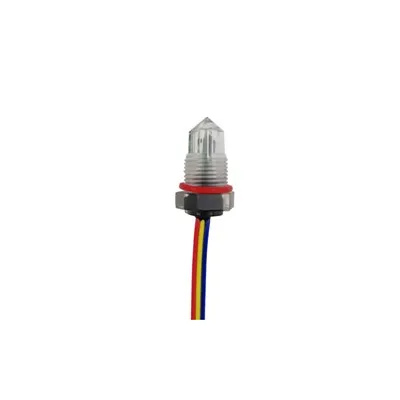
| Optical TIR | Refractive index | Clean liquids, no moving parts |
| Ultrasonic point | Gap attenuation | Foam, viscous media |
| RF admittance | RF impedance | Coating-prone media |
| Radar point | Microwave reflection | Non-contact overfill |
Eight sensing principles, one binary answer: The types of level switches are eight sensing principles that all answer the same binary question. Float switches use buoyancy and a magnet-actuated reed - the cheap mechanical classic for simple open tanks. Capacitive switches measure the dielectric change at a probe - solid-state, pressure-insensitive, good for non-metallic tanks and interface. Vibrating forks sense the frequency shift when liquid damps a tuning fork - the general-purpose workhorse for liquids and slurries. Conductive switches complete a circuit through the media's conductivity - the lowest-cost option, water-based only. Optical TIR switches detect the refractive-index change at a prism tip - no moving parts, clean liquids, compact. Ultrasonic point switches sense echo attenuation across a gap - foam and viscous friendly. RF admittance switches measure RF impedance - the coating-proof specialist. Radar point switches reflect microwaves at a set level - fully non-contact, for aggressive media and overfill protection. The table is the shortcut; the media is the filter. (Each technology in depth: Industrial Level Switches: Float, Capacitive & More; the optical branch: How Optical Level Sensors Work.)
How a Level Switch Works End to End
The Signal Path, Five Links
The path:
| Step | What happens |
|---|---|
| 1. Liquid arrives | Media reaches the set-point level |
| 2. Sensing element detects | Float rises, probe changes, fork damps |
| 3. Switching element changes | Reed closes, transistor turns on |
| 4. Output stage delivers | Contact closes, voltage appears, current steps |
| 5. Controller acts | PLC reads the input, runs the logic |
From liquid to logic, in five links: A level switch works end to end as a five-link chain. First, the liquid arrives at the set-point level - the level where the switch is mounted. Second, the sensing element detects it: a float rises with the surface, a capacitive probe's dielectric changes, a fork's vibration damps, a prism's refraction shifts, an electrode's circuit completes. Third, the switching element changes state: a reed switch snaps, a relay energizes, a transistor turns on. Fourth, the output stage delivers: a dry contact closes, +24 V appears at the PLC input, a Namur current steps from 8 to 16 mA. Fifth, the controller acts: the PLC digital input reads the change and runs the logic - stop the pump, close the valve, sound the alarm, latch the interlock. The whole chain is designed to be fast (milliseconds), simple (one bit), and reliable (no scaling, no calibration, no interpretation). The level switch's genius is that it compresses "the liquid is here" into a single bit the plant can act on instantly - and the five-link chain is the whole story of how it does it. (The signal-chain view, sensor-wide: What Is a Liquid Level Sensor?)
How to Choose a Level Switch
The Five-Step Funnel
The funnel:
| Step | Question | What it eliminates |
|---|---|---|
| 1. Media | Liquid, slurry, foam, coating, conductive? | Technologies |
| 2. Process | Temperature, pressure, hygienic, vacuum? | Versions |
| 3. Connection | Thread, flange, clamp? | Fit options |
| 4. Environment | Hazardous area, SIL, washdown? | Certification tier |
| 5. Output | Relay, PNP/NPN, Namur, 4–20 mA? | Controller match |
Five questions, in order, no shortcuts: Choosing a level switch is a five-step funnel, and the order is the method. Media first - opaque liquids rule out optical, non-conductive liquids rule out conductive, coating-prone media push to RF admittance or a fork, foam rules out some ultrasonics. Process second - temperature and pressure narrow the versions through derating curves, hygienic applications demand certified designs. Connection third - the tank's existing nozzle (thread, flange, clamp) constrains the physical fit. Environment fourth - hazardous areas demand ATEX/IECEx, safety loops demand SIL, washdown demands IP69K. Output fifth - the controller's input decides relay, PNP/NPN, Namur, or 4–20 mA. The funnel works because the media eliminates technologies before the catalog gets involved, and the environment eliminates versions after. Skip a step and the choice degrades into guesswork; follow it and the shortlist is defensible. (The funnel in full detail: Guide to Liquid Level Sensors.)
Applications and Wiring
Where They Work, and How to Connect Them
The applications:
| Industry | Typical switches |
|---|---|
| Water/wastewater | Float, conductive, fork |
| Chemical | Fork, RF admittance, capacitive |
| Food & beverage | Hygienic fork, optical |
| Oil & gas | Radar point, RF admittance |
| Power/boilers | Conductive, capacitive |
| Pharma | Hygienic optical, fork |
The wiring checklist:
| Point | Correct practice | Common mistake |
|---|---|---|
| Dry contact | Into PLC digital input | Driving a load beyond contact rating |
| PNP | Sourcing into DI+ | Wiring NPN logic to a PNP input |
| NPN | Sinking from DI− | Polarity reversal |
| Namur | Into intrinsic-safety barrier | Direct connection without barrier |
| Filtering | Debounce on the input | Slosh chatter false trips |
The industry map confirms the pattern; the wiring checklist prevents the failures: Applications and wiring are the two ends of the level switch story. The industry map shows the pattern: water and wastewater live on floats, conductive probes, and forks; chemicals on forks, RF admittance, and capacitance; food and pharma on hygienic-certified forks and optical; oil and gas on radar point and RF admittance; power and boilers on conductive and capacitive for low-water cutoff duty. The wiring checklist prevents the five most common failures: driving a load beyond the dry-contact rating (the contact welds); wiring an NPN (sinking) switch to a PNP (sourcing) input (the input never sees the signal); reversing polarity on a transistor output; connecting a Namur switch directly without its intrinsic-safety barrier; and skipping input filtering, so slosh chatters the contact and the PLC sees a flickering level. The switch is one bit; the wiring decides whether the bit arrives. (The automation view: Level Switches for Tanks for Automation; the industry-wide view: Global Experts in Gas & Liquid Sensor Solutions.)
FAQ
Q1: What is a level switch?
A level switch is a point-level sensing device that answers "is the liquid at this level?" with a binary on/off signal - dry contact, PNP/NPN, or Namur - used for alarms, interlocks, and pump protection. It is different from a level transmitter, which measures "how much liquid is there?" continuously.
Q2: What are the types of level switches?
The main types are float (buoyancy + reed, simple open tanks), capacitive (dielectric change, non-metallic tanks and interface), vibrating fork (frequency shift, the general-purpose default), conductive (conductivity, water-based media), optical TIR (refractive index, clean liquids), ultrasonic point (gap attenuation, foam and viscous), RF admittance (RF impedance, coating-prone media), and radar point (microwave reflection, non-contact overfill).
Q3: How does a level switch work?
In five links: the liquid arrives at the set-point level, the sensing element detects it, the switching element changes state, the output stage delivers the signal, and the controller acts. The whole chain is fast (milliseconds), simple (one bit), and needs no scaling or calibration.
Q4: How do I choose a level switch?
Use the five-step funnel: media (eliminates technologies), process (temperature, pressure, hygienic - narrows versions), connection (thread, flange, clamp), environment (ATEX, SIL, IP ratings - certification tier), and output (relay, PNP/NPN, Namur, 4–20 mA - controller match). Media first, output last.
Q5: What is the difference between a level switch and a level transmitter?
A level switch is a point device with a binary on/off output for thresholds - alarms, interlocks, pump protection. A level transmitter is a continuous device with a 4–20 mA or digital output for measurements - inventory, control loops, gauging. If the job is a threshold, use a switch; if the job is a number, use a transmitter.
The Bottom Line
A level switch is a point-level sensing device that answers "is the liquid at this level?" with a binary on/off signal - dry contact, PNP/NPN, or Namur - that a PLC, relay, or alarm system acts on immediately: stop the pump, close the valve, sound the alarm. Inside every level switch, four parts do four jobs: the sensing element (float, probe, fork, prism, electrode) detects the liquid; the switching element (reed switch, relay, transistor) changes state; the output stage (dry contact, PNP/NPN, Namur, 4–20 mA) delivers the signal; and the process connection (thread, flange, clamp) mounts the device to the tank - the "switch inside the switch" that explains why the same switching element appears in a hundred different bodies. The types are eight sensing principles answering the same binary question: float for simple open tanks, capacitive for non-metallic tanks and interface, vibrating fork for almost everything, conductive for water-based media, optical TIR for clean liquids, ultrasonic point for foam, RF admittance for coating-prone media, and radar point for non-contact overfill. Choosing one is a five-step funnel - media → process → connection → environment → output - with media first because it eliminates technologies before the catalog gets involved. Wiring it is a five-point checklist - dry contact into a digital input, PNP/NPN polarity matched, Namur into its barrier, and input filtering against slosh chatter - because the switch is one bit and the wiring decides whether the bit arrives. A level switch is the simplest device in automation: one question, one bit, one job - and it is the device that stops the overflow, protects the pump, and keeps the process running, one threshold at a time. (The family: Guide to Liquid Level Sensors; the automation view: Level Switches for Tanks for Automation; the technology comparison: Industrial Level Switches: Float, Capacitive & More; the definition pillar: What Is a Liquid Level Sensor?)
Last updated: August 2026
Disclaimer: This article is an educational overview of level switches, for general reference. The device anatomy (sensing element, switching element, output stage, process connection), switching elements (reed switch, relay, PNP/NPN, Namur, TRIAC/SSR), types (float, capacitive, vibrating fork, conductive, optical TIR, ultrasonic point, RF admittance, radar point), selection funnel, applications, and wiring practices reflect common industry knowledge and vary by manufacturer, model, and application; always confirm ratings, certifications, wetted materials, outputs, and installation with the manufacturer's documentation and applicable codes. Process and safety applications must be engineered by qualified professionals. This guide is not affiliated with any instrument manufacturer.