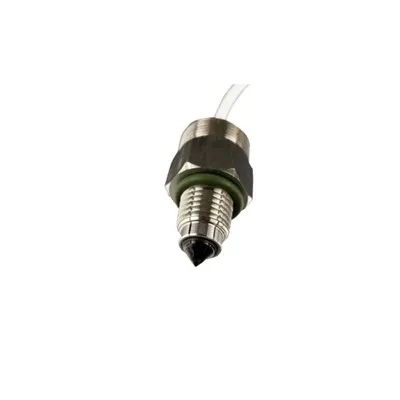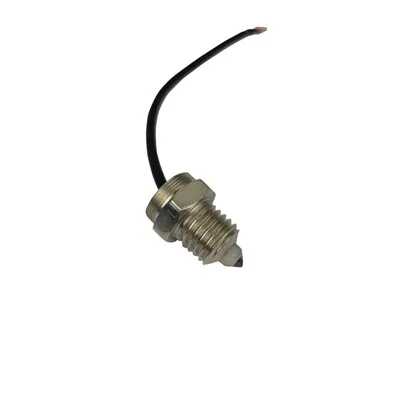
LIQUID LEVEL SWITCHES – Selection Guide
A liquid level switches selection guide that walks from the application requirement to the complete switch selection - the buyer's roadmap: the three questions that start every selection (what is the liquid, what does the switch need to do, where is it going), the four-switch family comparison (float, fork, optical, conductivity - with a side-by-side decision matrix), the eight selection criteria (liquid compatibility, set point and type, output, electrical rating, environment and certification, materials, process connection, and budget), the five worked examples across industries (wastewater sump pump, food-grade milk tank, Zone 1 oil tank, outdoor rainwater cistern, and chemical dosing system), and the five red flags that should stop a purchase (no data sheet, no certification for the zone, incompatible output, unrated materials, no hysteresis specification for pump control).
LIQUID LEVEL SWITCHES – Selection Guide: Quick Answer
Selecting a liquid level switch starts with three questions - what is the liquid, what does the switch need to do, and where is it going - and the answers to those three questions name the switch before the brand or the price are ever discussed. The three starting questions. Question 1, the liquid: is it clean, coating, conductive, or corrosive? The liquid's problem properties are the first filter - a coating liquid eliminates the optical switch and the float, and routes to the fork. A non-conductive liquid eliminates the conductivity switch. Question 2, the job: is it a high alarm, a low cutoff, a pump controller, a leak detector, or a multi-point monitor? The job's feature names the switch's特性: a pump controller wants hysteresis; an alarm wants a fail-safe direction; a leak detector wants the tiny fast optical. Question 3, the location: is it a safe area, a hazardous zone, a hygienic process, or an outdoor environment? The location names the certification: a hazardous zone demands Ex ia or Ex d; a hygienic process demands 3-A or EHEDG; outdoor demands IP65 or above. The three questions answered, the four families compared, and the eight selection criteria applied - and the switch is selected before the brand or the price are discussed. (The family guide: The Ultimate Guide to Liquid Level Switches; the routing: Choosing the Right Level Switch; the specification: Level Switches Selection Guide.)
The Three Starting Questions
What Is the Liquid? What Does It Need to Do? Where Is It Going?
The three starting questions table (Featured Snippet):
| Question | The answers that matter | What it decides |
|---|---|---|
| 1. What is the liquid? | Clean, coating, conductive, corrosive | The surviving switch family |
| 2. What does it need to do? | Alarm, cutoff, pump control, leak, multi-point | The feature: hysteresis, fail-safe direction, speed |
| 3. Where is it going? | Safe, hazardous, hygienic, outdoor, wet | The certification: Ex, hygienic, IP rating |
The three questions start every selection - and the answers name the switch before the brand or the price are discussed: The three starting questions are the fastest path to the right switch. Question 1, the liquid: clean, coating, conductive, or corrosive - the liquid's problem properties are the first filter. A coating liquid (oily, sticky, or scaling) eliminates the optical switch (the prism is blinded) and the float (the stem jams), and routes to the vibrating fork, which sheds the coating by its oscillation. A non-conductive liquid eliminates the conductivity switch, which needs the liquid to complete the circuit - the float, the optical, and the fork all survive. A corrosive liquid eliminates the switch with unrated wetted materials, and routes to the 316SS or PTFE rated version. Question 2, the job: alarm, cutoff, pump control, leak detection, or multi-point - the job's feature names the switch's特性. A pump controller wants hysteresis (a differential between the start and stop levels); an alarm wants a fail-safe direction (NC wiring so a wire break triggers the alarm); a leak detector wants the tiny, fast, clean-liquid optical; a multi-point monitor wants the conductivity probe with multiple electrodes. Question 3, the location: safe area, hazardous zone, hygienic process, outdoor, or wet well - the location names the certification. A hazardous zone demands Ex ia (NAMUR through an IS barrier) or Ex d; a hygienic process demands 3-A or EHEDG certification; a wet well demands submersible IP68; outdoor demands IP65 or above and UV-rated materials. The reading: the three questions are the fastest path to the right switch, and they answer it before the brand or the price are ever discussed. (The liquid routing: Choosing the Right Level Switch; the alarm logic: Level Switches Selection Guide: Common Problems; the certifications: Hazardous Location Guide to Liquid Level Sensors.)
The Four-Switch Family Comparison
Float, Fork, Optical, Conductivity - Side by Side
The four-family comparison table (Featured Snippet):
| Family | Principle | Best for | Avoid when | Cost |
|---|---|---|---|---|
| Float (reed) | Buoyancy lifts a magnet; magnet closes a sealed reed switch | Clean to semi-dirty; pump control; low-cost alarms | Coating liquids; viscous liquids; agitation | $ lowest |
| Vibrating fork | Piezoelectric crystal drives fork at resonance; liquid dampens it | Coating, viscous, slurry; almost any liquid; industrial standard | Very low liquid density; solid bridging | $ – $$ |
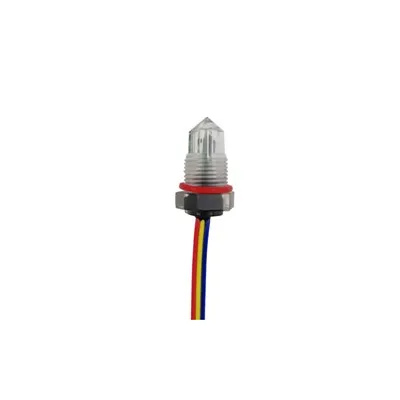
| Optical TIR | Infrared beam refracts at the glass-liquid interface | Clean liquids; tiny tanks; fast response; hygienic | Coating; dirty liquids; steam | $$ |
| Conductivity | Electrodes complete a circuit through the liquid | Multi-point; conductive liquids; low-cost | Non-conductive liquids; coating electrodes | $ |
The four families compared side by side - the float is the cheapest and simplest, the fork is the most versatile, the optical is the fastest and smallest, and the conductivity probe is the cheapest multi-point solution: The four-switch family comparison is the heart of the selection guide. The float (reed) switch: buoyancy lifts a magnet inside the stem, and the magnet closes a sealed reed switch. Best for clean to semi-dirty liquids, pump control, and low-cost alarms. Avoid when the liquid is coating (the stem jams), viscous (buoyancy is affected), or agitated (the float bobs and false-triggers). The cost is the lowest of the four families. The vibrating fork switch: a piezoelectric crystal drives the fork at its resonant frequency, and the liquid dampens the vibration. Best for coating, viscous, and slurry liquids - the oscillation sheds the coating, and there is no moving part to jam. The industrial standard for difficult liquids. Avoid when the liquid density is very low (insufficient damping) or when solid material can bridge the fork tines. The cost is mid-range. The optical TIR switch: an infrared beam is total-internally-reflected at the glass-liquid interface - when liquid is present, the refraction changes and the detector reads it. Best for clean liquids, tiny tanks, fast response, and hygienic applications. Avoid when the liquid is coating (the prism is blinded) or dirty (the light scatters). The cost is mid-to-high. The conductivity probe: two or more electrodes complete a circuit through the conductive liquid. Best for multi-point level detection and conductive liquids at the lowest cost. Avoid when the liquid is non-conductive (no circuit), or when the electrodes are coated or corroded. The reading: the four families are the menu, and the three starting questions are the order. (The family guide: The Ultimate Guide to Liquid Level Switches; the routing: Choosing the Right Level Switch; the spec: Level Switches Selection Guide.)
The Eight Selection Criteria
From Requirements to the Complete Specification
The eight selection criteria table (Featured Snippet):
| # | Criterion | The decision | The spec line |
|---|---|---|---|
| 1 | Liquid compatibility | The problem properties that name the family | Line 1: Liquid |
| 2 | Set point and type | Single point or differential; the actuation level | Lines 4–5: Set point, hysteresis |
| 3 | Output | Dry contact, PNP/NPN, or NAMUR | Line 8: Output |
| 4 | Electrical rating | Contact rating against the load current and voltage | Line 9: Electrical rating |
| 5 | Environment and certification | Zone, gas group, temperature class, IP rating | Lines 10–11: Environment, certification |
| 6 | Wetted materials | 316SS, PTFE, or hygienic alloys | Line 6: Materials |
| 7 | Process connection | Thread, flange, or hygienic fitting | Line 7: Connection |
| 8 | Budget | The cost of the switch and the installation | - |
The eight selection criteria walk from the application requirement to the complete specification - and the spec line is the decision, confirmed: The eight selection criteria are the roadmap from the three questions to the complete switch. Criterion 1, liquid compatibility: the problem properties that named the family in Question 1. Confirm: the liquid's coating, viscosity, conductivity, and corrosiveness - and verify the switch is rated for all of them. Criterion 2, set point and type: single point or differential, and the actuation level in engineering units. Confirm: for pump control, the differential (start and stop levels) must be specified - a switch without a specified hysteresis will have its factory default, which is almost always too small. Criterion 3, output: dry contact, PNP/NPN, or NAMUR. Confirm: the output matches the controller's input - PNP to a sourcing input, NPN to a sinking input, NAMUR through an IS barrier. Criterion 4, electrical rating: the contact rating against the load current and voltage. Confirm: the reed switch inside the float is a signal device rated in milliamps - a relay or an SSR is needed to drive real loads. Criterion 5, environment and certification: zone, gas group, temperature class, IP rating. Confirm: the certificate covers the zone, the gas group, and the temperature class - the certificate is a spec line, not a footnote. Criterion 6, wetted materials: 316SS, PTFE, or hygienic alloys. Confirm: the material is rated for the liquid's corrosiveness. Criterion 7, process connection: thread, flange, or hygienic fitting. Confirm: the thread standard (NPT or BSP), the size, and the type match the tank nozzle. Criterion 8, budget: the cost of the switch and the installation. Confirm: the budget is a version selector, not a family selector - the cheapest switch in the wrong family fails; the right switch at the right price is the target. The reading: the eight criteria fill the twelve lines of the specification - and the filled spec is the selection that has been checked. (The spec workbook: Level Switches Selection Guide; the routing: Choosing the Right Level Switch; the problems: Level Switches Selection Guide: Common Problems.)
Five Worked Examples Across Industries
Wastewater, Food-Grade, Hazardous, Outdoor, and Chemical Dosing
The five worked examples table (Featured Snippet):
| Industry | Liquid | Job | The switch | The key spec decisions |
|---|---|---|---|---|
| Wastewater | Dirty, coating | Pump control (sump pit) | Vibrating fork | IP68 submersible; PNP output; hysteresis specified |
| Food-grade | Milk, clean | High-level hygienic alarm | Optical TIR (hygienic) | 3-A certified; tri-clamp fitting; CIP capable |
| Oil & gas | Diesel, non-conductive | Low-level cutoff (Zone 1) | Float (NAMUR) | Ex ia certified; NAMUR output; IS barrier |
| Outdoor | Rainwater, clean | Cistern fill control | Float (vertical) | IP65 outdoor; UV-rated cable; 316SS |
| Chemical dosing | Conductive acid | Multi-point alarm | Conductivity probe | PP electrodes; multi-point controller; specified levels |
The five worked examples across industries - wastewater sump, food-grade milk tank, Zone 1 oil tank, outdoor rainwater cistern, and chemical dosing system - show the three questions and eight criteria applied end to end: The five worked examples demonstrate the buyer's roadmap applied. Wastewater sump pump: the liquid is dirty and coating - the fork survives where the float and optical fail. The job is pump control - hysteresis must be specified (start at 12 inches, stop at 6 inches). The location is a wet pit - IP68 submersible, with PNP output to the PLC. The material is 316SS for the waste water. The connection is a thread into the pit wall. The cost is mid-range - the fork is not the cheapest, but it is the right switch. Food-grade milk tank: the liquid is clean - all four families survive, but the hygienic requirement narrows the field. The job is a high-level alarm - a single-point optical TIR in the hygienic version. The location is a hygienic process - 3-A certified, with a tri-clamp fitting and CIP capability. The material is electropolished 316SS. The connection is the tri-clamp that matches the tank nozzle. The cost is mid-to-high - hygienic certification is not cheap, but it is required. Zone 1 oil tank: the liquid is diesel, non-conductive - conductivity is eliminated; the float survives. The job is a low-level cutoff - a fail-safe NC float switch, wired so a wire break triggers the alarm. The location is Zone 1 - Ex ia certified with NAMUR output, through an intrinsically safe barrier. The material is 316SS for the diesel. The connection is a flange into the tank. The cost is high - hazardous-area certification is not optional. Outdoor rainwater cistern: the liquid is clean rainwater - all four families survive, but the outdoor location drives the requirements. The job is fill control - a simple float switch with hysteresis. The location is outdoor - IP65, UV-rated cable, and 316SS for the wet-wet material. The connection is a thread into the cistern wall. The cost is low-to-mid - the outdoor requirements add cost, but the float is still the simplest solution. Chemical dosing system: the liquid is a conductive acid - the conductivity probe survives where the optical and float may be attacked. The job is multi-point alarm - multiple electrodes at different heights, one controller. The location is a chemical process - PP (polypropylene) electrodes for acid resistance. The connection is a thread into the tank. The cost is low - the conductivity probe is the cheapest multi-point solution. The reading: the three questions and the eight criteria, applied to each industry, end in the right switch. (The spec workbook: Level Switches Selection Guide; the routing: Choosing the Right Level Switch; the problems: Level Switches Selection Guide: Common Problems.)
The Five Red Flags
What Should Stop a Purchase
The red flags table (Featured Snippet):
| Red flag | The warning | The correct action |
|---|---|---|
| No data sheet | The specifications cannot be verified | Do not purchase - demand the data sheet first |
| No certification for the zone | A non-certified switch in a hazardous area is a safety violation | Verify the certificate covers the zone, gas group, and T-class |
| Incompatible output | The output does not match the controller's input | Match the output to the input before ordering |
| Unrated wetted materials | The material is not rated for the liquid's corrosiveness | Specify 316SS or PTFE for corrosive liquids |
| No hysteresis specified (pump control) | The pump will cycle on and off at the same level | Specify the differential: start at X, stop at Y |
The five red flags are the five mistakes that appear most often in failed installations - and each one should stop a purchase until it is resolved: The five red flags are the five selection mistakes that appear most often after installation, and each one should stop the purchase until it is corrected. Red flag 1, no data sheet: if the supplier cannot provide a data sheet, the switch's specifications cannot be verified. Do not purchase - demand the data sheet first. Red flag 2, no certification for the zone: a non-certified switch in a hazardous area is not just a field problem, it is a safety violation. Verify the certificate covers the zone, the gas group, and the temperature class - and verify it before ordering, not after installation. Red flag 3, incompatible output: the PNP output into a sinking input, or the NAMUR output into a relay controller, will not work. Match the output to the controller's input before the switch is ordered - this is not a field fix. Red flag 4, unrated wetted materials: the material must be rated for the liquid's corrosiveness. An unrated material will corrode, contaminate the process, or fail - specify 316SS or PTFE for corrosive liquids. Red flag 5, no hysteresis specified for pump control: the switch will have its factory default hysteresis, which is almost always too small for pump control. The pump will cycle on and off at the same level - specify the differential (start at X, stop at Y) on the purchase order. The reading: the five red flags are the five questions that should be answered before the purchase order is signed. (The problems: Level Switches Selection Guide: Common Problems; the spec: Level Switches Selection Guide; the certification: Hazardous Location Guide to Liquid Level Sensors.)
FAQ
Q1: What is the most important factor in selecting a liquid level switch?
The liquid's problem properties. A coating liquid eliminates the optical and the float before the output, the certification, or the price are discussed. Name the liquid's problem properties first, and the surviving switch family picks itself.
Q2: Can I use a float switch in a coating liquid?
No - the coating jams the stem and changes the buoyancy of the float. A coating liquid routes to the vibrating fork, which sheds the coating by its oscillation and has no moving parts to jam.
Q3: What output do I need for a PLC-controlled pump?
The PNP or NPN transistor output, matched to the PLC's input type: a sinking input wants the NPN sensor (which sinks current), and a sourcing input wants the PNP sensor (which sources current). If the input type is not known, specify the dry contact output with a relay - it is compatible with almost every controller.
Q4: What certification do I need for a hazardous area?
It depends on the zone. Zone 0 requires Ex ia (NAMUR through an intrinsically safe barrier). Zone 1 accepts Ex ia, Ex d, or Ex e. Zone 2 accepts Ex n or restricted-breathing variants. Verify the certificate covers the zone, the gas group, and the temperature class before purchasing.
Q5: What is the cheapest liquid level switch that will work?
The float (reed) switch is the cheapest of the four families. It works for clean to semi-dirty liquids, for pump control and low-level alarms. But it fails in coating liquids, viscous liquids, and hazardous areas - and in those cases, the cheapest switch that fails is more expensive than the right switch at the right price.
The Bottom Line
Selecting a liquid level switch starts with three questions - what is the liquid, what does the switch need to do, and where is it going - and the answers name the switch before the brand or the price are ever discussed. The three questions are the fastest path to the right switch: the liquid names the surviving family (coating routes to the fork; non-conductive eliminates conductivity); the job names the feature (pump control wants hysteresis; alarms want fail-safe direction); the location names the certification (hazardous zones demand Ex ia or Ex d). The four-family comparison confirms the choice: the float is the cheapest and simplest for clean liquids and pump control; the fork is the most versatile for coating and industrial applications; the optical is the fastest and smallest for clean hygienic tanks; the conductivity probe is the cheapest multi-point solution for conductive liquids. The eight selection criteria fill the specification: liquid compatibility, set point and type, output, electrical rating, environment and certification, wetted materials, process connection, and budget. The five worked examples demonstrate the process end-to-end: wastewater, food-grade, hazardous, outdoor, and chemical dosing - each one starts with the three questions and ends with the right switch. The five red flags stop the purchase until they are resolved: no data sheet, no certification for the zone, incompatible output, unrated materials, and no hysteresis specified for pump control. The one-sentence rule: the three questions start the selection, the eight criteria confirm it, and the red flags check it before the purchase order is signed. (The family guide: The Ultimate Guide to Liquid Level Switches; the routing: Choosing the Right Level Switch; the specification: Level Switches Selection Guide; the problems: Level Switches Selection Guide: Common Problems.)
Last updated: August 2026
Disclaimer: This article is an educational liquid level switches selection guide, for general reference. The three questions, the four-family comparison, the eight selection criteria, the five worked examples, and the five red flags reflect common engineering knowledge and vary by manufacturer, model, and application; always verify the specific device's data sheet, ratings, and certification with the manufacturer's documentation and the applicable standards and codes. Selection, installation, and wiring must be performed by qualified personnel, and safety devices such as low-level cutoffs must be tested and maintained per their instructions.