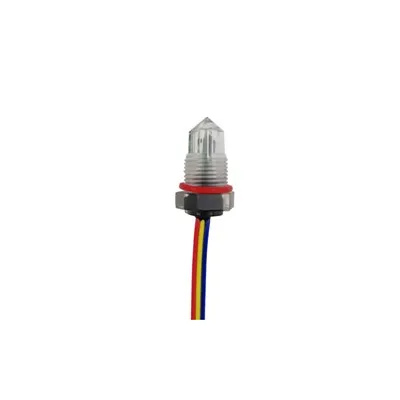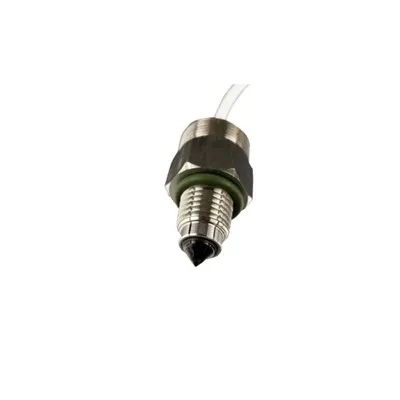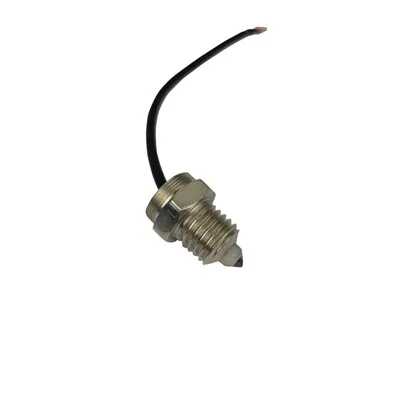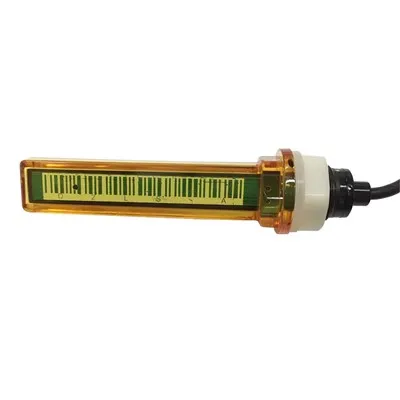
Stainless Steel Level Sensors
Stainless steel level sensors are currently the most widely used type. Their primary characteristics include high hardness, strong corrosion resistance, high-temperature tolerance, and excellent vibration resistance. Stainless steel level sensors are suitable for measuring the levels of various low-, medium-, and high-viscosity media, and they are widely utilized in industries such as refining, chemicals, pharmaceuticals, and food processing.
Plastic Level Sensors
Plastic level sensors offer advantages such as low cost, light weight, corrosion resistance, rust resistance, and ease of processing. They are suitable for measuring the levels of most non-corrosive liquids, as well as media such as water. Plastic level sensors are commonly employed in industries including beverages, food processing, wastewater treatment, and water purification.
Quartz Level Sensors
Quartz level sensors are high-precision, high-strength sensors capable of withstanding high temperatures and high pressures. Their primary advantages include exceptional corrosion resistance, zero water absorption, and impermeability to water vapor, making them ideal for measuring the levels of highly corrosive or high-temperature media. Quartz level sensors are designed for use in demanding environments, such as chemical plants, large-scale metallurgical facilities, and nuclear power stations.
Other Level Sensor Materials
In addition to the three common materials mentioned above, level sensors are also available in other materials, such as ceramics and glass. Ceramic level sensors are suitable for measuring the levels of magnetic media and corrosive chemical media, while glass level sensors are suitable for measuring the levels of non-viscous, low-corrosivity, and low-temperature media.