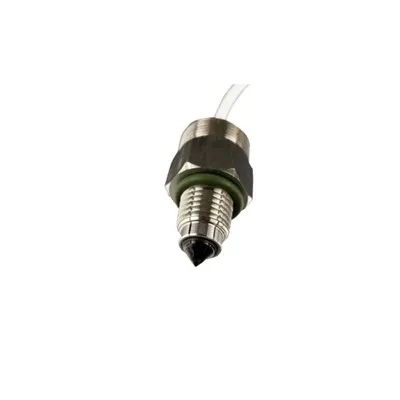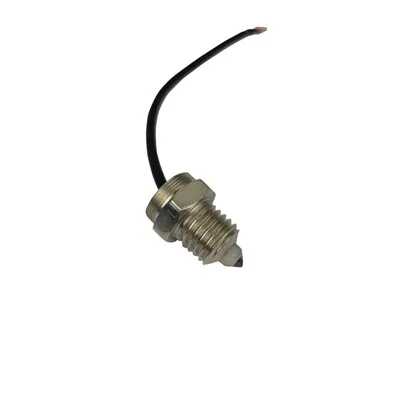
Review on transit time ultrasonic flowmeter
Understanding Transit Time Ultrasonic Flowmeters
A transit time ultrasonic flowmeter is a non-intrusive or inline instrument used to measure the flow rate of liquids and, in some applications, gases by tracking how long ultrasonic signals take to travel through a moving fluid. In simple terms, the meter compares the travel time of sound pulses moving with the flow against sound pulses moving against the flow. The difference between those two times is used to calculate velocity, which can then be converted into flow rate when the pipe size is known.
This review on transit time ultrasonic flowmeter technology explains how the method works, where it performs best, what limitations to consider, and how to choose the right configuration for an application. Transit time measurement is widely valued because it can provide accurate flow data without inserting mechanical parts into the stream, reducing pressure loss, contamination risk, and maintenance needs.
How Transit Time Measurement Works
Transit time measurement is based on a straightforward principle: sound travels faster when moving in the same direction as fluid flow and slower when moving against it. A typical transit time flowmeter uses two ultrasonic transducers positioned at a known distance from each other. These transducers alternately send and receive ultrasonic pulses.
When the fluid is stationary, the upstream and downstream travel times are nearly identical. When the fluid moves, the downstream signal arrives slightly faster, while the upstream signal takes slightly longer. The meter's electronics measure this time difference with high precision and calculate the average fluid velocity.
To determine volumetric flow, the meter combines the measured velocity with the internal pipe diameter and cross-sectional area. The result is commonly displayed as flow rate, totalized flow, velocity, or other process values depending on the device and system integration.
Main Types of Transit Time Flowmeters
Transit time flowmeters are available in several configurations. The right choice depends on the installation environment, pipe material, fluid properties, accuracy requirements, and whether permanent or temporary measurement is needed.
Clamp-On Transit Time Flowmeters
Clamp-on meters are installed on the outside of a pipe. The ultrasonic transducers are mounted externally, usually with a coupling gel or pad to help transmit sound through the pipe wall. Because the meter does not contact the fluid, installation can often be completed without cutting the pipe, interrupting the process, or creating pressure loss.
Clamp-on transit time ultrasonic flowmeters are popular for audits, troubleshooting, temporary flow checks, and permanent monitoring where non-invasive installation is preferred. They are especially useful in facilities where shutting down a line would be expensive or impractical.
Inline Transit Time Flowmeters
Inline models are installed directly into the piping system. These meters may offer higher repeatability and more controlled acoustic paths because the measuring section is designed specifically for ultrasonic transmission. Inline units are often selected for critical process applications, dosing systems, custody-related measurements, or installations where long-term accuracy is a priority.
Portable Transit Time Flowmeters
Portable units are designed for field technicians, maintenance teams, energy auditors, and commissioning engineers. They usually include clamp-on sensors, a handheld or case-mounted display, and data logging features. A portable transit time flowmeter can be moved from one pipe to another to verify pump performance, check system balance, or diagnose flow issues.
Key Advantages of Transit Time Ultrasonic Flowmeters
One of the strongest advantages of this technology is that it can measure flow without moving parts. Mechanical flowmeters may wear over time, especially when exposed to continuous flow, pressure changes, or impurities. In contrast, ultrasonic meters rely on sound signals and electronics, which can reduce maintenance demands.
Other important benefits include:
Low or no pressure drop: Clamp-on models do not obstruct the flow path, and many inline designs are also optimized to minimize restriction.
Non-invasive installation: External sensors can be installed without pipe cutting or process shutdown in suitable applications.
Bi-directional measurement: Many meters can measure flow in both directions, which is useful for loop systems and reversible processes.
Good accuracy with clean fluids: Transit time measurement performs especially well with clean liquids and stable flow profiles.
Wide pipe size compatibility: Clamp-on meters can often be used across a broad range of pipe diameters.
Useful for energy monitoring: When paired with temperature sensors, ultrasonic flowmeters can support heating and cooling energy calculations.
These advantages make the technology suitable for water treatment, HVAC systems, chemical processing, power plants, food and beverage utilities, and general industrial flow monitoring.
Limitations and Practical Considerations
A balanced review on transit time ultrasonic flowmeter performance must also consider its limitations. This technology is not ideal for every fluid or every pipe condition.
Transit time flowmeters generally work best with relatively clean fluids that allow ultrasonic signals to pass through clearly. Heavy solids, high air bubble content, dense slurry, or highly aerated liquids can weaken or scatter the signal. In such cases, another flow technology may be more appropriate, or a different type of ultrasonic meter may be considered.
Pipe condition also matters. Clamp-on meters depend on sound passing through the pipe wall and fluid. Thick coatings, corrosion, liners, scale buildup, or unknown pipe materials can affect signal quality. Accurate pipe data, including outside diameter, wall thickness, material, and lining information, is important for setup.
Flow profile is another factor. Elbows, valves, pumps, reducers, and other disturbances can create turbulence or asymmetrical flow. For best results, the meter should be installed where there is enough straight pipe upstream and downstream, according to the manufacturer's guidance. If ideal straight runs are not available, multi-path meters or careful site evaluation may help improve reliability.
Common Applications
Transit time ultrasonic flowmeters are used across many sectors because they provide efficient, clean, and flexible flow measurement.
Water and Wastewater
Clean water lines, treated water, distribution networks, and process water systems are common applications. Clamp-on meters are frequently used to check flow without interrupting service.
HVAC and Building Systems
In heating, cooling, and chilled water systems, transit time measurement helps monitor circulation, balance loops, and calculate energy usage. Non-invasive installation is particularly valuable in existing buildings.
Industrial Process Monitoring
Manufacturers use transit time flowmeters to measure water, solvents, chemicals, and other compatible liquids. Inline models may be selected when higher accuracy and permanent installation are required.
Power and Energy Facilities
Power plants and energy systems rely on accurate flow data for cooling water, feedwater support systems, and thermal energy monitoring. Ultrasonic technology is attractive where pressure loss and maintenance access are concerns.
Temporary Testing and Diagnostics
Portable meters are often used for pump testing, leak investigation, flow verification, and commissioning. Their ability to move between measurement points makes them useful for maintenance planning and system optimization.
Factors to Review Before Selecting a Meter
Choosing the right transit time flowmeter involves more than selecting a pipe size range. A good evaluation should include the fluid, pipe, installation conditions, communication requirements, and performance expectations.
Consider the following points:
Fluid type: Confirm that the liquid is clean enough for reliable ultrasonic signal transmission.
Pipe material: Metals and many plastics are suitable, but the meter must be configured correctly for the material.
Pipe dimensions: Accurate outside diameter, wall thickness, and lining data are essential.
Temperature and pressure: The meter and sensors must match the operating environment.
Installation style: Decide whether clamp-on, inline, or portable measurement is best.
Accuracy needs: General monitoring may require different performance than process control or billing-related measurement.
Available straight run: Review upstream and downstream pipe conditions before installation.
Output requirements: Check whether analog output, pulse output, Modbus, data logging, or other communication options are needed.
Environmental conditions: Outdoor, wet, hot, hazardous, or high-vibration locations may require special housings or ratings.
By reviewing these factors early, users can avoid poor signal strength, unstable readings, and installation delays.
Installation Best Practices
Proper installation is critical to the performance of a transit time ultrasonic flowmeter. Even a high-quality instrument can produce poor results if sensors are mounted incorrectly or pipe parameters are entered inaccurately.
For clamp-on units, the pipe surface should be clean, smooth, and free from loose paint, rust, or heavy buildup. The transducers must be aligned according to the selected mounting method. Common arrangements include V-method, Z-method, and W-method configurations, depending on pipe size, signal strength, and manufacturer recommendations.
Coupling material should be applied properly to remove air gaps between the sensor and pipe surface. Sensor spacing should be set accurately, as even small errors can influence measurement performance. After installation, signal strength, signal quality, and diagnostic values should be checked before relying on the readings.
For inline meters, correct orientation, gasket alignment, grounding, and straight-run requirements should be followed. The pipe should remain full during measurement, since partially filled lines can cause inaccurate or unstable readings.
Accuracy and Performance Expectations
Transit time ultrasonic flowmeters can provide strong accuracy when installed in suitable conditions. However, real-world performance depends on several variables, including fluid cleanliness, pipe data accuracy, transducer placement, flow profile, and calibration.
A common mistake is assuming that all meters will perform the same regardless of installation quality. In practice, measurement reliability is a combination of instrument design and field setup. For critical applications, users should consider professional commissioning, site verification, or calibration against a known reference.
Repeatability is often as important as absolute accuracy. In process monitoring, energy management, or trend analysis, a stable and repeatable signal can provide valuable insight even when the application does not require laboratory-grade precision.
Maintenance and Long-Term Use
Transit time flowmeters are generally low-maintenance because they do not rely on rotating parts or internal obstructions. Clamp-on sensors may need periodic inspection to confirm that mounting hardware remains secure and coupling material is still effective. Outdoor installations should be checked for weather exposure, cable condition, and enclosure integrity.
Inline meters should be reviewed as part of normal instrumentation maintenance. While they have no moving parts, deposits, coating, or process changes may still affect readings over time. Routine validation helps ensure that the meter continues to reflect actual system conditions.
Final Review: Is a Transit Time Ultrasonic Flowmeter the Right Choice?
A transit time ultrasonic flowmeter is an excellent choice for many clean-liquid applications where non-invasive measurement, low pressure loss, and reduced maintenance are priorities. It is especially valuable when users need reliable flow data without cutting into existing piping or stopping operations.
However, the technology should be selected carefully. Fluids with heavy solids, entrained air, or unstable acoustic properties may reduce performance. Pipe condition, installation locati0n, and setup accuracy are also critical to success.
For clean water, HVAC loops, industrial utilities, chemical lines, and temporary diagnostic work, transit time measurement offers a practical and efficient solution. A well-selected and properly installed transit time flowmeter can provide accurate flow insight, support process efficiency, and help operators make better maintenance and operational decisions.