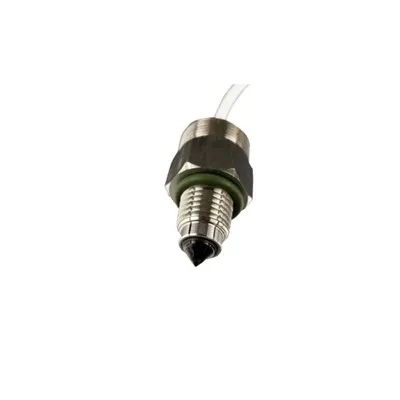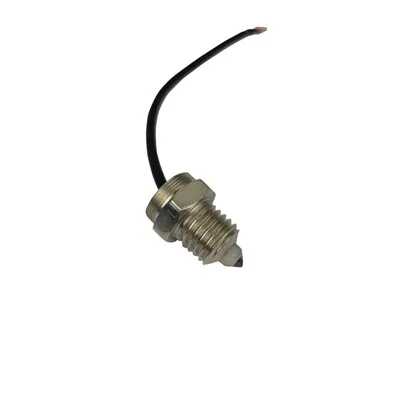
Should You Replace Both O2 Sensors at the Same Time?
A complete guide to the classic oxygen (O2) sensor repair question: which two sensors people mean (upstream vs downstream, bank 1 vs bank 2), what each sensor does (fuel trim vs catalytic converter monitoring), the case for replacing both at once (shared labor, symmetric aging, avoiding a repeat trip), the case for replacing only the failed one (cost, a healthy partner), the decision table (mileage, age, codes, symptoms), the two situations where replacing both is clearly right, the two where replacing one is clearly right, sensor lifetimes and costs, why you must diagnose before you buy, the FAQ, and the bottom line.
Should You Replace Both O2 Sensors at the Same Time? - Quick Answer
Replace both O2 sensors at the same time when they share the job or the labor - on a V-engine, replace both upstream (pre-catalytic-converter) sensors together because fuel trim is trimmed per bank; on any engine, replace the upstream and downstream sensors on the same bank together if the surviving one is old (60,000+ miles) or unknown, because the labor is shared and the survivor is near the end of its life anyway - but replace only the failed sensor when the other one is young, recently replaced, or confirmed healthy by live data. There is no universal yes or no; the honest rule is replace the failed sensor now, and replace its aging partner proactively. Oxygen sensors are wear items with typical lives of 60,000–100,000 miles, and they fail with age as much as with use - so the deciding question is not "should I always replace both?" but "how old is the other one, and how much will it cost to be wrong?" (The sensing physics behind these parts: Sensing Principle of Oxygen Sensors; reading the specs: Sensor Data Sheet: How to Read and Use One.)
First, Which Two Sensors Do People Mean?
Upstream vs Downstream, Bank 1 vs Bank 2
The sensor map:
| Sensor | Location | What it does |
|---|---|---|
| Upstream (sensor 1) | Before catalytic converter | Air/fuel ratio for fuel trim |
| Downstream (sensor 2) | After catalytic converter | Converter efficiency monitor |
| Bank 1 | Cylinder bank containing cylinder 1 | - |
| Bank 2 | The other bank (V-engines) | - |
"Both O2 sensors" is two different pairs: In a typical four-cylinder, "both O2 sensors" means the upstream (pre-cat) and downstream (post-cat) sensors in the exhaust - a pair. On a V-engine, "both" can mean both upstream sensors (one per bank), both downstream sensors, or all four. The right replacement strategy depends on which pair you mean. The upstream sensor is the working sensor - the engine computer reads it constantly to trim the air/fuel mixture. The downstream sensor is the watchdog - its only real job is to confirm the catalytic converter is still converting. They fail for different reasons and at different rates, so they should not be treated as a matched set. (The five sensing principles behind them: Sensing Principle of Oxygen Sensors.)
What Each Sensor Actually Does
The Worker and the Watchdog
The division of labor:
| Sensor | Reads | Purpose | Failure symptom |
|---|---|---|---|
| Upstream | Exhaust before the cat | Fuel trim (14.7:1 target) | Poor mileage, rough idle |
| Downstream | Exhaust after the cat | Converter efficiency | Converter codes, emissions |
One sensor runs the engine; the other audits the converter: The upstream oxygen sensor sits before the catalytic converter and is the engine computer's primary feedback for fuel control - it sees the raw exhaust and tells the computer whether the mixture is rich or lean so the computer can correct it toward the ideal 14.7:1 air/fuel ratio. When it degrades, the engine runs blind: fuel economy drops, idle gets rough, and emissions climb. The downstream sensor sits after the converter and compares what leaves the converter to what entered it - the computer uses the difference to judge whether the converter is still working. A failed downstream sensor usually means a converter-efficiency code (P0420/P0430 class) rather than driveability trouble. Because their jobs differ, their failure patterns differ - and that matters for the replace-both question. (The physics of both: Sensing Principle of Oxygen Sensors.)
The Case for Replacing Both
Shared Labor, Shared Lifespan
The reasons together:
| Reason | Detail |
|---|---|
| Shared labor | Both are often accessible in one visit |
| Symmetric aging | Same heat, same mileage, same life |
| Known end-of-life | 60,000–100,000 mile typical life |
| One trip, one diagnostic | Avoids a second CEL trip |
The strongest argument is the odometer, not the sensor: Oxygen sensors are wear items with typical service lives of 60,000–100,000 miles - heated sensors usually live at the shorter end, and newer wideband sensors live longer. If one sensor has failed at 90,000 miles, its partner has endured the same heat, the same vibration, and the same mileage, and is close behind it. Replacing both while the car is already on the lift and the exhaust is already accessible costs a little extra parts money and almost no extra labor - and it prevents the most common outcome of single replacement: a second check-engine light six months later from the sensor you left in place. On a V-engine, both upstream sensors should be treated as a set for an additional reason: the computer trims fuel per bank, and one healthy bank with one dying sensor makes the car run asymmetrically. (The same preventive-maintenance logic as any paired wear part: replace the failed one now, the tired one with it.)
The Case for Replacing One
Cost, and a Healthy Partner
The reasons alone:
| Reason | Detail |
|---|---|
| Cost | $30–$200+ per sensor |
| No evidence of failure | The other may test perfectly |
| Recent replacement | A young sensor needs no change |
| Diagnosis first | One code = one failed sensor |
If the other sensor is young, replacing it is wasted money: The argument for single replacement is equally honest. If the surviving sensor was replaced 20,000 miles ago, or live data shows it switching correctly and reading in range, replacing it is pure waste - you would be changing a healthy part. Oxygen sensors do not fail in matched sets; they fail individually as their individual heaters, elements, and wiring age. And because sensors are diagnosed by code and by live data, one code (say, P0135, heater circuit) identifies one failed sensor - fixing only that sensor is the correct, evidence-based repair. The "always replace both" rule is a parts-store convenience, not an engineering requirement. The deciding question is the survivor's age and health, not a blanket rule. (Diagnostic discipline: read the code, watch the live data, then buy - see the diagnostic section below.)
The Decision Table
Four Factors That Settle It
The framework:
| Factor | Replace both | Replace one |
|---|---|---|
| Mileage | 60,000+ miles on the pair | Under ~60,000 on survivor |
| Age/heat history | Both same age, hard service | One recently replaced |
| Codes | Multiple O2 codes | Single specific code |
| Live data | Both sluggish/out of range | One healthy, switching fast |
Let the evidence, not the rule, decide: Run the four factors and the answer usually appears. High mileage on both sensors, similar heat history, multiple oxygen-sensor codes, or live data showing both sensors slow to respond - replace both. Low mileage on the survivor, a single specific code, or live data showing one sensor switching cleanly and quickly - replace one. The common mistake is deciding before looking: either replacing one when the other is clearly dying, or replacing both when the other is clearly fine. Oxygen sensors cost real money, so the cheapest correct strategy is a minute of live-data diagnosis followed by a deliberate choice. (The data-first habit is the same one that keeps every sensor program honest: Sensor Data Sheet: How to Read and Use One.)
When Replacing Both Is Clearly Right
The Two No-Brainers
The situations:
| Situation | Why both |
|---|---|
| V-engine, both upstream | Per-bank fuel trim needs symmetry |
| High-mileage pair, unknown history | Survivor is near end of life anyway |
Two cases admit no debate: First, on a V-engine with two upstream sensors - one per bank - replace both. The computer trims fuel separately for each bank, and a weak sensor on one bank makes the whole engine run asymmetrically; leaving a dying sensor in place while replacing its mirror is false economy. Second, if both sensors are high-mileage and the replacement history is unknown, replace both - the survivor has endured the same life as the one that just failed, and the labor is already paid for. In both cases, the extra sensor is cheap insurance against a guaranteed second visit. These are the situations the "replace both" advice exists for. (The wear-item logic of paired components applies exactly as it does to any matched set: same environment, same life, same end.)
When Replacing One Is Clearly Right
The Two No-Brainers
The situations:
| Situation | Why one |
|---|---|
| Survivor is young or recently replaced | Healthy part needs no change |
| Single specific code, clean data elsewhere | Evidence points to one sensor |
Two cases also admit no debate: First, if the surviving sensor is young - recently replaced, or clearly under the normal service-life window with clean data - replacing it is waste. Second, if the diagnostic evidence is unambiguous - one specific oxygen-sensor code and live data showing everything else healthy - fix the one sensor the evidence names. Oxygen sensors fail individually, and the correct repair is the one the data supports. The "replace both" rule becomes wrong when it overrides evidence: buying a sensor the car does not need is exactly the kind of parts-changing that gives repair advice a bad name. (Diagnose first, always - the code list below shows how specific the evidence can be.)
Lifetimes and Costs
What You Are Actually Paying For
The numbers:
| Item | Typical value |
|---|---|
| Service life | 60,000–100,000 miles |
| Sensor price | $30–$200+ each |
| Heater failure | Common failure mode (P0135-class codes) |
| Wideband sensors | Longer life, higher price |
| Labor | Often shared - the second sensor is cheap to add |
The second sensor is usually a labor bargain: Oxygen sensor prices range from roughly $30 for a universal replacement to $200+ for a wideband or OEM unit. The labor, though, is the key to the replace-both economics: because both sensors on a bank are often accessible through the same exhaust access, the incremental labor for the second sensor is small - often a fraction of the first sensor's labor cost. That is precisely why the "both, if the survivor is old" advice makes sense: the marginal cost of the second sensor is parts-plus-a-little-labor, while the marginal benefit is avoiding a guaranteed second trip. But the same math cuts the other way for a young survivor - the marginal cost is a full sensor for zero benefit. (Cost reasoning in the same spirit as the galvanic-vs-optical ownership discussion: Galvanic vs Optical Dissolved Oxygen Sensors.)
Diagnose Before You Buy
Codes, Data, and the Shotgun Trap
The evidence:
| Code class | What it points to |
|---|---|
| P0130–P0135 | Bank 1 sensor 1 circuit/response/heater |
| P0136–P0141 | Bank 1 sensor 2 circuit/response/heater |
| P0150–P0161 | Bank 2 sensors |
| P0420/P0430 | Converter efficiency - often downstream related |
One code names one sensor - read it first: Modern O2 sensor codes are specific: P0135 is a Bank 1 Sensor 1 heater circuit fault, P0136 is Bank 1 Sensor 2, P0150–P0161 cover Bank 2, and P0420/P0430 point at converter efficiency, which is downstream territory. Before buying anything, read the code and - where possible - watch live data: a healthy sensor switches rapidly between rich and lean at idle and responds to throttle; a dying one is sluggish, stuck, or out of range. The shotgun approach - replacing both sensors because the parts store says so - costs money and often fails because the real fault was a vacuum leak, an exhaust leak, or a wiring issue all along. Diagnose, then decide: the replace-both question only matters after you know which sensor failed and how old its partner is. (The same discipline the whole cluster teaches: Sensor Data Sheet: How to Read and Use One.)
FAQ
Q1: Should I replace both O2 sensors at the same time?
Only when the survivor is old or the job is shared. Replace both on a V-engine's two upstream sensors (per-bank fuel trim), and replace both upstream/downstream sensors on one bank when the surviving sensor is at 60,000+ miles or unknown age. If the survivor is young, recently replaced, or confirmed healthy by live data, replace only the failed one. The rule: replace the failed sensor now, the aging partner proactively.
Q2: What is the difference between upstream and downstream O2 sensors?
Upstream (sensor 1, before the catalytic converter) is the working sensor - the engine computer uses it to trim the air/fuel ratio toward 14.7:1, so a failed one hurts mileage and idle. Downstream (sensor 2, after the converter) is the watchdog - it monitors converter efficiency, so a failed one typically sets a converter-efficiency code rather than a driveability symptom.
Q3: How long do O2 sensors last?
Typically 60,000–100,000 miles, depending on type, heat exposure, and fuel quality - heated sensors usually at the shorter end, newer wideband sensors longer. Because they are wear items that fail with age, a sensor that failed at high mileage usually has a partner close behind it - the basis of the "replace both" advice.
Q4: How much does it cost to replace O2 sensors?
Sensors run roughly $30–$200+ each (universal to OEM/wideband), plus labor. The key economic fact: both sensors on a bank are often accessible together, so the incremental labor for the second sensor is small - which is why adding the second sensor when the survivor is old is cheap insurance against a second trip.
Q5: Can I replace just one O2 sensor?
Yes - and it is correct whenever the evidence names one sensor: a single specific code, a healthy partner, or live data showing the other sensor switching cleanly. Oxygen sensors fail individually, not in matched sets. Replacing both without evidence is the parts-store rule, not the engineering rule.
The Bottom Line
Should you replace both O2 sensors at the same time? The honest answer is: replace the failed sensor now, and replace its aging partner proactively - both at once when they share the job or the labor (both upstream sensors on a V-engine; an old same-bank pair with shared exhaust access), one at a time when the survivor is young or the evidence names a single sensor. Oxygen sensors are wear items with 60,000–100,000-mile lives, so the deciding factor is the survivor's age and health, not a blanket rule. The economics make both cases clean: when the survivor is old, the second sensor is cheap insurance - a little parts money and almost no extra labor against a guaranteed second check-engine light; when the survivor is young, replacing it is pure waste. Diagnose first - read the code, watch the live data - and let the mileage, the codes, and the sensor's own switching behavior make the decision. The car will tell you which sensor failed; the odometer tells you whether its partner is next. (The physics of the sensors themselves: Sensing Principle of Oxygen Sensors; the discipline of reading their specs: Sensor Data Sheet: How to Read and Use One; the ownership-cost thinking that applies to any paired wear part: Galvanic vs Optical Dissolved Oxygen Sensors.)
Last updated: August 2026
Disclaimer: This article is an educational guide to oxygen (O2/lambda) sensor replacement strategy for general reference. Service-life figures (60,000–100,000 miles typical), prices ($30–$200+ per sensor, universal to OEM/wideband), diagnostic trouble codes (P0130–P0161 O2 sensor circuits; P0420/P0430 converter efficiency), and the described behaviors of upstream vs downstream sensors reflect typical industry knowledge and vary by vehicle make, model, year, and engine; always confirm the correct sensor, part number, and procedure for your specific vehicle with the factory service information. This guide is not affiliated with any parts manufacturer or repair chain.