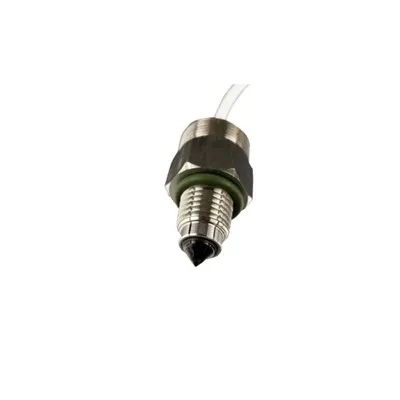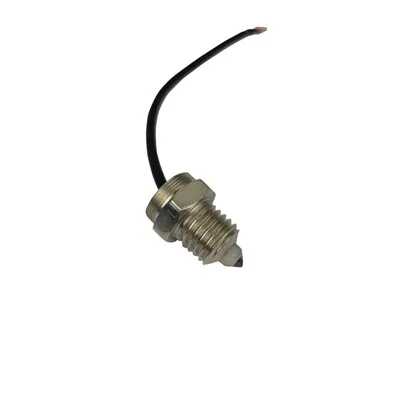
Solid State Level Sensors for Sale
A buyer's guide to solid state level sensors - what they are, what types are available, what specs matter when purchasing, how much they cost, where to find them, and what questions to ask before placing an order. The article covers: the solid state advantage over mechanical level sensors (no moving parts, no contact wear, faster response), the five solid state level sensing technologies available for purchase (capacitive, ultrasonic, radar, optical TIR, and conductive), the eight key specs that define a level sensor's performance and price (measurement type, range, accuracy, output, material, pressure rating, temperature rating, and certification), the five price tiers from budget to premium ($15–$500+), the five major industries that buy solid state level sensors (food and beverage, pharmaceutical, industrial process, HVAC, and automotive), the six questions every buyer should ask before purchasing, and the five red flags that signal a sensor that will cost more in the long run than its initial price tag suggests.
Solid State Level Sensors for Sale: Quick Answer
Solid state level sensors for sale include five main technologies - capacitive, ultrasonic, radar, optical TIR, and conductive - ranging from $15 for a basic level switch to $500+ for an industrial radar transmitter, with prices determined by measurement type, accuracy, material, pressure rating, and certification. The word "solid state" means no moving parts inside the sensing element - the level is detected electronically, not by a float or a probe that physically moves. This makes solid state sensors more reliable, faster, and longer-lasting than mechanical sensors, especially in challenging liquids (coating, viscous, or corrosive) and in sanitary applications. When buying a solid state level sensor, the purchase decision is made in this order: what the liquid is, what the sensor needs to do, what the environment is, and what the output must be. The brand and the price come last - not first. A sensor bought on price alone, without matching it to the liquid and the application, will fail prematurely and cost more in downtime than it saved. (The selection guide: Level Sensor Switch Selection Guide; the switch types: The Ultimate Guide to Liquid Level Switches; the buying guide: Choosing the Right Level Switch.)
What Does "Solid State" Mean?
The Technology Inside the Sensor - and Why It Matters to the Buyer
The solid state definition table (Featured Snippet):
| Sensor type | Moving parts? | How it detects level | Key advantage | Typical price |
|---|---|---|---|---|
| Mechanical float switch | Yes - the float moves up and down | Buoyancy moves a magnet that closes contacts | Lowest cost | $10–$80 |
| Capacitive solid state | No | Measures the change in capacitance between two electrodes | Detects through tank walls | $30–$150 |
| Ultrasonic solid state | No - transducer is fixed | Measures the time for a sound pulse to travel to the surface and back | Non-contact, no calibration | $100–$400 |
| Radar solid state | No - antenna is fixed | Measures the time for a microwave pulse to travel to the surface and back | Works in foam, vapor, turbulence | $300–$1,500+ |
| Optical TIR solid state | No | Infrared light reflected or refracted by the liquid surface | Fastest response (1–10 ms) | $40–$200 |
| Conductive solid state | No | Measures current flow between electrodes in the liquid | Simplest for conductive liquids | $20–$80 |
Solid state level sensors have no moving parts in the sensing element - level is detected by a change in an electrical property (capacitance, ultrasonic travel time, microwave travel time, light reflection, or electrical conductivity), not by a physical float or probe that moves with the liquid level: The solid state designation separates these sensors from mechanical float switches, which use a buoyant element that physically rises and falls with the liquid surface. The mechanical float has moving contacts that wear out, stems that jam in coating liquids, and bodies too large for small tanks. The solid state sensor detects level by measuring an electrical property - the capacitance between two electrodes changes as liquid replaces air between them; the ultrasonic travel time changes as the liquid surface moves; the optical reflection changes as liquid covers the prism tip. None of these require a moving part. The buyer benefits: no mechanical wear means the sensor lasts longer; no jamming means less maintenance calls; the response is faster (ultrasonic: 50–500 ms; optical: 1–10 ms); and the sensor can be smaller (optical sensors are available in 10 mm diameter bodies, where a float switch needs 20–40 mm). The purchase implication: solid state sensors cost more upfront than float switches, but they last longer, require less maintenance, and perform in liquids where float switches fail. The total cost of ownership over five years is almost always lower for a solid state sensor in a demanding application. (The switch comparison: The Ultimate Guide to Liquid Level Switches; the capacitive: Capacitive Level Sensors Explained; the ultrasonic: How Do Ultrasonic Level Sensors Work?.)
The Five Solid State Level Technologies Available for Purchase
Capacitive, Ultrasonic, Radar, Optical TIR, and Conductive
The five technologies table (Featured Snippet):
| Technology | What it measures | Best for | Avoid when |
|---|---|---|---|
| Capacitive | Capacitance change between electrodes | Solids, powders, liquids through tank walls, non-conductive liquids | Conductive liquids coat the electrodes |
| Ultrasonic | Travel time of sound pulses from transducer to surface | Open tanks, clean liquids, non-contact applications | Foaming liquids, heavy vapor, vacuum tanks |
| Radar (TDR/GWR) | Travel time of microwave pulses along a probe | Sealed tanks, pressurized vessels, foam and vapor | Very low dielectric liquids (below 2.0) |
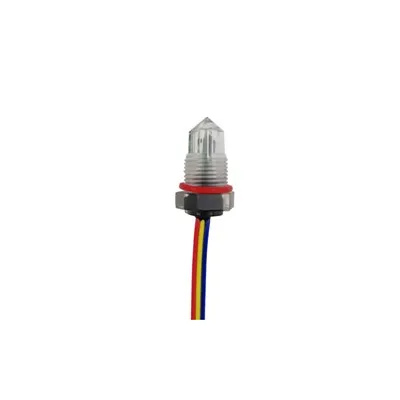
| Optical TIR | Change in total internal reflection at a prism tip | Clean liquids, point detection, miniature applications | Coating liquids, foam |
| Conductive | Electrical current between electrodes in conductive liquid | Simple point detection in conductive liquids | Non-conductive liquids |
The five solid state level technologies are designed for different applications, and matching the technology to the liquid and the tank conditions is the single most important purchasing decision: Capacitive level sensors: measure the change in capacitance between two electrodes (the tank wall can be one electrode). Capacitive sensors detect through non-conductive tank walls (plastic, glass, concrete), making them the only solid state option for measuring level inside a sealed non-metallic tank without a process connection. They detect both solids and liquids. They fail in conductive liquids (the current flows between the electrodes through the liquid, shorting the measurement) and in coating liquids (the coating changes the dielectric constant and creates false readings). Price range: $30–$150 for point switches; $150–$500 for continuous transmitters. Ultrasonic level sensors: measure the time for an ultrasonic pulse to travel from the transducer to the liquid surface and back. The sensor calculates the level from the travel time and the speed of sound. Ultrasonic sensors are non-contact (the transducer is mounted above the liquid, not in it) and require no calibration - the speed of sound calculation is built in. They require an open tank (no cover) and a clear acoustic path (foam, heavy vapor, dust, and turbulence scatter the sound pulse and cause errors or failures). Price range: $100–$400 for point sensors; $300–$800 for continuous transmitters. Radar level sensors: measure the time for a microwave pulse to travel from the antenna to the liquid surface and back. Microwave pulses pass through foam, vapor, and turbulence that defeat ultrasonic sensors. Radar is the premium technology - it works in sealed tanks, pressurized vessels, and in the presence of foam and heavy vapor. The two types are TDR (time domain reflectometry, also called GWR - guided wave radar) and non-contact radar. TDR uses a probe as the waveguide; non-contact radar uses a horn or rod antenna above the liquid. Price range: $300–$1,500+ for continuous transmitters; point radar switches are rare and expensive. Optical TIR level sensors: use an infrared LED, a prism, and a phototransistor to detect whether liquid is present at the prism tip. The prism is mounted at the set point level; when liquid covers the prism, the total internal reflection changes and the phototransistor output changes state. Optical TIR sensors are the fastest solid state point switch (1–10 ms response), the smallest (10–18 mm diameter), and the cleanest (glass or sapphire prism, no O-rings in the wet path, autoclavable). They fail in coating liquids - the coating covers the prism surface and changes the TIR condition permanently. Price range: $40–$200 for point switches. Conductive level sensors: measure the electrical current between two or more electrodes immersed in the liquid. Current flows when conductive liquid bridges the gap between the electrodes. Conductive sensors are the lowest-cost option for simple point detection in conductive liquids (water, aqueous solutions, conductive chemicals). They cannot be used in non-conductive liquids (oils, solvents, hydrocarbons) and they require the liquid to be at the electrode height to trigger - they are strictly point sensors, not continuous. Price range: $20–$80 for basic rod-type sensors; $80–$200 for multi-point controllers. (The capacitive: Capacitive Level Sensors Explained; the ultrasonic: How Do Ultrasonic Level Sensors Work?; the optical: How Do Optical Liquid Level Sensors Work?; the selection: Level Sensor Switch Selection Guide.)
Eight Specs That Define Performance and Price
Measurement Type, Range, Accuracy, Output, Material, Pressure, Temperature, Certification
The eight key specs table (Featured Snippet):
| Spec | Why it matters | Typical range | Price impact |
|---|---|---|---|
| Measurement type | Point (on/off) vs continuous (0–100%) | Point: switch; Continuous: transmitter | Point: $15–$500; Continuous: $150–$1,500+ |
| Measurement range | How far above the sensor the liquid level can be | 0.1–30 m (ultrasonic/radar) | Longer range = higher price |
| Accuracy | Error expressed as % of span or mm | ±0.25–5% FS | Tighter accuracy = higher price |
| Output signal | How the sensor communicates | Switch: dry contact, PNP, NPN, NAMUR; Transmitter: 4–20 mA, HART, RS-485 | Smart protocols (HART, RS-485) = higher price |
| Wetted material | What touches the liquid | Polypropylene, PVDF, 316SS, Hastelloy, PTFE | More exotic material = higher price |
| Pressure rating | Maximum tank pressure | 0–30 bar typical; 100+ bar for high-pressure | Higher pressure = higher price |
| Temperature rating | Maximum process temperature | –40°C to +85°C typical; 200°C+ for high-temp | Higher temperature = higher price |
| Certification | Agency approval for hazardous areas, sanitary, or safety | ATEX, IECEx, FM, 3-A, EHEDG, SIL | Certification = significantly higher price |
The eight key specs determine whether a sensor will work in the application and what it will cost - and they must be specified in this order: liquid first, then measurement type, then environment, then output, then price: Measurement type: the first question is whether the application needs a point switch (on/off, such as a high-level alarm or a low-level pump cutoff) or a continuous transmitter (a level reading from 0% to 100%). Point switches are $15–$500; continuous transmitters are $150–$1,500+. Most level sensing applications use a combination: a continuous transmitter for process control and a point switch for safety overfill protection. Measurement range: the range (the maximum distance from the sensor to the liquid surface for continuous sensors) determines the technology and the price. Ultrasonic and radar sensors with ranges above 5 m cost significantly more than sensors with shorter ranges. Specify the actual range needed, not the maximum range the sensor can achieve. Accuracy: accuracy is expressed as a percentage of full scale (% FS) or in millimeters. A sensor rated at ±0.5% FS with a 5 m range has a maximum error of ±25 mm. For filling operations and inventory management, ±1–5 mm may be required. For simple pump control, ±10–25 mm is acceptable. Tighter accuracy always costs more. Output signal: for point switches, the output type (dry contact, PNP, NPN, NAMUR) must match the controller input. For continuous transmitters, the output (4–20 mA analog, HART digital, RS-485 Modbus) determines the integration complexity and the price. 4–20 mA is the standard; HART adds diagnostic capability; RS-485/Modbus is the choice for digital plant networks. Wetted material: the material in contact with the liquid (the probe, the electrodes, the prism, the housing) must be chemically compatible with the liquid. Polypropylene is the lowest cost; 316 stainless steel is standard for industrial applications; Hastelloy and PTFE coatings are used for aggressive chemicals and cost significantly more. Pressure and temperature ratings: the sensor must be rated above the actual tank pressure and temperature, with margin. A sensor rated to 5 bar and 80°C costs less than one rated to 20 bar and 200°C. Certification: the most expensive spec add-on. ATEX or IECEx certification for hazardous areas adds 30–100% to the price. FM certification in the United States is similar. 3-A sanitary certification and EHEDG for food and pharmaceutical applications add cost but are non-negotiable in those industries. SIL (safety integrity level) certification for safety instrumented systems is the most expensive add-on, required for overfill protection and safety shutdown applications per IEC 61511. (The output matching: Open Collector vs Push-Pull Output; the NAMUR: Intrinsically Safe Level Switch; the hazardous areas: Hazardous Location Guide for Liquid Level Sensors.)
Five Price Tiers
From Budget Switch to Premium Radar - What the Money Gets You
The five price tiers table (Featured Snippet):
| Tier | Price range | What you get | What you give up | Best for |
|---|---|---|---|---|
| Budget | $15–$40 | Basic conductive or simple float switch | Accuracy, material quality, certification | Simple water tanks, non-safety applications |
| Economy | $40–$100 | Optical TIR switch or basic capacitive switch | Narrow material selection, limited temperature | Clean liquids, non-corrosive, basic pump control |
| Standard industrial | $100–$300 | Ultrasonic continuous sensor or multi-point capacitive | Hazardous area certification, wide temperature | General industrial tanks, water and mild chemicals |
| Premium industrial | $300–$600 | High-accuracy ultrasonic, radar, or multi-parameter capacitive | - | Challenging liquids, longer range, pressurized tanks |
| Specialist | $600–$1,500+ | Radar TDR, intrinsically safe, SIL-rated, hygienic certified | - | Hazardous areas, sanitary制药, safety-critical overfill |
The five price tiers correspond to five application levels: budget for simple non-safety water tanks, economy for clean liquids without certification requirements, standard industrial for general plant floor tanks, premium for challenging liquids and longer ranges, and specialist for hazardous areas, sanitary, and safety-critical applications: The budget tier ($15–$40): conductive level switches and basic float switches. These are purchased on price alone, typically for non-safety water tank applications where failure has no process consequence. The material is typically polypropylene or PVC, the temperature rating is below 60°C, and there is no agency certification. Do not use these in any application where the liquid is corrosive, the temperature is above 60°C, or failure has a safety consequence. The economy tier ($40–$100): optical TIR switches and basic capacitive point switches. These are used in clean liquid tanks (water, oils, coolants) where the application is non-critical and the liquid is not coating. The optical TIR switch in this tier is typically housed in polypropylene or PVDF, rated to 60–80°C, and has no hazardous area certification. The standard industrial tier ($100–$300): ultrasonic continuous level sensors and multi-point capacitive switches. These are the workhorses of the plant floor - a 4–20 mA ultrasonic sensor in a 316SS or polypropylene housing, rated to 5–10 bar and 70–100°C. This tier covers most industrial water, wastewater, and mild chemical tank applications. Hazardous area certified versions in this tier add $100–$200 to the price. The premium industrial tier ($300–$600): high-accuracy ultrasonic sensors (±0.2% FS), non-contact radar sensors for tanks with foam or vapor, and multi-parameter capacitive transmitters for complex liquids. This tier covers the challenging applications: tanks with foam, sealed pressurized vessels, liquids with vapor blankets, and multi-tank installations with digital communication. The specialist tier ($600–$1,500+): radar TDR (guided wave) transmitters, intrinsically safe sensors with ATEX/IECEx certification, SIL-rated safety switches for overfill protection, and hygienic sensors with 3-A and EHEDG certification for food and pharmaceutical applications. These sensors are purchased for compliance - the certification is not optional, it is the reason the sensor is being bought. The price includes the documentation, the traceability, and the agency approval. (The level transmitter guide: How to Choose a Level Transmitter; the hazardous areas: Hazardous Location Guide for Liquid Level Sensors; the sanitary sensors: Level Sensor for Food and Beverage.)
Five Major Industries That Buy Solid State Level Sensors
Food and Beverage, Pharmaceutical, Industrial Process, HVAC, and Automotive
The five industries table (Featured Snippet):
| Industry | Common sensors purchased | Key purchasing criteria | Typical tier |
|---|---|---|---|
| Food and beverage | Optical TIR switches, ultrasonic transmitters, capacitive switches | 3-A, EHEDG, CIP/SIP capable, sanitary materials | Premium to specialist |
| Pharmaceutical | Optical TIR switches, ultrasonic, radar TDR | 3-A, EHEDG, USP Class VI, autoclave capable | Specialist |
| Industrial process | Ultrasonic, capacitive, radar | Chemical compatibility, pressure rating, ATEX | Standard to premium |
| HVAC | Ultrasonic, conductive, optical | Low cost, reliable, IP65, simple installation | Economy to standard |
| Automotive | Capacitive, ultrasonic, optical | Miniature, fast response, chemical resistant | Standard to premium |
The five major industries each buy solid state level sensors for different reasons and with different criteria: food and beverage prioritizes sanitary certification and cleanability; pharmaceutical adds USP Class VI and sterilization capability; industrial process prioritizes chemical compatibility and pressure ratings; HVAC prioritizes cost and reliability; and automotive prioritizes miniature size and chemical resistance: Food and beverage: the purchased sensors are optical TIR switches for fill-level detection in dairy, beverage, and brewing tanks, and ultrasonic transmitters for inventory management in large storage tanks. The purchasing criteria are non-negotiable: 3-A sanitary certification, electropolished 316SS or Hastelloy wetted materials, tri-clamp or DIN 11864 process connections, and CIP/SIP capability. The total cost of a sensor failure in a food and beverage plant (product loss, line shutdown, contamination risk, regulatory consequence) far exceeds the price difference between a standard sensor and a sanitary-certified sensor. Pharmaceutical: the purchased sensors are similar to food and beverage but with stricter material requirements (USP Class VI elastomers, pharmaceutical-grade 316SS), sterilization capability (autoclave, SIP, gamma radiation), and documentation (material traceability, validation documents, FDA 21 CFR Part 11 compliance for digital records). The purchasing decision is driven by the validation department, not the process engineer. Industrial process: the largest market by volume. Purchased sensors include ultrasonic sensors for water and wastewater tanks, capacitive sensors for solids and powders, and radar sensors for challenging liquids with foam or vapor. The purchasing criteria are chemical compatibility (verifying the wetted material against the safety data sheet), pressure and temperature ratings, and ATEX or IECEx certification for hazardous areas. Industrial process buyers are price-sensitive but not price-driven - they buy on specification first. HVAC: the largest market by unit volume. Purchased sensors are simple ultrasonic or conductive level switches for water tanks, cooling towers, and boiler feedwater reservoirs. The criteria are cost, reliability, IP65 rating, and simple installation. An HVAC buyer will replace a failed sensor with the same model if it performed adequately, regardless of whether a better sensor is available. Automotive: purchased sensors include capacitive sensors for coolant and fluid level in manufacturing and assembly, optical sensors for miniature applications, and ultrasonic sensors for automated filling lines. The criteria are miniature size, fast response for automated filling, chemical resistance to coolants and cleaning solutions, and automotive industry quality standards (IATF 16949). (The sanitary sensors: Level Sensor for Food and Beverage; the hazardous areas: Hazardous Location Guide for Liquid Level Sensors; the pharmaceutical: Level Sensor for Pharmaceutical Applications.)
Six Questions to Ask Before Purchasing
The Purchasing Checklist - Answer These Before You Place the Order
The six purchasing questions table (Featured Snippet):
| Question | Why it matters | What to verify |
|---|---|---|
| 1. What is the liquid? | The liquid's properties (conductive, coating, corrosive, sanitary) determine the technology and material | pH, conductivity, viscosity, specific gravity, coating tendency, solids content |
| 2. Point or continuous? | Determines the sensor type and the price | Alarm/switch: point; Inventory/process control: continuous |
| 3. What are the tank conditions? | Pressure, temperature, vapor, foam, and turbulence affect technology choice | Sealed or open, pressure in bar, temperature in °C, foam/vapor present |
| 4. What is the output? | The sensor output must match the controller input | 4–20 mA, HART, RS-485, PNP/NPN, NAMUR, dry contact |
| 5. Is certification required? | Hazardous area, sanitary, or safety certification adds cost but may be legally required | ATEX/IECEx for gas/dust, 3-A/EHEDG for food/pharma, SIL for safety |
| 6. What is the total cost of ownership? | The purchase price is a fraction of the total cost | Include installation, calibration, maintenance, downtime, and replacement |
The six questions before purchasing are: what is the liquid; point or continuous; what are the tank conditions; what is the output; is certification required; and what is the total cost of ownership - answer these in order before comparing brands or prices: What is the liquid: the liquid's properties are the single most important factor in sensor selection. A conductive liquid eliminates capacitive sensors. A coating liquid eliminates optical TIR and float switches. A corrosive liquid determines the wetted material (316SS, Hastelloy, PTFE, or polypropylene). A sanitary liquid (food, pharmaceutical, biotech) eliminates anything without 3-A or EHEDG certification. Get the safety data sheet (SDS) for the liquid before selecting the sensor. Point or continuous: this determines whether the purchase is a switch ($15–$500) or a transmitter ($150–$1,500+). Most applications need both - a continuous transmitter for process control and a point switch for overfill protection. Tank conditions: pressure and temperature are minimum/maximum limits. A sensor rated to 5 bar and 80°C will fail catastrophically in a 10 bar, 120°C application. Foam, vapor, and turbulence eliminate ultrasonic sensors and favor radar. Output: the sensor's output type must be compatible with the controller or PLC input. A PNP output requires a sinking input. A NAMUR output requires an IS barrier. A 4–20 mA output requires an analog input. Buying a sensor with the wrong output type means the sensor sits on the shelf until it is rewired or replaced. Certification: verify whether the application legally requires hazardous area certification (ATEX/IECEx/FM for flammable gases and dusts), sanitary certification (3-A/EHEDG for food and pharmaceutical), or safety certification (SIL per IEC 61511 for safety instrumented systems). Certification is not optional if the plant's insurance or the local authority having jurisdiction (AHJ) requires it. Total cost of ownership: the purchase price is typically 10–20% of the total cost over the sensor's lifetime. The remaining 80–90% is installation, commissioning, calibration, maintenance, downtime from failure, and replacement. A $500 radar sensor that works in foam for five years costs less in total than a $100 ultrasonic sensor that fails every six months in the same application. (The selection guide: Level Sensor Switch Selection Guide; the hazardous areas: Hazardous Location Guide for Liquid Level Sensors; the continuous transmitter: How to Choose a Level Transmitter.)
Five Red Flags When Buying Solid State Level Sensors
Warning Signs That Signal a Sensor That Will Cost More Than It Saves
The five red flags table (Featured Snippet):
| Red flag | What it signals | The hidden cost |
|---|---|---|
| No data sheet available | The sensor cannot be verified against the application requirements | Sensor arrives and does not fit; no recourse |
| No chemical compatibility statement | The wetted materials have not been verified for the liquid | Corrosion, contamination, premature failure |
| Price too low for the technology | The quality of the components, the housing, or the calibration is compromised | Early failure, frequent replacement, production downtime |
| No process connection option | The sensor cannot be installed in the tank | Installation requires custom fabrication |
| No technical support or documentation | The supplier is a distributor, not a manufacturer | No application support when the sensor does not work |
The five red flags when buying solid state level sensors are: no data sheet available, no chemical compatibility statement, a price too low for the technology, no process connection option, and no technical support or documentation - each flag signals a problem that will cost more than the purchase price saved: No data sheet available: the data sheet is the specification document. If the supplier cannot provide a data sheet before purchase, they cannot verify that the sensor meets the application requirements. A sensor bought without a data sheet is a sensor bought blind. No chemical compatibility statement: the wetted materials must be verified against the liquid. If the supplier cannot provide a chemical compatibility chart or a written statement of compatibility, the sensor may corrode, contaminate the product, or fail prematurely. Get the SDS and verify the wetted materials before ordering. Price too low for the technology: a capacitive level transmitter that costs $50 when comparable models cost $200 is too cheap. The low price means the capacitive measurement is uncalibrated, the housing is not pressure-rated, the electronics are not temperature-compensated, or the output is unverified. The sensor will not perform to specification, and it will fail. No process connection option: the sensor must be installed in the tank. If the sensor is available only with a 1/2" NPT thread and the tank has a 2" tri-clamp nozzle, the sensor cannot be installed without an adapter - which creates a leak path. Verify the available process connections before ordering. No technical support or documentation: a supplier who cannot answer application questions before purchase will not provide support after purchase. When the sensor does not work (and it will happen), the cost of lost production and the time spent troubleshooting without support will far exceed the price difference between the cheapest and the best-supported option. (The selection guide: Choosing the Right Level Switch; the datasheet: Level Sensor Datasheet Guide; the quality: Top Quality Sensors for Hazardous Areas.)
FAQ
Q1: What is a solid state level sensor?
A solid state level sensor is a level sensor that uses an electronic or optical principle - not a moving float - to detect the liquid or material level. The five solid state technologies are capacitive (measures capacitance), ultrasonic (measures sound travel time), radar (measures microwave travel time), optical TIR (measures light reflection), and conductive (measures electrical current in the liquid). All five have no moving parts in the sensing element, which makes them more reliable, faster, and longer-lasting than mechanical float switches.
Q2: What is the difference between a solid state level sensor and a float switch?
A float switch uses a buoyant element that physically rises and falls with the liquid surface - it has moving contacts that wear out and stems that jam in coating liquids. A solid state sensor detects level by measuring an electrical or optical property (capacitance, sound, microwaves, light reflection, or conductivity) - there are no moving parts. Solid state sensors are more reliable, faster, and more resistant to coating liquids than float switches, but they cost more upfront. In demanding applications (coating liquids, sanitary requirements, small tanks, fast response), solid state is the right choice. In simple, non-critical water tank applications, a float switch is sufficient.
Q3: How much does a solid state level sensor cost?
The price ranges from approximately $15–$40 for a basic conductive or simple float switch, to $40–$100 for an economy optical TIR or basic capacitive switch, to $100–$300 for a standard industrial ultrasonic sensor or multi-point capacitive switch, to $300–$600 for a premium industrial sensor (high-accuracy ultrasonic or non-contact radar), to $600–$1,500+ for specialist sensors (radar TDR, intrinsically safe, SIL-rated, or sanitary certified). The price is determined by the technology, the accuracy, the material, the pressure and temperature ratings, and the certification. The purchase price is typically 10–20% of the total cost of ownership over the sensor's lifetime.
Q4: What should I look for when buying a solid state level sensor?
Look for these in order: a data sheet with full specifications; verified chemical compatibility between the wetted materials and the liquid; the correct process connection for the tank; an output type compatible with the controller or PLC; the required certification (hazardous area, sanitary, or safety); and a supplier who provides application support. The brand and the price come last. A sensor that meets the specifications costs what it costs - if the price is too low for the technology, the quality has been compromised.
Q5: What is the best solid state level sensor for a coating liquid?
The vibrating fork level switch is the best option for coating liquids - it is not optical, so it is not affected by coatings on the sensor surface. It detects liquid by the change in the vibration frequency of two metal tines when liquid dampens the vibration. It is a mechanical solid state sensor (the tines vibrate but do not have moving contacts) and it is rated for temperatures up to 250°C and pressures up to 40 bar. The capacitive sensor is an alternative for non-conductive coating liquids. The optical TIR sensor, the float switch, and the ultrasonic sensor all fail in coating liquids.
The Bottom Line
Solid state level sensors for sale span five technologies - capacitive, ultrasonic, radar, optical TIR, and conductive - from $15 basic switches to $1,500+ specialist transmitters, and the purchase decision is made by answering six questions in order: what is the liquid, point or continuous, what are the tank conditions, what is the output, is certification required, and what is the total cost of ownership. The solid state advantage over mechanical sensors is no moving parts - which means no mechanical wear, faster response, smaller size, and longer life in demanding applications. The five technologies each serve different applications, and matching the technology to the liquid is the single most important purchasing decision. The eight key specs - measurement type, range, accuracy, output, material, pressure, temperature, and certification - define the performance and the price. The five price tiers correspond to five application levels: budget for simple non-safety tanks, economy for clean liquids, standard industrial for general plant floor applications, premium for challenging liquids and longer ranges, and specialist for hazardous areas, sanitary, and safety-critical applications. The five red flags - no data sheet, no chemical compatibility statement, price too low, wrong process connection, and no technical support - signal sensors that will cost more in downtime and replacement than they save on the purchase price. The one-sentence rule: the best solid state level sensor is not the most expensive one - it is the one that is correctly matched to the liquid, the tank conditions, and the application, purchased from a supplier who provides the documentation and support to back it up. (The selection guide: Level Sensor Switch Selection Guide; the switch guide: The Ultimate Guide to Liquid Level Switches; the buying guide: Choosing the Right Level Switch; the transmitter guide: How to Choose a Level Transmitter; the hazardous areas: Hazardous Location Guide for Liquid Level Sensors.)
Last updated: August 2026
Disclaimer: This article is an educational buyer's guide to solid state level sensors for sale, for general reference. The five technologies, the eight key specs, the five price tiers, the five industries, and the six purchasing questions reflect common engineering knowledge and vary by manufacturer, model, and application; always verify the specific sensor's data sheet, specifications, chemical compatibility, pressure and temperature ratings, process connection, and certifications with the manufacturer's documentation and the applicable standards and codes. Selection and installation must be performed by qualified personnel. The information in this article is provided for general guidance and does not constitute a recommendation for any specific sensor, brand, or supplier.