Theory of transit time ultrasonic flowmeters
Transit time ultrasonic flowmeters are widely used where accurate, non-intrusive, and low-maintenance flow measurement is required. Unlike mechanical meters, they do not rely on moving parts in the fluid stream. Instead, they use ultrasonic technology to determine how fast a liquid or gas is moving through a pipe by measuring the travel time of sound signals.
Understanding the Theory of transit time ultrasonic flowmeters helps explain why this method is valued across industrial, municipal, energy, and process applications.
How transit time measurement works
At the heart of this flow measurement technology is a simple principle: sound travels at different effective speeds depending on whether it is moving with or against the direction of flow.
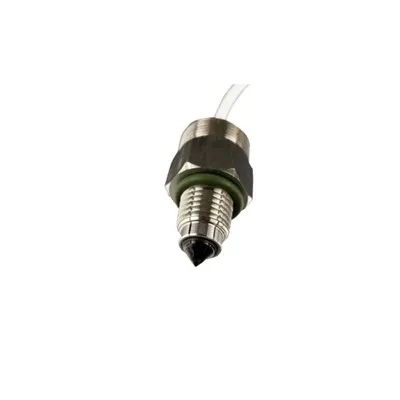
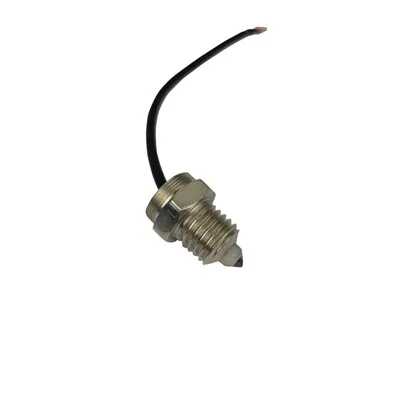
A typical transit time ultrasonic flowmeter uses two ultrasonic transducers mounted on or in a pipe. These transducers alternately send and receive acoustic signals:
One signal travels downstream, in the same direction as the flow.
The other signal travels upstream, against the direction of the flow.
When fluid is moving, the downstream signal arrives slightly faster than the upstream signal. The meter measures this time difference with very high precision. This difference is known as the transit time difference, and it is directly related to the velocity of the fluid.
Once the velocity is known, the flowmeter calculates volumetric flow rate using the pipe's internal cross-sectional area.
The basic measurement principle
In simplified terms, transit time measurement compares two ultrasonic travel times. If there is no flow, both signals take the same amount of time to travel between the transducers. If flow is present, the downstream signal is assisted by the moving fluid, while the upstream signal is slowed by it.
The greater the difference between the two travel times, the higher the flow velocity. This is the foundation of ultrasonic measurement in transit time devices.
Because the technique depends on measuring time differences rather than pressure drop or mechanical rotation, it can provide stable measurement with minimal interference to the process.
Key components of transit time ultrasonic flowmeters
Most ultrasonic flowmeters based on transit time technology include the following elements:
Ultrasonic transducers that generate and receive acoustic pulses.
Signal processing electronics that measure the time difference between upstream and downstream signals.
Pipe or flow cell geometry data used to calculate velocity and flow rate.
Display or output interface for local readings, control systems, or data logging.
Some meters use clamp-on transducers attached to the outside of the pipe, while others use wetted or inline transducers that contact the fluid directly. Clamp-on designs are especially useful when installation without cutting the pipe is preferred.
Factors that affect flowmeter accuracy
Flowmeter accuracy depends on both the meter design and the installation conditions. Important factors include:
Proper transducer alignment and spacing.
Accurate pipe diameter and wall thickness information.
A fully developed flow profile.
Minimal air bubbles, solids, or suspended particles.
Stable fluid properties and suitable acoustic transmission.
Adequate straight pipe lengths before and after the meter locati0n.
Transit time ultrasonic flowmeters generally perform best with clean liquids or gases that allow sound waves to travel clearly. Fluids with excessive entrained air or heavy particulates may weaken the acoustic signal and reduce measurement reliability.
Advantages of ultrasonic technology
Transit time ultrasonic flowmeters offer several practical advantages compared with some traditional flow measurement methods:
No moving parts to wear or obstruct flow.
Low pressure loss, especially with clamp-on or full-bore designs.
Suitable for a wide range of pipe sizes.
Potential for bidirectional flow measurement.
Fast response to changes in flow conditions.
Non-invasive installation options for many applications.
These benefits make ultrasonic technology attractive for water systems, chemical processing, HVAC, oil and gas, power generation, and other applications where dependable flow data is important.
Common applications
Transit time ultrasonic flowmeters are commonly used for:
Clean water and wastewater monitoring.
Cooling and heating water systems.
Process liquids in industrial plants.
Custody transfer applications where suitable meter designs and approvals are used.
Energy measurement when combined with temperature sensors.
Temporary flow surveys using portable clamp-on meters.
The right application depends on the fluid, pipe material, installation environment, and required accuracy.
Best practices for reliable ultrasonic measurement
To achieve strong performance, users should select the meter type carefully and follow installation guidance. In general, best practices include verifying pipe dimensions, choosing a locati0n with stable flow, avoiding areas near pumps or valves when possible, and ensuring transducers are installed securely.
For clamp-on ultrasonic flowmeters, correct coupling between the transducer and pipe surface is essential. For inline meters, proper sizing and installation help preserve flowmeter accuracy over time.
Summary
The Theory of transit time ultrasonic flowmeters is based on measuring the difference between upstream and downstream ultrasonic signal travel times. This small time difference reveals the velocity of the fluid, which is then converted into flow rate.
By combining precise transit time measurement with advanced signal processing, ultrasonic flowmeters provide a powerful, efficient, and versatile approach to modern flow measurement technology. When correctly selected and installed, they can deliver accurate ultrasonic measurement without the complexity or maintenance demands of many mechanical flowmeter designs.