Understanding Four Types of Liquid Level Sensors
Choosing the right way to monitor liquid levels is essential for safe, efficient, and consistent operations. Whether a tank holds water, chemicals, oil, fuel, food-grade ingredients, or wastewater, the level measurement method affects inventory control, overflow prevention, pump protection, process automation, and maintenance planning.
Modern liquid level sensors come in several designs, each built around a different measurement principle. Some are simple mechanical devices, while others use sound waves, electrical fields, or electromagnetic signals to measure levels without moving parts. Understanding how these technologies work makes it easier to choose a sensor that matches the liquid, tank design, accuracy needs, and operating environment.
Below is a practical guide to four common types of level sensing technologies and where each one performs best.
What Do Liquid Level Sensors Do?
Liquid level sensors detect the position, height, or presence of liquid inside a tank, vessel, sump, reservoir, or process container. Depending on the application, they may provide:
Point level detection, which confirms whether liquid has reached a specific high or low point
Continuous level measurement, which tracks the liquid level across a range
Alarm signals, such as high-level overflow alerts or low-level pump protection
Process control input, allowing automated systems to open valves, start pumps, or adjust flow
Inventory monitoring, especially for storage tanks and bulk fluids
Some systems use sensors as part of digital control networks, while others rely on visual liquid level gauges for quick manual readings. In many facilities, both are used together: a gauge provides local confirmation, and a sensor sends data to a control panel, PLC, or monitoring platform.
1. Float Level Sensors
Float level sensors are among the most widely recognized and straightforward types of level measurement devices. They use a buoyant float that rises and falls with the liquid surface. As the float moves, it activates a switch, reed sensor, magnet, or mechanical indicator.
Float sensors are often used for point level detection, such as turning a pump on or off when the liquid reaches a certain height. Some designs can also provide continuous measurement when connected to a resistive chain, magnetic stem, or guided mechanism.
How They Work
A float sits on the liquid surface. When the level changes, the float moves with it. In a simple switch-style design, the float triggers an electrical contact at a set point. In more advanced designs, the float movement is converted into a proportional signal that indicates the level across a wider range.
Common Applications
Float level sensors are commonly found in:
Water storage tanks
Sumps and lift stations
Cooling systems
Hydraulic reservoirs
Fuel tanks
Basic pump control systems
Advantages
Float sensors are popular because they are easy to understand, cost-effective, and dependable in many standard applications. They typically require minimal electronics and can work well in clean liquids with predictable density.
Limitations
Because float sensors rely on moving parts, they may not be ideal for sticky, viscous, turbulent, or debris-filled liquids. Buildup on the float can affect movement, and changes in liquid density may influence buoyancy. For applications involving aggressive chemicals, high pressure, or sanitary requirements, material compatibility is especially important.
2. Ultrasonic Level Sensors
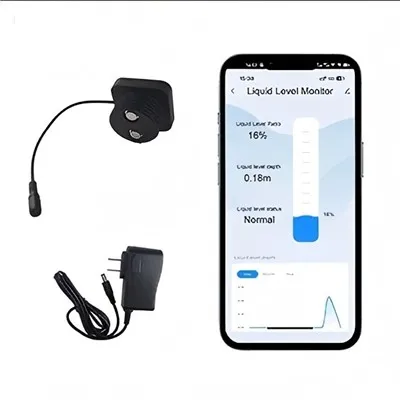
Ultrasonic level sensors measure liquid level without touching the liquid. They send high-frequency sound pulses toward the liquid surface and calculate level based on the time it takes for the echo to return.
This non-contact design makes ultrasonic sensors useful where direct contact with the fluid is undesirable. They are often selected for water, wastewater, chemical storage, and open-channel applications.
How They Work
The sensor is mounted above the liquid, usually at the top of the tank. It emits an ultrasonic pulse downward. When the pulse hits the liquid surface, it reflects back to the sensor. The device calculates the distance between the sensor and the liquid surface, then converts that distance into a level reading.
Common Applications
Ultrasonic sensors are often used in:
Wastewater tanks
Chemical storage tanks
Rainwater and stormwater systems
Bulk liquid storage
Open channels and basins
Applications where contact with the liquid should be avoided
Advantages
The biggest advantage of ultrasonic technology is non-contact measurement. Since the sensor does not touch the liquid, there is less risk of corrosion, contamination, or coating on the measurement element. Installation is usually simple, and many models provide continuous level output.
Limitations
Ultrasonic sensors can be affected by foam, heavy vapor, condensation, turbulence, temperature changes, and obstructions inside the tank. The sound wave needs a clear path to the liquid surface. Tanks with agitators, internal piping, or irregular geometry may require careful installation and configuration.
3. Capacitive Liquid Level Sensors
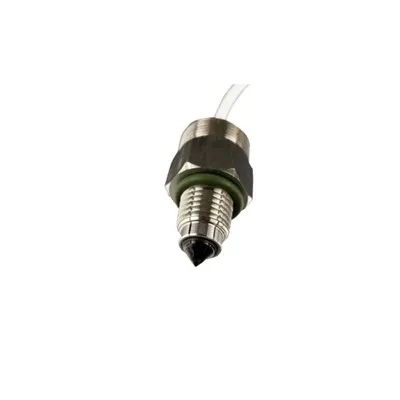
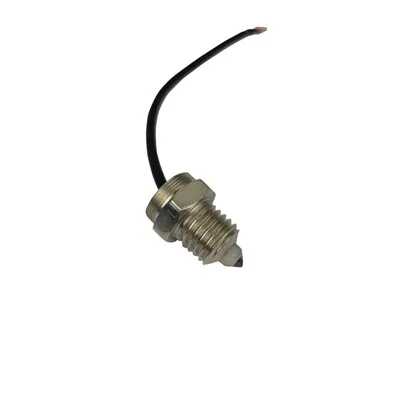
Capacitive liquid level sensors measure changes in capacitance caused by the presence or movement of liquid. They can be used for point level detection or continuous measurement, depending on the sensor design.
Capacitive sensing is versatile because it can detect many conductive and non-conductive liquids. It is often used where compact sensor size, no mechanical movement, or detection through non-metallic tank walls is valuable.
How They Work
A capacitive sensor creates an electrical field between electrodes or between the sensor probe and the tank wall. When liquid enters that field, the dielectric properties change. The sensor detects this change and converts it into a level signal.
For point level applications, the sensor may simply detect whether liquid is present at a specific locati0n. For continuous applications, a probe can measure the changing capacitance along its length as the liquid level rises or falls.
Common Applications
Capacitive sensors are used in:
Chemical tanks
Food and beverage processing
Pharmaceutical systems
Plastic or fiberglass vessels
Small reservoirs
Oils, coolants, and certain powders or slurries
Advantages
Capacitive sensors have no moving parts, which can reduce mechanical wear. They are compact, responsive, and suitable for a broad range of liquids when properly configured. Some models can detect liquid through non-metallic container walls, making them useful for applications where intrusion into the vessel is not desired.
Limitations
Sensor performance depends on the dielectric constant of the liquid and the surrounding environment. Coating, buildup, foam, and material changes can affect readings. Calibration may be required, especially if the liquid type changes. For conductive tanks or complex installations, grounding and sensor placement are important considerations.
4. Radar Level Sensors
Radar level sensors use electromagnetic waves to measure the distance to the liquid surface. Like ultrasonic sensors, many radar sensors are non-contact, but radar is generally less affected by vapor, temperature changes, pressure, and dust.
There are two common radar approaches: non-contact radar, which sends signals from above the liquid surface, and guided wave radar, which sends signals along a probe or cable. Both can provide continuous level measurement.
How They Work
A radar sensor transmits microwave signals toward the liquid surface. The signals reflect back to the sensor, and the device calculates level based on travel time. Guided wave radar follows a similar principle, but the signal travels along a probe, which helps guide the measurement path.
Common Applications
Radar level sensors are commonly used in:
Chemical processing
Oil and fuel storage
High-temperature tanks
Pressurized vessels
Tanks with vapor or steam
Industrial storage and process applications
Advantages
Radar technology is valued for accuracy and reliability in demanding environments. It works well in many applications where ultrasonic sensors may struggle, such as tanks with vapor, pressure, changing temperatures, or turbulent surfaces. Non-contact radar also reduces exposure to corrosive or hazardous liquids.
Limitations
Radar sensors are often more expensive than simpler technologies. Installation still matters, especially in tanks with internal structures, narrow nozzles, heavy agitation, or low-reflectivity liquids. Guided wave radar probes may contact the liquid, so material compatibility and buildup must be considered.
Liquid Level Gauges vs. Liquid Level Sensors
Although the terms are sometimes used together, liquid level gauges and sensors are not always the same thing. A gauge usually provides a local visual indication of level. A sensor detects level and sends an electrical, mechanical, or digital output for monitoring or control.
Examples of gauges include sight glass gauges, magnetic level indicators, and mechanical dial indicators. These are useful for operators who need to verify tank level on-site. Sensors, on the other hand, are better suited for automation, remote monitoring, alarms, and integration with control systems.
In many facilities, the best solution is not one or the other. A visual gauge can provide quick confirmation, while a sensor supports automated operation and data collection.
How to Choose the Right Liquid Level Sensor
Selecting the right sensor starts with the application. Before choosing a technology, consider the following factors:
Liquid type: Is it water, oil, fuel, chemical, slurry, food product, or wastewater?
Contact requirements: Can the sensor touch the liquid, or is non-contact measurement preferred?
Measurement style: Do you need point detection or continuous level measurement?
Tank material and shape: Is the tank metal, plastic, fiberglass, open, sealed, pressurized, or oddly shaped?
Operating conditions: Are there vapors, foam, turbulence, pressure, temperature swings, or condensation?
Accuracy needs: Is approximate level enough, or does the process require precise measurement?
Maintenance access: Can the sensor be cleaned, inspected, or replaced easily?
Compatibility: Are wetted materials safe for the liquid and process environment?
System integration: Does the sensor need to connect to alarms, pumps, PLCs, displays, or remote monitoring tools?
For simple water applications, a float sensor may be sufficient. For non-contact measurement in a clean tank, ultrasonic may be a practical option. For compact detection or plastic vessels, capacitive technology may be a strong fit. For demanding industrial environments, radar may provide the reliability needed.
Best Practices for Reliable Level Measurement
Even the best sensor can perform poorly if it is installed or applied incorrectly. To improve reliability:
Mount sensors where they have a stable measurement target
Avoid locations directly above fill streams, turbulence, or agitators when possible
Confirm that sensor materials are compatible with the liquid
Account for foam, vapor, condensation, and buildup
Use proper calibration for the liquid and tank geometry
Provide enough clearance around non-contact sensors
Protect wiring and electronics from moisture, vibration, and chemicals
Inspect and clean sensors as recommended for the application
A thoughtful installation can extend sensor life, reduce false alarms, and improve confidence in the level reading.
Final Thoughts
Liquid level measurement is not one-size-fits-all. Float, ultrasonic, capacitive, and radar technologies each offer distinct advantages depending on the liquid, tank, environment, and control requirements.
Float sensors are simple and economical. Ultrasonic sensors provide non-contact measurement for many general applications. Capacitive liquid level sensors offer compact, no-moving-part detection for a wide range of materials. Radar sensors deliver strong performance in more demanding industrial conditions.
By understanding how these liquid level sensors work and comparing them against real application needs, operators and engineers can choose a solution that improves safety, reduces downtime, and supports more reliable process control.