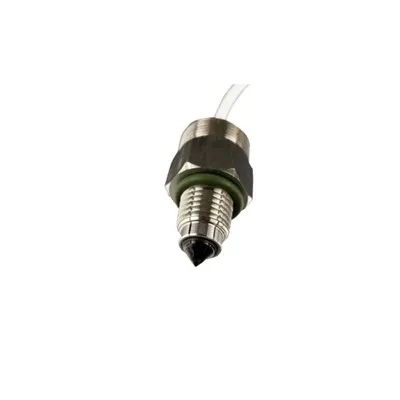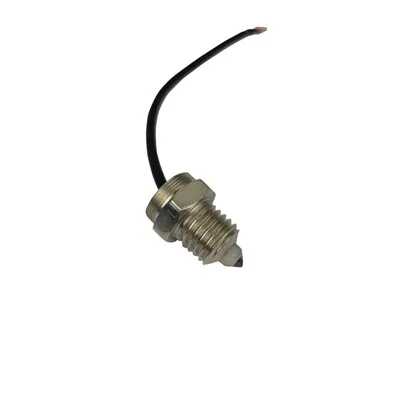
What Are Optical Liquid Level Sensors Used For? The Complete Application Guide
In this guide: What are optical liquid level sensors used for - covering how they work, the industries and applications that rely on them, how they compare to other sensor types, and the complete FAQ for engineers and buyers specifying level detection.
What Are Optical Liquid Level Sensors Used For: Quick Answer
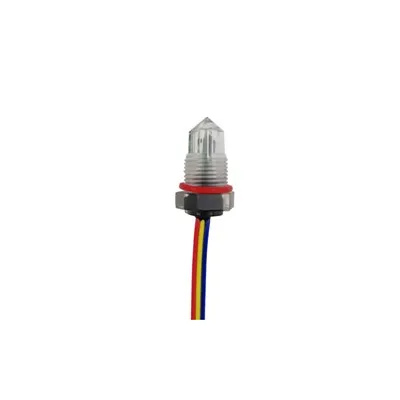
Optical liquid level sensors are used for point-level liquid detection - confirming whether liquid is present or absent at a specific location - across industries where reliability, compactness, and no-moving-parts operation matter. They work by shining infrared light from an LED inside a sensor tip; when the tip is dry, light reflects back to a photodetector (signaling "empty"), and when liquid contacts the tip, the light refracts away (signaling "liquid present"). Because they have no floats, no mechanical linkages, and no electrical contacts in the liquid, they are used in medical devices (dialysis, IV pumps, diagnostic analyzers), automotive systems (washer fluid, coolant, fuel warning), household appliances (coffee makers, dishwashers, washing machines), water treatment and condensate monitoring, HVAC, food and beverage equipment, aquariums, vending machines, and industrial process tanks. Their primary jobs are high/low level alarms, leak and spill detection, pump protection (dry-run prevention), and automatic fill/empty control. This guide explains exactly where and why optical sensors are used, and how they compare to float, capacitive, and ultrasonic alternatives.
How Optical Liquid Level Sensors Work
The Principle Behind the Detection
Optical liquid level sensors detect liquid through a change in infrared light behavior at the sensor tip - a simple, robust, solid-state method:
| Condition | What Happens to Light | Sensor Output | Meaning |
|---|---|---|---|
| Tip is dry (air) | LED light totally internally reflects back to photodetector | High signal | No liquid present ("empty") |
| Tip is wet (liquid) | Light refracts out of tip into liquid; less returns to detector | Low signal | Liquid present ("full") |
Why this matters for applications: The sensing happens entirely through a sealed optical tip (typically polished plastic or glass) - no moving parts, no spring, no magnet, no float arm. This makes optical sensors immune to the sticking, fouling, and mechanical wear that plague float switches, and lets them be mounted in tight spaces and aggressive media. The output is a simple digital signal (liquid / no liquid) perfect for alarms, PLC inputs, and automated shutoff - which is why they are chosen for safety- and reliability-critical uses.
Primary Uses of Optical Liquid Level Sensors
The Four Core Jobs
Across every industry, optical liquid level sensors perform four fundamental detection jobs:
| Job | What It Does | Typical Trigger |
|---|---|---|
| High-level alarm | Warns when tank/vessel is nearly full | Prevents overflow and spill |
| Low-level alarm | Warns when liquid drops below set point | Prevents pump dry-run; signals refill |
| Leak / spill detection | Detects liquid where it shouldn't be | Floor pan, drip tray, bund wall |
| Pump protection | Stops pump when source is empty | Prevents dry-run burnout |
Point vs. continuous: Optical sensors are point-level devices - they detect at one fixed location, not the continuous volume of a tank. For "is the tank full?" or "is there a leak?" they are ideal. For "exactly how full is the tank?" (continuous level), other technologies (ultrasonic, radar, hydrostatic) are used, though multiple optical sensors at different heights can approximate multi-point level staging.
Industry-by-Industry Applications
Where Optical Sensors Are Used
Optical liquid level sensors appear in a remarkably wide range of equipment:
| Industry | Application | Why Optical Is Chosen |
|---|---|---|
| Medical / life science | Dialysis machines, IV pumps, diagnostic analyzers, blood handling | No contamination; precise; small; reliable |
| Automotive | Washer fluid, coolant reservoir, fuel low-warning, AdBlue/DEF | Compact; immune to sloshing; no moving parts |
| Household appliances | Coffee makers, dishwashers, washing machines, ice makers | Small; cheap; reliable; food-safe options |
| HVAC / refrigeration | Condensate pan overflow, humidifier reservoir | Leak detection; prevents water damage |
| Water treatment | RO systems, sump, rainwater harvesting | Corrosion-free; no float sticking |
| Food & beverage | Beverage dispensers, brewing, CIP tanks | Sanitary; no crevices; easy clean |
| Aquariums / ponds | Top-off control, leak detection | Submersible; low power |
| Vending / coffee | Water tank level, drip tray | Compact; low cost |
| Industrial process | Chemical totes, coolant tanks, parts washers | Resists chemicals; no mechanical wear |
| Oil & gas / off-road | Hydraulic reservoir, urea tank, washer | Vibration-resistant; robust |
The medical example: In a dialysis machine, optical sensors confirm that blood and dialysate lines are correctly primed and that no air gaps or empty reservoirs exist before treatment begins - a safety-critical use where a float switch's potential to stick could be dangerous. The sealed, contamination-free optical tip is ideal for sterile fluid paths.
Optical vs. Other Level Sensor Technologies
Choosing the Right Sensor
Optical sensors are one of several level-detection technologies - here is how they compare for common uses:
| Technology | Moving Parts? | Best For | Limitations | Relative Cost |
|---|---|---|---|---|
| Optical (infrared) | No | Point detection; small spaces; clean/sanitary | Point only; needs clear tip; not for opaque coating buildup | |
| Float switch | Yes (float/arm) | Simple high/low; low cost | Sticks/fouls; larger; mechanical wear | $ |
| Capacitive | No | Through-tank-wall; some solids | Sensitive to coating; calibration needed | |
| Ultrasonic | No | Continuous non-contact level | Foam/vapor errors; needs clear path | $ |
| Conductive / probe | No | Conductive liquids only | Fails in pure water; corrosion | $ |
| Radar / hydrostatic | No | Continuous in large tanks | Expensive; overkill for point jobs |
When optical wins: For point-level detection in clean, sanitary, or space-constrained applications - medical, appliance, automotive, leak pans - optical sensors beat float switches on reliability (no sticking) and beat ultrasonic/radar on cost and simplicity. They lose to continuous technologies when you need to know the exact volume, and to capacitive when you must sense through a tank wall without penetrating it.
Advantages That Drive Adoption
Why Engineers Specify Optical Sensors
Several characteristics make optical liquid level sensors the default choice for point detection:
| Advantage | What It Delivers |
|---|---|
| No moving parts | No floats, springs, or linkages to stick, wear, or fail |
| Compact size | Fits tight cavities; threaded or push-in mount |
| Solid-state reliability | Long life; millions of cycles; no mechanical fatigue |
| Fast response | Millisecond detection; good for rapid control |
| Media versatility | Works in water, oils, fuels, chemicals, beverages |
| Sanitary option | FDA/NSF-grade tips; no crevices to harbor bacteria |
| Low power | Suitable for battery and portable devices |
| Simple output | Digital signal; easy PLC / microcontroller interface |
| Resists sloshing (with design) | Tunable to ignore momentary wave contact |
Selection Considerations
What to Specify When Buying
When selecting an optical liquid level sensor for a given use, these factors matter most:
| Factor | Why It Matters |
|---|---|
| Media compatibility | Tip material (PP, PSU, glass) must resist the liquid (acids, fuels, solvents) |
| Mounting style | Threaded, push-fit, or panel; orientation (vertical/horizontal) |
| Output type | NPN/PNP, normally open/closed, analog variants |
| Temperature range | Process and ambient limits; hot liquids need rated tip |
| Pressure rating | Submersible or in-tank versions differ |
| Electrical approvals | IP rating, food-grade, intrinsic safety for hazardous areas |
| Tip clarity maintenance | Coating/fouling media may need periodic cleaning |
| Single vs. multi-point | One sensor = one level; stack for staging |
Frequently Asked Questions
Q1: What are optical liquid level sensors used for?
Optical liquid level sensors are used for point-level liquid detection - confirming whether liquid is present or absent at a specific location - in applications where reliability, compactness, and contamination-free operation matter. Their core uses are high-level alarms (prevent overflow), low-level alarms (signal refill, prevent pump dry-run), leak and spill detection (floor pans, drip trays, bund walls), and automatic fill/empty control. They are found in medical devices (dialysis, IV pumps, diagnostic analyzers), automotive systems (washer fluid, coolant, fuel warning), household appliances (coffee makers, dishwashers, washing machines), HVAC condensate pans, water treatment (RO, sump, rainwater), food and beverage equipment, aquariums, vending machines, and industrial process tanks (chemical totes, coolant, parts washers). They detect at a single fixed point rather than measuring continuous volume.
Q2: How does an optical liquid level sensor detect liquid?
An optical liquid level sensor detects liquid using infrared light and the principle of total internal reflection. Inside the sensor tip, an LED emits infrared light that, when the tip is surrounded by air, totally internally reflects off the polished tip surface back to a photodetector - producing a "dry/empty" signal. When liquid contacts the tip, its refractive index is closer to the tip material than air, so the light refracts out of the tip into the liquid instead of reflecting back - less light reaches the detector, producing a "wet/liquid present" signal. The sensor electronics convert this light-level change into a simple digital output. Because detection occurs through a sealed optical tip with no moving parts, the method is robust, fast (millisecond response), and immune to the mechanical failures of float switches.
Q3: What is the difference between optical and float level sensors?
The main difference is that optical sensors have no moving parts while float switches rely on a floating element and mechanical linkage. A float switch uses a buoyant float that rises and falls with liquid level, mechanically actuating a reed switch or mercury contact at the set point - reliable but prone to sticking, fouling, and wear, and too large for tight spaces. An optical sensor instead detects liquid through an infrared light change at a sealed tip, with no float, spring, or arm to fail. Optical sensors are smaller, faster, longer-lived, and better for sanitary and sloshing conditions; float switches remain useful for very simple, low-cost, high-volume applications where slight sticking is acceptable. For point detection in medical, appliance, automotive, and leak-detection uses, optical sensors are generally preferred.
Q4: Can optical liquid level sensors measure continuous tank level?
No - optical liquid level sensors are point-level devices, meaning they detect liquid only at the single location where the sensor tip is mounted, not the continuous volume or percentage full of a tank. To know "exactly how full" a tank is, you need a continuous-level technology such as ultrasonic, radar (guided or non-contact), hydrostatic pressure, or capacitive sensors. However, you can approximate multi-point staging by installing several optical sensors at different heights (e.g., 25%, 50%, 75%, 100%), each providing a digital on/off signal at its level. This multi-point approach is common when you need a few discrete level warnings without the cost and complexity of a continuous sensor - but a single optical sensor alone answers only "is liquid at this point: yes or no."
Q5: What liquids can optical liquid level sensors detect?
Optical liquid level sensors can detect most liquids that differ sufficiently in refractive index from air - including water, wastewater, oils, fuels (gasoline, diesel, kerosene), hydraulic fluid, coolants, beverages, milk, mild acids and bases, and many solvents - as long as the sensor tip material is compatible with the liquid. The detection depends on the refractive-index change at the tip, so the sensor must be selected with a tip material (polypropylene, polysulfone, glass, or sapphire) that resists the specific chemical. Very low-surface-tension or highly coating liquids (e.g., some oils that leave a film) can cause a false "wet" reading if residue remains on the tip, which is why media compatibility and occasional cleaning matter. Pure, non-conductive, or translucent liquids are generally detected reliably; the limiting factor is usually chemical compatibility of the tip, not the optical principle itself.
The Bottom Line
Optical liquid level sensors are used for reliable, compact, no-moving-parts point-level detection - answering the question "is liquid present at this location?" - across medical, automotive, appliance, HVAC, water-treatment, food-and-beverage, aquarium, vending, and industrial applications. Their four core jobs are high-level alarms, low-level alarms, leak/spill detection, and pump dry-run protection, and they earn their place wherever float-switch sticking, contamination risk, or space constraints make mechanical sensors unsuitable. They work by refracting infrared light out of a sealed tip when liquid contacts it, producing a clean digital signal with millisecond response and millions of cycles of life. They are not continuous-level meters (use ultrasonic, radar, or hydrostatic for exact volume) and require a tip material compatible with the liquid - but for point detection, they outperform float switches on reliability and beat ultrasonic/radar on cost and simplicity. When specifying, choose the right tip material, mounting style, output type, and approvals for your media and environment, and you get a sensor that quietly does its job for years without a single moving part to fail.
Last updated: August 2026
Disclaimer: This guide provides general information about optical liquid level sensors for educational and specification-reference purposes only. Sensor selection must account for your specific media chemistry, temperature, pressure, electrical, and regulatory requirements (food-grade, hazardous-area, IP rating). Always consult the sensor manufacturer's datasheet and a qualified engineer before specifying a sensor for a safety-critical or regulated application. This guide is not affiliated with, endorsed by, or sponsored by any sensor manufacturer.