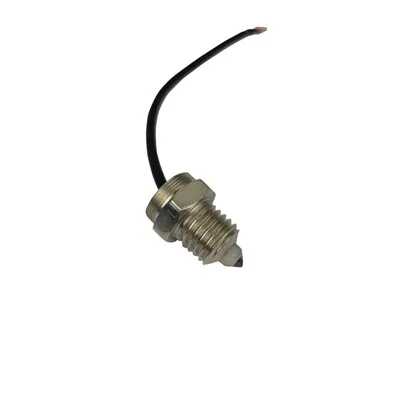
What is a mass flow controller used for
Control gas flow with confidence using a precision mass flow controller built for stable, repeatable performance in demanding process, laboratory, and OEM environments. Whether you are dosing a carrier gas, regulating purge flow, blending gases, or automating a test bench, the right gas flow controller helps you maintain process consistency while reducing manual adjustment and operator error.
A mass flow controller for gases measures and controls flow based on mass rather than volume, making it ideal when pressure and temperature changes could affect accuracy. Our selection supports common industrial and research applications and can help you compare options such as a thermal mass flow controller, a mass flow meter with control capability, a Brooks mass flow controller alternative, or a Burkert mass flow controller equivalent depending on your system requirements.
Precision gas control for critical applications
A mass flow controller is used to automatically regulate the flow rate of a gas to a defined setpoint. Instead of relying on manual valves or pressure-only control, the device measures actual gas flow and adjusts an internal control valve to maintain the desired rate.
This makes it especially useful in processes where even small flow variations can affect quality, repeatability, safety, or test results. Common uses include:
Semiconductor and electronics manufacturing
Laboratory gas dosing and analysis
Chemical processing and catalyst research
Environmental testing and calibration systems
Food and beverage packaging gases
Fuel cell and battery research
Pharmaceutical process development
Vacuum coating and thin-film deposition
Gas blending and mixing skids
OEM equipment that requires automated flow control
If your process depends on stable gas delivery, a mass flow controller can replace guesswork with measurable, automated control.
Key benefits
Accurate, repeatable flow control
A quality thermal mass flow controller helps maintain a consistent flow rate even when upstream pressure, downstream pressure, or ambient conditions fluctuate within the device's operating range. This supports repeatable results across batches, test runs, and production cycles.
Built for gases
Unlike many general-purpose flow devices, a mass flow controller for gases is designed specifically for gas behavior and gas compatibility. It can be configured for common gases such as nitrogen, air, oxygen, argon, hydrogen, carbon dioxide, helium, and other process gases depending on material compatibility and calibration needs.
Closed-loop automation
The controller measures flow, compares it with your setpoint, and adjusts the valve automatically. This closed-loop approach is ideal for automated equipment, PLC-controlled systems, and process recipes where manual tuning is inefficient or inconsistent.
Flexible integration
Modern gas flow controller options can support analog and digital communication, depending on the model selected. This makes integration easier for benchtop systems, skid-mounted process panels, pilot plants, and production equipment.
Better process visibility
When paired with a control system, HMI, or data acquisition platform, a mass flow controller gives operators access to real-time flow data. This can help with troubleshooting, quality documentation, and process optimization.
Designed for performance-focused gas systems
Choose the configuration that fits your application instead of forcing your process to fit a generic device. Available options may include different flow ranges, elastomer selections, body materials, communication protocols, display styles, and calibration gases.
Typical configuration considerations include:
Gas type and compatibility
Full-scale flow range
Required accuracy and repeatability
Inlet and outlet pressure conditions
Operating temperature range
Wetted material requirements
Seal material compatibility
Electrical input and output signals
Mounting orientation and footprint
Response time expectations
Certification or documentation needs
If you are replacing an existing Brooks mass flow controller, comparing a Burkert mass flow controller, or upgrading from a basic mass flow meter, our team can help identify a practical configuration for your flow range, gas type, and control requirements.
Product features
Our mass flow controller solutions are selected for dependable performance, straightforward integration, and long-term usability. Available features may include:
Thermal mass flow measurement for direct gas mass flow control
Integrated control valve for automatic setpoint regulation
Fast response for dynamic process adjustments
Compact designs for OEM equipment and control panels
Analog control options for common automation systems
Digital communication options on select models
Stainless steel or application-appropriate wetted materials
Multiple fitting and connection choices
Calibration options for specific gases or equivalent gases
Optional display or local interface depending on model
Support for low-flow, mid-flow, and higher-flow applications
Because every process is different, final specifications should be selected based on your operating conditions, gas compatibility, and accuracy requirements.
Mass flow controller or mass flow meter?
A mass flow meter measures flow. A mass flow controller measures flow and actively controls it.
If you only need to monitor the amount of gas moving through a line, a mass flow meter may be sufficient. If you need the device to hold a specific setpoint automatically, you need a mass flow controller. For processes such as gas dosing, purge control, gas blending, and automated test sequencing, the controller is typically the better choice.
Why choose a thermal mass flow controller?
A thermal mass flow controller is one of the most common choices for clean, dry gas applications because it measures gas flow based on heat transfer. Since it works with mass flow rather than volumetric flow alone, it can deliver dependable control in applications where standard volumetric devices may require more compensation.
This technology is widely used in laboratories, manufacturing environments, research systems, and OEM instruments. It is especially valuable when the process requires repeatable gas delivery, traceable calibration, and electronic setpoint control.
Applications by industry
Research and laboratory systems
Use controlled gas flow for analytical instruments, reaction studies, calibration benches, gas chromatography support systems, and experimental rigs.
Manufacturing and process control
Improve consistency in purge lines, inerting systems, coating processes, additive manufacturing support equipment, and controlled atmosphere systems.
OEM equipment
Integrate a compact gas flow controller into instruments, analyzers, test equipment, environmental chambers, and production machines.
Gas blending and mixing
Control multiple gas streams independently to create a desired blend ratio for testing, packaging, research, or production use.
Pricing and availability
Pricing depends on the selected flow range, gas type, materials, fittings, communication options, calibration requirements, and quantity. Instead of offering a one-size-fits-all price, we provide application-based quotes so you receive a controller matched to your process.
To request pricing, be prepared to share:
Gas or gas mixture
Desired flow range
Inlet and outlet pressure
Process temperature
Required accuracy
Connection type
Electrical signal or communication preference
Any replacement part number, if available
This information helps narrow the selection and prevents overpaying for features you do not need.
Need help selecting the right controller?
Choosing the wrong flow range, seal material, or calibration gas can lead to poor control performance or compatibility issues. Our product specialists can help you compare options, review replacement needs, and select a controller that fits your equipment.
Request a quote today for a mass flow controller matched to your gas, flow range, and process requirements.
Frequently asked questions
What is a mass flow controller used for?
A mass flow controller is used to measure and automatically regulate gas flow to a specific setpoint. It is commonly used in research, manufacturing, gas blending, calibration, purge control, and automated process systems.
Can it control liquids?
Some flow controllers are designed for liquids, but a standard mass flow controller for gases should only be used with compatible gases unless the product is specifically rated for liquid service.
Is it the same as a pressure regulator?
No. A pressure regulator controls pressure, while a mass flow controller controls flow rate. Many systems use both: the pressure regulator stabilizes supply pressure, and the flow controller maintains the desired gas flow.
Can you replace a Brooks or Burkert unit?
In many cases, yes. If you provide the existing model number, gas, flow range, fittings, and electrical signals, a suitable Brooks mass flow controller or Burkert mass flow controller replacement can often be identified.
How do I get a quote?
Send your application details and any existing part number. We will help confirm the best gas flow controller configuration and provide pricing based on your requirements.