Which valve actuator offers the best flow control
Flow control rarely fails because the valve "can't handle the pressure." It fails because the actuator can't place the plug/ball precisely, repeatably, and fast enough for the process and the PID loop. So, which valve actuator offers the best flow control? The honest answer is: the actuator that delivers the required positioning accuracy and dynamic response for your valve type, with minimal hysteresis/deadband and the right fail-safe behavior. In most modulating applications, that ends up being either a pneumatic actuator with a digital positioner or a high-resolution electric servo actuator-chosen to match the valve and control objective.
First, define "best" flow control (what you actually need)
A "best valve actuator for flow control" is the one that achieves your target on these four criteria:
Accuracy & repeatability (how close it gets, how consistently it repeats)
Low hysteresis & deadband (key to reducing valve hysteresis and deadband in real loops)
Response time (fast enough without overshoot-critical for actuator response time for flow regulation)
Stability in a PID loop (avoids hunting; supports choosing actuator for PID loop stability)
If you don't set these requirements, you'll overbuy (wasteful) or underbuy (unstable loop, oscillations, poor quality).
What is a modulating valve actuator-and why it matters
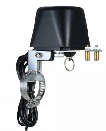
A common question is what is modulating valve actuator? It's an actuator designed to move the valve to any intermediate position (not just open/close) and hold it there under changing loads-typically via analog (4–20 mA) or digital commands with feedback.
When your goal is the best valve actuator for modulating control, you're really selecting a flow control actuator system-meaning actuator plus feedback/positioning hardware and tuning support.
Pneumatic vs electric: which usually controls flow better?
The debate over electric vs pneumatic actuator flow control comes down to dynamics, environment, and infrastructure.
Pneumatic actuator + digital positioner: the most common "best" for process flow control
For many industrial control valves, the highest practical performance comes from pneumatics with a smart digital positioner because they deliver strong force density and fast, smooth motion.
Why it often wins in modulating service:
Fast stroking and strong thrust/torque for demanding trims
Excellent control when paired with a high-quality positioner and clean air
Easy to implement robust actuator fail-safe options spring return (fail-open/fail-closed)
This is where the topic positioner vs actuator accuracy matters: in modulating control, the positioner often determines the effective accuracy more than the actuator mechanics alone.
Electric servo actuator: best when you need clean, precise, air-free control
A modern electric actuator can be a high-precision flow control actuator selection choice when:
You don't have instrument air (or it's unreliable)
You want fine resolution and consistent positioning at low speeds
You benefit from integrated controls and logging
Electric units also shine when you want smart valve actuator diagnostics benefits such as cycle counting, torque trends, alarms, and predictive maintenance-without adding separate positioner hardware.
Watch-outs: torque margins at speed, heat duty cycle, ingress protection, and what happens on power loss (battery, capacitor, or mechanical fail-safe).
Quarter-turn actuator vs linear actuator: match the valve, not your preference
Your valve style sets the motion type, and motion type strongly influences controllability.
Linear actuators (globe valves): usually best for precision throttling
A well-sized linear actuator on a globe control valve is a classic answer for low flow control with valve actuator and tight regulation. Globe valves typically offer better inherent throttling characteristics, especially with appropriate trim.
Best for:
Pressure/flow loops requiring fine control near the seat
Severe-service trims (cavitation, flashing, high ΔP)
Quarter-turn actuators (ball/butterfly): great when characterized and positioned well
In a quarter-turn actuator vs linear actuator comparison, quarter-turn can still deliver excellent modulation-especially with:
Characterized control valves (V-port ball, characterized butterfly)
A quality positioner/feedback system
Proper breakaway torque margin
Quarter-turn is often chosen for larger sizes, lower cost, and higher capacity-just don't assume it will modulate well without characterization and feedback.
The hidden performance killers: hysteresis, deadband, and trim mismatch
Even a "perfect" actuator can't fix a poor mechanical package. Focus on:
Linkage slop, stiction, packing friction
Oversized actuator masking friction until it suddenly breaks free
Incorrect trim for the operating range
A big part of actuator compatibility with control valve trim is ensuring the actuator can smoothly overcome packing and hydrodynamic forces without stick-slip. If the loop hunts around setpoint, don't only retune PID-verify friction and deadband first.
How to size valve actuator for control valve (practical checklist)
If you're asking how to size valve actuator for control valve, size for the worst credible conditions and the most sensitive control region.
Key sizing steps (modulating focus)
Identify required shutoff class and seating load (especially for globe valves).
Calculate control valve actuator torque requirements (quarter-turn) or thrust (linear) at:
Maximum ΔP across the valve
Maximum line pressure and temperature
Worst-case fluid forces near the critical travel region
Add margin for:
Packing friction changes over time
Supply pressure variation (pneumatic)
Wear, contamination, and temperature effects
Ensure the actuator is not so oversized that it amplifies stick-slip behavior.
Validate dynamic needs:
Required stroke time and ramping
Minimum controllable movement and resolution
Actionable tip: ask vendors for installed performance estimates (deadband, hysteresis, step response) rather than only static thrust/torque tables.
Response time and PID stability: "fast" isn't always "best"
For flow loops, faster actuators can improve disturbance rejection-but overly aggressive response can cause overshoot and valve chatter. Prioritize:
Stable, repeatable micro-movements
Smooth acceleration/deceleration profiles
Proper positioner tuning (pneumatic) or servo tuning (electric)
This is central to actuator response time for flow regulation and choosing actuator for PID loop stability: the "best" actuator is the one that tracks commands without oscillation in your specific process dynamics.
So which actuator offers the best flow control? (recommendation by scenario)
Use this quick decision guide for best valve actuator for flow control:
Highest-performance process control (most plants): pneumatic actuator + smart digital positioner Ideal when you need fast modulation, robust fail-safe spring return, and proven control valve ecosystem.
Air unavailable / clean-room / distributed sites: electric servo actuator with high-resolution feedback Ideal for precise positioning, diagnostics, and simpler utilities.
Tight throttling and low-flow stability: linear actuator on globe valve (with the right trim) Often the best path for best valve actuator for modulating control at low flows.
Large lines / high capacity with good modulation: quarter-turn actuator on characterized ball/butterfly Works great when paired with strong feedback control and correct sizing.
Takeaway
If you're still asking "Which valve actuator offers the best flow control?" the winning choice is the actuator system that best matches your valve motion (linear or quarter-turn), trim, and loop dynamics-while minimizing hysteresis/deadband and meeting fail-safe needs. In practice, pneumatic + digital positioner is most often the benchmark for industrial modulating flow control, with electric servo actuators a top choice when air, environment, or diagnostics requirements tip the balance.
Estimated word count (article body): ~970 words.