Working Principle And Application Of Doppler Flow Meter
Last month, I spent three days troubleshooting a flow meter at a wastewater treatment plant that kept giving erratic readings. The maintenance supervisor was frustrated-half a million dollars in upgrades, and they couldn't trust the numbers. Turns out, someone had installed the sensor too close to a pump discharge, creating turbulence that confused the instrument. After relocating it twenty pipe diameters downstream, accuracy jumped from ±15% error to within 3% of actual flow. This experience reminded me why understanding Doppler flow meters matters-these devices are everywhere in municipal and industrial settings, yet installation mistakes remain surprisingly common.
What Makes Doppler Technology Different
If you've worked with electromagnetic or ultrasonic transit-time meters, Doppler flow meters operate on an entirely different principle. Instead of measuring how long sound takes to travel through fluid, they rely on frequency shift caused by moving particles. The sensor transmits ultrasonic waves (typically 1-6 MHz) into the pipe at a fixed angle. When these waves bounce off suspended solids, gas bubbles, or other particulates moving with the flow, the returning signal has a different frequency. This Doppler shift-named after physicist Christian Doppler-correlates directly to particle velocity.
The mathematics involves something called the Doppler equation: the frequency shift equals twice the transmitted frequency multiplied by particle velocity and the cosine of the beam angle, divided by the speed of sound in the medium. Don't worry, you don't need to calculate this manually-modern instruments handle it internally. What matters is understanding that Doppler meters need something in the fluid to reflect sound. Clean drinking water? They struggle. Raw sewage with suspended solids? Perfect. This characteristic makes them ideal for wastewater, sludge, irrigation water carrying sediment, and industrial effluents-applications where other meter types face challenges.
The Real-World Trade-offs Nobody Mentions
Here's where things get interesting. I've seen engineers specify Doppler meters for applications where they fundamentally won't work. A colleague once called me about a semiconductor plant trying to measure ultra-pure water with a Doppler meter. Predictably, readings were all over the place-no particles meant no reflections, no reflections meant no reliable measurement. They needed a transit-time ultrasonic meter instead.
Minimum Particle Requirement: Most manufacturers specify a minimum concentration of 100 ppm suspended solids or 2% gas bubbles by volume. Below this threshold, signal strength drops and readings become unreliable. Some advanced models claim operation down to 25 ppm, but I treat such claims skeptically until proven in the field.
Velocity Thresholds: Doppler meters also have minimum velocity requirements, typically 0.5 to 2 feet per second depending on the model. Below this, particles don't generate sufficient Doppler shift for accurate measurement. I've encountered situations where operators throttled valves back during low-demand periods, causing flow velocity to drop below the meter's range. Suddenly, readings went to zero even though water still moved through the pipe.
Accuracy Expectations: Laboratory conditions might achieve ±1% accuracy. In field installations with varying particle concentrations and flow profiles, ±3-5% is more realistic. If your application requires ±0.5% precision, Doppler technology isn't the right choice regardless of what sales literature promises.
Installation: Where Most Projects Fail
Proper installation accounts for probably 80% of successful Doppler meter applications. The physics doesn't care about your schedule pressure or budget constraints-ignore the fundamentals and you'll chase phantom problems for months.
Pipe Configuration Matters More Than You Think
Upstream and downstream straight pipe runs aren't suggestions. Most manufacturers specify minimum 10 pipe diameters upstream and 5 downstream from any disturbance. From field experience, I recommend doubling those values whenever possible. Elbows create swirling flow patterns that distort velocity profiles. Valves generate turbulence that can scatter acoustic beams unpredictably. Pumps? I've seen installations within 5 diameters of pump discharges where readings fluctuated 20% depending on pump speed.
Vertical pipe installations present their own challenges. If the pipe isn't completely full, Doppler meters can give false readings because they average velocity across the beam path. Partially filled pipes mean the acoustic beam samples air and water inconsistently. The solution? Install in horizontal sections or use full-pipe verification with level sensors.
Sensor Mounting: The Devil Is in the Details
Clamp-on Doppler meters attach externally to the pipe wall, which sounds convenient until you realize how critical coupling becomes. The acoustic signal must transfer efficiently from transducer to pipe to fluid. Any air gap, rust layer, or paint film attenuates this transmission. I always specify grinding the pipe surface to bare metal, applying fresh coupling compound, and securing sensors with stainless steel bands that accommodate thermal expansion without shifting position.
One municipal client used hose clamps initially to save money. Six months later, thermal cycling had loosened the clamps enough that the sensor shifted 3 millimeters-enough to degrade accuracy from ±4% to ±12%. We replaced them with proper mounting hardware at $47 per bracket, but the real cost was six months of questionable data.
For submersible installations in open channels or partially filled pipes, mounting stability becomes equally important. A sensor that swings slightly in flowing water introduces measurement noise. I specify rigid mounting frames anchored to channel walls or floor, with the sensor positioned to maintain consistent depth relative to the channel bottom.
Electrical Interference: The Silent Accuracy Killer
Here's a scenario I encounter repeatedly: a Doppler meter installed near a variable frequency drive (VFD) showing erratic readings that coincide with motor startup. VFDs generate electromagnetic interference that corrupts low-level ultrasonic signals. Proper shielding helps-use twisted-pair shielded cable for sensor connections, ground the shield at one end only (usually the electronics enclosure), and route signal cables in metallic conduit separate from power wiring.
Last year, a food processing plant struggled with flow readings that jumped 10-15% every time their refrigeration compressors cycled. Tracing the problem revealed the sensor cable ran alongside 480V power feeds in the same cable tray. Rerouting the signal cable through separate conduit resolved the issue completely. Total cost: $200 in materials and 4 labor hours. The expensive alternative would have been replacing the meter with a different technology.
Product Landscape and What You'll Actually Pay
Walking through the market, you'll find Doppler flow meters ranging from $800 portable units to $25,000 permanently installed systems with SCADA integration. The price spread reflects differences in construction quality, accuracy capabilities, and feature sets-not necessarily suitability for your application.
Portable Units ($800-$3,500)
These battery-powered handheld instruments work well for spot-checking existing installations or temporary measurements. The LD-D150 model from Chinese manufacturer Laiende sells for around $850 (6,500 yuan) and offers basic velocity and flow measurement in pipes up to 20 inches. Accuracy claims of ±1.5% should be interpreted as best-case; field use typically sees ±3-5% depending on operator technique. For occasional troubleshooting, these units serve their purpose. Don't expect the same reliability as permanent installations.
The Greyline PDFM 5.1 portable Doppler meter costs approximately $2,800 and includes data logging, multiple pipe size programming, and a more robust transducer assembly. I've used this model for verification surveys and found it reliable when properly calibrated against known flow conditions.
Permanent Clamp-On Systems ($3,000-$12,000)
For continuous monitoring, permanently installed clamp-on Doppler systems offer better long-term stability. The Greyline DFM 5.1 series starts around $3,500 for basic models with 4-20mA output. Adding Modbus communication, dual-channel capability, or integral data logging pushes the price toward $6,000-8,000.
Chinese manufacturers have entered this market aggressively. Hengmei's HM-DSL2 retails for approximately $950 (6,500 yuan) and includes WiFi connectivity, GPS positioning, and 100,000-point data storage. The HM-DSL3 model at $1,950 (13,600 yuan) adds bidirectional flow measurement capability for applications with potential reverse flow conditions.
Are Chinese instruments as reliable as established Western brands? My experience suggests mixed results. Early models (2018-2020) suffered from inconsistent transducer quality and firmware bugs. Current offerings from reputable manufacturers have improved substantially. However, consider warranty support and spare parts availability. A client purchased 15 units from a Chinese supplier only to discover the company discontinued that model 18 months later, leaving them with orphaned equipment.
Insertion and Full-Bore Installations ($8,000-$25,000)
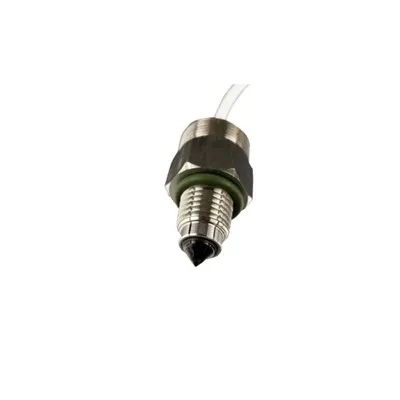
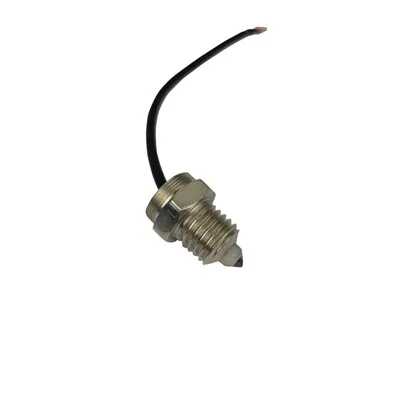
Insertion Doppler meters mount through a pipe fitting (typically 1.5-2 inch NPT thread) with the sensor protruding into the flow stream. These cost $8,000-15,000 and offer better accuracy than clamp-on designs because the transducer contacts fluid directly rather than transmitting through pipe wall. They also allow sensor removal for cleaning without depressurizing the pipeline-valuable for sludge and wastewater applications where fouling occurs.
Full-bore Doppler meters incorporate the sensor into a spool piece that installs as a pipe section. These represent the high end of Doppler technology, with prices from $15,000-25,000 depending on pipe size and features. Accuracy improves to ±2% under controlled conditions, and integrated calibration runs establish traceability to flow standards. For custody transfer or regulatory reporting where measurement uncertainty must be documented, these systems justify their cost.
Calibration and Ongoing Maintenance Reality
Contrary to marketing claims, Doppler flow meters aren't truly "calibrate once and forget" instruments. Field conditions change-particle concentrations vary, pipe walls accumulate deposits, sensor alignment drifts. Understanding calibration requirements prevents unpleasant surprises.
Initial Calibration: More Than Zero and Span
When commissioning a new installation, verify the meter against an independent flow measurement. This might be a portable reference meter, volumetric tank test, or comparison with an existing calibrated meter in series. Don't rely solely on manufacturer's factory calibration-the pipe conditions at your site differ from their test rig.
For the wastewater plant I mentioned earlier, we performed a 72-hour comparison test between the new Doppler meter and the facility's existing Parshall flume. The Doppler read 4.2% high initially. Entering a correction factor resolved the discrepancy, but without that verification, they would have under-reported effluent flows indefinitely.
Periodic Recalibration: What Frequency?
Most regulatory frameworks require annual recalibration for meters used in compliance reporting. For internal process control, I recommend verification every 6-12 months depending on application severity. Municipal sewage with consistent characteristics? Annual might suffice. Industrial effluent with variable composition? Every six months is prudent.
Calibration methods range from simple to sophisticated:
Zero Verification: With no flow (isolate the pipe or wait for stagnant conditions), the meter should read zero or near-zero. This catches sensor drift but doesn't verify span accuracy.
Reference Meter Comparison: Portable transit-time ultrasonic meters can provide reasonable comparison measurements if installed properly. Differences greater than 5% warrant investigation.
Volumetric Test: The gold standard involves collecting flow in a tank of known volume and comparing totalized volume. This works well for small-diameter pipes and lower flow rates.
Contracted Calibration Service: Third-party services bring portable provers to your site for formal calibration with traceable certification. Budget $1,500-3,000 per meter per event.
Daily Operational Checks
Operators should monitor several parameters continuously:
Signal Strength: Most Doppler meters display signal quality as a percentage or qualitative indicator. Sudden drops suggest transducer problems, coupling failure, or changes in fluid composition (fewer particles). If signal falls below manufacturer's threshold, investigate before trusting readings.
Velocity Stability: In steady-state processes, flow velocity should remain relatively constant. Random fluctuations of 10% or more when process conditions haven't changed indicate measurement problems.
Totalizer Reconciliation: Compare totalized volume from the Doppler meter against other measurements-tank level changes, pump run times, or alternative meters. Consistent discrepancies indicate drift requiring investigation.
When Doppler Works Brilliantly (And When It Doesn't)
After working with flow measurement for years, I've developed strong opinions about where Doppler technology excels versus applications where it creates more problems than solutions.
Ideal Applications
Municipal Wastewater: Raw sewage contains ample suspended solids for acoustic reflection. The non-contact nature of clamp-on designs eliminates fouling concerns that plague insertion meters. Most treatment plants I've worked with achieve reliable measurements with minimal maintenance beyond annual calibration checks.
Industrial Effluent Monitoring: Paper mills, food processors, chemical plants-their discharge streams typically carry solids, fibers, or bubbles that suit Doppler measurement. Regulatory compliance monitoring often specifies Doppler meters explicitly for these applications.
Irrigation and Agricultural Water: Open channels and partially filled pipes challenge many meter types. Doppler instruments designed for channel installation handle variable water levels effectively. A farming cooperative in California's Central Valley installed 23 Doppler meters across their distribution network for $45,000 total, achieving reasonable measurement where electromagnetic meters would have cost double.
Stormwater and Combined Sewer Overflows: During rain events, these flows carry sediment and debris that would damage mechanical meters. Doppler meters with ruggedized construction survive conditions that destroy other equipment.
Problematic Applications
Clean Water Distribution: Insufficient particles for reliable reflection. I've seen utilities attempt Doppler installation for finished water mains, only to abandon them within months due to erratic readings. Transit-time ultrasonic or electromagnetic meters work far better.
Low-Velocity Drains: Sump pumps, condensate returns, and other intermittent low-flow applications may fall below the minimum velocity threshold. Flow measurement at these conditions requires different technology.
Pulsating Flow: Positive displacement pumps create velocity variations that can confuse Doppler signal processing. If you must measure flow from a PD pump, install the meter well downstream (30+ pipe diameters) or consider alternatives.
High-Precision Requirements: Pharmaceutical water systems, custody transfer of expensive chemicals, boiler feed measurement-these applications demand accuracy better than Doppler technology typically delivers in field conditions.
Troubleshooting Guide: Problems You'll Actually Encounter
After numerous field calls, certain problems repeat. Here's practical guidance for issues you're likely to face:
No Flow Reading (Display Shows Zero)
Check fluid composition first: Has particle concentration dropped below threshold? A brewery client discovered their Doppler meter stopped working after they improved their clarification process. Better beer meant fewer particles in effluent, which meant the Doppler couldn't "see" the flow. Solution: Install a small air injection system upstream to provide bubbles for reflection.
Verify sensor coupling: For clamp-on designs, dried or displaced coupling compound causes complete signal loss. Remove the sensor, clean both surfaces, apply fresh coupling, and reinstall.
Confirm pipe is full: Partially filled pipes result in no acoustic path through liquid. Level sensors or visual inspection confirm this condition.
Erratic or Fluctuating Readings
Electrical interference tops the list: I mentioned VFD problems earlier. Other sources include nearby radio transmitters, arc welders, and poorly grounded power systems. Shielded cables and proper grounding usually resolve this.
Turbulent flow: Sensors too close to pumps, valves, or elbows pick up chaotic velocity patterns. Relocate if possible; otherwise, install flow conditioning elements upstream.
Varying particle concentration: If solids content fluctuates significantly, consider signal averaging over longer time periods (most meters offer configurable damping). Real-time readings become less representative but stability improves.
Consistently High or Low Readings
Pipe wall deposits: Scale buildup reduces effective pipe diameter, but the meter calculates flow based on nominal pipe size. A 12-inch pipe with 1 inch of scale actually has 10-inch flow area-meter will over-read by about 30%. Periodic inspection and cleaning prevent this.
Incorrect pipe parameters: Entering wrong pipe diameter, wall thickness, or material properties causes systematic errors. I always verify installation parameters against actual pipe specifications before commissioning.
Calibration drift: Over time, sensor characteristics change. Annual calibration checks catch this. If your meter reads consistently 5-8% off, a calibration adjustment usually suffices. Larger errors suggest hardware problems.
Making the Right Selection Decision
Choosing a Doppler flow meter involves balancing multiple factors. Here's a decision framework I use:
Fluid Characteristics: Confirm sufficient particles or bubbles for reflection. If uncertain, request particle size analysis or conduct a trial installation with a portable unit.
Pipe Configuration: Verify adequate straight run availability. If installation must occur near disturbances, budget for flow conditioning or accept reduced accuracy.
Accuracy Requirements: Be realistic about what's achievable. Doppler meters in field conditions typically deliver ±3-5% accuracy regardless of manufacturer claims.
Maintenance Capability: Who will maintain the instrument? Clamp-on designs require periodic coupling renewal. Insertion meters need occasional cleaning. If your maintenance staff is minimal, choose the simplest installation method.
Regulatory Context: Compliance reporting may dictate specific calibration frequencies, accuracy classes, or installation standards. Verify requirements before purchasing.
Total Cost of Ownership: Purchase price represents maybe 30-40% of lifetime cost. Installation labor, calibration services, maintenance, and eventual replacement constitute the majority. A cheaper meter requiring frequent service may cost more long-term than a premium unit with reliable performance.
Practical Advice From the Field
After years working with flow measurement in varied applications, here's what I wish more engineers understood about Doppler technology:
Installation quality determines success or failure: The best meter poorly installed performs worse than an adequate meter properly installed. Invest in correct installation the first time rather than troubleshooting indefinitely.
Calibration isn't optional: Initial calibration verifies the meter works in your specific application. Ongoing calibration maintains accuracy as conditions change. Budget for this-ignoring calibration guarantees measurement drift.
Understand the physics: Doppler meters measure particle velocity, which correlates to fluid velocity but isn't identical. Slippage between particles and fluid occurs in some applications. Recognize the limitation.
Document everything: Installation photos, calibration records, maintenance logs-this documentation proves invaluable when troubleshooting or demonstrating regulatory compliance.
Plan for the future: Technology evolves. Manufacturers discontinue models. Spare parts become unavailable. When selecting equipment, consider long-term support availability. That ultra-low-price supplier might not be around in five years.
Closing Thoughts
Doppler flow meters serve essential roles in water and wastewater management, industrial process control, and environmental monitoring. When properly applied and installed, they provide reliable measurements in challenging fluids that would defeat other technologies. But they're not universal solutions-attempting to force Doppler measurement into unsuitable applications wastes money and generates unreliable data.
If you're considering Doppler technology for an upcoming project, start by honestly evaluating your application against the criteria discussed here. Talk with experienced users, not just sales representatives. Visit installations if possible. Request trial evaluations with portable units before committing to permanent installation.
The most expensive flow meter isn't the one with the highest purchase price-it's the one that doesn't work for your application, generates questionable data, and requires endless troubleshooting attention. Choose wisely based on physics and field experience, not marketing claims. Your future self will thank you when the instrument performs reliably and the data it produces actually means something.
For those already struggling with Doppler meter problems, systematic troubleshooting usually identifies root causes. Check installation geometry, verify fluid characteristics, examine electrical interference sources, and validate calibration. Most issues trace to these fundamental factors rather than instrument defects. Patience and methodical investigation pay dividends.
If budget allows, consider backup measurement capability-a portable reference meter for verification, redundant sensors for critical applications, or alternative measurement methods for cross-checking. No single technology works perfectly in all conditions. Having options provides resilience when primary systems encounter problems.
The wastewater plant where I spent those three days? They've now operated their relocated Doppler meter for 18 months with consistent performance. Regular calibration checks show ±3% accuracy against their reference Parshall flume. That initial frustration transformed into confidence-exactly what good flow measurement should provide.