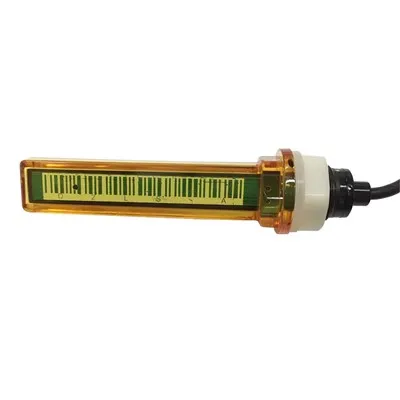
Gas Level Indicator: Enjoy Effortless Monitoring of Your Propane and LPG Supply
In this guide: How gas level indicators transform propane and LPG tank management from guesswork into effortless monitoring-eliminating surprise outages, emergency refills, and unreliable pressure gauges. Learn what effortless gas level monitoring actually means, how the technology works, which solutions deliver the most convenient experience, and how to choose the right system for your home, RV, or business.
The Frustration That Started Everything: Running Out of Gas at the Worst Moment
It always happens at the worst possible time. A cold Sunday morning and the propane furnace will not start. Your RV arrives at the most beautiful remote campsite and the stove will not light. You are halfway through grilling a steak and the flame dies to a sad hiss. You grab the propane cylinder and shake it-but shaking does not tell you whether you have 5% or 30% left.
You are not alone in this frustration. Millions of propane and LPG users experience unexpected fuel outages every year, not because they were careless, but because traditional tank monitoring methods-pressure gauges that lie in cold weather, guessing by weight, shaking cylinders-are fundamentally unreliable. You should not need a degree in thermodynamics just to know if your heating fuel is running low.
The solution is a gas level indicator: a small electronic sensor that gives you an accurate, real-time answer to one question: how much fuel is actually in my tank? And in 2026, the best gas level indicators do much more than measure-they connect wirelessly to your phone, send automated low-fuel alerts, track your usage history, and make propane tank management genuinely effortless.
This guide is about that effortlessness: what it means, how it works, and why a $65–250 investment in a gas level indicator pays for itself the first time it prevents an emergency.
What Does "Effortless Monitoring" Actually Mean?
Effortless monitoring is not just a marketing phrase-it is a specific set of capabilities that change how you interact with your fuel supply:
Without Effortless Monitoring With a Gas Level Indicator
Walk to the tank to check level Check from your couch, office, or vacation
Shake the tank for a rough guess See exact percentage to one decimal place
Guess when to order a refill Receive automated alerts at your chosen threshold
Emergency delivery fees when you run out Schedule delivery on your timeline
Pressure gauge lies in cold weather Accurate reading regardless of temperature
One tank, one guess Multiple tanks, one app dashboard
No data on consumption patterns Historical graphs showing usage trends
Tank runs out mid-cook, mid-shower, mid-nights Low-fuel alerts give you days of advance warning
Effortless means three things: knowing without going, planning without guessing, and being warned before you run out.
The Technology That Makes Effortless Monitoring Possible
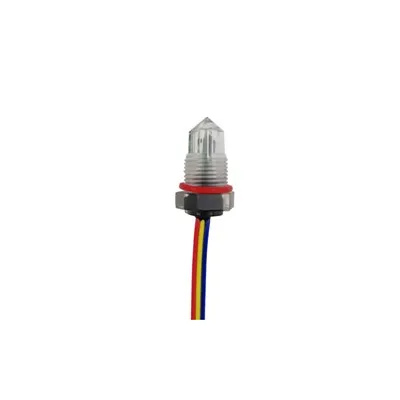
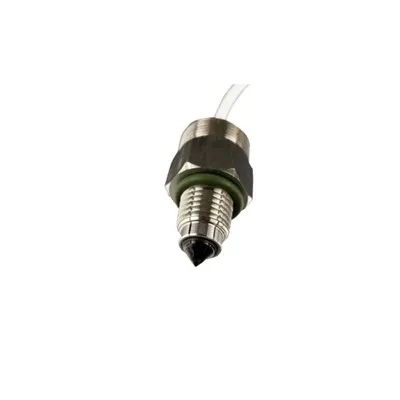
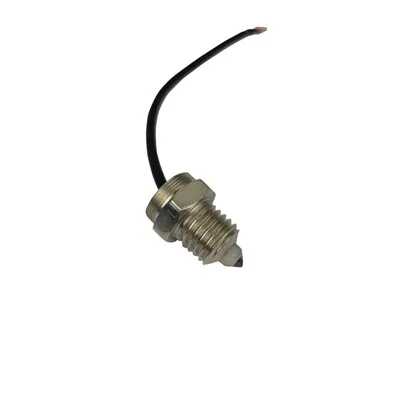
A gas level indicator is fundamentally an ultrasonic distance sensor combined with wireless connectivity and a smartphone app. Understanding how it works helps you choose the right one-but more importantly, it helps you trust what it tells you.
Ultrasonic Measurement: The Science of Knowing Without Going
Inside every modern gas level indicator is a piezoelectric ultrasonic transducer. When you tap the app to check your tank level, the sensor emits a high-frequency sound pulse downward through the steel tank wall. The pulse travels through the LPG vapor space inside, bounces off the flat liquid propane surface at the bottom of the tank, and returns to the sensor. The sensor measures the total travel time, calculates the distance to the liquid surface, and converts that distance to a fill percentage.
The key insight: The sensor is measuring the actual physical liquid surface inside your tank-not vapor pressure, not temperature, not a guess. This is why ultrasonic gas level indicators are accurate in all weather conditions, while pressure gauges become unreliable in cold temperatures.
A built-in temperature sensor continuously adjusts the speed-of-sound calculation for current temperature, ensuring accuracy from -40°F to +140°F. Most sensors also include Bluetooth LE, WiFi, or cellular connectivity to transmit readings to your phone or cloud dashboard.
What You See in the App: Your Fuel at a Glance
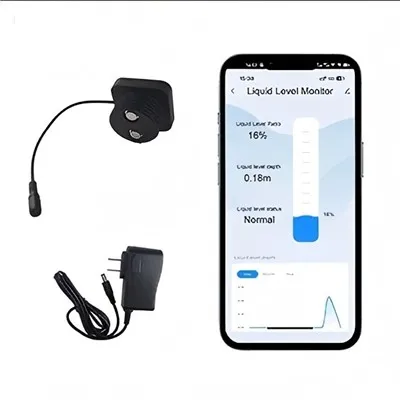
The companion smartphone app is your window into your fuel supply:
App Display What It Tells You Why It Matters
Fill percentage Exact level as a number (e.g., 34.7%) Know precisely when to refill
Gallons remaining Calculated gallons based on your tank's capacity Useful for delivery scheduling
Last reading timestamp When the sensor last reported Confirms the sensor is active
Battery status Remaining sensor battery life Replace before it dies
7-day/30-day history Fuel level over time Understand your consumption rate
Low-fuel alert badge Push notification has fired Action required
Temperature reading Current tank temperature Context for cold-weather readings
This is the effortless part: Instead of walking to the tank, guessing by the gauge, or trying to remember when you last refilled, you open an app and know exactly where you stand.
Who Benefits Most From Effortless Gas Level Monitoring?
The short answer: everyone who relies on propane or LPG. But certain users benefit disproportionately more than others-and understanding who gets the most value helps you appreciate why a gas level indicator is one of the most practical investments you can make.
Homeowners With Propane Heating
If your home is heated by propane, a gas level indicator is not a luxury-it is essential. Here is why:
Propane heating is non-negotiable: When your furnace stops because you ran out of propane, you are cold, potentially in freezing weather, and facing emergency delivery fees that can run $100–300 or more for after-hours emergency fills
Usage varies by weather: Cold winters mean faster consumption. You cannot predict your usage reliably from past bills alone.
Home tanks are permanent: Unlike portable cylinders, you cannot easily weigh or shake your home tank. You need a sensor.
The effortless benefit: Set a 25% alert, and your phone tells you when to schedule a delivery. Your tank is never empty when you need it most.
RV Owners and Campers
RVs amplify every propane management problem because RVs take you away from home:
Remote locations: Many RVs camp far from cell service and hardware stores. Running out of propane at a remote campsite is a serious problem.
Multiple fuel sources: RVs typically have two propane cylinders, a generator fuel tank, and appliances that use both propane and gasoline. Managing all of these manually is a hassle.
Seasonal and storage use: RVs sit for months between trips. The last thing you want is to arrive at your stored RV and find the propane ran out during winter storage.
The effortless benefit: Before you leave for a trip, check your RV propane level from your phone. If you are storing the RV, the cellular-connected sensor sends you an alert before you lose fuel to a slow leak.
Restaurant and Commercial Kitchen Operators
Commercial propane use-restaurants, food trucks, catering operations-has zero tolerance for fuel interruptions:
A kitchen without gas means a kitchen that cannot cook: Every hour of downtime costs revenue.
Delivery scheduling: Commercial propane suppliers need advance notice for bulk deliveries. Knowing your current level and consumption rate lets you schedule deliveries proactively.
Multi-tank facilities: Commercial kitchens and restaurants often have multiple tanks. Manually checking each one is time-consuming and error-prone.
The effortless benefit: A single dashboard monitoring all your tanks. Automated alerts prevent the kitchen ever going dark. Your supplier gets accurate level data for delivery planning.
Off-Grid and Cabin Property Owners
Cabins and off-grid properties often rely on propane because there is no natural gas line:
Propane delivery is your only option: You cannot just drive to a gas station when you run out.
Long distances: A remote cabin means long drives for inspections. Doing them remotely saves hours.
Seasonal use patterns: Cabins used primarily in summer may sit unused in winter. A sensor tells you the tank level without a trip.
The effortless benefit: Check your remote property's propane level from your primary residence. Know when to arrange a delivery before you drive out.
The Key Benefits of Gas Level Indicators in Detail
Benefit 1: Never Run Out Again
The most important benefit of a gas level indicator is the elimination of unexpected fuel outages. This is not a minor convenience-in cold weather, a propane outage can mean frozen pipes, a cold house, and an emergency situation.
How the alerts work: You set a low-fuel threshold in the app (typically 25% or 30%). When the sensor detects that your tank has dropped to that level, you receive a push notification on your phone. You then schedule a refill at your convenience-typically with 1–2 weeks of fuel remaining.
The cost comparison:
Scenario Without Sensor With Sensor
Emergency after-hours delivery $150–300 $0 (scheduled delivery)
Frozen pipes from outage $500–5,000+ $0 (never runs out)
Spoiled refrigerator food $100–300 $0
Inconvenience and stress Priceless Effortless
Annual sensor cost $0 $65–250 one-time
The math is simple: Preventing a single emergency delivery or one frozen pipe incident pays for the sensor many times over.
Benefit 2: Accurate Readings in All Weather
Traditional pressure gauges are temperature-dependent. Gas level indicators are not.
A pressure gauge measures vapor pressure, which drops dramatically in cold weather. A tank that is 50% full can read "empty" on a 20°F morning-not because it is empty, but because the vapor pressure is low. Conversely, a tank that is nearly empty can read higher than expected on a hot day because warm temperatures raise vapor pressure.
Ultrasonic gas level indicators measure the physical liquid surface directly. Temperature affects the speed of sound, and the sensor compensates for this in real-time using its onboard temperature sensor. The result is accurate readings regardless of weather.
Weather Condition Pressure Gauge Reading Ultrasonic Sensor Reading
Hot summer day (100°F) Reads higher than actual Accurate
Mild day (70°F) Relatively accurate Accurate
Cold morning (30°F) Reads 20–30% too low Accurate
Freezing (0°F) Reads nearly empty Accurate
Benefit 3: Real-Time Visibility From Anywhere
Modern gas level indicators connect wirelessly to your phone or cloud dashboard. The connection method determines where you can monitor from:
Connectivity Type Range Monitoring Location
Bluetooth LE ~30 feet At the tank or nearby
WiFi bridge Anywhere with WiFi From anywhere via internet
4G LTE cellular Anywhere with cell coverage From anywhere on Earth
For most users, a Bluetooth sensor with a smartphone app is sufficient for tanks near your home. For RVs and remote properties, a cellular-connected sensor eliminates the range limitation entirely.
Benefit 4: Understanding Your Consumption Patterns
The best gas level indicators track historical usage data, showing you your fuel level over days, weeks, and months. This data reveals consumption patterns you could never see before:
Winter vs. summer usage: See exactly how much more fuel you burn in heating season
Usage rate: Calculate your gallons-per-day consumption rate to predict refill timing
Delivery verification: Confirm you received the correct fill amount after a delivery
Leak detection: If your tank is dropping without any appliances running, you may have a leak
This data transforms propane management from reactive to proactive. Instead of noticing you are running low after the fact, you can predict exactly when you will need a refill and schedule it on your schedule.
Choosing the Right Gas Level Indicator for Effortless Monitoring
Not all gas level indicators deliver the same level of effortlessness. Here is how to choose the one that matches your needs:
Decision Framework
Your Situation Recommended Solution Why
Home propane tank, check locally Mopeka Pro Check (Bluetooth) Most accurate, no subscription
Home tank, want remote access Mopeka Link or Mopeka Hub WiFi bridge for anywhere monitoring
RV or remote property Generac 7009 LTE (cellular) True anywhere monitoring, no WiFi needed
Multiple tanks at one property Mopeka Hub + multiple sensors Single dashboard for all tanks
Portable BBQ/camping cylinder Mopeka Pro Check (magnetic mount) Transferable between tanks
Commercial/multi-property management Tank Utility or commercial IoT system Fleet-level monitoring and automation
Features That Define Effortlessness
When evaluating gas level indicators, look for these specific features:
Feature Why It Matters Minimum Recommended
Ultrasonic measurement Accuracy in all weather Mandatory
Push notifications Know without checking Mandatory
Temperature compensation Accurate in cold and heat Mandatory
Companion smartphone app Your daily interface Mandatory
No subscription fee Ongoing cost savings Strongly recommended
3+ year battery life Minimal maintenance Recommended
IP67 water resistance Outdoor durability Recommended
Multi-tank dashboard Manage multiple tanks For multi-tank users
Setting Up Effortless Monitoring in Minutes
Installing a modern gas level indicator is one of the easiest technology upgrades you will ever do. The entire process takes 10–15 minutes and requires no tools for steel tanks.
The Simple Installation Process
Step 1 - Choose the mounting position: The bottom center of the tank (6 o'clock position). This is the lowest physical point of the tank, which is always submerged in liquid.
Step 2 - Clean the tank surface: Wipe the mounting area with an alcohol wipe. The magnet needs direct contact with the steel.
Step 3 - Configure the app: Download the companion app, create an account, and enter your tank's water capacity (printed on the tank collar).
Step 4 - Attach the sensor: Press the magnetic sensor firmly onto the tank at the 6 o'clock position.
Step 5 - Pair and verify: Open the app, scan for the sensor via Bluetooth, and confirm it displays a reading.
Step 6 - Set your alert threshold: Configure a low-fuel alert at 25–30%. This is your safety margin before you run low.
That is it. You now have effortless monitoring.
Real Stories: How Gas Level Indicators Changed Propane Management
The following scenarios illustrate why gas level indicators have become essential for propane users:
Story 1 - The winter freeze: A homeowner in Minnesota checks their gas level indicator on a -10°F morning. The pressure gauge reads "empty" but the ultrasonic sensor shows 47%. The furnace runs normally all week. The pressure gauge would have had them calling an emergency delivery in dangerous cold.
Story 2 - The campsite save: An RV family arrives at a remote national park campsite. They check their propane level via the cellular sensor before leaving home. At 28%, they stop at a propane refill station 30 miles before the park. Without the sensor, they would have arrived with insufficient fuel and no cell service for emergency delivery.
Story 3 - The restaurant that never closed: A restaurant owner receives a 25% alert on a Friday afternoon. They schedule a propane delivery for Monday morning. The tank hits 18% Monday at 9 AM. The kitchen never missed a lunch rush. Without the sensor, they would have learned about the low tank when the stove would not light during the Saturday dinner rush.
Frequently Asked Questions
Q1: Do gas level indicators really eliminate running out of propane?
Yes-when set up correctly with appropriate alert thresholds, gas level indicators make running out of propane a choice rather than an accident. Set your alert threshold at 25–30% (1–2 weeks of fuel at normal consumption rates), and you will always have advance warning to schedule a refill. The key is setting the threshold early enough: waiting until 10% means you may have only days of fuel remaining.
Q2: How much does a gas level indicator cost?
Gas level indicators range from $40 to $300, with most quality consumer models priced between $65 and $90. The Mopeka Pro Check ($65–80) and Generac 7009 LTE ($199–249) are the most popular options. Most consumer gas level indicators have no monthly subscription fee. The only common exception is Tank Utility, which has a small monthly or annual fee for its data platform.
Q3: Is the installation really that easy?
Yes-installing a magnetic-mount gas level indicator on a steel propane tank takes 10–15 minutes and requires no tools. The process is: clean the tank surface, download the app, enter your tank's water capacity, press the magnetic sensor onto the tank bottom, and pair it with the app via Bluetooth. That is the entire installation.
Q4: How accurate are gas level indicators compared to traditional gauges?
The best gas level indicators (Mopeka Pro Check, Generac 7009 LTE) are 90–98% accurate, compared to 70–85% accuracy for traditional pressure gauges. The accuracy gap is most dramatic in cold weather: pressure gauges can be off by 40% or more when temperatures drop below freezing, while ultrasonic sensors maintain their accuracy across the full temperature range.
Q5: Can I monitor my gas level from anywhere?
It depends on the connectivity method. Bluetooth sensors work within ~30 feet of the tank-perfect for checking while at home or near your RV. WiFi bridge sensors (Mopeka Link) let you check from anywhere via your home internet connection. Cellular sensors (Generac 7009 LTE) let you check from anywhere on Earth with cell coverage. Choose based on where your tank is located and where you need to monitor it from.
Q6: Do gas level indicators work on all propane tank types?
Ultrasonic gas level indicators work on all tank types-steel, aluminum, and composite-when using the appropriate mounting method. Magnetic mounting works on steel tanks. Bolt-on brackets are used for aluminum and composite tanks. Horizontal tanks (common on RVs) require sensors calibrated for horizontal geometry (such as the Mopeka RC1). Underground propane tanks require fixed internal monitoring systems installed by the propane supplier.
Q7: How long do gas level indicators last?
The sensor hardware itself typically lasts 5–10 years with proper care. Battery life is the primary maintenance item: CR2032 coin cell batteries last 2–5 years, and CR123A lithium batteries last 3–6 years. Replacing batteries every 2–3 years proactively prevents unexpected downtime. The companion app, firmware updates, and cloud platform may evolve over time-but the sensor hardware is built for long-term outdoor use.
Bottom Line: Effortless Monitoring Is Within Reach
Gas level indicators have transformed propane management from a source of anxiety into a genuinely effortless process. The technology works, the accuracy is proven, the installation is simple, and the cost is modest. One $65–250 investment eliminates the guesswork, the surprise outages, the emergency deliveries, and the cold mornings that defined propane tank management for generations.
The effortless monitoring experience in practice:
Sunday morning: Open the app while having coffee. See 43%. Know your tank is fine.
Before a trip: Check the RV propane level from your phone. At 31%-just above your 30% alert. Stop for a refill on the way out.
After a delivery: Confirm the sensor reads 84%. Know you received exactly what you paid for.
Winter storm warning: Check the sensor. At 29%. Schedule delivery before the storm arrives.
You do not have to guess anymore. You do not have to walk to the tank. You do not have to wonder.
A gas level indicator delivers the most fundamental kind of value: knowing where you stand, whenever you want to know, from wherever you are. That is effortless.
Last updated: July 2026
Disclaimer: This guide provides general information about gas level indicators and effortless propane monitoring for educational purposes. Product specifications, pricing, accuracy figures, and features are subject to change. Always verify current information from the manufacturer's official documentation before purchasing. Gas cylinder systems involve pressurized fuel and should be installed, maintained, and used in accordance with applicable regulations and manufacturer guidelines.