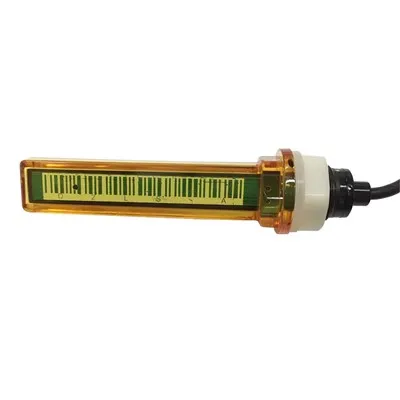
How Does a Liquid Level Gauge Work in an LPG Container? Complete Technical Guide
In this guide: How liquid level gauges measure fuel levels inside LPG (Liquefied Petroleum Gas) containers, the science behind each measurement technology-ultrasonic, pressure-based, float, weight, and capacitance methods-why traditional LPG tank gauges are often inaccurate, how modern smart gauges improve precision, and answers to the most commonly asked questions about LPG container liquid level measurement.
The Challenge of Measuring LPG Inside a Sealed Container
Measuring the liquid level inside an LPG container is deceptively difficult. Unlike measuring water in a transparent container, LPG is stored under pressure as a liquid inside a sealed steel, aluminum, or composite vessel. You cannot see the fuel. You cannot reach it. You must measure it through the container wall-or through the tank's valves and fittings-without compromising the seal that keeps the fuel pressurized and safe.
This physical challenge is why LPG container liquid level measurement has historically been imprecise. Traditional LPG tank gauges measure vapor pressure-a proxy for level-and deliver accuracy that is acceptable for rough estimation but inadequate for modern energy management. Understanding how liquid level gauges work in LPG containers requires understanding both the physics of stored LPG and the engineering solutions that have emerged to measure it accurately.
This guide explains every major LPG liquid level measurement technology in use today: how each works, why each has strengths and limitations, where modern smart gauges have improved on traditional methods, and what the most accurate LPG level monitoring solutions deliver in 2026.
Understanding LPG: The Fuel Inside the Container
LPG-Liquefied Petroleum Gas-is a mixture of propane and butane stored under pressure as a liquid inside pressurized containers. Understanding its physical properties is essential for understanding how level gauges work.
The Physics of Stored LPG
Inside an LPG container, propane exists in two phases simultaneously:
| Phase | Position | Properties |
|---|---|---|
| Liquid phase | Bottom of tank (85% of capacity) | Dense, ~4.2 lbs/gallon at 70°F, flows under gravity |
| Vapor phase | Top of tank (ullage space) | Gaseous, low density, exerts pressure on liquid |
The critical physical property: LPG liquid evaporates continuously until the vapor reaches equilibrium pressure (~110 PSI at 70°F for propane). At equilibrium, the rate of evaporation equals the rate of condensation. This equilibrium pressure is what makes LPG containers pressurized-and what makes measuring liquid level through pressure inherently complicated.
Why LPG Liquid Level Measurement Is Unique
The combination of pressure, temperature, and phase coexistence creates measurement challenges that do not exist with most other liquids:
LPG is stored under pressure: The container is sealed and pressurized. Any internal measurement device must be rated for the container's operating pressure.
Two phases coexist: A liquid-vapor interface exists at all fill levels. The liquid surface is flat and horizontal-which makes ultrasonic measurement possible-but the interface condition changes as the tank empties.
LPG vapor pressure varies dramatically with temperature: At 0°F, propane vapor pressure is ~30 PSI. At 100°F, it is ~180 PSI. This temperature-dependent pressure is the primary reason pressure-based level gauges are inherently inaccurate.
The liquid is not pure propane: LPG blends vary by region and season. Propane/butane ratios change, which affects liquid density, vapor pressure, and how sensors interpret the measurement.
LPG containers vary in geometry: Vertical cylinders, horizontal ASME tanks, motorhome-mounted horizontal tanks, portable BBQ cylinders, and underground tanks all have different geometries that affect level measurement calculations.
How Traditional LPG Tank Gauges Work: The Pressure Method
The most common and oldest method for measuring LPG container liquid level is the pressure gauge-a device that measures the vapor pressure inside the tank's ullage space and converts it to an estimated fill percentage.
The Pressure Measurement Principle
A traditional LPG tank gauge is installed on the container's service valve or vapor service port and measures the pressure of the LPG vapor in the space above the liquid. The gauge displays this pressure as a percentage of full, based on the assumption that pressure correlates predictably with fill level.
The theoretical basis: At constant temperature, a fuller tank has more liquid evaporating, which should produce slightly higher vapor pressure than a less-full tank. The pressure gauge uses this relationship to estimate fill level.
Why Pressure-Based LPG Gauges Are Inherently Inaccurate
The pressure measurement method is fundamentally flawed for LPG liquid level measurement because vapor pressure inside an LPG container is dominated by temperature-not fill level. Here is why:
At 70°F, a 20% full tank and a 60% full tank have nearly identical vapor pressures. The reason: both tanks reach the same equilibrium vapor pressure determined by temperature, not by how much liquid is evaporating. More liquid means more surface area-but at equilibrium, the vapor pressure is set by temperature alone.
The pressure gauge is actually measuring temperature, not level. This is why:
A full tank in cold weather reads low
An empty tank in hot weather can read higher than expected
Two identical tanks at the same fill level but different temperatures show different readings
Temperature Effects on Pressure-Based LPG Gauges
| Temperature | Actual Fill Level | Pressure Gauge Reading | Error |
|---|---|---|---|
| 70°F | 50% | 50% | 0% |
| 30°F | 50% | 20–25% | -25 to -30% |
| 30°F | 80% | 55–60% | -20 to -25% |
| 100°F | 50% | 65–70% | +15 to +20% |
| 0°F | 50% | 5–10% | -40 to -45% |
The takeaway: At temperature extremes, pressure-based LPG gauges can be wrong by 40–50%. A tank that reads "empty" on a cold morning may be half full.
Ultrasonic LPG Liquid Level Gauges: The Modern Standard
Ultrasonic liquid level gauges represent the modern standard for accurate LPG container measurement. By measuring the actual liquid surface position rather than vapor pressure, ultrasonic gauges deliver accuracy that pressure gauges cannot match-regardless of temperature.
How Ultrasonic LPG Gauges Work
An ultrasonic LPG liquid level gauge measures the distance from the sensor (mounted on the outside of the tank) to the LPG liquid surface inside the container. This is the same sonar principle used in depth finders, submarine navigation, and medical imaging.
The measurement process:
Ultrasonic pulse emission: The gauge's piezoelectric transducer emits a short ultrasonic pulse (~40 kHz) downward from its position on the outside of the LPG container.
Tank wall penetration: The ultrasonic pulse passes through the container wall-steel, aluminum, or composite-with minimal attenuation (~1–3% signal loss). Both the tank wall and LPG are transparent to ultrasound at these frequencies.
Vapor space traversal: The pulse travels through the LPG vapor space above the liquid surface. LPG vapor (propane and butane gas) is essentially transparent to ultrasound at low frequencies.
Liquid surface reflection: At the liquid-vapor interface, the ultrasonic pulse reflects. The flat, horizontal liquid surface of LPG creates a clean, predictable reflection-the ideal acoustic target.
Return signal: The reflected pulse returns to the sensor along the same path. The sensor's transducer receives the returning signal.
Time-of-flight calculation: The gauge measures the total round-trip travel time. Using the known speed of sound in LPG vapor (approximately 840 ft/s at 70°F), it calculates the distance from the sensor to the liquid surface.
Fill percentage conversion: The gauge converts the measured distance to a fill percentage using the container's known geometry (dimensions, shape, orientation). This geometry data is entered during gauge setup.
The Temperature Compensation Challenge for Ultrasonic LPG Gauges
The speed of sound in LPG vapor changes with temperature-just as it does in air. At 0°F, sound travels slower through LPG vapor. At 100°F, it travels faster. An ultrasonic gauge that does not compensate for temperature would produce temperature-dependent errors.
Modern ultrasonic LPG gauges solve this with:
An onboard thermistor that continuously measures temperature
Real-time temperature compensation that adjusts the speed-of-sound calculation for current temperature
Calibration curves validated across the full operating temperature range
With proper temperature compensation, ultrasonic LPG gauges maintain 90–98% accuracy across the full range from -40°F to +140°F-without the dramatic errors that affect pressure-based gauges.
Why Ultrasonic Is the Right Technology for LPG Containers
Ultrasonic measurement is particularly well-suited for LPG containers for several reasons:
LPG's liquid surface is ideal: The liquid-vapor interface inside a stationary LPG container is flat and horizontal-exactly what ultrasonic sensors need for clean, accurate reflections.
Ultrasonic passes through tank walls: Unlike float-based or capacitive methods, ultrasonic sensors mount externally on the tank wall-requiring no tank modification and no penetration of the pressure vessel.
LPG vapor is acoustically transparent: Unlike some gases that absorb ultrasound, LPG vapor (propane and butane) does not significantly attenuate the ultrasonic pulse.
Temperature compensation is achievable: The temperature-dependent speed of sound variation is well-characterized and easily compensated with an onboard temperature sensor.
Float-Based LPG Liquid Level Gauges
Float-based liquid level gauges use a physical buoyant float that rests on the LPG liquid surface, with the float's vertical position indicating the fill level.
How Float-Based LPG Gauges Work
A float (typically a hollow sphere or cylinder made of compatible material) sits on the liquid LPG surface and rises and falls with the liquid level. The float is connected to a magnetic or mechanical position sensor that converts the float's position into an electrical signal or mechanical dial reading.
Common configurations:
External magnetic float gauge: A magnetic float inside a vertical tube on the tank exterior rises and falls with the liquid level, moving a magnetic follower on the outside of the tube
Internal float with stem: A float rod extends from the tank interior through a sealed penetration to an external indicator
Servo-operated tank level gauge: A precision servo motor positions a float and reports the position electronically
Limitations of Float-Based LPG Gauges
Float-based gauges have several significant limitations for LPG containers:
| Limitation | Impact |
|---|---|
| Tank penetration required | Internal float systems require a penetration point in the pressure vessel, creating a potential leak path |
| Not suitable for horizontal tanks | Float rods are gravity-dependent and do not work correctly on horizontal tank geometries |
| Temperature sensitivity | Float materials have thermal expansion properties that can affect accuracy |
| Limited to vertical tanks | Float gauges are generally restricted to large vertical LPG storage tanks, not consumer cylinders |
| Mechanical wear | Moving parts wear over time, reducing accuracy and reliability |
Float-based gauges are common in large commercial and industrial LPG storage tanks but are rarely used in consumer LPG containers (home tanks, RV tanks, BBQ cylinders) because of their complexity and installation requirements.
Weight-Based LPG Liquid Level Gauges
Weight-based LPG liquid level measurement is one of the most accurate methods available-because it directly measures mass, not a proxy variable.
How Weight-Based LPG Measurement Works
A weight-based LPG gauge measures the total weight of the container (tank + fuel) and subtracts the known empty weight (tare weight) of the tank. The remaining weight is the LPG weight. Dividing by LPG's known density (approximately 4.2 lbs/gallon for propane at 70°F) gives the volume.
Calculation formula:
code复制
LPG weight = Total weight − Tare weight LPG gallons = LPG weight ÷ 4.2 lbs/gallon Fill percentage = LPG gallons ÷ Tank water capacity × 100
Example:
Total weight of tank on scale: 37.8 lbs
Tare weight (from tank collar): 18.5 lbs
LPG weight: 19.3 lbs
LPG gallons: 19.3 ÷ 4.2 = 4.6 gallons
Tank water capacity: 47.6 lbs ÷ 8.33 = 5.71 gallons
Fill percentage: (4.6 ÷ 5.71) × 100 = 80.5%
Weight-Based Gauges: Accuracy and Limitations
Weight-based measurement achieves 92–97% accuracy because it directly measures mass rather than inferring it. Temperature has essentially no effect on the weight measurement itself.
The fundamental limitation: The tank must be on a scale or have load cells installed at its mounting points. This makes weight-based measurement impractical for:
Permanently mounted above-ground residential tanks
Underground LPG tanks
RVs with fixed-mounted horizontal tanks
Any tank that is not easily accessible for weighing
Where weight-based measurement excels: Portable LPG cylinders (BBQ tanks, camping cylinders) and applications where tanks are regularly removed for filling.
Capacitance-Based LPG Liquid Level Gauges
Capacitance-based liquid level gauges measure the electrical capacitance between sensors mounted on or near the tank walls. The capacitance changes depending on whether the space between the sensors contains LPG liquid, LPG vapor, or air.
How Capacitance LPG Gauges Work
Capacitance is a measure of a capacitor's ability to store electrical charge. A capacitance level sensor has two electrodes (conductive strips, wires, or plates) with an insulating gap between them. The gap is filled with whatever material is present-air, LPG vapor, or LPG liquid.
The key property: LPG liquid has a different dielectric constant than LPG vapor or air. When the electrodes are immersed in liquid LPG, the capacitance is higher than when they are in vapor or air. By measuring capacitance continuously, the gauge determines the liquid level.
Advantages and Limitations of Capacitance Gauges
| Advantage | Limitation |
|---|---|
| No moving parts | Requires electrodes mounted inside or near the tank |
| Works at extreme temperatures and pressures | Installation complexity for external mounting |
| Suitable for any tank geometry | Calibration can be affected by LPG blend variations |
| Fast response time | Less common in consumer applications |
Capacitance gauges are more common in industrial LPG applications and in newer smart gauge products that are emerging as alternatives to ultrasonic measurement.
Modern Smart LPG Liquid Level Gauges
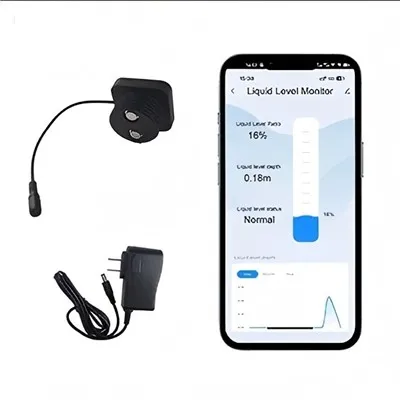
The latest generation of LPG liquid level gauges combines ultrasonic measurement with cellular connectivity, smartphone apps, and cloud data platforms-delivering the most accurate, most convenient, and most capable LPG monitoring experience available in 2026.
What Makes a Gauge "Smart"
A smart LPG liquid level gauge is an ultrasonic gauge with built-in connectivity and intelligence:
| Feature | Description |
|---|---|
| Ultrasonic measurement | 90–98% accuracy, direct liquid surface measurement |
| Wireless connectivity | Bluetooth, WiFi, or cellular data transmission |
| Smartphone app | Real-time level display, alerts, historical data |
| Cloud data storage | Usage history, consumption trends, delivery tracking |
| Automated alerts | Low-fuel push notifications to your phone |
| Temperature compensation | Real-time adjustment for temperature effects |
| Multi-tank support | Monitor multiple tanks from a single app |
Leading Smart LPG Gauge Products
| Product | Measurement | Connectivity | Accuracy | Best For |
|---|---|---|---|---|
| Mopeka Pro Check | Ultrasonic | Bluetooth LE | 95–98% | Consumer cylinders and tanks |
| Generac 7009 LTE | Ultrasonic | 4G LTE cellular | 90–95% | Remote monitoring anywhere |
| Mopeka Hub | Ultrasonic | WiFi bridge | 95–98% | Multi-tank households |
| Tank Utility | Ultrasonic | Cellular | 85–93% | Commercial and consumer delivery management |
LPG Container Types and Their Gauge Compatibility
Different LPG container types require different gauge technologies and mounting methods:
| Container Type | Common Gauge Type | Mounting Method | Accuracy |
|---|---|---|---|
| BBQ propane cylinder (20 lb) | Ultrasonic or pressure gauge | Magnetic or valve thread | 70–98% |
| RV horizontal ASME tank | Ultrasonic (horizontal-calibrated) | Bolt-on bracket | 90–98% |
| Home above-ground tank (100–500 gal) | Ultrasonic or pressure gauge | Magnetic or bolt-on | 70–98% |
| Portable camping cylinder | Pressure gauge (integrated) | Valve-integrated | 70–80% |
| Commercial bulk storage tank | Float, servo, or radar gauge | Fixed internal mounting | 92–99% |
| Underground LPG tank | Fixed internal gauge | Supplier-installed internal system | 95–98% |
Frequently Asked Questions
Q1: Why do LPG tank gauges read differently in hot and cold weather?
Traditional LPG tank gauges measure vapor pressure, and vapor pressure changes dramatically with temperature. At cold temperatures, vapor pressure drops even in a full tank, causing the gauge to read low. At high temperatures, vapor pressure increases even in an empty tank, causing the gauge to read higher. This is not a gauge defect-it is physics. Ultrasonic LPG gauges measure the actual liquid surface, so temperature has a minimal effect on their readings.
Q2: Can ultrasonic gauges work on horizontal LPG containers?
Yes-ultrasonic gauges work on horizontal LPG containers when configured correctly. The gauge must be calibrated for horizontal tank geometry (the fill percentage calculation algorithm differs for horizontal tanks). Products like the Mopeka RC1 and Mopeka Pro Check Universal are specifically designed for horizontal LPG tanks. The sensor mounts at the bottom center of the horizontal axis, and the app is configured to select the horizontal tank option.
Q3: What is the most accurate way to measure LPG level at home?
Ultrasonic LPG liquid level gauges (such as the Mopeka Pro Check) deliver the most accurate consumer-grade LPG level measurement available at 95–98% accuracy. The next most accurate method is weight-based measurement using a scale (92–97% accuracy), which is practical for portable cylinders but not for permanently mounted tanks. All consumer-grade ultrasonic gauges significantly outperform traditional pressure-based gauges (70–85% accuracy).
Q4: Do LPG liquid level gauges work on all LPG blends?
Most commercial LPG liquid level gauges are calibrated for propane as the reference fuel. LPG is typically a propane/butane blend, and the blend ratio varies by region and season. Butane has a lower vapor pressure than propane at the same temperature. This can cause minor accuracy variations on gauges calibrated specifically for propane-but the effect is small (typically ±2–3% for normal propane/butane blends) compared to the ±40% errors from temperature effects on pressure gauges.
Q5: How often should an LPG liquid level gauge be calibrated?
Factory-calibrated ultrasonic LPG gauges (Mopeka, Generac, Tank Utility) do not require user calibration. The factory calibration is stored in the gauge's firmware and accounts for the sensor's specific characteristics and typical tank geometries. Calibration should only be checked:
After a firmware update that includes calibration changes
If accuracy seems noticeably degraded
When switching between significantly different tank types
Pressure-based gauges should be inspected periodically for physical damage, corrosion, and calibration drift. Professional pressure gauge calibration is recommended every 2–5 years.
Q6: Can I install an LPG liquid level gauge myself?
Yes-for most consumer-grade ultrasonic LPG gauges, self-installation is straightforward. Magnetic mount sensors (for steel tanks) take 10–15 minutes. Bolt-on bracket installations (for aluminum and composite tanks) take 30–45 minutes and require a drill and basic tools. Both are within the capability of most homeowners. Professional installation is recommended for fixed internal gauge systems, commercial tanks, and any installation involving permanent gas line modifications.
Q7: What happens to LPG liquid level measurement in extreme cold?
Extreme cold affects LPG containers in two ways that impact level measurement:
Propane vaporization slows: Below 44°F, propane vaporization rate decreases. Below 0°F, vaporization may nearly stop. This is a fuel delivery issue, not a measurement issue-the gauge reading is accurate, but the tank cannot deliver fuel fast enough.
Pressure drops: At very low temperatures, tank pressure drops significantly. Pressure-based gauges will read very low regardless of actual fill level. Ultrasonic gauges are largely unaffected and continue to read accurately.
For cold-climate LPG users, ultrasonic gauges are essential because they continue to deliver accurate level information regardless of temperature-while pressure gauges become essentially useless in cold weather.
Bottom Line: Choosing the Right LPG Liquid Level Gauge
LPG liquid level gauge technology has evolved dramatically, and the gap between traditional pressure gauges and modern smart gauges is enormous.
The accuracy hierarchy:
Pressure-based gauges: 70–85% accuracy, temperature-dependent errors up to ±40%
Weight-based measurement: 92–97% accuracy, limited to portable tanks
Ultrasonic smart gauges: 90–98% accuracy, minimal temperature dependence
Industrial gauges (radar, servo): 95–99% accuracy, commercial/industrial use
For most consumers, an ultrasonic smart LPG gauge (Mopeka Pro Check or Generac 7009 LTE) delivers the best combination of accuracy, convenience, and value. For cold-climate users, ultrasonic is not a preference-it is a necessity. For portable BBQ and camping cylinders, weight-based verification (a simple scale) provides the most accurate reading available.
Whatever gauge technology you choose, the principle is the same: You cannot manage your LPG supply effectively if you cannot see its level accurately. Modern ultrasonic gauges give you that visibility-with accuracy that makes proactive LPG management possible for the first time.
Last updated: July 2026
Disclaimer: This guide provides general information about how liquid level gauges work in LPG containers for educational purposes. LPG measurement technologies, accuracy specifications, and product features are subject to change. Always verify current specifications from the manufacturer's official documentation. LPG systems involve pressurized fuel and must be installed, maintained, and used in accordance with applicable regulations and manufacturer guidelines. Consult a licensed LPG professional for installation, modification, and maintenance of LPG container equipment.