How to Know When a Small Propane Tank Is Empty: Complete 2026 Guide to Portable Cylinder Level Checking
In this guide: Everything you need to know about how to know when a small propane tank is empty - covering 1-pound and 20-pound cylinders, the weigh test, hot water trick, slosh test, flame behavior, smart monitors, and the complete FAQ guide for 2026.
How to Know When a Small Propane Tank Is Empty: Quick Answer
You can know when a small propane tank is empty using four reliable methods: (1) the weigh test - weigh the tank, subtract the tare weight (stamped "TW" on the collar), divide by 4.2 to get gallons remaining; (2) the hot water trick - pour warm water down the tank, the cold section below the propane line shows the level; (3) the slosh test - shake a small cylinder and listen for liquid sloshing inside; and (4) flame behavior - weak yellow flames instead of strong blue mean the tank is nearly empty. The most accurate method for small tanks is the weigh test (±1–3% accuracy), which works on any portable cylinder. For 1-pound disposable cylinders, which cannot be weighed easily or refilled, the only practical methods are the slosh test and flame behavior. For 20-pound BBQ cylinders, the weigh test or a magnetic smart monitor (Mopeka Pro Check, ±3–5%) gives the most reliable reading. A 20-pound tank is empty at approximately 17.0 pounds total weight (its tare weight) - when the scale reads under 19 pounds, you have less than one gallon left.
Understanding Small Propane Tank Types
What Counts as a "Small" Propane Tank
Small propane tanks - also called portable propane cylinders - are the cylinders used for grills, camping stoves, portable heaters, torches, and RV appliances. They differ from the large stationary tanks (250–1,000 gallons) used for home heating. Understanding your tank type determines which methods work best.
| Tank Type | Common Use | Capacity | Tare Weight (TW) | Empty Signal |
|---|---|---|---|---|
| 1 lb disposable cylinder | Camping stoves, torches | 0.24 gal | 1.0–1.4 lbs | Cannot weigh; slosh/flame only |
| 5 lb cylinder | Portable heaters, small grills | 1.2 gal | 8–10 lbs | < 9.5 lbs total |
| 11 lb cylinder | Portable grills, marine | 2.6 gal | 13–15 lbs | < 14.5 lbs total |
| 20 lb cylinder | BBQ grills, RV | 4.7 gal | 16.5–18.5 lbs | < 19.5 lbs total |
| 30 lb cylinder | RV, larger grills | 7.1 gal | 24–28 lbs | < 27.5 lbs total |
| 40 lb cylinder | Forklifts, large RV | 9.4 gal | 28–32 lbs | < 33.0 lbs total |
Note: All portable cylinders are filled to 80% of water capacity by law (the 80% fill rule), leaving 20% vapor space for expansion. A "full" 20-pound cylinder holds 4.7 gallons of propane (20 lbs ÷ 4.2 lbs/gal), not 5.9 gallons of water capacity.
Method 1: The Weigh Test (Most Accurate for Small Tanks)
The Gold Standard for Portable Cylinders
The weigh test is the most accurate method for determining how much propane is left in a small tank. It works on every refillable cylinder, requires only a scale, and is more accurate than any built-in gauge or monitor.
The Weigh Test Formula
code复制
Propane pounds left = Total weight − Tare weight (TW) Propane gallons left = Propane pounds left ÷ 4.2 lbs/gallon Fill percentage = Propane gallons left ÷ Tank capacity (gallons) × 100
Why 4.2 pounds per gallon? Propane has a density of approximately 4.2 pounds per gallon at 60°F. This physical constant is the foundation of all propane weight calculations.
Worked Example - 20-Pound BBQ Cylinder
| Step | Calculation | Result |
|---|---|---|
| Weigh the tank | Bathroom scale | 29.5 lbs |
| Find tare weight | TW on collar | 17.0 lbs |
| Subtract tare | 29.5 − 17.0 | 12.5 lbs propane |
| Convert to gallons | 12.5 ÷ 4.2 | 2.98 gallons |
| Calculate percentage | 2.98 ÷ 4.7 × 100 | 63% full |
Worked Example - 5-Pound Cylinder
| Step | Calculation | Result |
|---|---|---|
| Weigh the tank | Luggage scale | 15.0 lbs |
| Find tare weight | TW on collar | 9.0 lbs |
| Subtract tare | 15.0 − 9.0 | 6.0 lbs propane |
| Convert to gallons | 6.0 ÷ 4.2 | 1.43 gallons |
| Calculate percentage | 1.43 ÷ 1.2 × 100 | 119% (overfilled - check) |
If your calculation shows over 100%, the tank may have been overfilled (illegal) or the tare weight on your tank differs from the assumed value. Verify the actual TW stamped on the collar.
Practical Weighing Tips for Small Tanks
| Tool | Best For | Accuracy | Tip |
|---|---|---|---|
| Bathroom scale | 20–40 lb cylinders | ±0.5 lb | Weigh tank + yourself, subtract your weight |
| Luggage scale (hook) | 1–40 lb cylinders | ±0.2 lb | Hook the tank handle, lift, read |
| Kitchen scale | 1 lb cylinders | ±0.1 oz | Weigh the whole cylinder directly |
| Postal scale | 1–5 lb cylinders | ±0.1 oz | Direct weigh, most precise for small |
Community tip: Write the tare weight on a piece of tape on the tank so you never have to squint at the stamped collar. Another popular hack: weigh the full tank once, write that weight on the tank, and you can calculate percentage directly from any future weighing without doing the tare subtraction.
Method 2: The Hot Water Trick
The Best Free Method Without a Scale
The hot water trick is the most popular free method for checking small propane tank levels - especially for BBQ cylinders where you may not have a scale handy. It works on any steel or aluminum cylinder (not plastic or composite).
How to Perform the Hot Water Trick
Heat water to a safe temperature (warm tap water, not boiling - boiling water can damage the tank valve or hurt you)
Pour the hot water down one side of the propane tank, from top to bottom
Wait 3–5 seconds for the water to cool and the temperature difference to develop
Run your hand slowly down the same side of the tank
The tank will feel warm above the propane level (vapor space) and cold below the propane level (liquid propane)
The point where the temperature changes is the propane liquid surface
Why this works: Liquid propane is extremely cold - it boils at -44°F. Where liquid propane is inside the tank, it rapidly absorbs heat from the warm water, leaving that section cold to the touch. Above the liquid line, only propane vapor is present, which does not absorb heat as effectively, so the tank stays warm where you poured the water.
Hot Water Trick Accuracy by Tank Type
| Tank Type | Test Effectiveness | Accuracy |
|---|---|---|
| 20 lb steel cylinder | Excellent | ±10–15% |
| 5 lb steel cylinder | Excellent | ±10–15% |
| 1 lb steel cylinder | Good | ±15–20% |
| Aluminum cylinder | Good | ±10–15% |
| Composite/plastic tank | Poor | N/A (insulates) |
Limitation: The hot water trick gives a rough estimate - "roughly half full" or "nearly empty" - not a precise gallon count. Use it as a quick check before a cookout, not for refill planning.
Method 3: The Slosh and Sound Test
For 1-Pound and Small Cylinders
The slosh test is the only practical method for 1-pound disposable cylinders (which cannot be weighed easily and cannot be refilled) and a useful backup for larger small cylinders.
How to Perform the Slosh Test
Hold the cylinder horizontally or tilt it at a 45-degree angle
Gently shake or rock the cylinder
Listen for and feel the liquid propane sloshing inside
Interpreting the slosh:
Loud, heavy slosh: Tank is more than half full - significant liquid present
Light, short slosh: Tank is less than half full - small amount of liquid
No slosh, only a faint hiss: Tank is nearly empty - vapor only, no liquid
Accuracy: The slosh test is the least accurate method for small tanks (±20–30%). It is useful for a "do I have enough for one more cook?" check but never for precise measurement.
Special note for 1-pound cylinders: Because 1-pound cylinders are small and lightweight, the slosh is easy to feel. A 1-pound cylinder that sloshes heavily has roughly half its contents (about 0.12 gallons); one that feels empty with only a hiss has less than 0.02 gallons - effectively done.
Method 4: Flame Behavior (The Last Warning)
What Your Appliance Tells You
The most common way people discover a small propane tank is empty is through flame behavior - the appliance tells you. This is the last warning, not the first.
Flame Behavior Signs of a Nearly Empty Small Tank
| Symptom | What It Means | Approximate Level |
|---|---|---|
| Weak, yellow, flickering flames | Low pressure from low propane | 5–10% remaining |
| Burner goes out when second burner lit | Insufficient pressure for demand | 3–8% remaining |
| Flame shrinks gradually then sputters out | Tank emptying during use | 1–5% remaining |
| Appliance won't light at all | No usable pressure | < 1% (effectively empty) |
| Rotten egg smell when trying to light | Last vapor exiting, mercaptan odor | < 1% (effectively empty) |
Why flame behavior is the last warning: By the time the flame changes color or pressure drops, the tank is at 5–10% or less. You have enough propane for maybe one more short use - not enough to rely on. Use flame behavior as a backup signal, and check the level (weigh test or hot water trick) before your next use.
Method 5: Smart Monitors for Small Tanks
The Hands-Off Option for 20-Pound Cylinders
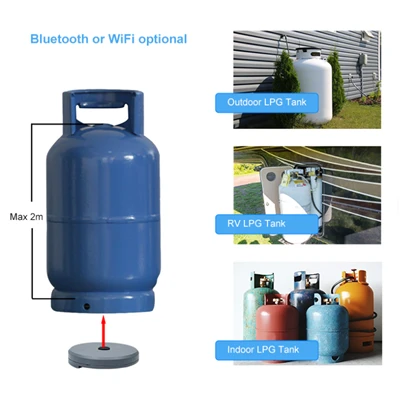
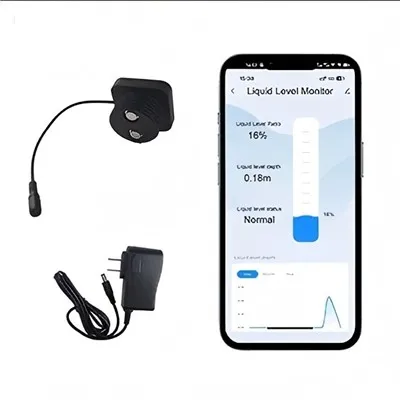
Smart propane monitors can be used on small refillable cylinders (especially 20-pound BBQ cylinders) to provide continuous level tracking with phone alerts. They eliminate manual checking entirely.
Best Smart Monitors for Small Tanks
| Monitor | Type | Accuracy | Connectivity | Price | Best For |
|---|---|---|---|---|---|
| Mopeka Pro Check | Magnetic ultrasonic | ±3–5% | BLE → Hub → WiFi | $89–$129 | 20 lb steel cylinders |
| Mopeka Standard | Magnetic ultrasonic | ±5–8% | BLE → Hub → WiFi | $74–$109 | Budget 20 lb monitoring |
| Generac G0070090 | LTE cellular | ±5–8% | Direct cellular | $199–$249 | Remote/small tanks w/o WiFi |
| External float gauge | Mechanical | ±10–15% | None (visual) | $15–$40 | BBQ tank quick check |
How they work on small tanks: The Mopeka Pro Check mounts magnetically on the bottom of a 20-pound steel cylinder. It emits an ultrasonic pulse through the tank wall, measures the distance to the liquid propane surface, and sends the reading via Bluetooth to a Hub, which forwards it to your phone. Set the alert at 20% and you get a notification before the tank runs dry.
Limitation for 1-pound cylinders: Smart monitors do not work on 1-pound disposable cylinders - they are too small, the wall material may not transmit the ultrasonic signal well, and they are not refillable. Use the slosh test or flame behavior for 1-pound cylinders.
Comparison of All Methods for Small Tanks
Which Method Should You Use?
| Method | Accuracy | Cost | Effort | Works on 1 lb | Works on 20 lb |
|---|---|---|---|---|---|
| Weigh test | ±1–3% | Free (scale) | 5 min | ✅ (kitchen scale) | ✅ |
| Hot water trick | ±10–15% | Free | 5 min | ✅ | ✅ |
| Slosh test | ±20–30% | Free | 1 min | ✅ | ✅ |
| Flame behavior | Last warning | Free | Instant | ✅ | ✅ |
| Smart monitor | ±3–8% | $74–$249 | 5 min install | ❌ | ✅ |
The 20% Rule for Small Tanks
Never Wait for the Flame to Die
The 20% rule applies to small tanks just as much as large ones: order a refill or swap your tank when it reaches 20–25%, never at empty. Here is why it matters for portable cylinders:
Grill run-out ruins cookouts: A tank reading "low" via weigh test at 20% still has about 0.94 gallons (4 lbs) - enough for a short cook, but not a long one. Swap before you start.
Exchange tanks are never full: Blue Rhino and AmeriGas exchange tanks are filled to 15 pounds (not 20) - about 3.6 gallons. A swapped tank reads "full" but has 25% less than a refill.
Cold weather reduces output: In winter, propane pressure drops, so a tank that worked fine in summer may sputter in January even at 20%.
Running dry wastes the tank: A completely empty 20-pound cylinder still has residual vapor; suppliers cannot always refill a totally empty tank without a purge - some exchange programs reject "too empty" tanks.
For weigh test users: When a 20-pound cylinder weighs 22.4 pounds (22.4 − 17.0 = 5.4 lbs ÷ 4.2 = 1.29 gal ÷ 4.7 = 27% full), swap it. For a 5-pound cylinder at 11.4 pounds (11.4 − 9.0 = 2.4 lbs ÷ 4.2 = 0.57 gal ÷ 1.2 = 48% full), you have a bit more time.
Frequently Asked Questions
Q1: How do I know when a 1-pound propane cylinder is empty?
A 1-pound disposable propane cylinder cannot be weighed easily (too light for most scales) and cannot be refilled, so the practical methods are the slosh test and flame behavior. For the slosh test: hold the cylinder, tilt it 45 degrees, and shake gently. A heavy slosh means roughly half full (about 0.12 gallons); a faint slosh means nearly empty; no slosh with only a hiss means the tank is done. For flame behavior: when the appliance flame turns weak and yellow or won't stay lit, the 1-pound cylinder is effectively empty. Because 1-pound cylinders are small, the slosh is easy to feel - most campers develop a feel for "enough for one more meal" vs. "done." Always carry spare 1-pound cylinders on camping trips rather than relying on estimating a single cylinder's remaining life.
Q2: How do I know when a 20-pound BBQ propane tank is empty?
A 20-pound BBQ propane tank is empty when the scale reads approximately 16.5–18.5 pounds - the tare weight stamped "TW" on the collar (typically 17.0 pounds). Using the weigh test: weigh the tank, subtract 17.0, and if the result is less than 1.0 pound, the tank is effectively empty (under 0.24 gallons). Practical signs an empty 20-pounder gives you: the grill flame turns weak and yellow instead of strong blue, the burner goes out when you light a second burner, the tank feels unusually light when lifted, and you may smell the rotten-egg mercaptan odor as the last vapor exits. For BBQ users who hate running out mid-cook, keep a spare full tank and use the weigh test or hot water trick on the primary tank before each cook.
Q3: Is the hot water trick accurate for small propane tanks?
The hot water trick is accurate to approximately ±10–15% on small steel and aluminum propane tanks - good enough to decide "half full or nearly empty" but not precise enough for exact gallons. It works because liquid propane is extremely cold (boiling at -44°F), so the part of the tank containing liquid propane pulls heat from the warm water and feels cold, while the vapor section above stays warm. It works on steel and aluminum cylinders but not on plastic or composite tanks (they insulate the temperature change). For a 20-pound BBQ tank, the hot water trick is the best free method when you don't have a scale. For precise measurement, use the weigh test (±1–3%) or a smart monitor (±3–5%).
Q4: Why does my small propane tank flame get weak before the tank is empty?
A weak, yellow, flickering flame from a small propane tank means the tank is at 5–10% capacity or less - not completely empty, but nearly so. As the liquid propane level drops, there is less surface area for vaporization, so the tank cannot maintain sufficient vapor pressure to feed the burner at full rate. Cold weather makes this worse: at low temperatures, propane vapor pressure drops dramatically, so a tank that worked fine in summer may sputter in winter even at 20% full. Another cause: the tank is tilted or on its side (common with portable heaters), reducing the liquid surface area available for vaporization. If your flame weakens, check the level with the weigh test or hot water trick - do not assume the tank is "empty" if it still has some weight; swap it before your next cook and you won't get caught mid-meal.
Q5: Can I use a smart monitor on a small propane tank?
Yes - smart monitors work well on small refillable steel cylinders, especially 20-pound BBQ tanks. The Mopeka Pro Check ($89–$129 with Hub) mounts magnetically on the bottom of a 20-pound steel cylinder, measures level via ultrasonic technology with ±3–5% accuracy, and sends readings to your phone via the Mopeka app with free AI-powered refill predictions. Set the alert at 20% and you get a notification before the tank runs dry. The Generac G0070090 ($199–$249) connects directly to LTE cellular - no WiFi or Hub required - ideal for remote properties. Smart monitors do NOT work on 1-pound disposable cylinders (too small, non-refillable, wall material unsuitable). For 20-pound and larger refillable cylinders, a smart monitor is the best "never run out" solution - users report they have not run out since installing one and following the 20% alert rule.
The Bottom Line
You can know when a small propane tank is empty using four reliable methods. The weigh test is the most accurate (±1–3%) - weigh the tank, subtract the tare weight stamped on the collar, divide by 4.2, and you know exactly how many gallons remain. It works on every refillable cylinder from 1-pound to 40-pound. The hot water trick is the best free method without a scale - pour warm water down the tank, the cold section below the propane line reveals the level (±10–15% accuracy). The slosh test works for 1-pound cylinders and quick checks (±20–30%). Flame behavior - weak yellow flames - is the last warning most people get, signaling 5–10% or less. For 20-pound BBQ tanks, a smart monitor (Mopeka Pro Check or Generac G0070090) provides hands-off monitoring with automatic 20% alerts so you never run out mid-cook. Whatever method you use, follow the 20% rule: swap your tank at 20–25%, not at empty. A 20-pound tank is empty at approximately 17.0 pounds total weight - when your scale reads under 19 pounds, you have less than one gallon left and it is time to swap.
Last updated: July 2026
Disclaimer: This guide provides general information about checking small propane tank levels for educational purposes. Propane is a flammable gas - always exercise caution when operating, testing, or working near propane tanks and appliances. Never attempt to refill a 1-pound disposable cylinder (illegal and dangerous) or open/modify any propane system without professional certification. If you smell propane gas, evacuate the area immediately, do not operate electrical devices, and call your propane supplier or 911. This guide is not affiliated with, endorsed by, or sponsored by Mopeka, Generac, or any other referenced manufacturer.