How to Tell If a Propane Tank Is Full: 7 Proven Methods
Complete Guide to Checking Propane Levels in Any Tank-From Grill Tanks to 500-Gallon Residential Tanks
Introduction: Why Knowing If Your Propane Tank Is Full Matters
Knowing whether your propane tank is full is essential for:
Avoiding run-outs during winter or critical times
Verifying delivery accuracy after propane company fills your tank
Planning refills before you run low
Safety - knowing how much propane you have
Budgeting - tracking usage and planning costs
The Problem: Propane is invisible. You can't look inside a tank and see how much is left. Unlike water or gasoline, propane is stored as a pressurized liquid, and the tank is sealed. So how do you tell if it's full?
The Answer: There are 7 reliable methods to check propane tank levels, ranging from simple visual checks to high-tech remote monitoring. This guide covers ALL of them.
What You'll Learn:
| Method | Difficulty | Cost | Accuracy |
|---|---|---|---|
| #1: Tank Gauge (Dial) | Easy | Free (included) | ±5-10% |
| #2: Warm Water Test | Easy | Free | Approximate |
| #3: Weight Method | Moderate | Scale needed | ±1-2 lb |
| #4: Ultrasonic Sensor | Moderate | $65-250 | ±3-5% |
| #5: Remote Monitor | Easy | $65-250 | ±3-5% |
| #6: Delivery Ticket | Easy | Free | Exact fill amount |
| #7: Propane Delivery Service | Easy | Free | Exact fill amount |
What Does "Full" Actually Mean?
Propane Tank Fill Limits
Important: A "full" propane tank is NOT filled to 100% capacity. Propane is stored as a liquid and expands with temperature. Safety regulations limit fill levels to:
| Tank Type | Maximum Fill | Why |
|---|---|---|
| DOT cylinders (grill, RV tanks) | 80% of total capacity | 20% headspace for expansion |
| ASME tanks (residential, commercial) | 80-85% | Depends on tank design |
So a "full" tank typically reads 80% on the gauge.
Full by Tank Type
| Tank Type | Total Capacity | "Full" Level | Full Weight |
|---|---|---|---|
| 20 lb grill tank | 4.7 gallons | 80% = 3.8 gal | ~37-40 lb total |
| 30 lb RV tank | 7.1 gallons | 80% = 5.7 gal | ~55-58 lb total |
| 40 lb tank | 9.4 gallons | 80% = 7.5 gal | ~72-75 lb total |
| 120 gallon | 120 gallons | 80% = 96 gallons | N/A |
| 250 gallon | 250 gallons | 80% = 200 gallons | N/A |
| 500 gallon | 500 gallons | 80% = 400 gallons | N/A |
| 1000 gallon | 1000 gallons | 80% = 800 gallons | N/A |
Key Point: When the gauge reads 80%, the tank is "full." Don't expect 100%.
Method 1: Read the Tank Gauge (Dial)
Difficulty: Easy | Cost: Free | Accuracy: ±5-10% | Time: 30 seconds
Best For: All propane tanks with existing gauge (most residential and large grill tanks)
How to Find the Gauge
On Residential Tanks (120-1000+ gallon):
Look at the top of the propane tank
Find a round dial with numbers (usually 4-inch or 2-inch face)
The gauge is typically on or near the regulator assembly
On Grill Tanks (20-40 lb):
Some grill tanks have a built-in gauge in the valve
Look for a small dial on the valve handle
How to Read the Gauge
Step-by-Step:
Locate the gauge dial on the tank
Read the percentage or fraction shown
Compare to "full" :
80% = FULL (tank just filled)
50% = Half full
30% = Low (time to order refill)
20% = Critical (order immediately)
10% = Emergency (risk of run-out)
Gauge Face Layout:
code复制
Full ─ 80% │ │ │ │ │ │ │ │ Needle ─► │ │ │ │ └──┘ Red ── 10-20% Yellow ── 20-30% Green ── 30-80%
Gauge Color Zones
Most propane tank gauges are color-coded:
| Color Zone | Level | Meaning | Action |
|---|---|---|---|
| Green | 30-80% | Good range | No action needed |
| Yellow | 20-30% | Running low | Order propane soon |
| Red | 10-20% | Very low | Order immediately |
What If You Don't Have a Gauge?
No gauge on tank? Use one of the other methods below.
For grill tanks: Many older tanks don't have gauges. Use the hot water test (Method 2) or weight method (Method 3).
Gauge Reading Tips
Tip 1: Check in the right position
Stand directly in front of the gauge
Read perpendicular to the dial face (straight on)
Angle reading can be inaccurate
Tip 2: Tap the gauge
If needle seems stuck, gently tap the gauge face
Tapping can free a stuck needle
Don't hit too hard
Tip 3: Check consistency
Check gauge on different days
Needle should move slowly as propane is used
If needle hasn't moved in weeks, gauge may be stuck
Tip 4: Know gauge limitations
Mechanical gauges can be ±10% inaccurate
Magnetic gauges are more accurate
If gauge reading seems wrong, try another method
Method 2: Warm Water Test (For Grill Tanks)
Difficulty: Easy | Cost: Free | Accuracy: Approximate | Time: 2-3 minutes
Best For: Small propane tanks/cylinders without gauges (20-40 lb grill tanks)
How It Works
Propane is stored as a liquid. Wherever the liquid level is, the tank wall feels cold to the touch. When you pour warm water down the tank, the area above the liquid level heats up (and dries quickly), while the area below the liquid level stays cool (and stays wet longer).
Step-by-Step Instructions
What You Need:
A cup of warm water (not boiling, just warm tap water)
A towel or cloth (optional)
Steps:
Safety first: Ensure valve is closed and no propane smell
Pour warm water down the side of the tank
Pour from the top downward
Pour on a single vertical line
Feel the tank with your hand
Start from the top and slide down
The tank will feel warm where it's above the propane level
The tank will feel cool/cold where the propane liquid is inside
Mark the transition point
The spot where the tank changes from warm to cold is the propane level
This is where the liquid propane surface is inside
Estimate the fill percentage
If level is near the top → tank is nearly full
If level is near the bottom → tank is nearly empty
Level at the middle → tank is about half
Warm Water Test Diagram
code复制
┌────────────┐ │ WARM │ ← Above propane level (water dries quickly) │ ↑ │ │ DRY │ ├────┼───────┤ ← Propane liquid level (feels cold) │ ↓ │ │ COLD │ ← Inside propane liquid │ WET │ └────────────┘
How to Estimate Fill Level
| Tank Feeling | Approximate Level |
|---|---|
| Warm almost to bottom | Less than 25% full |
| Half warm, half cold | About 50% full |
| Warm only at top third | About 30-40% full |
| Cold most of the way down | 75%+ full |
| Cold all the way | 80%+ full |
Warm Water Test Tips
Do's:
✅ Use warm tap water (not boiling - boiling water could damage paint/protective coating)
✅ Pour in a straight vertical line for best results
✅ Feel with your hand immediately - the temperature difference is subtle
✅ Try on a cool/cold day for more pronounced temperature difference
Don'ts:
❌ Don't use boiling water (dangerous and unnecessary)
❌ Don't test near valve or connections
❌ Don't test in extremely cold weather (tank will feel cold everywhere)
When This Method Works Best
| Condition | Effectiveness |
|---|---|
| Cool weather (40-60°F) | ✅ Excellent |
| Cold weather (below 40°F) | ✅ Good (tank cold, water warm) |
| Warm weather (70+°F) | ⚠️ Less effective (tank is warm) |
| Very hot weather (90+°F) | ❌ Hard to detect temperature difference |
Alternative: If it's warm weather, try the opposite - feel for the cool line on the tank naturally. The portion below the propane level will be cooler to the touch.
Method 3: Weight Method
Difficulty: Moderate | Cost: Scale needed | Accuracy: ±1-2 lb | Time: 5 minutes
Best For: Small tanks and cylinders (20-40 lb grill tanks, RV tanks) that can be removed and weighed
How It Works
Propane tanks have a fixed empty weight (called "Tare Weight" or "TW" stamped on the tank). By weighing the full tank and subtracting the tare weight, you can calculate how much propane is inside.
What You Need
Bathroom scale or luggage scale
Propane tank (removable type)
Step-by-Step Instructions
Step 1: Find the Tare Weight (TW)
Look for a stamp on the tank collar or handle:
| Stamping | Meaning | Example |
|---|---|---|
| TW | Tare Weight (empty tank weight in lb) | TW 18.2 |
| WC | Water Capacity (tank capacity in lb) | WC 47.6 |
Step 2: Weigh the Tank
Place the tank on a bathroom scale
Record the total weight
Step 3: Calculate Propane Weight
code复制
Propane Weight = Total Weight - Tare Weight (TW)
Step 4: Calculate Fill Percentage
code复制
Fill Percentage = (Propane Weight ÷ Max Propane Weight) × 100
Where Max Propane Weight = 80% of water capacity (WC × 0.8 × actual propane density)
Simplified for 20 lb tanks:
| Total Weight | Propane Remaining | Fill Level |
|---|---|---|
| ~36-38 lb | ~17-19 lb | Nearly full (80%) |
| ~30 lb | ~11 lb | About half |
| ~25 lb | ~6 lb | About 25% |
| ~19-20 lb | 0 lb | Empty (tare weight) |
Weight Reference Chart
Standard 20 lb Grill Tank:
| Total Weight | Propane Remaining | Fill Level | Action |
|---|---|---|---|
| 37-40 lb | 17-20 lb | Full | Ready |
| 33-36 lb | 13-16 lb | 60-80% | Good |
| 29-32 lb | 9-12 lb | 40-60% | Okay |
| 25-28 lb | 5-8 lb | 20-40% | Order refill |
| 21-24 lb | 1-4 lb | 5-20% | Very low |
| 18-20 lb | 0 lb | Empty | Refill needed |
Note: Tare weight varies by brand. Check TW stamp on your specific tank.
| Tank Type | Typical TW | Full Weight | Empty Weight |
|---|---|---|---|
| 20 lb grill tank | 18-19 lb | 37-40 lb | 18-19 lb |
| 30 lb RV tank | 25-27 lb | 55-58 lb | 25-27 lb |
| 40 lb tank | 32-34 lb | 72-75 lb | 32-34 lb |
Weight Method Tips
Use a digital scale for best accuracy
Remove any covers, valves, or attachments before weighing
Weigh the tank when it's not connected to anything
Check TW stamp - it's different for every tank
Write the TW on your tank with a marker for easy reference
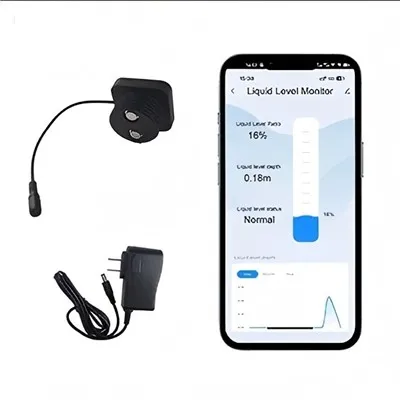
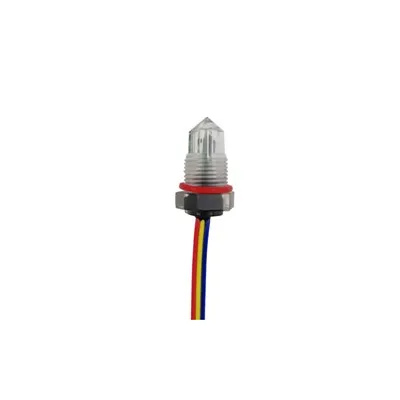
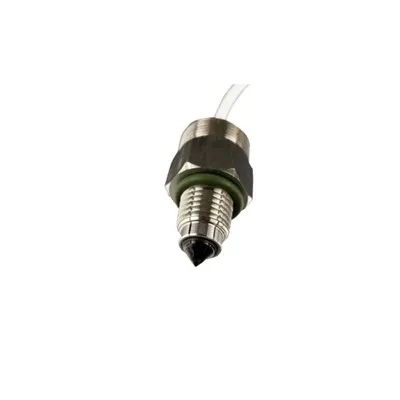
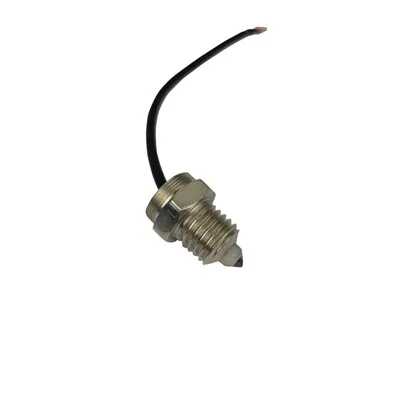
Method 4: Ultrasonic Sensor (Smart Monitor)
Difficulty: Easy (after installation) | Cost: $65-250 | Accuracy: ±3-5% | Time: Instant
Best For: Anyone wanting accurate, easy-to-check tank levels
Recommended Products
| Product | Type | Price | Accuracy | Monthly Fee |
|---|---|---|---|---|
| Mopeka Pro Check M1017012 | Bluetooth | $65-73 | ±5% | $0 |
| Mopeka Pro+ Cellular | Cellular | $199.99 | ±5% | $5-15/mo |
| Generac 4G LTE G0070090 | Cellular | $199-249 | ±3% | $0 ⭐ |
How Ultrasonic Sensors Work
Sensor mounts on bottom of propane tank
Emits ultrasonic sound wave through tank wall
Sound wave travels through propane liquid
Reflects off liquid surface
Measures return time to calculate liquid level
Displays percentage in app
Checking Level with Ultrasonic Sensor
For Bluetooth sensors (Mopeka Pro Check):
Open smartphone app
Must be within 10-30 feet of tank
App displays current level
Shows percentage and gallons remaining
For Cellular sensors (Generac 4G LTE, Mopeka Pro+):
Open smartphone app
Can check from anywhere
Level displayed instantly
Shows percentage, gallons, and usage data
Pros and Cons
Pros:
✅ Most accurate (±3-5%)
✅ Easy to read (smartphone app)
✅ Track usage over time
✅ Get alerts when low
✅ No guessing
Cons:
❌ Requires purchase of sensor
❌ Bluetooth sensors have limited range
❌ Cellular sensors may have monthly fees
❌ Installation required
Method 5: Remote Monitoring (App-Based)
Difficulty: Easy | Cost: $65-250 (device) | Accuracy: ±3-5%
Best For: Checking from anywhere, regular tracking, alert notifications
How It Works
A sensor is installed on the tank
Data is transmitted to your smartphone
App shows current level, usage history, and trends
Alerts notify you when tank is getting low
Top Remote Monitoring Products
| Product | Connection | Price | Monthly Fee | Best For |
|---|---|---|---|---|
| Generac 4G LTE | Cellular | $199-249 | $0 ⭐ | Best overall value |
| Mopeka Pro+ Cellular | Cellular | $199.99 | $5-15/mo | Cellular option |
| Mopeka Pro Check | Bluetooth | $65-73 | $0 | Budget option |
What You See in the App
Current level: Percentage and gallons remaining
Usage history: Daily, weekly, monthly usage
Forecast: Estimated days until empty
Alerts: Push notifications at set thresholds
Multi-tank: View all tanks in one dashboard
Example App Display
code复制
📱 Mopeka Tank Check App Home Tank: 72% (288 of 400 gallons) ⬛⬛⬛⬛⬛⬛⬛⬜⬜⬜ 72% - Good Usage: 8 gallons/day Days remaining: ~36 Last reading: 2 minutes ago
Method 6: Check Your Delivery Ticket
Difficulty: Easy | Cost: Free | Accuracy: Exact fill amount
Best For: Verifying recent deliveries, tracking usage
How It Works
After a propane delivery, your supplier provides a delivery ticket showing:
Gallons delivered
Starting level (estimated or measured)
Ending level
Date of delivery
What to Look For
On the Ticket:
| Information | What It Tells You |
|---|---|
| Gallons delivered | How much was added |
| Tank size | Total capacity |
| Date | When last filled |
| Estimated level | Rough starting level |
Example Ticket:
code复制
═══════════════════════════ Propane Delivery Ticket ═══════════════════════════ Date: July 10, 2026 Tank Size: 500 gallon Gallons Delivered: 300 Starting Level: 20% (100 gal) Ending Level: 80% (400 gal) ← FULL Next estimated delivery: October 2026 ═══════════════════════════
How to Use Delivery Ticket Information
If ticket says "Ending Level: 80%" - tank is full
If tank is now showing less, subtract usage since delivery
Track tickets over time to understand your usage patterns
Use tickets to verify gauge accuracy
Method 7: Ask Your Propane Supplier
Difficulty: Easy | Cost: Free | Accuracy: Varies
Best For: Automatic delivery customers, recent fills
How It Works
Propane suppliers track fill levels and deliveries
They can tell you the last fill amount and date
Some suppliers offer remote monitoring
Regular customers may get delivery estimates
What to Ask
When calling your supplier:
"When was my tank last filled?"
"How many gallons were delivered?"
"What is my tank size?"
"Can you estimate my current level?"
Automatic Delivery Services
Many propane companies offer automatic delivery:
Company estimates usage rate
Company schedules deliveries before you run out
Some use remote monitoring to track usage
You don't need to check or order
Pros: Hands-off, prevent run-outs Cons: Less control, may not get best pricing
How to Tell If a Grill Tank Is Full
Quick reference for 20 lb grill tanks:
Method 1: Built-In Gauge
Check the small dial on the valve (if equipped)
Green = full/good
Red = empty
Method 2: Warm Water Test ⭐
Pour warm water down the side
Feel where it changes from warm to cool
That's the propane level
Method 3: Weight Method
Check Tare Weight (TW) on tank collar
Weigh tank on bathroom scale
Subtract TW from total weight
Full = 20 lb propane + TW
A full 20 lb tank weighs ~37-40 lb
Method 4: Lift Test (Approximate)
Full tank: Heavy, hard to lift with one hand
Half tank: Moderate weight
Empty tank: Light, easy to carry
Method 5: Mopeka Pro Check Sensor
Install sensor on tank bottom
Check level via smartphone app
Accurate within ±5%
How to Tell If a Residential Tank Is Full
Quick reference for 120-1000+ gallon tanks:
Method 1: Tank Gauge (Best Method)
Locate dial on top of tank
Read percentage: 80% = full
Color zones: Green (30-80%), Yellow (20-30%), Red (10-20%)
Method 2: Remote Monitor ⭐
Generac 4G LTE: Cellular, no monthly fee
Mopeka Pro Check: Bluetooth, budget option
Check from smartphone anytime
Method 3: Delivery Ticket
Check last delivery amount
Estimate usage since then
Method 4: Float Gauge
Some tanks have external float gauges
Reads directly as percentage
Propane Tank Fill Levels Quick Reference
By Tank Size
| Tank Size | Full Capacity | Full Propane | Gauge Reads |
|---|---|---|---|
| 20 lb grill | 4.7 gal | 3.8 gal (20 lb) | 80% |
| 30 lb RV | 7.1 gal | 5.7 gal (30 lb) | 80% |
| 100 gal | 100 gal | 80 gal | 80% |
| 120 gal | 120 gal | 96 gal | 80% |
| 250 gal | 250 gal | 200 gal | 80% |
| 330 gal | 330 gal | 264 gal | 80% |
| 500 gal | 500 gal | 400 gal | 80% |
| 1000 gal | 1000 gal | 800 gal | 80% |
By Gauge Reading
| Gauge Reading | Meaning | Action |
|---|---|---|
| 80% | Full | No action |
| 60-70% | Good | No action |
| 40-50% | Moderate | Consider ordering |
| 30% | Low | Order soon |
| 20% | Critical | Order immediately |
| 10% | Emergency | Fill ASAP |
| 0-5% | Run-out risk | Emergency delivery |
Usage-Based Fill Time Estimate
How long a full tank lasts:
| Tank Size | Full Propane | Winter (cold) | Moderate | Summer |
|---|---|---|---|---|
| 20 lb grill | 20 lb | ~10-15 days | ~1-2 months | ~3-4 months |
| 120 gal | 96 gal | ~20-30 days | ~2-3 months | ~4-6 months |
| 250 gal | 200 gal | ~40-60 days | ~4-6 months | ~6-8 months |
| 500 gal | 400 gal | ~60-90 days | ~6-8 months | ~8-12 months |
Which Method Should You Use?
Quick Decision Guide
For Small Tanks (Grill, RV):
| Situation | Best Method |
|---|---|
| Tank has gauge | Method 1: Read the gauge |
| No gauge | Method 2: Warm water test |
| Have a scale | Method 3: Weight method ⭐ |
| Want high accuracy | Method 4: Ultrasonic sensor |
| Checking often | Mopeka Pro Check sensor |
For Large Tanks (Residential, Commercial):
| Situation | Best Method |
|---|---|
| Tank has gauge | Method 1: Read the gauge ⭐ |
| Need accurate reading | Method 4: Ultrasonic sensor |
| Want remote access | Method 5: Remote monitor |
| Just had delivery | Method 6: Check delivery ticket |
| Automatic delivery | Method 7: Ask supplier |
Accuracy vs. Cost Trade-off
code复制
Accuracy ↑ │ ±3% ────┤ 💻 Remote Monitor ($199-249) │ 📡 Ultrasonic Sensor ($65-250) │ ±5% ────┤ │ │ ±10% ────┤ 📋 Gauge Dial (Free) │ 💧 Warm Water Test (Free) │ ±20% ───┤ 🏋️ Lift Test (Free) │ └───────────────────────────────→ Cost Free $250+
Recommendation Summary
| Method | Best For | Our Rating |
|---|---|---|
| Tank Gauge | Anyone with a gauge | ⭐⭐⭐⭐ Quick and free |
| Warm Water Test | Grill tanks without gauge | ⭐⭐⭐ Good emergency check |
| Weight Method | Grill/RV tanks with scale | ⭐⭐⭐⭐ Accurate for small tanks |
| Ultrasonic Sensor | Accurate readings | ⭐⭐⭐⭐⭐ Most accurate |
| Remote Monitor | Remote checking | ⭐⭐⭐⭐⭐ Best convenience |
| Delivery Ticket | Recent fills | ⭐⭐⭐ Free information |
| Propane Supplier | Need help | ⭐⭐⭐ Good backup |
Common Questions About Propane Tank Levels
How Full Should a Propane Tank Be?
A propane tank should be filled to 80% of its total capacity. This leaves 20% headspace for propane expansion as temperature changes.
DOT cylinders: Max 80% fill
ASME tanks: Max 80-85% fill
Gauge reading at full: ~80%
Why Isn't My Gauge Showing 100%?
This is normal! Propane gauges are designed to show 80% as "full." If your gauge showed 100%, the tank would be dangerously overfilled with no room for propane expansion. 80% = full. This is a safety requirement.
How Often Should I Check My Tank?
| Season | Frequency |
|---|---|
| Winter (heavy use) | Every 1-2 days |
| Spring/Fall | Weekly |
| Summer (light use) | Every 2-4 weeks |
| Before storms | Check if using generator |
| After delivery | Verify fill level |
What If My Gauge Is Stuck?
Symptoms: Gauge shows same reading for weeks despite using propane
Solutions:
Gently tap the gauge face
Check if needle moves after tapping
Compare with another method (weigh test, warm water test)
If gauge is confirmed stuck, have it replaced by a professional
Consider upgrading to a remote monitor as alternative
Can I Use a Stick to Measure?
No! Never insert anything into a propane tank's opening to measure level. This is extremely dangerous. Propane is under pressure, and inserting a stick or object can cause:
Propane release
Injury from pressure
Fire or explosion risk
Safe methods only: Use gauge, warm water, weight, or sensors.
Common Mistakes to Avoid
Mistake 1: Expecting 100% on the Gauge
Wrong: "My gauge says 80%, not 100%. Is my tank not full?"
Right: 80% = full. This is normal and safe.
Mistake 2: Sticking Anything Into the Tank
Wrong: "Let me use a stick to check the level."
Right: Use safe methods only (gauge, warm water, weight, sensors).
Mistake 3: Overfilling a Tank
Wrong: "Let's add more propane to get it to 100%."
Right: Follow the 80% fill rule. Overfilling is dangerous.
Mistake 4: Ignoring Low Levels in Winter
Wrong: "I'll order more when it's empty."
Right: Order at 30% in winter. Cold weather increases usage and delivery delays.
Mistake 5: Relying Only on the Gauge (Without Verification)
Wrong: "The gauge says 40%, it must be right."
Right: Verify periodically. Gauges can stick or become inaccurate.
Best Practices for Propane Tank Monitoring
1. Check Weekly
Make it a habit to check propane level every week
Set a recurring reminder on your phone
Check more often in winter
2. Know Your Tank
Tank size (stamped on tank)
Current level (check now!)
Usage rate (gallons per day/week)
Typical fill date (when last filled)
3. Track Usage
Note gauge readings over time
Understand seasonal patterns
Predict when you'll need next fill
Use remote monitors for automatic tracking
4. Order Early
Order at 30% in winter
Order at 20% in moderate weather
Don't wait until single digits
Emergency deliveries cost more ($50-100+ extra)
5. Consider a Remote Monitor
Easiest way to check propane levels
Check from anywhere, anytime
Get alerts before you run out
Track usage patterns
Best value: Generac 4G LTE ($199-249, no monthly fee)
Comparison: All Methods Side by Side
| Method | Tank Type | Cost | Accuracy | Time | Difficulty |
|---|---|---|---|---|---|
| Tank Gauge | All | Free | ±5-10% | 30 sec | Easy |
| Warm Water Test | Small | Free | Approximate | 2-3 min | Easy |
| Weight Method | Small (removable) | $15-30 (scale) | ±1-2 lb | 5 min | Moderate |
| Lift Test | Small | Free | Very rough | 5 sec | Easy |
| Ultrasonic Sensor (Bluetooth) | All | $65-150 | ±3-5% | Instant | Easy |
| Ultrasonic Sensor (Cellular) | All | $199-249 | ±3-5% | Instant | Easy |
| Delivery Ticket | All | Free | Exact fill | 1 min | Easy |
| Propane Supplier | All | Free | Varies | 5 min | Easy |
Frequently Asked Questions (FAQ)
Q1: How can I tell if my propane tank is full without a gauge?
A: Use one of these methods:
Warm water test: Pour warm water down tank, feel temperature change
Weight method: Weigh tank, subtract tare weight
Ultrasonic sensor: Install Mopeka or Generac sensor
Check delivery ticket: See how much was filled
Q2: What percentage should a full propane tank read?
A: 80%. Due to safety regulations, propane tanks are only filled to 80% capacity to allow room for liquid expansion. A gauge reading of 80% means the tank is full.
Q3: How do I know if my 20 lb propane tank is full?
A: The most reliable methods are:
Weight method: Full 20 lb tank weighs approximately 37-40 lb total (tare weight + 20 lb propane)
Warm water test: Pour warm water down the side, feel temperature change
Built-in gauge: If equipped, the gauge should show in the green or "full" range
Lift test: Full tank is noticeably heavy (37-40 lb); can test by lifting
Q4: My gauge shows 80%. Is that full or do I need more?
A: 80% IS FULL. This is the safest and correct fill level. No additional propane should be added.
Q5: Why does my propane gauge show less after filling?
A: Possible reasons:
Temperature change: Colder temperatures cause propane to contract
Gauge stuck before filling: Old gauge may have been stuck at a higher reading
Underfilled: Some deliveries may not completely fill the tank
Leak: Check for unusual usage patterns or propane smell
Q6: How accurate are propane tank gauges?
A: Accuracy varies:
Mechanical gauges: ±5-10%
Magnetic gauges (R3D): ±3-5%
Ultrasonic sensors (Mopeka, Generac): ±3-5%
Weight method: ±1-2 lb
For most purposes, all methods provide useful information. For critical monitoring, use ultrasonic sensors.
Q7: Can I use my phone to check propane tank level?
A: Yes, but it depends on the product:
Mopeka Pro Check: Check via app, but must be within 30 feet (Bluetooth)
Generac 4G LTE: Check from anywhere via app (cellular, no monthly fee)
Mopeka Pro+ Cellular: Check from anywhere via app (cellular, with monthly fee)
Q8: How do propane delivery companies know when to fill?
A: Methods include:
Automatic delivery: Estimated usage rate + degree-day tracking
Will-call: You call when you need a fill
Remote monitoring: Sensor on tank sends usage data to supplier
Scheduled delivery: Regular fill schedule based on historical usage
Q9: What's the best way to monitor propane level remotely?
A: Generac 4G LTE Propane Monitor is the best option:
True cellular remote monitoring
No monthly subscription fees ⭐
$199-249 one-time cost
3-year total cost: $199-249
Alternative: Mopeka Pro+ Cellular ($199.99 + $5-15/month)
Q10: Is it dangerous to run out of propane?
A: Yes, running out of propane can be:
Dangerous: Appliances may leak gas when refilled
Expensive: Emergency delivery fees ($50-100+ extra)
Inconvenient: No heat, hot water, cooking
Damaging: Can allow moisture into propane lines
Requires safety check: Professional leak test needed before restarting appliances
Don't let your tank go below 10-20%.
Related Guides
Propane Tank Monitoring Guide: Complete monitoring overview
Mopeka Pro Check M1017012 Review: Bluetooth sensor review
Generac 4G LTE Propane Monitor: Cellular monitor review
Mopeka Pro+ Cellular Sensor Review: Cellular monitoring
R3D Remote-Ready Dial Guide: Magnetic gauge information
Propane Tank Sizes Guide: Understanding tank capacities
Propane Safety Tips: Essential safety information
Last Updated: July 2026
Disclaimer: Methods and accuracy levels are for informational purposes. Always follow propane safety guidelines. For critical propane level confirmation, use multiple methods. Consult your propane supplier for professional tank monitoring options.