How to Tell If Your Propane Tank Is Empty: Signs, Methods, and What to Do Next
In this guide: Everything you need to know about how to tell if your propane tank is empty - covering gauge reading, physical signs, appliance behavior, wireless monitors, what to do when empty, and the complete FAQ for 2026.
How to Tell If Your Propane Tank Is Empty: Quick Answer
You can tell if your propane tank is empty by checking the gauge (if it reads 0–5%, the tank is essentially empty), by noticing that propane appliances stop working (furnace producing no heat, water heater not heating), by hearing hissing sounds from the tank valve (indicating gas release), or by weighing the tank on a scale to compare against the tare weight stamped on the collar. The most reliable method is reading the tank gauge - most residential propane tanks have a float gauge or digital display that shows the fill level as a percentage. A reading below 15–20% means you are running low and should schedule a refill; a reading of 0–5% means the tank is effectively empty and professional service is required before safe refill. This guide covers every method for checking your propane tank level, the signs that indicate you are running low or empty, what to do immediately when you discover an empty tank, and how to prevent running dry in the future.
Method 1: Reading Your Propane Tank Gauge
The Most Reliable Way to Know Your Level
The tank gauge is the single most reliable indicator of how much propane remains in your tank, and checking it regularly is the foundation of propane tank management:
How to read your propane tank gauge:
| Gauge Type | What It Looks Like | How to Read It | Accuracy |
|---|---|---|---|
| Float gauge (analog) | Dial with a needle, like a car fuel gauge | Needle position indicates percentage full | ±5–10%; most common type |
| Digital gauge | Electronic display showing percentage or gallons | Direct percentage or gallon reading | ±1–3%; most accurate |
| Slotted gauge | Vertical slot with a rod that rises with propane level | Mark on rod indicates fill level | ±5%; simple and reliable |
| Fixed liquid level gauge | Small sight glass on tank side | Shows liquid level inside tank | ±10%; less common on residential |
| Wireless remote gauge | Handheld or app-based display paired to tank sensor | Percentage sent to your phone or remote display | ±3–5%; convenient |
What your gauge reading actually means:
| Gauge Reading | What It Means | Action Required |
|---|---|---|
| 80–100% | Full tank; normal operating level | None - everything fine |
| 50–79% | Good level; plenty of supply | None - monitor normally |
| 20–49% | Moderate level; schedule refill soon | Order refill within 1–2 weeks |
| 15–19% | Low - refill needed | Order refill now |
| 5–14% | Very low - risk of running out | Order refill immediately |
| 0–5% | Empty or nearly empty | Do not use; call supplier for purge + refill |
Where to find the gauge on your tank: On above-ground residential tanks, the gauge is typically mounted on top of the tank near the valves. On underground tanks, the gauge may be inside a protective housing at ground level or accessed through a remote wireless sender. If you cannot locate your gauge, check your tank's valve assembly - the gauge is always mounted near the relief valve and regulator, and on most tanks these are grouped in a single manifold assembly at the top of the tank.
Method 2: Weighing the Tank
The Most Accurate Method for Portable Tanks
Weighing your propane tank is the most accurate method for smaller portable tanks (up to 100 pounds), and it works by comparing the current tank weight to the known empty weight:
How to determine your propane level by weighing:
| Step | Action | How to Find the Number |
|---|---|---|
| 1. Find the tare weight | Look for "T.W." or "Tare Weight" stamped on the tank collar or handle | Stamped number = empty tank weight in pounds |
| 2. Weigh the tank | Use a bathroom scale or hanging scale | Record current weight in pounds |
| 3. Subtract the tare weight | Current weight minus tare weight | This = propane weight in pounds |
| 4. Divide by tank capacity | Propane weight ÷ total tank capacity | This = percentage full |
Common tare weights and propane capacities for portable tanks:
| Tank Size | Tare Weight | Propane Capacity | Total Full Weight | Propane Weight Per 25% |
|---|---|---|---|---|
| 5 lb cylinder | 8–10 lbs | 5 lbs propane | 13–15 lbs | 1.25 lbs |
| 10 lb cylinder | 9–11 lbs | 10 lbs propane | 19–21 lbs | 2.5 lbs |
| 20 lb cylinder (BBQ) | 17–18 lbs | 20 lbs propane | 37–38 lbs | 5 lbs |
| 30 lb cylinder (RV) | 22–25 lbs | 30 lbs propane | 52–55 lbs | 7.5 lbs |
| 40 lb cylinder | 26–29 lbs | 40 lbs propane | 66–69 lbs | 10 lbs |
| 100 lb cylinder | 55–65 lbs | 100 lbs propane | 155–165 lbs | 25 lbs |
Weighing tip: Weigh the tank yourself by standing on a bathroom scale while holding the tank, then subtract your own weight. For larger tanks on scales under a shed or building, simply read the scale directly.
Method 3: Reading the Signs From Your Appliances
How Your Home Tells You the Tank Is Low or Empty
Your propane-powered appliances will tell you when the tank is running low or empty - before the gauge even registers critically low, the appliances will show signs of fuel starvation:
Appliance warning signs of a low or empty propane tank:
| Appliance | Low Tank Warning Sign | Empty Tank Sign | Urgency |
|---|---|---|---|
| Furnace | Heating cycles on and off more frequently | Produces no heat; no flame | High - winter emergency |
| Water heater | Takes longer to heat water | Water runs cold; no pilot or flame | High |
| Stove / range | Burners light with smaller flames | Burners will not light at all | Medium |
| Propane dryer | Takes longer to dry clothes | Will not dry; may smell of gas | Low-Medium |
| Fireplace | Flame is smaller or flickers | Flame extinguishes; will not relight | Low |
| Tankless water heater | Fluctuating water temperature; units shutting off | No hot water at all | High |
| All appliances simultaneously | Multiple appliances performing poorly | All stopped working | Critical - tank is empty |
Why appliance behavior changes before the tank actually runs dry: As the propane level drops to the very bottom of the tank, the remaining propane may not generate enough vapor pressure to supply all connected appliances simultaneously. When multiple appliances call for gas at the same time - furnace plus water heater, for example - the available pressure is insufficient to supply all of them properly, and some appliances will not fire at all. This is often the first unmistakable sign that the tank is approaching empty, even if the gauge has not yet reached 0%.
Method 4: Physical Signs From the Tank Itself
What to Look, Listen, and Smell For
A propane tank gives physical warning signs before and during running empty:
Physical warning signs of a low or empty propane tank:
| Sign | What It Is | What It Means | Action |
|---|---|---|---|
| Ice on the tank | Frost or ice accumulation on tank exterior, especially at the bottom | High usage + cold weather; tank is working hard; low level likely | Check gauge immediately |
| Condensation on tank | Water droplets on tank exterior in warm/humid conditions | Normal when tank is cold from rapid vaporization; not a leak | Monitor gauge |
| Hissing sound from valve | Audible gas escaping from tank valve | Possible leak or valve issue - evacuate immediately and call 911 | Emergency - evacuate |
| Frost line on tank | Visible frost line that recedes as tank empties | Level of frost line = approximate propane level | Normal indicator method |
| Tank feels lighter than normal | Physical weight noticeably reduced | Less propane remaining | Weigh tank; check gauge |
| Tank is cold to the touch | Exterior of tank feels cold or has frost | High rate of vaporization; tank is working hard | Check gauge; may be low |
| White cloud around tank in cold weather | Vapor cloud around tank in cold conditions | Normal condensation in cold weather; not a leak | Monitor normally |
Important safety note on hissing sounds: A hissing sound from a propane tank is always a potential gas leak and should be treated as an emergency. If you hear hissing, evacuate the area immediately - do not operate any lights, phones, or electrical devices that could create a spark. Once safely away from the building, call 911 and your propane supplier from a safe distance.
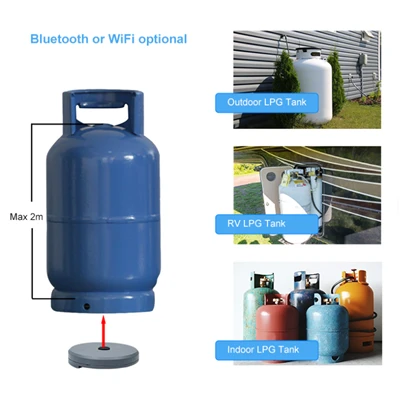
Method 5: Wireless and Smart Tank Monitors
Technology That Checks Your Tank Level Automatically
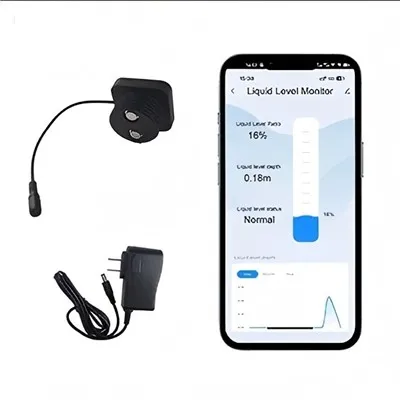
Wireless and smart tank monitors are the most convenient and proactive method for tracking your propane level:
Popular wireless tank monitor options:
| Monitor | Connectivity | Features | Price Range |
|---|---|---|---|
| Mopeka Pro Check | Bluetooth → smartphone | ultrasonic level sensing; tank clip mounting; smartphone app | $80–$120 |
| Mopeka Smart Link | Bluetooth → smartphone | External sensor; magnetic mount; compatible with Home Assistant | $60–$100 |
| Tank Utility | Cellular → smartphone app | Real-time monitoring; alerts; cellular (no WiFi needed) | $100–$200 |
| Smart propane monitors (genericheader) | WiFi or cellular → app | Smartphone alerts; multiple tank monitoring; usage tracking | $80–$150 |
| Otodata LP tank monitors | Cellular → web portal | Commercial/residential; automatic alerts; multiple tank support | $150–$300 installed |
What smart tank monitors do: A wireless tank monitor attaches to your tank and continuously measures the propane level using ultrasonic sensors (sound waves), float sensors, or pressure sensors. This data is transmitted to your smartphone via Bluetooth, WiFi, or cellular connection, and most monitors allow you to set custom alert thresholds - for example, an alert when the tank drops below 25%, and another alert when it drops below 15%. Some monitors also track your usage over time and can predict when you will need a refill based on your consumption pattern, which is the most proactive way to never run out.
What to Do When Your Propane Tank Is Empty
Your Immediate Action Plan
If your propane tank has run out, follow this sequence immediately:
| Step | Action | Why | Timeframe |
|---|---|---|---|
| 1. Do not use any propane appliances | Shut off gas valves at each appliance | Prevents further air entry; protects appliances | Immediate |
| 2. Ventilate the area | Open windows and doors near the tank | Dilutes any residual propane vapor | Immediate |
| 3. Eliminate ignition sources | No flames, smoking, sparks, or heat near tank | Prevents ignition of residual vapor | Immediate |
| 4. Call your propane supplier | Request purge service + refill delivery | Professional service is required - do not self-handle | Now |
| 5. Keep tank outdoors and upright | Store in ventilated outdoor area | Maintains safety; prevents vapor accumulation | Until service |
| 6. Document the situation | Take photos of gauge and tank | Protects you if disputes arise | Before technician arrives |
| 7. Do not attempt to refill or relight | Wait for professional service | Prevents explosion, CO poisoning, and appliance damage | Until cleared by technician |
How to Never Run Out of Propane Again
Prevention Methods That Work
The cost of prevention versus the cost of running dry:
| Method | Cost | Effectiveness | Notes |
|---|---|---|---|
| Check gauge monthly | Free | High | Minimum - catches issues before crisis |
| Set refill reminders at 25% | Free | Very high | Prevents ever reaching 15% |
| Weigh portable tanks regularly | Free (scale) | High | Good for BBQ and RV tanks |
| Smart tank monitor | $60–$300 one-time | Very high | Best for residential tanks |
| Auto-delivery program | Usually free | High | Supplier manages schedule for you |
| Dual-tank setup | $500–$2,000 installed | Very high | Automatic backup; no manual monitoring needed |
Frequently Asked Questions
Q1: How can I tell if my propane tank is empty?
You can tell if your propane tank is empty by checking the gauge - most residential propane tanks have a float gauge or digital display that reads as a percentage, and a reading of 0–5% means the tank is empty. If there is no gauge visible on the tank, the most accurate method for portable tanks (BBQ cylinders, RV tanks) is to weigh the tank on a scale and subtract the tare weight (the empty tank weight stamped on the tank collar), then calculate what percentage of the tank's total capacity remains. You can also tell a tank is empty by the behavior of your appliances: if your furnace stops producing heat, your water heater stops heating water, and your stove burners will not light - all at the same time - the tank is likely empty. A physical sign to look for is frost or condensation on the tank exterior, which indicates the tank is working hard and may be low, and in the late stages of empty, a hissing sound from the tank valve (which is a potential leak - evacuate and call 911). The most proactive approach is to install a wireless tank monitor that sends your phone an alert when the level drops below a threshold you set, typically 25%.
Q2: What does it mean if my propane tank gauge reads 0?
A propane tank gauge reading of 0 does not mean there is literally zero propane in the tank - it means the float gauge has dropped to its lowest calibration point, which is effectively empty for practical purposes. In most cases, a reading of 0–5% on a float gauge represents the same condition from the perspective of your appliances: there is insufficient propane vapor pressure to supply the system properly, and all propane appliances will behave as though the tank is empty. The tank may technically contain a small residual amount of liquid propane at the very bottom, but not enough to generate adequate vapor pressure for any appliance. More importantly, a reading of 0–5% means you have already run out or are on the verge of running out, and you should not attempt to use any propane appliances - the next step is to call your propane supplier immediately for professional purge service and refill. Never attempt to refill a tank that has run completely dry without a professional purge.
Q3: Can I tell how much propane is left without a gauge?
Yes - for portable propane tanks (BBQ cylinders, RV tanks up to 100 pounds), you can determine the propane level without a gauge by weighing the tank and comparing the weight to the tare (empty) weight stamped on the tank collar. For example, a standard 20-pound BBQ cylinder with a tare weight of 17.5 pounds holds 20 pounds of propane when full, meaning a total weight of 37.5 pounds. If your scale reads 28 pounds, the propane weight is 28 minus 17.5 equals 10.5 pounds, which is approximately 52.5% full. You can also use the hot water method: pour hot water down the side of the tank and run your hand down the exterior - the point where the tank suddenly feels cold is the propane level, since propane absorbs heat as it vaporizes. For large above-ground residential tanks without visible gauges, the most practical solution is a wireless tank monitor ($60–$300) that uses ultrasonic or pressure sensors to measure the level and transmits it to your smartphone, eliminating the need to physically access the gauge at all.
Q4: What happens when a propane tank is completely empty?
When a propane tank is completely empty, three things happen simultaneously: all propane appliances lose their fuel supply and stop working, air begins being drawn into the tank through the valve as the internal pressure falls below atmospheric pressure, and that air travels into your household gas piping. This air intrusion is the critical problem - it means you cannot simply refill the tank and resume normal operation. The tank must be professionally purged (air removed and replaced with propane vapor through a multi-step process) before it can safely hold and deliver propane again. Attempting to refill without purging creates an explosive propane-air mixture inside the tank. Additionally, attempting to restart appliances without the system being purged will produce carbon monoxide instead of clean combustion. For large above-ground tanks, running completely empty also creates a vacuum condition that can cause the tank walls to collapse inward. The cost of running dry - typically $150–$750 in professional purge, service, and fuel costs - is 5–15 times more expensive than refilling proactively when the gauge hits 20–25%.
Q5: How do I check my propane level without getting on the tank?
The easiest way to check your propane level without climbing on or near the tank is to install a wireless tank monitor, which attaches to the tank (either with a magnet, a strap, or inside the tank well) and continuously measures the propane level using ultrasonic sensors or pressure readings, then transmits that data to your smartphone via Bluetooth, WiFi, or cellular connection. The second method is to weigh portable tanks using a bathroom scale - stand on the scale while holding the tank, record the combined weight, subtract your own weight, and compare the result to the tare weight and full capacity stamped on the tank collar. For large above-ground tanks, you can often check the level through the tank well (the round housing on top of the tank that contains the gauge and valves) by simply opening the well cover and reading the gauge inside - no climbing on the tank required. Underground tanks typically have a gauge accessible from a ground-level housing or require a wireless monitor for checking. The worst method is guessing - never let your propane level reach the point where you are wondering whether it is empty, because by then it often is.
The Bottom Line
You can tell if your propane tank is empty by reading the gauge (the most reliable method), weighing portable tanks to compare against the tare weight, noticing when your propane appliances stop working simultaneously, or installing a wireless tank monitor that sends alerts to your phone before you run out. The most important number to know is 20–25%: when your gauge hits 20–25%, order a refill immediately. Never let it reach 0–5%, because running completely dry triggers mandatory professional purging before safe use can resume - and that costs $150–$750 versus the $20–$50 it costs to refill proactively. Install a wireless tank monitor, set calendar reminders, or enroll in your supplier's auto-delivery program - whatever method keeps you from running out is worth the small effort it requires. If your tank has already run empty, call your propane supplier now and do not attempt to handle the refill, purge, or restart yourself.
Last updated: July 2026
Disclaimer: This guide provides general information about checking propane tank levels for educational purposes. Propane tank gauges, weighing procedures, and maintenance requirements vary by tank type, size, manufacturer, and jurisdiction. Always contact a licensed propane technician or your propane supplier for service after a tank has run dry. If you smell propane or hear hissing near your tank at any time, leave the building immediately and call 911. This guide is not affiliated with, endorsed by, or sponsored by any propane supplier or propane equipment manufacturer.