The Essential Guide to Propane for Home Heating and More: Everything You Need to Know
In this guide: Everything you need to know about propane for home heating and more - covering how propane works, why homeowners choose it, costs, safety, sizing, comparisons to other fuels, and the complete FAQ for 2026.
The Essential Guide to Propane for Home Heating and More: Quick Answer
Propane - also called liquefied petroleum gas (LPG) - is one of the most versatile energy sources available to homeowners, powering everything from furnaces and water heaters to ranges, dryers, fireplaces, and backup generators. Approximately 14 million American households use propane as their primary heating fuel, and millions more rely on it for specific appliances or as a backup to natural gas and electric systems. Propane is stored as a liquid under moderate pressure in tanks ranging from small portable cylinders to massive underground storage vessels, and it converts to gas when released for use in your appliances. It burns cleanly, produces no creosote, and delivers more BTU per dollar than electricity in most cold-climate scenarios. This essential guide covers everything you need to know about propane for home heating and more: how it works, what it costs, how to size a tank, what safety practices matter, how it compares to other fuels, and the complete FAQ for homeowners considering propane or already using it.
What Is Propane and How Does It Work in a Home?
Understanding the Basics
Propane (C₃H₈) is a three-carbon alkane gas that is compressed into a liquid for storage and transport. It is odorless and colorless in its pure form - the distinctive "propane smell" comes from an additive called mercaptan, which is added specifically so leaks can be detected:
Propane: essential facts for homeowners:
| Property | Detail | What This Means for You |
|---|---|---|
| Chemical formula | C₃H₈ (propane) | Different from methane (CH₄) and butane (C₄H₁₀) |
| State at room temperature | Gas | Becomes liquid under moderate pressure (~120 psi at 70°F) |
| BTU per gallon | 91,502 BTU | High energy density; significant heat per unit |
| BTU per cubic foot (gas) | ~2,516 BTU/ft³ | Burns at higher intensity than natural gas |
| Boiling point | –44°F (–42°C) | Evaporates readily at outdoor temperatures even in cold weather |
| Flame temperature | ~1,980°F | Hot, clean burn when properly combusted |
| Density vs. air | 1.9× heavier than air | Sinks and pools at floor level; different from natural gas |
| Odorant added | Ethyl mercaptan | Produces the distinctive sulfur/rotten egg smell |
| Colorless and odorless | In pure form | The smell is always added; never rely on sight |
| Storage pressure | ~120 psi at 70°F | Requires pressurized tanks; not a simple container |
How propane moves through your home:
| Step | What Happens | What You Should Know |
|---|---|---|
| 1. Stored as liquid in tank | Propane is kept under pressure in the tank as a liquid | Tank is filled to 80% maximum - the remaining 20% is expansion room |
| 2. Released through tank valve | Opening the valve releases propane into the gas line as a vapor | Pressure regulator reduces tank pressure to safe household levels (10–11" WC) |
| 3. Travels through gas lines | Vapor flows through buried or above-ground gas lines to appliances | Lines are sized to deliver enough gas for all connected appliances simultaneously |
| 4. Reaches appliance regulator | Each appliance has its own regulator to fine-tune pressure | Ensures correct gas pressure regardless of what else is running |
| 5. Mixed with air at burner | Propane mixes with combustion air before ignition | Correct air-to-gas ratio is critical for safe, efficient combustion |
| 6. Burned in combustion chamber | Controlled combustion produces heat (furnace) or flame (stove) | Clean blue flame = proper combustion; yellow flame = danger signal |
| 7. Combustion gases vented | CO₂, water vapor, and trace gases are expelled through venting | Venting must be clear and properly installed - CO risk if blocked |
Why Homeowners Choose Propane
The Most Common Reasons
Homeowners choose propane for a variety of reasons, but most decisions fall into a few clear categories:
Top reasons homeowners use propane:
| Reason | How It Works | Who Benefits Most |
|---|---|---|
| No natural gas utility available | Propane is delivered by truck; natural gas requires a pipeline | Rural homeowners; properties beyond gas utility service areas |
| Reliable heating without grid power | Propane appliances with standing pilots work during outages | Areas with frequent power outages; storm-prone regions |
| High-BTU heating power | Propane furnaces produce 80,000–120,000 BTU/h consistently | Cold climate homeowners; large homes with high heating demand |
| Versatile whole-home fuel | One tank powers heating, hot water, cooking, drying, and more | Homeowners wanting a single fuel source for multiple systems |
| Cleaner than heating oil | Propane burns 30–50% cleaner with fewer emissions | Homeowners comparing oil to propane; environmentally conscious |
| Dual-fuel efficiency | Paired with a heat pump for optimal economics | Moderate-to-cold climate homeowners wanting the best of both |
| Backup fuel security | Propane stores on-site; no pipeline, no grid dependency | Anyone who values energy independence |
The Cost of Propane for Homeowners
What You Will Actually Pay - Upfront and Ongoing
Understanding propane costs means understanding both the one-time installation investment and the ongoing fuel and maintenance expenses:
Upfront costs - what to budget:
| Cost Item | Low End | High End | Notes |
|---|---|---|---|
| 100–250 gallon tank (above-ground) | $400 | $1,500 | Purchase price; lease costs less upfront |
| 500 gallon tank (above-ground) | $800 | $2,500 | Most common residential size |
| 1,000 gallon tank (above-ground) | $1,500 | $5,000 | For large homes or full propane homes |
| 500 gallon underground tank | $2,500 | $7,500 | Excavation adds significant cost |
| Gas line installation (interior) | $300 | $1,500 | From tank location to appliances |
| Propane furnace (standard) | $3,000 | $5,500 | 80–89% AFUE |
| Propane furnace (high-efficiency) | $5,500 | $10,000 | 90–98% AFUE; recommended for cold climates |
| Propane water heater (tank) | $800 | $2,500 | 40–50 gallon standard |
| Propane water heater (tankless) | $1,500 | $4,500 | Higher upfront; lower operating cost |
| Appliance conversions | $150 | $400/appliance | Converting existing natural gas appliances |
| Total system (typical home) | $6,000 | $15,000 | Tank + furnace + water heater + installation |
Ongoing annual costs:
| Cost Item | Low End | High End | Notes |
|---|---|---|---|
| Propane fuel (moderate climate) | $800 | $2,000 | 400–1,000 gallons/year at $2.00–$2.50/gal |
| Propane fuel (cold climate) | $1,500 | $4,000 | 600–1,600 gallons/year |
| Tank lease (if leasing) | $100 | $400/year | Covers maintenance and inspection |
| Annual tank inspection | $50 | $150/year | Required for owned tanks; included in lease |
| Delivery fee | $0 | $75/delivery | Some suppliers charge; ask upfront |
Propane Tank Sizes: Choosing the Right One
The Most Important Sizing Decision
Choosing the right propane tank size is one of the most consequential decisions in a propane installation - undersizing leads to constant refills and run-out risk; oversizing leads to unnecessary upfront costs:
Propane tank sizing guide:
| Tank Size | Usable Gallons (80%) | Best For | Typical Runtime (heating) |
|---|---|---|---|
| 120 gallon | ~96 gallons | Small homes; garage workshops; seasonal use | 30–60 days (small home) |
| 250 gallon | ~200 gallons | Small-to-medium homes; partial propane use | 60–120 days |
| 500 gallon | ~400 gallons | Medium homes; multiple propane appliances | 90–180 days |
| 1,000 gallon | ~800 gallons | Large homes; full propane homes; cold climates | 120–240+ days |
| Above-ground | All sizes available | Most common; easier to access and inspect | All climates |
| Underground | 500–1,000 gallons typical | Aesthetic concerns; space limitations | All climates; longer tank life |
The sizing rule of thumb: In cold climates, estimate 1 gallon per square foot per year for heating alone. In moderate climates, use 0.5–0.75 gallons per square foot. Add 200–400 gallons per additional major appliance (water heater, dryer, stove).
Propane Safety: What Every Homeowner Must Know
Non-Negotiable Safety Practices
Propane is a safe fuel when handled correctly - but the safety practices are non-negotiable. Here is what every propane homeowner must understand:
Essential propane safety practices:
| Safety Practice | Why It Matters | How to Do It |
|---|---|---|
| Install CO detectors on every level | Propane appliances produce CO when combustion is incomplete | Test monthly; replace batteries twice a year; replace units every 7–10 years |
| Annual professional inspection | Catches leaks, regulator problems, and appliance issues before they become dangerous | Schedule every year; typically $100–$200 |
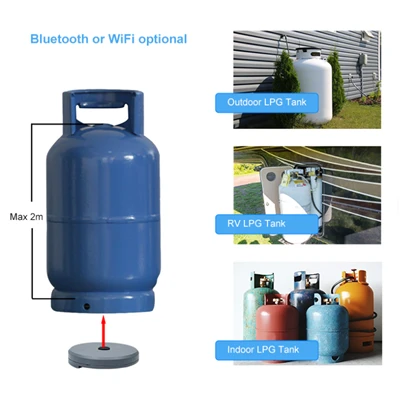
| Never store propane cylinders indoors | Propane is heavier than air and pools at floor level; leaks in enclosed spaces are dangerous | Store outdoor only, upright, in ventilated areas |
| Know the five smells that signal danger | Rotten egg smell (propane leak), sweet smell (antifreeze), burning oil, gas smell, chemical smell | If any unusual smell appears, evacuate and call from outside |
| Keep tank area clear | 10-foot clearance from buildings and ignition sources | Trim vegetation; do not store items near the tank |
| Check connections with soap solution | Bubble test reveals leaks at fittings | Spray connections during any maintenance or if smell is suspected |
| Never use a damaged tank | Dents, rust, and visible damage can compromise tank integrity | Have damaged tanks professionally inspected or replaced |
| Have an emergency plan | Know how to shut off gas at the tank; know evacuation routes | Practice with all household members |
Signs of a propane leak - what to look for:
| Sign | What It Indicates | Action |
|---|---|---|
| Rotten egg smell | Propane leak - the mercaptan additive is working | Evacuate; do not use electronics; call 911 from outside |
| Hissing sound near tank or appliances | Gas escaping under pressure | Same as above - evacuate immediately |
| Yellow or orange flame (should be blue) | Incomplete combustion; CO risk | Shut off appliance; call professional; do not use until cleared |
| Dead vegetation near underground piping | Possible underground leak | Call propane supplier immediately |
| Cold spots on floors near propane appliances | Possible heat exchanger crack (furnace) | Shut off appliance; evacuate; call professional immediately |
| Physical symptoms near propane appliances | Possible CO poisoning | Get fresh air immediately; call 911; seek medical attention |
Propane vs. Other Home Heating Fuels
How Propane Stacks Up
Propane competes with natural gas, electricity, heating oil, and - increasingly - heat pumps. Here is how it compares:
Propane compared to other heating fuels:
| Factor | Propane | Natural Gas | Electric Heat Pump | Heating Oil |
|---|---|---|---|---|
| BTU per dollar (fuel cost) | $27–$30/million BTU | $13–$18/million BTU | $12–$25/million BTU | $28–$35/million BTU |
| Equipment efficiency | 90–98% AFUE | 90–98% AFUE | 200–350% HSPF | 85–92% AFUE |
| Infrastructure required | Tank + gas lines | Utility pipeline | Electrical panel upgrade | Oil tank |
| Works during power outage | ✅ Yes (with standing pilot) | ❌ No | ❌ No | ❌ No |
| Works in extreme cold | ✅ Yes | ✅ Yes | ⚠️ Below ~0°F COP drops | ✅ Yes |
| Annual heating cost (moderate home) | $1,200–$2,500 | $700–$1,500 | $800–$2,000 | $1,500–$3,000 |
| Delivery/supply | Truck delivery; schedule it | Utility handles it | Utility handles it | Truck delivery; schedule it |
| Environmental impact | Moderate CO₂ | Lower CO₂ | Lowest (in clean-grid areas) | Highest |
Propane for More Than Just Heating
The Whole-Home Propane System
One of propane's greatest strengths is its versatility - one tank can power your entire home:
Propane appliance options and their benefits:
| Appliance | Propane Advantage | Typical BTU Range | Cost to Install |
|---|---|---|---|
| Central furnace | High BTU output; works in any temperature | 60,000–120,000 BTU/h | $3,000–$10,000 |
| Tank water heater | Faster recovery; lower operating cost than electric | 30,000–50,000 BTU/h | $800–$2,500 |
| Tankless water heater | Endless hot water; 30–50% less fuel than tank | 150,000–200,000 BTU/h | $1,500–$4,500 |
| Gas range / cooktop | Professional-level cooking; instant flame control | 35,000–65,000 BTU/h | $500–$2,500 |
| Clothes dryer | Faster drying; less wear on clothes; no lint fires | 22,000–35,000 BTU/h | $700–$1,500 |
| Gas fireplace | Ambiance + supplemental heat; efficient zone heating | 20,000–40,000 BTU/h | $1,000–$4,000 |
| Outdoor grill | Professional-level grilling; natural flame flavor | 30,000–80,000 BTU/h | $300–$3,000 |
| Backup generator | Automatic start; runs on existing fuel supply | 7,000–20,000 watts | $3,000–$10,000 |
| Pool / spa heater | Extends swim season; faster heating than electric | 200,000–400,000 BTU/h | $2,000–$6,000 |
| Garage / workshop heater | Comfortable workspace in unheated spaces | 30,000–75,000 BTU/h | $300–$1,500 |
Frequently Asked Questions
Q1: How does propane heating work in a home?
Propane heating works by burning propane gas in a furnace's combustion chamber, which heats a metal heat exchanger. A blower then pushes air across the hot heat exchanger and distributes the warmed air through ductwork to every room in your home. The propane is stored as a liquid in an outdoor tank under moderate pressure, and it converts to gas as it moves through the gas line to the furnace. A propane furnace produces 80,000–120,000 BTU per hour depending on its size, and a high-efficiency model (90–98% AFUE) converts 90–98% of the propane's energy into usable heat. Unlike electric heat, propane heat is not affected by outdoor temperature - it produces the same powerful, consistent heat at -20°F as it does at 50°F. The furnace is controlled by a thermostat in the same way as any other heating system, and the propane is delivered to your property by truck and stored in your tank until needed. Annual maintenance - including a professional inspection, burner cleaning, and combustion analysis - keeps the system running efficiently and safely.
Q2: Is propane more expensive than natural gas for home heating?
Yes - propane is typically 40–60% more expensive per BTU than natural gas, because natural gas is delivered by pipeline and its cost does not include the storage, transport, and delivery expenses that drive propane prices higher. At typical 2026 prices, natural gas costs approximately $1.20–$2.00 per therm (whereas propane costs $2.50–$4.00 per gallon, which is equivalent to $2.75–$4.40 per therm on a BTU-equivalent basis). However, the comparison is only meaningful if you have access to natural gas - approximately 15% of American households are in areas without natural gas utility service, and for those homeowners, propane is the cleanest, most versatile, and most practical high-BTU fuel available. For homeowners who have natural gas available, switching to propane almost never makes economic sense. For homeowners who do not have natural gas access, propane is often the most cost-effective option when compared to electric resistance heat, especially in cold climates where electric resistance heating is significantly more expensive per BTU.
Q3: How long does a propane tank last on your property?
A propane tank's functional lifespan is 20–30 years for above-ground tanks and 30–50 years for underground tanks, depending on the manufacturer, installation quality, soil conditions (for underground), and maintenance history. Tanks are certified for use for a specific period - typically 10–12 years for DOT-rated portable cylinders and 20–25 years for ASME-rated stationary tanks - and must be professionally recertified or replaced at the end of their certification period. The tank itself can last much longer than its initial certification period if it passes a thorough recertification inspection, which includes pressure testing, visual inspection for corrosion and damage, and verification of the tank's structural integrity. Your propane supplier will handle all recertification requirements as part of their lease or service agreement, or as part of the annual inspection if you own the tank. The tank's valve, regulator, and connections may need replacement before the tank itself needs replacing - these are typically replaced during routine maintenance at a fraction of the cost of a new tank.
Q4: What are the most common propane safety mistakes homeowners make?
The most common and dangerous propane safety mistakes homeowners make include not installing or not maintaining carbon monoxide detectors on every level of the home (CO poisoning is the most serious risk from improperly functioning propane appliances), storing propane cylinders indoors or in enclosed spaces like garages (propane sinks and pools at floor level, creating explosion risk in enclosed spaces), skipping the annual professional tank inspection to save $100–$200 (this inspection catches leaks, regulator failures, and dangerous appliance conditions before they become emergencies), failing to order propane in time and running the tank dangerously low during cold weather (running out of propane in winter is an emergency that costs hundreds of dollars in purge fees and emergency delivery charges), ignoring yellow flames on propane appliances (a yellow or orange flame indicates incomplete combustion and carbon monoxide production), using damaged or dented propane tanks (physical damage can compromise the tank's structural integrity), and not knowing how to shut off the propane supply at the tank in an emergency (every household member should know where and how to close the main tank valve).
Q5: What should I look for when choosing a propane supplier?
Choosing the right propane supplier matters more than most homeowners realize - it is a relationship that will last as long as you own your home, and switching suppliers is complicated and costly if you lease your tank. The most important factors to evaluate are price per gallon (get at least three quotes and compare on a per-gallon basis, not just on delivery fees), whether they offer price-lock or cap programs that protect against market spikes, whether they offer automatic delivery so you never have to monitor the tank yourself, whether they offer wireless tank monitoring that sends alerts to your phone, their delivery reliability during heating season (ask specifically about their typical delivery window in January and February), whether they offer a budget equal-payment plan that spreads annual costs into predictable monthly bills, the terms of their tank lease agreement (buyout clauses, annual fees, and exclusivity requirements), and whether they offer 24/7 emergency service for leaks and other urgent issues. Never sign a long-term exclusive contract without understanding the buyout terms - the best suppliers earn your loyalty through service quality, not contractual restrictions.
The Bottom Line
Propane is one of the most reliable, versatile, and practical heating fuels available to homeowners who do not have access to natural gas utility service, and its ability to provide powerful, consistent heat regardless of outdoor temperature and its independence from the electrical grid make it invaluable in cold climates and rural areas. The upfront investment of $6,000–$15,000 for a complete residential propane system - covering tank installation, furnace, water heater, and gas line work - pays dividends in comfort, reliability, and the ability to heat your home even when the power is out. The ongoing fuel cost of $800–$4,000 per year is competitive with or cheaper than electric resistance heat in cold climates, and propane's versatility means one tank can power your heating, hot water, cooking, drying, and more. The safety record of propane is excellent when systems are properly maintained - annual professional inspections, functioning CO detectors on every level, and awareness of the warning signs of leaks and appliance problems are the three non-negotiable practices that keep propane homes safe. Choose your supplier carefully, fill your tank in late summer when prices are lowest, and treat annual inspections as mandatory rather than optional.
Last updated: July 2026
Disclaimer: This guide provides general information about propane for home heating and more for educational purposes. Actual costs, installation requirements, safety procedures, and performance vary by region, climate, home characteristics, and market conditions. Always consult licensed HVAC professionals, propane suppliers, and plumbers before making decisions about propane installations. This guide is not affiliated with, endorsed by, or sponsored by any propane supplier or equipment manufacturer.