What Are the Consequences of Not Filling Up a Propane Tank? Full Guide to Costs, Safety Risks, and System Damage
In this guide: Everything you need to know about the consequences of not filling up a propane tank - covering immediate service disruptions, safety hazards, appliance damage, costs, what to do when empty, prevention strategies, and the complete FAQ for 2026.
What Are the Consequences of Not Filling Up a Propane Tank? Quick Answer
The consequences of not filling up a propane tank range from immediate household disruptions - no heat, no hot water, no cooking - to serious safety hazards including explosive air-propane mixtures, carbon monoxide poisoning, vacuum collapse of large tanks, and permanent internal tank corrosion. The financial consequences are equally serious: a propane tank that runs dry costs 5–15 times more to restore than a proactive refill would have cost. Most homeowners underestimate what "running out of propane" actually means because they think of it the way they think of running out of gasoline - inconvenient, but easily fixed by filling up again. Propane is different. A dry propane tank is not simply an empty container waiting to be refilled - it is a system-wide emergency that requires professional purging before safe use can resume, it introduces air into your gas lines that disrupts combustion, it begins an internal corrosion process that weakens the tank from the inside, and it creates conditions under which carbon monoxide and explosive gases can accumulate in your home. This guide covers every consequence of not filling up a propane tank in detail, so you understand exactly what is at stake and exactly what to do if it happens to you.
Immediate Consequences: What Stops Working Right Away
When the Tank Goes Dry, Everything Stops
The moment a propane tank runs dry, every propane-powered system in your home stops working simultaneously:
Immediate household consequences of a propane tank running empty:
| System | What Stops | First Signs | Urgency Level |
|---|---|---|---|
| Furnace / central heating | All heat production stops | Thermostat calls for heat that never arrives | Critical - winter emergency |
| Water heater | Hot water production stops | Cold showers; no hot water for dishes or laundry | High - immediate impact |
| Stove and oven | Cooking impossible | Cannot cook or bake | Medium - immediate inconvenience |
| Tankless water heater | On-demand hot water stops | Faucet runs cold despite being set to hot | High |
| Propane clothes dryer | Drying stops | Wet clothes sit in drum | Low - short-term nuisance |
| Propane fireplace | Flame extinguishes | No decorative heat | Low - short-term nuisance |
| Propane refrigerator | Cooling stops (if equipped) | Food begins warming in refrigerator | High - food safety risk |
| All propane appliances | Safety valves close automatically | No gas flow to any appliance | High |
The real consequence most people miss: The visible consequence - no heat, no hot water - is obvious. The invisible consequence is what happens inside the tank and gas lines the moment the propane runs out. Air is drawn in through the tank valve as pressure falls below atmospheric. That air fills the gas lines. Moisture from the air begins condensing on the inside of the tank. None of this is visible, but all of it creates serious hazards that must be professionally addressed before the system is safe to use again.
Financial Consequences: The True Cost of Not Filling Up
Running Dry Is One of the Most Expensive Fuel Mistakes You Can Make
The cost of not filling up a propane tank is not just the cost of the refill - it is the cumulative cost of professional purging, emergency service fees, potential appliance repairs, and the long-term damage that running dry does to your tank:
Financial consequences of not filling up a propane tank:
| Cost Item | Amount | When It Applies | Required or Optional? |
|---|---|---|---|
| Professional tank purging | $50–$500 | Always required after running dry | Required - non-negotiable |
| Emergency / after-hours service fee | $25–$150 | If you need same-day or weekend service | Avoidable with early call |
| Propane refill | $2–$4/gallon at market rate | Refill cost at current pricing | Required |
| Service call / technician trip charge | $50–$125 | Technician visit for purge + inspection | Required with purge service |
| Appliance repair (if damaged) | $50–$1,000 | If appliances ran without proper purge | Optional - preventable |
| Carbon monoxide detector check | $25–$100 | After improper restart | Strongly recommended |
| Tank replacement (vacuum collapse) | $500–$3,000 | If large tank collapsed from vacuum | Optional - preventable |
| Water damage restoration | $2,000–$10,000 | If tank failure caused flooding | Optional - preventable |
| Alternative heating costs | Variable | Electric space heaters; hotel; family | Avoidable with quick response |
Running dry vs. proactive refill - cost comparison:
| Scenario | Total Cost | Time Without Service |
|---|---|---|
| Refill at 20% gauge (proactive) | $20–$50 | None - seamless |
| Refill at 10% gauge (late but not dry) | $20–$50 | None - seamless |
| Run dry + normal hours purge + refill | $150–$500 | 4–12 hours |
| Run dry + emergency / after-hours service | $250–$750 | 2–8 hours + premium charges |
| Run dry + vacuum collapse + tank replacement | $500–$3,000+ | 1–3 days |
| Run dry + improper restart + appliance repairs | $300–$1,500+ | Variable |
Bottom line on cost: Running dry typically costs 5–15 times more than the cost of refilling proactively when your gauge reads 20–25%. Over a 15-year tank lifespan, a homeowner who runs dry even once pays more in emergency service costs than it would have cost to maintain the tank properly over the same period.
Safety Consequences: The Hazards of a Dry Tank
Four Categories of Danger That Are All Preventable
The safety consequences of not filling up a propane tank are serious, well-documented, and entirely preventable - and every year they injure and kill people who did not understand the risk:
Four categories of safety consequence from not filling a propane tank:
| Danger Category | What Causes It | What It Leads To | Prevention |
|---|---|---|---|
| Explosive mixture | Tank refilled without purge - air inside mixes with propane | Tank rupture; flash fire; serious injury or death | Professional purge before refill |
| Carbon monoxide poisoning | Improper restart produces CO instead of clean combustion | CO poisoning; death; neurological damage | Never restart without purge confirmed |
| Vacuum collapse | Large tank runs dry; atmospheric pressure crushes walls | Catastrophic tank failure; loud implosion; debris | Never leave large tanks empty for days |
| Gas leak from tank failure | Internal corrosion weakens tank over time from sitting empty | Slow gas leak; explosion risk; asphyxiation risk | Schedule service immediately when dry |
Why these dangers are so often overlooked: Propane's dangers are invisible and invisible - carbon monoxide has no color, no odor in the early stages of buildup, and its early symptoms mimic common conditions (headache, nausea, fatigue). Explosive mixtures inside a tank are not visible from the outside. Internal corrosion is invisible from the outside for months. The absence of an immediate dramatic event lulls people into thinking they can handle the situation themselves, which is exactly when injuries occur.
Appliance Damage Consequences
How Running Dry Permanently Damages Your Equipment
Propane appliances are precision combustion systems - running them when the tank is empty, or restarting them without proper purging, causes specific damage that ranges from expensive to catastrophic:
Appliance damage consequences from not filling the propane tank:
| Appliance | Damage Caused | Repair Cost | Can It Be Prevented? |
|---|---|---|---|
| Gas furnace heat exchanger | Thermal cracking from flame irregularities | $300–$900 | Yes - turn off furnace when tank empties |
| Water heater burner assembly | Burner ports clogged; thermocouple failure | $100–$400 | Yes - shut off gas valve when tank empties |
| Stove / range orifices | Moisture corrosion; blocked gas passages | $50–$300 | Yes - shut off gas at stove |
| Tankless water heater exchanger | Thermal shock cracking of heat exchanger | $300–$1,200 | Yes - turn off unit when tank empties |
| Propane fireplace valve | Corrosion of valve seats | $150–$500 | Yes - shut off fireplace gas valve |
| Gas dryer components | Burner damage; thermostat failure | $100–$350 | Yes - do not run dryer with empty tank |
The delayed damage problem: Some damage from running dry does not manifest immediately. A cracked furnace heat exchanger may produce a small CO leak that is not noticeable at first but worsens over time. A damaged gas valve may seat imperfectly, allowing a slow leak that accumulates in an enclosed space. These delayed hazards mean that even if your appliances appear to work normally after an improper restart, they may be producing unsafe levels of carbon monoxide or leaking gas below your detection threshold.
Long-Term Tank Consequences
What Running Dry Does to the Tank Itself
The most overlooked consequence of not filling a propane tank is what running dry does to the tank's long-term structural integrity:
Long-term tank consequences from running empty:
| Consequence | Cause | Effect on Tank | Severity |
|---|---|---|---|
| Internal corrosion | Moisture from air condenses on steel tank walls | Progressive rusting from inside - invisible but permanent | High - long-term structural risk |
| Pitting corrosion | Localized electrochemical attack at water-steel contact points | Concentrated metal loss at specific points; stress concentrations | Critical - reduces tank strength permanently |
| Sediment accumulation | Corrosion products settle at tank bottom | Clogs drain valve; restricts gas flow; accelerates further corrosion | Medium - repairable but costly |
| Valve damage | Repeated opening/closing with debris in system | Valve seats wear faster; future leak potential | Medium |
| Vacuum collapse (large tanks) | Atmospheric pressure crushes walls when internal pressure drops below atmospheric | Catastrophic structural failure; tank totaled | Critical - requires full replacement |
| Coating damage | Moisture and sediment abrade interior glass lining | Exposed steel; accelerated corrosion from that point | High - localized weak point |
Corrosion is permanent: Once steel has corroded, it cannot be restored. A tank that has developed significant internal pitting corrosion from sitting empty is weakened permanently. There is no coating, treatment, or repair that can reverse internal corrosion. The only options are continued monitoring with the understanding that the tank is structurally compromised, or full tank replacement. This is why preventing the empty period in the first place is so important - the corrosion that occurs cannot be undone.
What to Do If Your Propane Tank Has Run Out
Your Immediate Action Plan
If your propane tank has run out, follow this sequence without exception:
| Step | Action | Why | Timeframe |
|---|---|---|---|
| 1. Do not use any propane appliances | Close gas valves at each appliance | Prevents further air entry; protects appliances | Immediate |
| 2. Ventilate the area | Open windows and doors near tank and appliances | Dilutes residual propane vapor | Immediate |
| 3. Eliminate all ignition sources | No flames, smoking, sparks, or electrical devices near tank | Prevents ignition of residual vapor | Immediate |
| 4. Call your propane supplier | Schedule professional purge + inspection + refill | Professional service is mandatory - do not self-handle | Now |
| 5. Keep tank outdoors and upright | Store in ventilated outdoor area away from heat and ignition | Maintains safety during empty period | Until service |
| 6. Document everything | Photograph gauge, tank, surroundings | Protects you if disputes arise | Before technician arrives |
| 7. Do not attempt refill, purge, or relight | Wait for licensed technician | Prevents explosion, CO, and appliance damage | Until cleared |
How to Never Run Out of Propane Again
Prevention That Costs Pennies and Saves Dollars
The best consequence of not filling a propane tank is the one that never happens - here is how to make sure it never does:
Propane outage prevention strategies:
| Strategy | Cost | Effectiveness | Best For |
|---|---|---|---|
| Check gauge monthly | Free | High | All homeowners |
| Calendar refill reminder at 25% | Free | Very high | All homeowners |
| Weigh portable tanks regularly | Free (scale) | High | BBQ and RV tank owners |
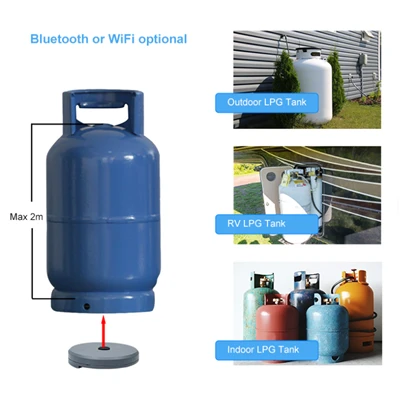
| Wireless tank monitor | $60–$300 one-time | Very high | Residential tank owners |
| Auto-delivery program | Usually free | High | Hands-off homeowners |
| Dual-tank system | $500–$2,000 installed | Very high | High-usage homes; rural properties |
| Pre-winter tank top-off | Regular fuel cost | High | All propane-heated homes |
Frequently Asked Questions
Q1: What happens if I do not fill up my propane tank?
If you do not fill up your propane tank, the consequences unfold in three stages: the immediate stage (loss of heat, hot water, and cooking the moment the tank runs dry), the dangerous stage (air fills the gas lines, creating restart hazards including explosive mixtures and carbon monoxide production, and moisture begins causing internal corrosion), and the expensive stage (professional purging, emergency service fees, and potential appliance repairs cost 5–15 times more than a proactive refill would have). The most serious consequence that most people do not anticipate is what happens when you try to fix it yourself: attempting to refill a tank that has run dry without professional purging creates an explosive air-propane mixture inside the tank, and attempting to restart appliances without the system being purged produces carbon monoxide. Both are genuinely life-threatening. The bottom line is that not filling a propane tank is not like running out of gasoline - the system consequences are significantly more serious and more expensive, and they require professional service to resolve safely.
Q2: How much does it cost when a propane tank runs out?
When a propane tank runs out, the total cost typically ranges from $150–$500 for a standard residential tank with normal-hours service, to $250–$750 for emergency or after-hours service, to $500–$3,000 or more if vacuum collapse has occurred or if appliance repairs are needed on top of the purge. The mandatory costs are the professional tank purging fee ($50–$500 depending on tank size), the propane refill itself at current market rates ($2–$4 per gallon), and the technician service call ($50–$125). If you needed emergency service on a weekend or evening, add $25–$150. If appliances were running when the tank emptied and were damaged before you shut them off, add $50–$1,000 for repairs. If a large above-ground tank suffered vacuum collapse from running dry, the tank must be fully replaced at $500–$3,000. Compare this to the $20–$50 cost of refilling when your gauge reads 20–25%, and the economics of proactive refilling are overwhelming.
Q3: Is it dangerous to run out of propane?
Yes - running out of propane is genuinely dangerous in four distinct ways. First, an explosive air-propane mixture forms inside the tank if it is refilled without professional purging, and that mixture can detonate if it reaches any ignition source. Second, attempting to restart appliances without a proper purge produces carbon monoxide - an invisible, odorless gas that kills people who do not evacuate in time. Third, large above-ground tanks that run completely empty are at risk of vacuum collapse, where atmospheric pressure crushes the tank walls inward with enough force to destroy the tank and send debris flying. Fourth, the moisture that enters an empty tank causes internal corrosion that permanently weakens the tank from the inside - damage that is invisible from the outside for months. All four of these dangers are entirely preventable by maintaining your propane level, refilling proactively at 20–25%, and calling your supplier immediately if the tank does run dry.
Q4: How long can a propane tank safely sit empty?
A propane tank should not sit empty for more than 24–48 hours before professional service is scheduled - the risks of internal corrosion, vacuum collapse (for large tanks), and handling errors all increase with every day the tank remains empty. For small portable cylinders, vacuum collapse is not a concern, but internal corrosion begins within the first 24 hours and should be addressed as soon as possible. For large above-ground residential tanks, the vacuum collapse risk makes leaving the tank empty for more than a few days genuinely dangerous - especially in cold weather when vapor cools faster and accelerates the pressure drop. The practical recommendation is to call your propane supplier immediately when the tank runs dry, schedule service for within 48 hours, and in the meantime keep the tank upright, outdoors, in a ventilated area, away from ignition sources. Do not wait a week for a convenient appointment - the consequences of delay are real and costly.
Q5: What is the most important thing to know about not filling up a propane tank?
The most important thing to know is that an empty propane tank is not a simple inconvenience - it is a multi-hazard emergency that requires professional service before the system can be safely used again, and attempting to handle it without that service creates life-threatening conditions including explosive mixtures, carbon monoxide production, and in large tanks, structural collapse. The second most important thing to know is that running dry is 5–15 times more expensive than refilling proactively, and that the cost of a professional purge and inspection ($100–$500) is negligible compared to the cost of an explosion, a CO poisoning incident, a collapsed tank, or an appliance repair bill. The third most important thing to know is that internal corrosion begins the moment the tank runs dry and is permanent - which means that every day you delay in calling your supplier, the damage to your tank is accumulating in ways you cannot see and cannot reverse.
The Bottom Line
The consequences of not filling up a propane tank are immediate, dangerous, expensive, and largely preventable. The immediate consequence is the loss of every propane-powered system in your home. The safety consequence is a set of hazards - explosive mixtures, carbon monoxide, vacuum collapse, and internal corrosion - that are all life-threatening and all entirely preventable with correct professional handling. The financial consequence is a bill of $150–$750 in most cases and potentially $500–$3,000 or more if the tank is damaged - versus the $20–$50 it would have cost to refill when the gauge hit 20–25%. The single action that prevents all of these consequences is checking your gauge regularly and refilling before the tank runs dry. If it has already run dry, call your supplier now - do not wait, do not attempt to handle it yourself, and do not let the empty tank sit for days. The cost of professional service is the cheapest safety investment you will ever make.
Last updated: July 2026
Disclaimer: This guide provides general information about the consequences of not filling a propane tank for educational purposes. Propane safety requirements, purge procedures, and costs vary by tank type, size, supplier, and jurisdiction. Always contact a licensed propane technician or your propane supplier for service after a tank has run dry. If you smell propane or hear hissing near your tank at any time, leave the building immediately and call 911. This guide is not affiliated with, endorsed by, or sponsored by any propane supplier or propane equipment manufacturer.