What Happens When You Run Out of Propane? The Complete Guide to Propane Run-Out Consequences
In this guide: What happens when you run out of propane - covering immediate effects, safety risks, restart procedures, cost breakdown, prevention strategies, and the complete FAQ for 2026.
What Happens When You Run Out of Propane: Quick Answer
When you run out of propane, every appliance connected to that propane supply stops working immediately, and the restart process requires a professional purge and combustion check before any appliance can safely operate again. The consequences escalate quickly: heating systems go offline, hot water disappears, cooking stops, and in freezing weather your home faces pipe-freeze risk within 24–48 hours. Propane is stored as a liquid under pressure, and when the tank empties, air fills the gas lines - this air must be professionally purged before any propane appliance can ignite safely. Running out of propane is different from a simple inconvenience: it is a multi-stage event with real safety risks, real dollar costs, and real long-term consequences for your propane system if it happens repeatedly. Approximately 14 million American households use propane for home heating, hot water, cooking, or clothes drying - and virtually every one of those households has experienced or will experience a propane run-out at some point. This guide explains exactly what happens at every stage of a propane run-out, what it costs to recover, what the safety risks are, and how to make sure it never happens to you.
What Stops Working Immediately When Propane Runs Out
The Instant Appliance Shutdown
Propane appliances are connected to the same tank supply - when the tank goes empty, every appliance on that system shuts down within seconds:
| Appliance | Time to Shutdown | Immediate Effect |
|---|---|---|
| Propane furnace or boiler | Immediate | Home heating system offline; furnace shuts down on safety |
| Tankless water heater | Immediate | No hot water the moment a tap is opened |
| Tank water heater | Minutes | Residual hot water in tank; gone in 10–30 minutes |
| Gas cooktop and oven | Immediate | Burners extinguish; pilot lights go out |
| Propane clothes dryer | Immediate | Stops mid-cycle; wet clothes stuck inside |
| Gas fireplace | Immediate | Pilot light extinguishes; decorative flames gone |
| Propane grill (portable cylinder) | Immediate | All burners extinguish mid-cook |
The furnace domino effect: A home furnace is the highest-BTU-demand appliance on any propane system - typically consuming 80,000–120,000 BTUs per hour when running. The moment tank pressure drops to zero, the furnace is the first appliance to detect the loss and shut down on its pressure switch safety. When the furnace stops, the home's entire heating system goes offline simultaneously. Unlike a gas cooktop where a single burner goes out, a home furnace shutdown affects every room in the house at the same time.
The Temperature Drop Timeline: How Fast Your Home Cools
What Happens to Indoor Temperature After Heating Stops
Your home loses heat at a rate determined by outdoor temperature, insulation quality, and thermostat settings:
| Time After Furnace Stops | Indoor Temperature Drop (Typical Home) | Risk Level |
|---|---|---|
| First 2–4 hours | 2–5°F drop | Comfort concern; manageable with blankets |
| 4–8 hours | 5–12°F drop in moderate weather | Noticeably uncomfortable; dress in layers |
| 8–12 hours | 10–18°F drop in typical winter | Health risk for children, elderly, and pets |
| 12–24 hours | 15–30°F drop; interior reaches 50–55°F | Dangerous for vulnerable occupants |
| 24–48 hours | 25–45°F below normal; interior may approach freezing | Pipe freeze risk begins in unheated areas |
The pipe freeze threshold: The temperature at which home plumbing becomes vulnerable to freezing is approximately 40°F inside - which can occur in as little as 12–24 hours in a poorly insulated home during sub-20°F outdoor temperatures. A single burst pipe in an exterior wall can release thousands of gallons of water, causing $10,000–$50,000 in structural damage to your home. If you are experiencing a propane run-out in winter weather and still have running water, leave a pencil-thin stream of water flowing from the faucet farthest from your main water line as emergency freeze prevention.
The Propane Run-Out Timeline: A Stage-by-Stage Breakdown
What Happens From the Moment the Tank Goes Empty to Days Later
Understanding the timeline helps you make the right decisions at every stage:
| Stage | Time | What Happens | Your Action |
|---|---|---|---|
| Stage 1: Tank goes empty | T=0 | Tank pressure drops to zero; all appliances shut down | Check tank gauge; confirm run-out |
| Stage 2: Air enters tank and gas lines | Minutes to hours | Atmospheric air fills the tank and piping | Do not attempt to restart anything |
| Stage 3: Appliances cool down | Minutes to hours | Water heater, dryer, fireplace cool to ambient | Open windows if propane smell detected |
| Stage 4: Home begins losing heat | Hours | Interior temperature begins to drop | Put on layers; contact supplier |
| Stage 5: Call your propane supplier | As soon as possible | Schedule delivery and professional restart | Call now - not tomorrow |
| Stage 6: Propane delivered | 1–5 days standard; same day for emergency | New fuel arrives at tank | Be home to meet technician |
| Stage 7: Professional purge performed | 1–3 hours | Technician bleeds air from all gas lines | This step is mandatory - not optional |
| Stage 8: Combustion check | 30–60 minutes | Technician verifies safe operation at each appliance | Do not skip this step |
| Stage 9: System cleared for use | Complete | All appliances operating normally | Resume normal operation |
The Restart Process: Why It Cannot Be Skipped
What Professionals Do That Homeowners Cannot
The most critical step in any propane run-out recovery is the gas line purge - and it is completely mandatory:
| Restart Step | What It Is | Why It Cannot Be Skipped |
|---|---|---|
| Gas line purge | Bleeding air out of the tank and all connected gas piping | Air in gas lines causes incorrect air-fuel ratio; leads to CO production |
| Pressure verification | Measuring gas pressure at each appliance connection | Ensures propane reaches every burner at the correct pressure |
| Appliance relight | Re-establishing pilot lights and ignition at each appliance | Correct lighting sequence prevents gas buildup |
| Combustion analysis | Measuring flame quality and carbon monoxide levels | Confirms each appliance is burning safely before you use it |
| System sign-off | Technician confirms system is safe and operational | Documents that restart was performed correctly |
Why the purge is non-negotiable: When a propane tank runs empty, air fills the tank and all connected gas piping. This air contains approximately 78 percent nitrogen and 21 percent oxygen - and this oxygen, when mixed with propane in the combustion chamber, changes the flame characteristics from a clean blue combustion to an unstable, incomplete burn that produces carbon monoxide and soot. A furnace lit without a purge first can produce elevated CO levels for minutes or hours before the system stabilizes - and those elevated CO levels are undetectable without a combustion analyzer. The purge removes this air from the gas lines before any ignition attempt, ensuring the first flame is clean and safe from the very first second.
The Real Cost of Running Out of Propane
Itemized Breakdown for Every Scenario
The cost of a propane run-out depends on when it happens, how it is handled, and what consequences follow:
| Cost Item | Weekday Standard | Weekday Emergency | Weekend/Holiday Emergency |
|---|---|---|---|
| Propane fill | Market rate | Market rate | Market rate (winter premium pricing) |
| Delivery charge | Usually included | $50–$200 surcharge | $75–$300 surcharge |
| Seasonal surcharge (winter) | $0–$50 | $50–$150 | $50–$150 |
| Gas line purge | $50–$150 | $75–$200 | $100–$250 |
| Combustion analysis per appliance | $50–$100 each | $75–$150 each | $100–$200 each |
| Appliance relight | Usually included | Usually included | Usually included |
| Total direct costs | $200–$400 | $400–$800 | $500–$1,200 |
Beyond direct costs: A winter run-out that allows interior temperatures to drop below 40°F risks frozen and burst pipes - repair costs of $10,000–$50,000. Temporary relocation costs $100–$300 per night. Food spoilage from a refrigerator without power adds $200–$500. The $100–$400 in direct service fees from a properly handled run-out are negligible compared to these potential consequences.
Safety Hazards During and After a Propane Run-Out
The Risks That Make Professional Handling Essential
These are the genuine safety hazards associated with propane run-outs:
| Hazard | When It Occurs | Risk Level | Prevention |
|---|---|---|---|
| Carbon monoxide from improper restart | During restart without purge | High | Always use licensed technician; combustion analysis mandatory |
| Propane smell fading | Old or "stale" propane in tank before run-out | Moderate | Schedule delivery before gauge hits 10% |
| Air in gas lines causing flashback | During improper restart attempt | Low but real | Never attempt DIY restart; purge required |
| Frostbite from cold home in winter | Interior drops below 40°F | High for vulnerable occupants | Prevent run-out; evacuate if necessary |
| Burst pipes from freezing | Interior below 32°F for extended time | High - property damage | Keep tank above 20%; emergency trickle water flow |
| Fires from improper appliance relight | Homeowners relighting without purge | Low but real | Licensed technician handles all relighting |
The CO danger during restart: The most serious safety risk from a propane run-out occurs during the restart - specifically, a restart attempted without the mandatory gas purge. When propane and air are mixed in the combustion chamber in the wrong proportions, the flame burns incompletely and produces carbon monoxide. A properly purged system produces virtually zero CO during normal operation. An improperly restarted system can produce elevated CO levels for an extended period - and since CO is invisible and odorless, you cannot detect it without a working CO detector. Always insist on a combustion analysis during any propane system restart.
Long-Term Consequences of Repeated Propane Run-Outs
What Happens to Your System When Run-Outs Become a Pattern
A single run-out is an inconvenience. Repeated run-outs create compounding damage to your propane system:
| Consequence | What Happens Over Time | Long-Term Effect |
|---|---|---|
| Internal tank corrosion | Each empty event introduces air and moisture into tank | Tank bottom corrosion compounds; eventual replacement needed |
| Flame sensor wear | Repeated soot buildup from improper restarts coats sensor | Sensor fails prematurely; causes nuisance lockouts |
| Igniter thermal fatigue | Repeated failed ignition cycles without combustion overheat igniter | Igniter lifespan reduced from 7–10 years to 4–6 years |
| Gas valve wear | Repeated cycling without stable flame confirmation stresses valve | Valve seat wear; eventual replacement needed |
| Rising annual heating costs | Soot buildup reduces combustion efficiency over time | Furnace works harder; fuel consumption increases |
The internal tank corrosion problem: The most serious long-term consequence of repeated run-outs is invisible from the outside. Every time your propane tank runs empty, atmospheric air fills the tank, bringing water vapor. This moisture condenses at the lowest point in the tank - where liquid propane normally sits - and begins corroding the tank bottom. You cannot see this corrosion from outside the tank. It cannot be detected without a professional inspection. After multiple run-outs, the corrosion can reach the point where a pressure test reveals the tank can no longer safely hold propane. At that point, the tank must be replaced - a cost of $800–$3,000 depending on size - when keeping the tank above 20 percent would have prevented the damage entirely.
How to Prevent a Propane Run-Out
The Layered Prevention System
Preventing a propane run-out requires more than one strategy - use all three layers:
| Prevention Layer | How It Works | Effectiveness | Cost |
|---|---|---|---|
| Order at 20%, not 10% | Schedule delivery when gauge first hits 20% | High - gives 2–5 day delivery buffer | Free |
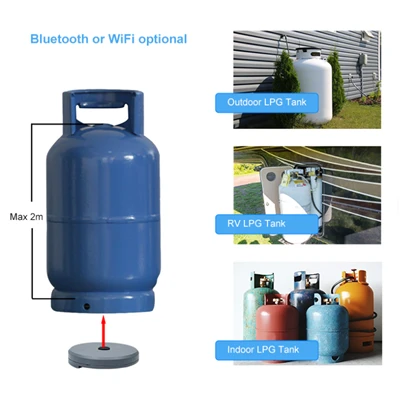
| Wireless tank monitor | Real-time level alerts to your phone | Very high - proactive warning | $100–$300 one-time |
| Automatic delivery program | Supplier schedules deliveries automatically | Highest - removes human error | Usually free |
| Monthly manual check | Human backup check once per month | Moderate - catches tech failures | Free |
| August–September pre-winter fill | Full tank before heating season at lowest price | High value - maximum reserve + cheapest fuel | Market rate |
The 20 percent rule is critical: Most homeowners who experience run-outs waited until their gauge showed 10 percent or lower. The problem is that standard propane deliveries take 2–5 business days to schedule. A 500-gallon tank at 10 percent holds approximately 40–50 gallons. In winter heating season, that may last only 3–7 days - and if a cold snap arrives, daily consumption jumps 30–50 percent, reducing that reserve to 2–4 days. Ordering at 20 percent gives your supplier time to schedule a standard delivery. Waiting until 10 percent puts you in emergency territory with emergency fees and potential wait times during the busiest time of year.
Frequently Asked Questions
Q1: What happens immediately when you run out of propane?
When you run out of propane, every appliance connected to that propane supply stops working immediately - the furnace shuts down on its pressure safety switch within seconds, the tankless water heater produces no hot water the moment a tap is opened, and any gas cooktop burners or oven flames extinguish. A tank water heater provides a brief buffer of residual hot water that lasts 10–30 minutes before it too goes cold. A propane clothes dryer stops mid-cycle with wet clothes inside. A gas fireplace pilot light goes out. All of these shutdowns occur because the propane tank has lost pressure - when tank pressure falls below the threshold needed to push gas through the supply lines, the gas valve on each appliance detects the loss and shuts off as a safety response. No appliance is damaged by this shutdown. What happens next - the restart process - is where the real risks and costs lie, and it requires a licensed technician to purge the air from the gas lines before any appliance can be safely lit again.
Q2: How long does it take to restart a propane system after running out?
It takes 2–5 hours from the time a licensed technician arrives at your property until your propane system is fully restarted and cleared for safe operation. The propane delivery itself - getting new fuel into your tank - takes 15–30 minutes. The gas line purge, which removes air from all connected piping before any ignition, takes 30–90 minutes depending on the size of the system and the number of branch lines. The appliance relight and combustion analysis, where the technician individually lights each appliance and verifies safe carbon monoxide levels and flame quality at each one, takes 30–60 minutes per appliance for a typical home with 3–5 propane appliances. The total process is approximately 2–5 hours for a standard home. An emergency call on a weekend evening or winter holiday takes the same amount of time but costs $200–$500 more in emergency surcharges. The only way to avoid this time and cost is to prevent the run-out from happening in the first place.
Q3: Can running out of propane make you sick?
Running out of propane itself does not make you sick, but attempting to use propane appliances during or immediately after a run-out without proper restart can produce carbon monoxide, which is genuinely dangerous and can be lethal. During a run-out, the propane supply is gone - there is no fuel to produce CO from normal combustion, so the risk during the run-out itself is minimal. The danger comes during the restart: if air has filled the gas lines and someone attempts to light a furnace or water heater without a proper purge, the propane-air mixture burns incompletely and produces elevated levels of carbon monoxide. This CO is invisible, odorless, and undetectable without a working detector. Always have a licensed technician perform the purge and combustion analysis after any propane run-out, and always evacuate immediately and call 911 if your CO detector sounds at any time. The other health risk during a winter run-out is hypothermia from a cold home, particularly for infants, elderly occupants, and pets - this is why preventing run-outs in cold climates is a genuine safety issue, not just a convenience concern.
Q4: What is the cheapest time of year to fill a propane tank?
The cheapest time of year to fill a propane tank is during late summer, specifically August and September, when propane prices reach their annual low point before the heating season drives demand and prices upward. Summer propane fills are typically 20–40 percent less expensive than winter peak prices. A 500-gallon tank filled in August at $2.20 per gallon costs approximately $1,100. The same 500-gallon fill ordered as an emergency in January at $3.75 per gallon plus a $200 emergency delivery surcharge costs approximately $2,075. The $975 difference represents both the summer fill savings and the avoided emergency fees. Beyond the fuel price advantage, August and September offer the best delivery availability - suppliers have open slots on their routes, so you can schedule a standard delivery without any urgency or premium fees. Fill your tank completely in August or September, sign up for automatic delivery, add a wireless tank monitor, and you will never pay winter peak prices or emergency fees again.
Q5: How do I know when my propane tank is almost empty?
You know when your propane tank is almost empty through three methods, used together for maximum reliability. First, read the gauge on your tank - every propane tank has a gauge that shows fill percentage. Order when the gauge reaches 25 percent, and schedule delivery before it drops to 20 percent. Second, track your consumption patterns - most propane suppliers offer usage tracking through their automatic delivery or monitoring programs. If your household used 300 gallons last January and you have 150 gallons remaining on a 500-gallon tank (30 percent), you are on pace for a run-out in the middle of the coldest part of winter. Third, install a wireless tank monitor ($100–$300) that sends real-time level alerts to your phone and triggers a warning when the tank reaches your chosen threshold. Many homeowners run out of propane not because they could not see it coming but because they waited too long to call - the 20 percent rule exists because standard delivery lead times are 2–5 business days, and the gap between your call and your delivery should not consume your entire remaining reserve.
The Bottom Line
Running out of propane is a multi-stage event that begins with every appliance going offline simultaneously and escalates through restart costs, safety risks, and long-term system damage if handled incorrectly or allowed to become a pattern. The immediate effects - no heat, no hot water, no cooking - are inconvenient but manageable for a day or two. The real consequences are the $200–$1,200 in professional restart service fees, the pipe-freeze risk in winter weather, the carbon monoxide hazard during an improper restart, and the invisible internal tank corrosion that compounds with every repeated run-out. The prevention system is straightforward: read your gauge monthly, order when it reaches 20 percent, sign up for automatic delivery, install a wireless tank monitor, and fill your tank in August or September before heating season. These measures cost less than one prevented run-out event and give you something no emergency service can - the confidence that your home will be warm, your water will be hot, and your propane system will run reliably for its full intended lifespan.
Last updated: July 2026
Disclaimer: This guide provides general information about what happens when you run out of propane for educational purposes. Actual costs, timelines, temperature drop rates, and recovery procedures vary by region, home, equipment, and climate. Always consult a licensed propane technician for system restart and safety procedures. This guide is not affiliated with, endorsed by, or sponsored by any propane supplier or equipment manufacturer.