Can Running Out of Propane Damage a Furnace? The Complete Homeowner's Guide
In this guide: Can running out of propane damage a furnace - covering what gets affected, what does not, long-term risks, repair costs, and the complete FAQ for 2026.
Can Running Out of Propane Damage a Furnace: Quick Answer
Running out of propane does not typically cause permanent damage to a furnace itself - a furnace is designed to shut down safely when gas pressure drops, and one properly managed run-out event with a professional restart does not break the furnace. However, repeated run-outs or an improperly handled restart can accelerate wear on the flame sensor, the hot surface igniter, the gas valve, and the heat exchanger over time. The real danger to your furnace is not the run-out itself - it is what happens when a homeowner tries to restart the system without the mandatory propane purge. When air fills the gas lines and the furnace attempts to ignite without a proper purge, the igniter overheats from repeated failed ignition cycles, soot accumulates on the flame sensor and burner assembly, and the heat exchanger experiences thermal stress from uneven combustion. These conditions do not destroy a furnace in a single event, but they compound over multiple run-outs and can shorten the furnace's service life by years. The most important thing a homeowner can do after a propane run-out is call a licensed technician for a proper purge and combustion check - the $100–$250 service call is the single best investment in protecting your furnace's longevity.
What Actually Happens to Your Furnace During a Propane Run-Out
The Sequence of Events Inside the System
When your propane tank runs dry, a specific sequence of events unfolds inside your furnace - and understanding this sequence is the key to understanding what does and does not get damaged:
| Phase | What Happens Inside the Furnace | Effect on Furnace Components |
|---|---|---|
| Phase 1: Gas pressure drops | Tank pressure falls below the threshold needed to push gas through the lines | Gas valve detects low pressure and shuts off - safety response, not damage |
| Phase 2: Flame extinguishes | No gas reaches the burner; existing flame goes out | Burner assembly cools normally - no stress |
| Phase 3: Furnace shuts down | Control board detects flame loss and initiates shutdown sequence | Normal shutdown procedure - no component stress |
| Phase 4: Furnace sits dormant | No gas in lines; no electrical activity on gas side | Zero wear - furnace is simply off |
| Phase 5: Air fills gas lines | Atmospheric air enters tank and gas lines during empty period | Introduces moisture - the primary long-term concern |
| Phase 6: Fuel restored, restart attempted | New propane fills tank; gas reaches the system | Restart method determines whether components are stressed |
The critical point: Phases 1 through 4 cause no damage to your furnace whatsoever. A furnace shutting down because its gas supply is interrupted is no different from you turning off a light - the switch is designed for exactly this. The damage risk begins only at Phase 6, and only if the restart is handled incorrectly.
What Parts of a Furnace Are Affected - and What Is Not
Component-by-Component Analysis
Here is the honest breakdown of which furnace components are vulnerable to damage from a propane run-out and which are not:
| Furnace Component | Affected by Propane Run-Out? | Why | Long-Term Risk |
|---|---|---|---|
| Heat exchanger | No | Designed for thousands of thermal cycles; isolated from gas pressure changes | None |
| Blower motor | No | Purely electrical; draws no gas; unaffected by propane pressure | None |
| Blower motor capacitor | No | Electrical storage component; isolated from gas system | None |
| Control board | No | Electronic brain; responds to electrical signals, not gas | None |
| Thermostat wiring | No | Low-voltage electrical; fully isolated from gas | None |
| Draft inducer fan | No | Electric motor; only checks gas pressure, does not use it | None |
| Pressure switch | No | Safety device designed to detect gas pressure loss | None |
| Hot surface igniter | ⚠️ Indirect risk | Overheats during failed ignition cycles during improper restart | Moderate - premature wear |
| Flame sensor | ⚠️ Indirect risk | Coated with soot from incomplete combustion during improper restart | Moderate - failure after multiple events |
| Gas valve | ⚠️ Indirect risk | Thermal cycling stress during repeated improper restart attempts | Low - designed for cycling |
| Burner assembly | ⚠️ Indirect risk | Soot accumulation from incomplete combustion during improper restart | Low to moderate - cleans up with service |
| Induced draft motor | No | Electrical; runs after ignition to clear flue gases | None |
The pattern is clear: Every electrical component in a furnace - the blower motor, control board, thermostat wiring, draft inducer fan, pressure switch, and induced draft motor - is completely unaffected by a propane run-out because it operates entirely on electricity and has no interaction with the gas supply. Every gas-side component - the hot surface igniter, flame sensor, gas valve, and burner assembly - is only affected during an improper restart when air in the gas lines causes incomplete combustion.
Long-Term Damage: When Repeated Run-Outs Become a Problem
Cumulative Effects That Shorten Furnace Life
A single properly handled run-out does not meaningfully affect your furnace's lifespan. Repeated run-outs with improper restarts are a different story:
| Cumulative Issue | What It Causes Over Time | Effect on Furnace |
|---|---|---|
| Repeated air exposure in tank | Internal tank moisture increases; moisture reaches gas system | Accelerates corrosion in gas valve and regulator |
| Repeated soot accumulation on flame sensor | Each improper restart deposits more soot on sensor rod | Sensor fails prematurely; furnace locks out on safety |
| Repeated igniter thermal cycling without combustion | Each failed ignition attempt overheats igniter without cooling | Igniter lifespan shortened from 7–10 years to 4–6 years |
| Soot buildup on burner orifices | Incomplete combustion from air-fuel mixture clogs small orifices | Burner flames become uneven; heat exchanger stressed |
| Heat exchanger thermal stress | Uneven flame from soot causes uneven heating of exchanger walls | Thermal fatigue over time; eventual cracking risk |
| Gas valve cycling wear | Repeated valve opens-and-closes without stable combustion | Valve seat wear; eventual replacement needed |
The compounding problem: Each of these issues is minor on its own - a furnace can recover from one improperly restarted run-out with a thorough combustion service call. But 3–5 run-outs per heating season, each handled improperly, create cumulative wear that begins to show up as component failures in years 2–4 rather than years 7–10. The most common sequence is this: flame sensor fails first (year 2–3), then the igniter begins requiring multiple attempts to light (year 3–4), then the gas valve starts showing signs of wear (year 4–6). Homeowners who experience multiple run-outs per season often report that their furnace "never runs as reliably after" - and they are right, because the cumulative damage has taken years off the system's service life.
The Restart Mistake That Causes Most Furnace Damage
Why Skipping the Purge Is the Real Problem
Most of the damage attributed to "running out of propane" is actually caused by improper restart procedure - specifically, skipping the mandatory gas line purge:
| Without a Purge | What Happens | Damage Caused |
|---|---|---|
| Air in gas line reaches burner | Air-propane mixture has wrong combustion properties | Incomplete combustion; soot production |
| Igniter activates | Heats to 2,000°F+ to light gas | Gas not at correct pressure yet |
| Flame sensor does not detect flame | No combustion occurring cleanly enough to register | Control board shuts down gas valve |
| Control board waits, retries | 30–60 second wait, then another ignition attempt | Igniter cycles again without cooling |
| Cycle repeats 3–10 times | Igniter overheats repeatedly without combustion cooling | Premature igniter wear; thermal fatigue |
| Eventually a flame establishes | Partial combustion; some heat produced | Flame is yellow/orange not blue; soot deposits |
| Furnace runs with wrong combustion | Heat exchanger stressed by uneven flame | Cumulative thermal fatigue |
| With a Proper Purge | What Happens | Result |
|---|---|---|
| Air bled from gas lines first | Pure propane reaches burner at correct pressure | Correct air-fuel ratio |
| Igniter activates | Clean propane ignites on first attempt | Normal 2,000°F+ operation |
| Flame sensor detects flame immediately | Stable combustion established | Control board holds gas valve open |
| Igniter cools after establishing flame | Normal thermal cycle | Igniter experiences normal, not excessive, thermal stress |
| Furnace runs at full efficiency | Blue flame; correct CO levels; optimal heat output | Heat exchanger operates normally |
| Combustion analysis confirms safe operation | Technician verifies all parameters | System cleared for safe operation |
Repair Costs When a Furnace Is Damaged by Repeated Run-Outs
What You Will Actually Pay
| Repair Needed | Cost Range | Caused by Propane Run-Out? |
|---|---|---|
| Hot surface igniter replacement | $150–$400 | ⚠️ Indirect - from improper restart cycling |
| Flame sensor replacement | $100–$250 | ⚠️ Indirect - from soot accumulation |
| Gas valve cleaning or replacement | $200–$600 | ⚠️ Indirect - from moisture and cycling |
| Burner assembly cleaning | $150–$350 | ⚠️ Indirect - from soot buildup |
| Heat exchanger replacement | $800–$3,500 | ❌ Extremely rare - requires catastrophic failure |
| Control board replacement | $200–$500 | ❌ No - unrelated electrical failure |
| Blower motor replacement | $300–$800 | ❌ No - unrelated electrical failure |
| Propane system purge + combustion check | $100–$250 | ✅ This is what prevents all of the above |
The economic argument for prevention: Every $100–$250 you spend on a proper propane purge and combustion check after a run-out is an investment that protects components worth $400–$1,200 in potential repairs. The most cost-effective decision a propane homeowner ever makes is never needing those repairs because they invested in the purge and signed up for automatic delivery.
How to Prevent Run-Outs From Ever Affecting Your Furnace
A Furnace Owner's Propane Protection System
Protecting your furnace from propane run-out damage is straightforward - these three layers work together:
| Protection Layer | What It Does | Effectiveness | Cost |
|---|---|---|---|
| Automatic delivery program | Supplier schedules deliveries before tank drops below safe level | Highest - supplier manages the risk for you | Usually free |
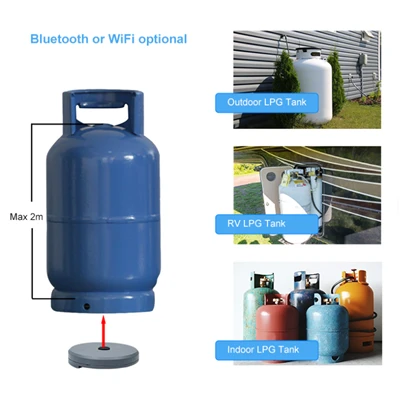
| Wireless tank monitor | Real-time alerts when tank drops below your set threshold | Very high - proactive warning | $100–$300 one-time |
| Monthly manual gauge check | Human backup check once per month | Moderate - catches monitor failures | Free |
| August–September pre-winter fill | Full tank before heating season at lowest summer prices | Highest value - maximum reserve + lowest price | Market rate |
| Annual furnace maintenance | Technician inspects igniter, flame sensor, and combustion quality | Identifies wear before it causes failure | $100–$200/year |
Frequently Asked Questions
Q1: Can running out of propane actually break my furnace?
Running out of propane does not typically break a furnace in a single event - a furnace is designed to shut down safely when gas pressure drops, and a single run-out with a professional purge and restart causes no permanent damage to any furnace component. What actually breaks furnaces over time is the combination of repeated run-outs with improper restart procedures: skipping the mandatory gas line purge causes the igniter to overheat from repeated failed ignition cycles, soot accumulates on the flame sensor and burner assembly from incomplete combustion, and the gas valve experiences thermal cycling stress from repeatedly opening and closing without stable flame confirmation. After 3–5 improperly handled run-outs, these cumulative effects begin to manifest as component failures: the flame sensor fails first, then the igniter begins requiring multiple attempts to light, then the gas valve shows signs of wear. A furnace that experiences one properly handled run-out and no others will operate normally for its full expected lifespan of 18–25 years. A furnace that experiences 4–5 improperly handled run-outs per season for 3–4 years may begin showing component failures years earlier than it should.
Q2: What furnace parts are most at risk after a propane run-out?
The furnace parts most at risk after a propane run-out are the hot surface igniter, the flame sensor, and the gas valve - but only if the system is restarted without a proper purge. The hot surface igniter is at risk because it generates heat through electrical resistance and depends on the cooling effect of clean combustion to regulate its temperature. When air fills the gas lines and the igniter activates without a proper air-fuel mixture, it overheats without the cooling effect of combustion, and each repeated failed ignition cycle accumulates thermal stress that shortens its lifespan. The flame sensor is at risk because it works by conducting a tiny electrical current through the flame - soot from incomplete combustion during an improper restart deposits on the sensor's metal rod and insulates it, preventing it from detecting flame and causing the control board to shut down the gas valve prematurely. The gas valve itself is designed to handle repeated cycling, but the repeated thermal stress of cycling without stable flame confirmation over multiple run-outs accelerates wear on the valve seat and spring mechanism. All three of these components are inexpensive to replace individually ($100–$400 each) compared to the furnace itself, but their cumulative failure is the primary way repeated run-outs shorten a furnace's useful life.
Q3: How many times can a furnace run out of propane before it is damaged?
There is no single number that defines when a furnace is "damaged" from propane run-outs - damage is not binary but cumulative, and the severity depends on how each restart is handled. One properly handled run-out - where a licensed technician performs the purge and combustion check - causes essentially no cumulative damage and has no meaningful effect on furnace lifespan. Two to three properly handled run-outs per season are similarly benign. The damage begins when run-outs are improperly restarted (no purge) or when the number of run-outs per season is high enough (5–8 per season) that even properly handled restarts accumulate minor stress on the igniter, flame sensor, and gas valve. In practice, homeowners who experience 3–5 run-outs per season with improper restarts typically begin noticing symptoms within 2–3 years: the igniter requires more attempts to light, the flame sensor triggers nuisance lockouts, and heating bills rise as combustion efficiency drops. The practical answer is this: zero properly handled run-outs causes no measurable damage. Three to five improperly handled run-outs per season for multiple seasons begins to shorten furnace lifespan in a measurable way.
Q4: Will my furnace work normally after a propane run-out?
Your furnace will work normally after a propane run-out if the restart is handled properly by a licensed technician who performs the mandatory purge, pressure verification, combustion analysis, and flame sensor check. After a proper restart, you should observe a blue flame (not yellow or orange), normal heating output (your home reaches thermostat temperature within the expected timeframe), steady ignition (one clean click and light, no rapid cycling or hesitation), no carbon monoxide alarms (the combustion analysis confirmed safe CO levels), and stable operation through the rest of the heating season. If you observe yellow or orange flame, furnace shutting down after 10–30 seconds, multiple ignition attempts before staying lit, rising heating bills despite normal outdoor temperatures, or a carbon monoxide detector alarm at any point, the restart was not done correctly - call a heating technician immediately for a combustion analysis and correction. A properly restarted furnace after a single run-out event should perform identically to before the run-out for the remainder of its service life.
Q5: What is the best way to protect my furnace from propane run-out damage?
The best way to protect your furnace from propane run-out damage is to prevent run-outs from ever happening, which requires a layered system of tank monitoring and supplier management. Sign up for your propane supplier's automatic delivery program - this is the most effective single measure because it shifts the responsibility for tracking tank levels and scheduling deliveries from you to a system that is designed for exactly this purpose. Add a wireless tank monitor to your tank ($100–$300 one-time cost) as a backup alert system that sends real-time level readings to your phone, ensuring you know your tank level at all times even if you are traveling or busy. Check your gauge manually once per month as the human verification layer that catches any technology failures. Fill your tank in August or September before heating season begins - this puts you at 100 percent capacity at the lowest fuel price of the year and gives you maximum reserve going into winter. These four measures together - automatic delivery, wireless monitor, monthly manual check, and summer fill - eliminate virtually all risk of a propane run-out, which eliminates virtually all risk of restart-related furnace damage, which saves you $400–$1,500 in potential component repairs over the life of your furnace.
The Bottom Line
Running out of propane does not break a furnace in a single properly handled event, but repeated run-outs combined with improper restart procedures accumulate wear on the hot surface igniter, flame sensor, gas valve, and burner assembly that shortens your furnace's service life by years. The distinction that matters is this: the run-out itself is harmless. The improper restart that skips the mandatory purge is what damages furnace components - because it causes the igniter to overheat from failed ignition cycles, deposits soot on the flame sensor, and stresses the gas valve with unstable thermal cycling. The $100–$250 you pay for a professional purge and combustion check after any run-out is the most cost-effective furnace protection investment you will ever make, because it eliminates the restart conditions that cause all of this wear. Layer automatic delivery, a wireless tank monitor, monthly manual checks, and a pre-winter August fill on top of that, and your furnace will operate at full efficiency for its full 18–25 year service life without ever experiencing a run-out-related component failure.
Last updated: July 2026
Disclaimer: This guide provides general information about whether running out of propane can damage a furnace for educational purposes. Furnace components, failure modes, and repair requirements vary by manufacturer, model, age, and installation conditions. Always consult a licensed HVAC technician or propane technician for furnace diagnostics, repair, and restart procedures. This guide is not affiliated with, endorsed by, or sponsored by any HVAC equipment manufacturer or propane supplier.