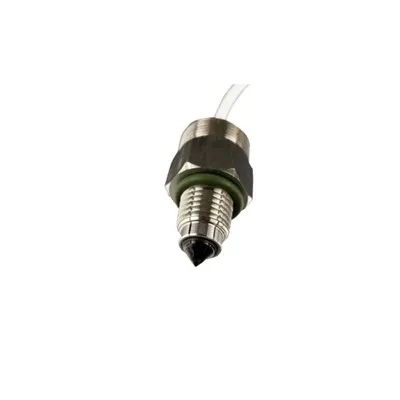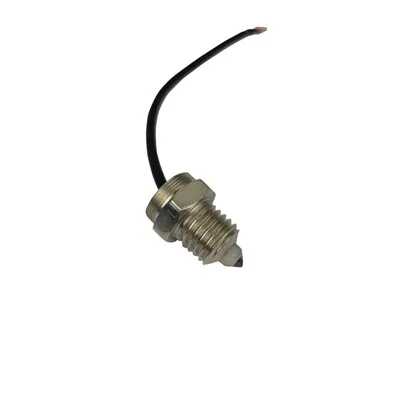
7 Types of Pressure Sensors Explained
When your operation depends on accurate pressure measurement, choosing the right sensing technology matters. Our range of pressure sensors, pressure transducers, and related industrial sensors is built to help teams monitor, control, and protect critical systems across manufacturing, automation, HVAC, hydraulics, pneumatics, water treatment, and process environments.
Whether you need a compact sensor for OEM equipment or a rugged device for demanding industrial use, we make it easier to match the right pressure sensing solution to your application.
Find the Right Pressure Sensor for Your Application
Pressure measurement is not one-size-fits-all. Different systems require different sensor types based on media, pressure range, environment, output signal, accuracy needs, and installation requirements.
Our product selection supports common pressure measurement needs, including:
System pressure monitoring
Pump and compressor control
Hydraulic and pneumatic feedback
Process automation
Leak detection
Filter monitoring
Tank and fluid level applications
Equipment safety and diagnostics
7 Common Types of Pressure Sensors
1. Gauge Pressure Sensors
Gauge pressure sensors measure pressure relative to atmospheric pressure. They are commonly used in hydraulic systems, pneumatic controls, pumps, compressors, and general industrial equipment.
Best for: applications where system pressure must be compared to ambient air pressure.
2. Absolute Pressure Sensors
Absolute pressure sensors measure pressure relative to a perfect vacuum. They are often used where atmospheric pressure changes could affect readings, such as vacuum systems, weather-sensitive processes, and sealed applications.
Best for: vacuum monitoring, barometric compensation, and controlled process environments.
3. Differential Pressure Sensors
Differential pressure sensors measure the difference between two pressure points. They are widely used for filter monitoring, flow measurement, cleanroom control, and HVAC systems.
Best for: detecting pressure drop, airflow changes, or filter blockage.
4. Sealed Pressure Sensors
Sealed pressure sensors reference pressure against a sealed internal reference instead of ambient air. This makes them useful in environments where external conditions may vary or where venting is not ideal.
Best for: rugged industrial applications and outdoor equipment.
5. Vacuum Pressure Sensors
Vacuum pressure sensors are designed to measure pressures below atmospheric pressure. They support applications such as packaging equipment, vacuum pumps, material handling, and laboratory systems.
Best for: vacuum control, suction monitoring, and negative pressure systems.
6. High-Pressure Sensors
High-pressure sensors are engineered for systems that operate under demanding pressure conditions, including hydraulics, test stands, presses, and heavy machinery.
Best for: industrial equipment requiring reliable monitoring under elevated pressure.
7. Flush Diaphragm Pressure Sensors
Flush diaphragm sensors are designed for media that may clog standard pressure ports. They are commonly used with viscous fluids, slurries, adhesives, food-grade processes, and other challenging materials.
Best for: applications involving thick, sticky, or particle-heavy media.
Why Choose Our Pressure Transducers?
Our pressure sensing solutions are selected for durability, measurement consistency, and integration flexibility. Depending on the model, available options may include analog outputs, digital communication, stainless steel wetted parts, compact housings, and multiple pressure ranges.
Key benefits include:
Reliable pressure measurement for industrial environments
Options for gauge, absolute, differential, vacuum, and high-pressure applications
Compatibility with many control systems and monitoring platforms
Rugged construction for demanding equipment
Multiple electrical and mechanical configurations
Support for OEM, maintenance, and system upgrade projects
Product Options and Specifications
Available specifications vary by model, but common configuration options may include:
Pressure type: gauge, absolute, differential, sealed, vacuum, or high pressure
Output signals: voltage, current, or digital options depending on model
Process connections: common threaded and application-specific fittings
Housing materials: industrial-grade materials selected for durability
Media compatibility: options for air, gas, water, oil, and select process fluids
Electrical connections: cable, connector, or custom configurations where available
If your application has specific requirements, our team can help narrow down the right pressure sensor based on operating conditions, installation constraints, and performance goals.
Built for Industrial Performance
Accurate pressure data helps improve uptime, reduce risk, optimize system performance, and support preventative maintenance. From compact pressure transducers for machine builders to durable industrial sensors for harsh operating environments, our solutions are designed to fit real-world pressure monitoring needs.
Request Pricing or Application Support
Need help choosing the right sensor type? Share your pressure range, media, connection requirements, output signal, and environment details. We'll help you compare options and identify a pressure sensing solution that fits your system.
Contact us today to request pricing, check availability, or get expert product guidance.