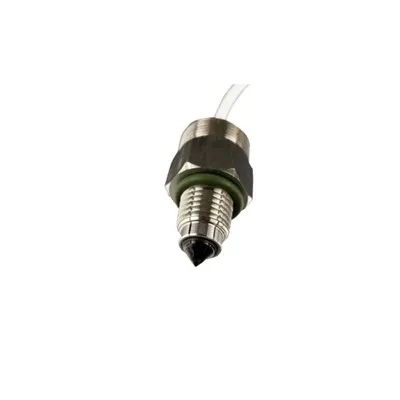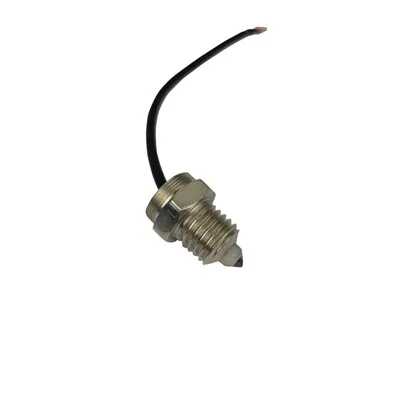
An Introduction to Level Measurement
Introduction
Level measurement is one of the most fundamental measurements in industrial and environmental instrumentation. In a chemical plant, the level of liquid in a reactor vessel determines whether the batch process has the correct volume. In a water utility, the level in a storage reservoir determines whether there is enough water to meet demand. In a flood management system, the level in a river channel determines whether an alert should be issued to protect downstream communities. In each case, the level measurement is the primary input to a decision.
Level measurement determines the height of a material surface – a liquid surface, a solid surface, or the interface between two liquids – relative to a reference point. The material may be water, oil, chemical solution, slurry, grain, powder, or cement. The reference point may be the bottom of a tank, a fixed elevation on a gauge datum, or the sensor mounting point.
This article provides a comprehensive introduction to level measurement: the key concepts and terminology, the distinction between point-level and continuous measurement, the main technologies, the factors that determine which technology to choose, and the key specifications to consider.
Key Concepts in Level Measurement
Point-Level vs Continuous Measurement
The first distinction in level measurement is between point-level detection and continuous level measurement.
Point-level detection determines whether the material surface is above or below a specific point. A point-level switch produces a discrete output – on or off, open or closed – when the surface reaches the switch point. Point-level switches are used for high-level alarms (to prevent overflow), low-level alarms (to prevent pump dry-running), and pump control (to start or stop a pump at a setpoint).
Continuous level measurement determines the height of the material surface at all times, producing an analogue output signal proportional to the measured level. A continuous level transmitter produces 4-20 mA, 0-10 V, a digital data stream, or a wireless transmission. Continuous level measurement is used for process control, inventory management, and situations where the exact level at any given moment matters.
Level vs Volume
The level measurement is the height of the material surface. The volume in the vessel is calculated from the level using the vessel geometry. For a cylindrical vertical tank with a flat bottom, volume is the cross-sectional area multiplied by the liquid height. For irregular tanks, a strapping table – a calibration table mapping level to volume, determined by filling the tank with known quantities – is required.
Interface Measurement
In some applications, the surface of interest is the boundary between two immiscible liquids – for example, oil floating on water in a separator vessel. Interface measurement determines the position of this liquid-liquid boundary, which is important for product quality control and separator efficiency monitoring. Radar level sensors and capacitance probes are the most commonly used technologies for interface measurement.
Bulk Solid Level Measurement
Level measurement of bulk solids – grain, sand, cement, plastic pellets, powdered chemicals – presents additional challenges. Bulk solids do not have a flat surface: they form a sloping pile with a variable angle of repose. The surface is uneven and may be disturbed by loading. Dust and airborne particles can interfere with acoustic and optical sensors. Abrasive materials can damage sensor components.
Main Level Measurement Technologies
Float-Based Level Measurement
Float-based level measurement uses a buoyant element resting on the liquid surface that rises and falls with changes in level. The float connects to a mechanism that converts its vertical movement into a level reading or a switch contact.
The simplest float instrument is a graduated staff gauge – a ruler fixed to a tank or channel wall, read directly by an operator. More sophisticated instruments use a tape or cable connecting the float to a rotary shaft encoder or potentiometer, which converts float position into an electrical signal.
Float-based measurement is inexpensive, reliable, and directly traceable to the physical position of the liquid surface. It is widely used in water and wastewater applications, fuel storage tanks, and industrial process vessels.
The limitations are moving parts (which can wear or jam in abrasive or fibrous liquids), the requirement for a stilling well in turbulent conditions, and practical difficulty in deep boreholes or narrow shafts.
Hydrostatic Pressure Level Measurement
A hydrostatic pressure sensor is submerged in the liquid at the bottom of the tank or borehole. It measures the pressure exerted by the liquid column above it. The physical relationship is: Pressure = density x gravitational acceleration x height (P = rho g h). Since liquid density and gravitational acceleration are known constants, the measured pressure is directly proportional to the height of the liquid column, and the sensor electronics convert the pressure reading to a level reading.
Hydrostatic pressure measurement is widely used for borehole and groundwater monitoring, deep tank level measurement, and submersible applications. It provides excellent accuracy in immersion applications at relatively low cost.
The primary limitations are the water density assumption (if actual liquid density differs from the programmed value, the level reading will be systematically in error) and the requirement for the sensor to be submerged, which requires material compatibility verification.
Ultrasonic Level Measurement
An ultrasonic sensor mounted above the liquid surface emits high-frequency sound pulses (typically 40 kHz or 55 kHz) toward the surface and measures the time delay of the returning echo. Since the speed of sound in air is approximately 343 metres per second at 20 degrees Celsius, the time delay is proportional to the distance from the sensor to the surface.
The level is: Level = (Sensor Mounting Height) minus (Measured Distance). The sensor electronics perform this calculation and output the result as a calibrated level signal.
Ultrasonic measurement is non-contact – nothing is immersed in the liquid – making it suitable where immersion would cause contamination, corrosion, or sensor damage. It is widely used for open tanks, channels, and reservoirs.
The primary limitations are the dead zone (a minimum distance below which measurement is not possible), sensitivity to surface turbulence, foam, and temperature gradients, and the requirement for the liquid surface to reflect sound waves reliably.
Radar Level Measurement
A radar sensor emits microwave pulses toward the liquid surface and measures the time delay of the returned echo. Microwaves travel at the speed of light and are essentially unaffected by air temperature, humidity, wind, or pressure – the factors that limit ultrasonic accuracy.
FMCW (frequency-modulated continuous wave) radar sensors emit a continuous frequency ramp and measure the frequency difference between transmitted and received signals, producing accuracy of +/- 0.5 mm to +/- 2 mm. Pulse radar sensors emit short microwave pulses and are effective for longer-range applications.
Radar is increasingly the preferred technology for professional level measurement because of its superior accuracy, reliability, and robustness in challenging conditions. It is unaffected by surface turbulence, foam, steam, and vapour. The primary limitation is cost: radar sensors typically cost 3-5 times more than comparable ultrasonic sensors.
Capacitance Level Measurement
A capacitance probe uses an electrode mounted in the tank. As the liquid level rises around the electrode, the dielectric constant of the medium surrounding it changes from approximately 1 (air) to approximately 80 (water). The gauge electronics measure this capacitance change and convert it to a level reading.
Capacitance probes are available in contact configurations (immersed in the liquid) and non-contact configurations (mounted on the outside of a non-metallic tank wall). They handle foam and surface turbulence better than ultrasonic sensors and are widely used in chemical process applications.
The primary limitations are sensitivity to changes in liquid dielectric properties and coating or scaling on the probe, which can affect accuracy.
Conductive Level Measurement
Conductive level measurement uses two or more electrodes immersed in the liquid. A low-voltage alternating current is applied between the electrodes. When the liquid reaches the shorter electrode, it completes the circuit and the sensor produces a switch output.
Conductive measurement is simple, inexpensive, and reliable for aqueous conductive liquids. It is widely used for point-level detection in water, wastewater, and aqueous chemical solutions. It is not suitable for non-conductive liquids such as oils or hydrocarbon fuels.
Choosing the Right Level Measurement Technology
Is Point-Level or Continuous Measurement Required?
If only the surface position at a specific point is needed – for a high-level alarm or a low-level pump cutout – a point-level switch is appropriate. If the level must be known at all times for process control or inventory management, a continuous level transmitter is required.
Is Contact or Non-Contact Measurement Appropriate?
Non-contact technologies (ultrasonic and radar) are preferred when immersion in the liquid would cause contamination, corrosion, or sensor damage. Contact technologies (pressure, capacitance, conductive) are appropriate when immersion is acceptable and often perform better in challenging conditions.
What Are the Liquid Properties?
Highly viscous liquids may coat sensor surfaces. Abrasive liquids may damage moving parts. Corrosive chemicals require material compatibility verification. Conductive liquids enable conductive switches. Non-conductive liquids exclude conductive measurement.
What Are the Tank Conditions?
Tank geometry, mounting options, pressure, temperature, and accessibility for maintenance all influence technology selection.
What Accuracy Is Required?
Accuracy requirements range from +/- 10-20 mm for basic inventory management to +/- 0.5 mm for precision process control. Accuracy as a percentage of full scale degrades in absolute terms as the tank size increases: on a 10-metre tank, +/- 0.5% FS equals +/- 50 mm.
What Output Is Required?
The sensor output must be compatible with the receiving system. Common outputs are 4-20 mA, 0-10 V, RS-485 Modbus RTU, IO-Link, and wireless protocols (LoRaWAN, NB-IoT, cellular).
Key Level Measurement Specifications
Measurement range: the maximum distance from the sensor to the material surface that the sensor can measure reliably.
Dead zone (blanking distance): the minimum distance from the sensor at which measurement is possible. Position the dead zone above the maximum expected level.
Accuracy: expressed as a percentage of full scale (% FS), as an absolute value in millimetres, or both.
Repeatability: the ability to produce the same reading when measuring the same level under the same conditions. Typically better than stated accuracy.
Hysteresis: the difference in output between measurements at the same level with the surface rising and falling. Caused by mechanical friction in float mechanisms and switching characteristics of electronic sensors.
Output signal: the electrical signal produced by the sensor. 4-20 mA current loop is the most common industrial output. Digital outputs carry additional diagnostic data.
IP rating: the Ingress Protection rating. For outdoor installations, IP67 or IP68 is typically required.
Common Applications
Water and wastewater: Storage reservoirs, clarifiers, filter backwash tanks, sewage wet wells, pump stations. Float switches for pump control, ultrasonic for continuous monitoring, hydrostatic for boreholes.
Chemical and process industry: Reactor vessels, storage tanks, separation vessels. Radar for challenging conditions, capacitance for chemical compatibility.
Food and beverage: Mixing tanks, storage vessels, pasteurisation tanks, CIP systems. Hygienic-design sensors with food-grade materials; radar or ultrasonic for non-contact measurement.
Power generation: Condensate tanks, cooling water reservoirs, fuel oil storage, boiler feedwater tanks.
Environmental monitoring: River gauging stations, wetland and lake level monitoring, groundwater wells, flood warning systems.
Conclusion
Level measurement is a fundamental measurement in industrial, municipal, agricultural, and environmental instrumentation. Understanding the distinction between point-level and continuous measurement, the physical principles underlying each technology, and the factors that determine technology selection enables engineers and instrumentation professionals to choose the right level instrument for any application.
No single technology is the best choice for every application. Float-based measurement is the most reliable and inexpensive for still water. Hydrostatic pressure is the standard for boreholes and deep tanks. Ultrasonic measurement is the workhorse for open tanks and channels. Radar is the premium choice for challenging conditions and the highest accuracy requirements. Capacitance probes solve specific problems in chemical and process applications. Conductive switches provide a simple point-level solution for conductive liquids.
Selecting the right level measurement technology starts with understanding the application: what must be measured, in what form, under what conditions, and to what accuracy. With the right sensor correctly installed, level measurement provides the reliable, continuous data that enables safe, efficient, and compliant operation of the systems and processes that depend on knowing how much material is in the vessel.