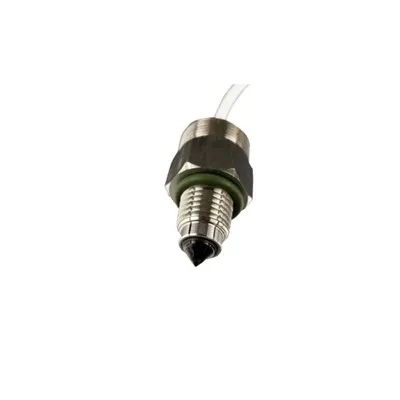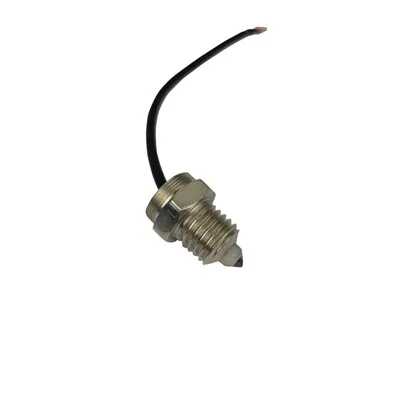
Best Ultrasonic Sensor for Tank Water Level Detection
For most tank water-level detection, the best ultrasonic sensor is a non-contact, temperature-compensated unit with a 4–20 mA or IO-Link output, a PVDF or PP face (for chemical/UV resistance), a range covering tank height plus dead-zone headroom, and an environment rating (IP/NEMA, temperature) matched to where the tank lives. In agitated or foamy water, add a stilling well - or step up to radar. This guide helps you pick the best ultrasonic for your tank; for the broader tank-measurement decision see best way to measure tank level and the ultrasonic complete guide.
Why Ultrasonic Is Usually Best for Tank Water
Non-contact - nothing in the water to foul, corrode, or maintain.
Low cost - cheaper than radar, simpler than calibrated pressure systems.
Easy install - mount on the lid, no tank entry, no calibration of a wetted part.
Continuous & accurate - ±0.1% to ±0.5% of span with temperature compensation.
But ultrasonic is not always best: heavy foam, steam, or dust scatters the pulse (use radar), and a pressurized closed tank may need a rated flange or a pressure/radar method. See non-contact hub and pressure method.
It also beats a float for tank water because there is no moving part to stick in scale or debris, and it beats a pressure sensor because nothing is submerged to recalibrate when the tank is cleaned. For a technology-agnostic view, the best way to measure tank level compares all options side by side.
Tank Factors That Decide the "Best" Ultrasonic
| Tank Factor | What It Demands |
|---|---|
| Open / vented vs pressurized | Pressurized → rated flange or use pressure/radar |
| Tank height | Range must exceed max level + dead-zone headroom |
| Indoor vs outdoor | Outdoor needs IP67 + wide temp + UV-stable body |
| Clean water vs chemical | Chemical → PVDF body |
| Wastewater vs foamy | Foam → stilling well or radar |
| Agitated vs still | Agitation → stilling well or averaging |
| Narrow vs wide | Narrow → tight beam angle; avoid wall echoes |
What "Best" Looks Like - Spec Recommendations
| Parameter | Recommended for Tank Water |
|---|---|
| Measuring range | Tank height + 10–20% headroom above dead zone |
| Dead zone | Below the sensor; keep max level clear of it |
| Output | 4–20 mA (loop) or IO-Link; NPN/PNP for alarm |
| Body / face | PP (water) or PVDF (chemical/UV) |
| Environment | IP67 outdoor; rated temp span incl. summer |
| Temperature comp | Built-in (essential for outdoor swings) |
| Supply | 12–30 V DC |
| Mounting | Perpendicular to calm surface, centered |
Confirm exact numbers on the datasheet. For output/signal detail see 12V/24V precision sensors.
Decision Tree: Pick the Best Config
Rain/water tank, outdoor → IP67, PP or PVDF face, 4–20 mA, temp comp, NEMA/UV-stable.
Chemical dosing tank → PVDF body, chemically rated, IO-Link for diagnostics.
Wastewater / foamy → stilling well first; if foam is chronic, choose radar instead.
Agitated process tank → stilling well or averaged reading; verify beam stays on liquid.
Pressurized closed tank → ultrasonic only if flanged/rated; else pressure or radar.
Narrow tall tank → higher-frequency, narrow-beam unit; center the mount.
Hazardous area → certified model (hazardous guide).
Our choosing the right switch maps these to products.
Quick summary: for a typical outdoor rainwater or process-water tank, the best pick is an IP67 PVDF-face 4–20 mA ultrasonic with temperature compensation; for foamy wastewater step up to radar or add a stilling well; for a pressurized vessel use pressure or flanged radar instead.
What Performance to Expect on a Tank
A well-specified tank ultrasonic typically holds ±0.1% to ±0.5% of span with temperature compensation, and millimeter resolution. On a 2 m water tank, ±0.5% of span is about ±10 mm - fine for inventory and alarms, though a radar or magnetostrictive sensor would be tighter if you need sub-millimeter. Remember the reading is the distance to the surface, converted to level by subtracting from the known tank height; the units & strapping guide shows how that becomes volume.
Calibration on a Tank
Setup is quick: teach the empty distance (sensor to an empty tank bottom) and the full distance (sensor to the full level). The electronics map echo time linearly to 0–100% or engineering units. Confirm the vessel height and any offset (for example a stilling-well top) so the displayed number equals real level. Re-check after a large temperature swing if compensation seems off.
The Stilling Well Option
For turbulent, agitated, or foamy tanks, a stilling well - a slotted vertical pipe below the sensor - lets the water inside settle to a calm surface while shielding the beam from splashes and foam. The slots equalize pressure with the tank, so the level inside matches the tank. It is the cheapest fix for a jumpy reading and often saves you from upgrading to radar.
Ultrasonic vs Radar: The Tank Trade-off
Radar handles foam, steam, and dust that defeat ultrasonic, and is more accurate - but it costs more and its beam also needs a clear path. For most open/vented water tanks, ultrasonic is the better value; reserve radar for chronic fouling, vapor, or when you need the tightest accuracy. The non-contact hub lays out both plus capacitive and optical non-contact options.
Ultrasonic vs Alternatives for Tank Water
| Method | Best For Tank Water When… | Limit |
|---|---|---|
| Ultrasonic | Open/vented, clean-ish, low cost | Foam, steam, dust |
| Radar | Foam, vapor, dust, high accuracy | Higher cost |
| Pressure | Submerged, known density, pressurized | Wetted, density-dependent |
| Float | Simple point/level, cheap | Moving parts, SG limit |
| Capacitive | Coating-tolerant (RF) | Probe fouling |
See float overview, capacitive guide, pressure method, and how water sensors work physically.
Installation for Tank Water
Mount on the lid, perpendicular to the calm surface, centered away from walls/inlet.
Respect the dead zone - the sensor cannot read right below its face; keep the max level above it.
Avoid condensation - warm tank vapor can fog the transducer face; some housings add heating or a purge. A fogged face kills the echo.
Use a stilling well for turbulent or agitated tanks to steady the surface and shield the beam.
Keep the beam clear - no ladder, mixer, or pipe in the cone; false echoes cause jumps.
Route cable away from power to reduce noise; seal the gland for outdoor rating.
For setpoint use see tank automation; for level→volume see units & strapping.
Outputs & Controller
A continuous ultrasonic outputs a scaled value - 4–20 mA (loop), 0–10 V, or digital (IO-Link/Modbus). A bare NPN/PNP is usually just an alarm channel, not the precision reading; precision lives in the analog/digital link. Match to the PLC input (NPN↔sinking, PNP↔sourcing - same as proximity sensors). See precision 12V/24V.
Common Mistakes for Tank Water
Condensation on the face from warm tank vapor - the #1 outdoor/tank failure; heat or purge.
Dead zone at the top - max level enters it, no reading when full.
Beam hitting a wall in a narrow tank - false echo; center and use a tight beam.
No temperature comp outdoors - large seasonal error.
Wrong IP rating - indoor sensor dies outside; use IP67.
Ultrasonic in heavy foam/steam - switch to radar.
Troubleshooting
| Symptom | Likely Cause | Fix |
|---|---|---|
| No echo at top | In dead zone | Lower sensor / extend range |
| Erratic jumps | Turbulence / foam | Stilling well; radar if chronic |
| Reading drifts | Temp not compensated | Verify temp sensor |
| False echo | Obstruction in beam | Reposition; clear cone |
| Fogged face | Condensation | Heated housing; dry face |
| Dies outdoors | Low IP rating | Replace with IP67 unit |
Selection Checklist
Tank type: open / vented / pressurized?
Tank height → range + dead-zone headroom.
Media: clean water, chemical, or wastewater?
Foam / steam / agitation present?
Indoor or outdoor → IP & temp rating.
Output: 4–20 mA / IO-Link / NPN-PNP?
Body: PP or PVDF?
Hazardous area → certified model?
See choosing the right switch and the level sensor complete guide.
FAQ: Best Ultrasonic Sensor for Tank Water
What is the best ultrasonic sensor for a water tank?
A non-contact, temperature-compensated 4–20 mA (or IO-Link) unit with a PP/PVDF face, range covering tank height plus dead-zone headroom, and an IP rating matching its location.
Is ultrasonic good for tank water?
Yes - non-contact, low cost, easy to install, and accurate with temperature compensation. Avoid it for heavy foam, steam, or dust.
Which body material for a water tank?
PP for plain water; PVDF for chemicals, UV, and longer outdoor life.
Do I need temperature compensation?
Yes, especially outdoors - sound speed changes ~0.6% per °C, so compensation prevents seasonal drift.
What IP rating for an outdoor tank?
IP67 (or better) with a wide temperature span and UV-stable body.
Can ultrasonic handle a pressurized tank?
Only flanged/rated models; otherwise use pressure or radar.
How do I stop foam from fooling it?
Use a stilling well; if foam is chronic, switch to radar.
Why is my sensor reading wrong at the top?
The max level is likely inside the dead zone - lower the sensor or pick a longer range.
Condensation kills the echo - what do I do?
Use a heated face or purge; keep the transducer dry.
Narrow tank echoes off the wall?
Center the mount and pick a higher-frequency, narrow-beam unit.
What output should I choose?
4–20 mA or IO-Link for the value; NPN/PNP only for an alarm channel.
Ultrasonic or radar for tank water?
Ultrasonic for open/vented, clean-ish, lower cost; radar for foam, vapor, dust, or maximum accuracy.
How do I get volume from the level?
Apply the tank shape or a strapping table - see units & strapping.
Is it safe in hazardous areas?
Only certified (ATEX/IECEx) models - see the hazardous guide.
How accurate is ultrasonic on a 2 m tank?
Typically ±0.1% to ±0.5% of span - about ±10 mm on a 2 m tank with temperature compensation; resolution is millimeters.
What is a stilling well?
A slotted vertical pipe under the sensor that lets the water settle to a calm surface and shields the beam from foam and splashes, equalizing pressure with the tank so the level matches.
Conclusion
The best ultrasonic sensor for tank water level detection is a non-contact, temperature-compensated, 4–20 mA (or IO-Link) unit with a PP or PVDF face, a range that clears the dead zone, and an IP/temperature rating matched to the tank's environment. It wins for open or vented water tanks because nothing sits in the water to foul or maintain, installation is a simple lid mount, and accuracy is good with compensation. The traps are physical: condensation on the face, the dead zone at the top, beam reflection in narrow tanks, and foam/steam that scatters the pulse - each has a fix (heated face, headroom, centered narrow beam, stilling well, or a radar upgrade). Match the body to the chemistry (PVDF for chemicals), the output to your PLC, and - for hazardous zones - pick a certified model, and ultrasonic will reliably report your tank water level for years. When the water is clean and the tank is open, it is hard to beat the combination of low cost, no wetted part, and simple lid-mount installation.
For more, see best way to measure tank level, ultrasonic complete guide, ultrasonic working principle, ultrasonic liquid level sensors, ultrasonic in the taxonomy, non-contact hub, pressure method, how water sensors work physically, float overview, capacitive guide, point vs continuous, precision 12V/24V, water level units & strapping, tank automation, choosing the right switch, hazardous guide, and the ultimate guide.